
Featured Swift-Pattern & Industrial Containment Systems
Discover high-capacity pre-galvanized, hot-dip galvanized, and stainless cable routing products manufactured to exact dimensional tolerances and structural loading thresholds.
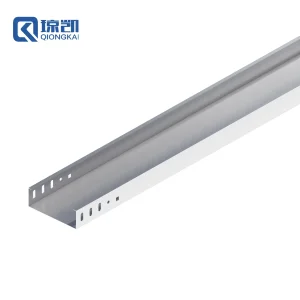
Carbon Steel PG HDG SS Cable Trunking Trough Type Channel 150*50
View Specifications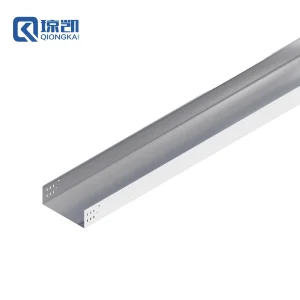
Carbon Steel PG HDG SS Cable Trunking Trough Type Channel 400*150
View Specifications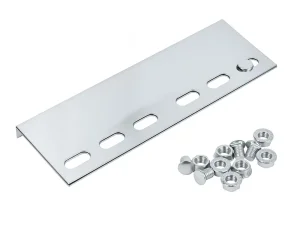
Wholesale Pre-Galvanized Cable Tray Connections Spare Parts
View Specifications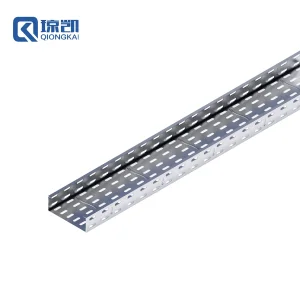
Reinforced Medium Duty Pre-galvanized HDG Perforated Cable Tray 150*50
View Specifications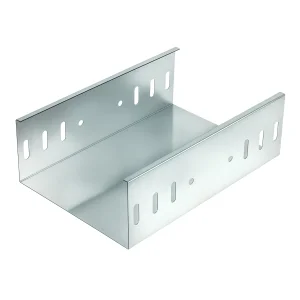
Custom Size Pre-Galvanized Cable Trunking Factory Solutions
View Specifications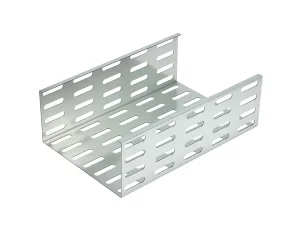
Wholesale Pre-Galvanized Cable Tray With Precision Perforation
View Specifications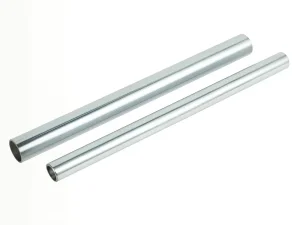
Heavy-Gauge Wholesale Pre-Galvanized Electrical Conduit
View Specifications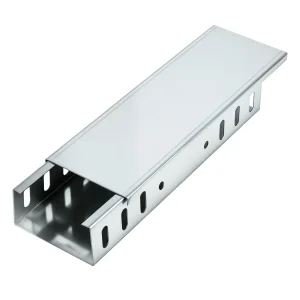
Wholesale Pre-Galvanized Cable Trunking 100*50 Channel Profile
View SpecificationsGlobal Landscape of Legrand Swift Cable Tray Systems
The Legrand Swift cable tray pattern has become the preeminent global benchmark for perforated cable support systems across Europe, the Middle East, Asia-Pacific, and emerging markets. Understanding the design engineering behind this standard enables project directors and MEP procurement specialists to source with complete structural confidence.
The Swift Engineering DNA
Originating from rigorous British industrial specifications, the Swift pattern utilizes distinctive slot configurations and return flange profiles that optimize weight-to-load carrying ratios while accelerating heat dissipation in power cables.
The system is characterized by its high lateral rigidity, integrated fish-tail coupling mechanisms, and standardized hole matrices that enable tool-free accessories and rapid electrical earth bonding.
OEM vs. Branded Distribution
Global mega-projects face escalating commercial pressure from extended brand markups and distribution lead times. Sourcing directly from certified heavy-duty manufacturers eliminates redundant supply tiers.
Direct manufacturer collaboration guarantees identical metallurgy, compliance with BS EN 61537, customized side-height configurations (50mm, 75mm, 100mm, 150mm), and project-tailored structural finishes at significant capital savings.
Mechanical Load Classification
In adherence to international testing methods, trays are classified into Light Duty (SRF), Medium Duty (MRF), Heavy Duty (HRF), and Extra Heavy Duty (XRF) configurations designed to withstand up to 300 kg/m dynamic cable loadings.
Continuous inward return flanges prevent cable sheathing abrasion during high-tension pulling operations while simultaneously multiplying cross-sectional moment of inertia ($I_x$).
Information Gain: Critical Procurement Note on Swift-Compatible Coupling Systems
When procuring Swift-style cable trays from high-precision manufacturers, ensure that the slot matrices align with standard 25mm pitch fast-fit couplers. The rapid-fit fishplate and slot configuration eliminates the need for field drilling, reducing mechanical installation labor costs by up to 42% on high-density ceiling grid runs compared to traditional bolted channel assemblies.
Material Grades, Finish Treatments & Corrosion Matrices
Premature mechanical failure of containment infrastructure is overwhelmingly driven by mismatched environmental corrosion classes. Our heavy-duty roll-forming lines process coil materials that satisfy rigorous international chemical and metallurgical benchmarks.
| Finish / Material Type | Reference Standard | Zinc / Protective Thickness | ISO 12944-2 Environment | Ideal Industrial Application |
|---|---|---|---|---|
| Pre-Galvanized (PG) | BS EN 10346 / ISO 10143 | 140 – 275 g/m² (both sides) | C1 - C2 (Low Humidity) | Commercial buildings, false ceilings, clean IT halls |
| Electro-Galvanized (EG) | BS EN 12329 / ASTM B633 | 12 – 18 µm continuous coat | C1 (Controlled Indoor) | Wire mesh trays, interior computer room sub-floors |
| Hot-Dip Galvanized (HDG) | BS EN ISO 1461 / ASTM A123 | 65 – 85 µm (450–600 g/m²) | C3 - C4 (Humid & Industrial) | Petrochemical, power generation, outdoor substations |
| Stainless Steel 304 | AISI 304 / EN 10088-2 1.4301 | Natural passive chromium oxide | C3 - C4 (Sanitary / Washdown) | Food & beverage processing, dairy, pharmaceutical cleanrooms |
| Stainless Steel 316 / 316L | AISI 316L / EN 10088 1.4404 | 2-3% Molybdenum enhanced | C5 - CX (Extreme Marine/Chlorides) | Offshore oil & gas platforms, coastal marine, desalination |
| Thermoset Epoxy / Polyester | EN 13438 / ISO 12944-6 | 60 – 100 µm powder coat | C2 - C3 (Color Coded Indoor) | Hyperscale data centers, fire circuit identification (RAL 3000) |
Side Rail Height Profile
Manufactured in standard Swift depths: 25mm (extra light), 50mm (medium MRF), 75mm (heavy duty HRF), and 100mm/150mm deep trough configurations to accommodate massive multiconductor bundling.
Width Capacity Continuum
Standardized progression from 50mm up to 900mm wide spans. Every tray features engineered transverse and longitudinal ribs that resist bowing under concentrated vertical loadings.
Perforation Geometry
Precision-punched slots designed with smooth edge radiuses to completely safeguard cable insulation jacket integrity while offering unconstrained cable tie-wrap attachment points.
Electrical Earth Bonding
Fully compliant with BS EN 61537 Section 9.3 for electrical continuity, featuring pre-punched copper bonding strap slots ensuring instantaneous earth fault dissipation.
Field-Tested Application Scenarios Across Strategic Verticals
From airport hubs to extreme-temperature LNG gas terminals and high-density computing halls, engineered cable management infrastructure ensures non-stop operational continuity.
Shanghai Hongqiao Int. Airport
Deployment: Heavy-gauge corrosion-resistant CT series cable trunking and perforated cable trays throughout mechanical service tunnels.
Engineering Challenge: High ambient vibration, zero-failure electrical distribution for navigational lighting and baggage telemetry networks.
Result: Over 15 years of uninterrupted structural performance with zero mechanical fatigue or galvanic degradation.
Offshore LNG Terminal, Qatar
Deployment: Custom profiled section support structures and heavy-duty 316L marine-grade stainless cable tray assemblies.
Engineering Challenge: Hyper-saline marine atmosphere combined with extreme desert thermal fluctuations ($+50^\circ\text{C}$).
Result: Eliminates pitting and crevice corrosion, exceeding the 25-year design lifespan requested by consortium operators.
Enterprise AI Data Halls
Deployment: Overhead electro-galvanized wire mesh baskets integrated with custom powder-coated (RAL 9005 & RAL 5015) Swift perforated trays.
Engineering Challenge: Massive heat concentration from high-power GPU server racks and stringent cable radius containment requirements.
Result: Optimized airflow convection patterns, reducing cooling energy consumption and preventing high-speed fiber signal attenuation.
Agro-Industrial Complex, Paraguay
Deployment: Cost-optimized heavy-duty pre-galvanized and HDG reinforced molded cable trays for a mega livestock agricultural processing facility.
Engineering Challenge: Corrosive ammonia gas atmospheres, stringent capital expenditure caps, and rapid construction timelines.
Result: Turnkey delivery achieved 28% budget reduction compared to legacy European branded quotes with identical structural load ratings.
Infrastructure Export to Italy
Deployment: Containerized hot-dip galvanized cable trays and matching 41-series strut channels manufactured for Italian railway electrification projects.
Engineering Challenge: Strict CE conformity, uniform zinc coating thickness verification, and zero tolerance for burrs or sharp edges.
Result: Successfully cleared all independent third-party laboratory metallurgy tests upon port entry into the European Union.
Outdoor Power Station, Thailand
Deployment: Hybrid FRP and high-load FRP-lined hot-dip galvanized steel cable trays operating in monsoon precipitation conditions.
Engineering Challenge: Intense ultraviolet solar radiation combined with continuous 95%+ relative humidity and seasonal flooding risks.
Result: Complete structural insulation, non-sparking characteristics, and zero electrochemical degradation over five operational years.
Technology Roadmap: 2025–2035 Cable Containment
The industrial containment sector is undergoing rapid transformation driven by automated manufacturing, digital building information modeling (BIM), and stringent decarbonization mandates.
1. Continuous High-Speed Roll-Forming
Modern manufacturing utilizes automated cold roll-forming lines capable of transforming master steel coils into finished perforated profiles in a single pass.
Servo-electric in-line punch presses eliminate internal micro-stresses, ensuring that 3-meter and 6-meter sections exhibit absolute straightness with zero camber or twist.
2. Green Steel & Low-Carbon Zinc
Meeting Scope 3 greenhouse gas reporting targets requires containment manufacturers to adopt electric arc furnace (EAF) steel and zero-effluent hot-dip galvanizing baths.
Continuous life-cycle analysis (LCA) and Environmental Product Declarations (EPDs) are increasingly mandated by tier-1 EPC contractors globally.
3. BIM LOD 400 & Modular Prefab
Cable management design has shifted to full 3D clash-detection BIM environments. Manufacturers now provide parametric Revit families for every tray, bend, riser, and reducer.
Pre-assembled modular brackets and off-site pre-cut lengths reduce on-site hot work permits and drastically streamline MEP scheduling.
Integrated Support Framing Ecosystem (The Complete System Approach)
A cable tray is only as reliable as the substructure supporting it. World-class containment procurement requires an integrated framework combining Swift perforated trays with 41-series strut channels (41×21, 41×41, 41×62, and 41×82 back-to-back), seismic bracing hardware, cantilever brackets, and light-gauge metal stud ceiling grids. Purchasing the tray, supports, and fasteners as a single coordinated package eliminates mismatched galvanic potentials and installation incompatibilities.
Heavy Duty Grid, Ladder & Modular Channel Solutions
Explore wire mesh baskets, industrial ladder systems, and reinforced molded trough channels engineered for large-scale industrial and utility distributions.
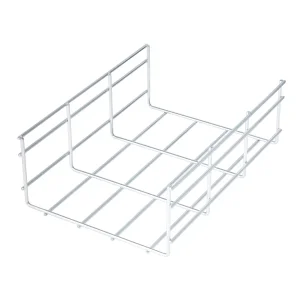
Wholesale Pre-Galvanized Grid Wire Mesh Cable Tray 200mm
View Specifications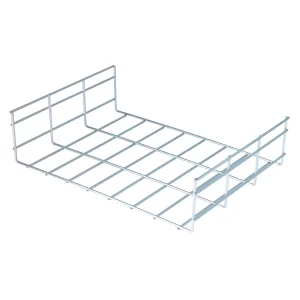
Wholesale Pre-Galvanized Grid Wire Mesh Cable Tray 500mm
View Specifications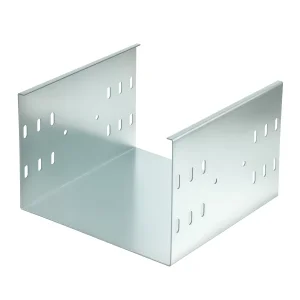
Wholesale QiongKai Pre-Galvanized Heavy Cable Trunking Systems
View Specifications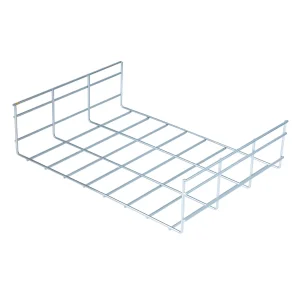
Buy Pre-Galvanized Grid Wire Mesh Cable Tray 400mm Profile
View Specifications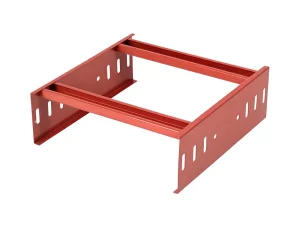
Pre-Galvanized Powder-Coated Cable Ladder (Fire Protection Red)
View Specifications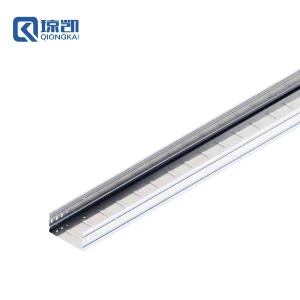
Heavy Duty Reinforced Molded Pre-Galvanized Trunking 200*100
View Specifications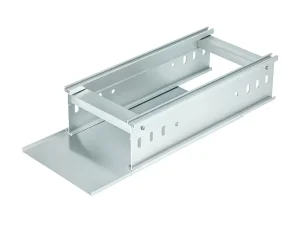
Pre-Galvanized Ladder Type Cable Tray GI & HDG Customizable
View Specifications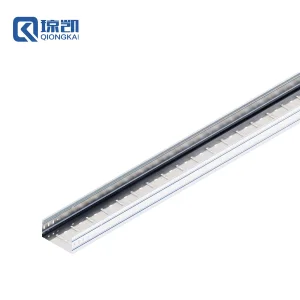
Cost Saving Heavy Duty Reinforced Molded Cable Tray 200*100
View SpecificationsFrequently Asked Engineering & Procurement Questions
Expert insights addressing structural calculations, regulatory standards, deflection thresholds, and logistics considerations for global infrastructure buyers.
What makes the Swift cable tray perforation pattern structurally distinct?
The Swift design integrates staggered transverse slots and longitudinal ribs across the bed of the tray. This geometry serves three structural objectives: first, it maintains cross-sectional steel integrity without unnecessary weight; second, it provides extensive flexibility for fastening cable ties (cleats) at any position; third, it enables the distinctive "fish-tail" overlapping coupler assembly, which eliminates mechanical misalignment and speeds up joint connection without compromising structural moment capacity.
How does Qiongkai verify load compliance according to BS EN 61537?
Every cable tray profile produced undergoes Safe Working Load (SWL) Type 1 or Type 2 destructive and non-destructive deflection testing according to BS EN 61537 (Cable management — Cable tray systems and cable ladder systems). Trays are mounted on multi-span configurations (typically 1.5m, 2.0m, or 3.0m supports) and progressively loaded with distributed mass. The maximum allowable mid-span deflection is strictly capped at $L/100$ or $L/200$ (where $L$ is the span distance between support brackets), with zero permanent structural deformation or seam separation at 1.7× the safe design load.
Can Qiongkai supply complete dimensional equivalents to Legrand Swift MRF and HRF trays?
Yes. Qiongkai manufactures exact dimensional and functional equivalents to Swift Light Duty (SRF), Medium Duty (MRF), Heavy Duty (HRF), and Extra Heavy Duty (XRF) profiles. Our automated rolling tooling matches identical side flange heights (50mm, 75mm, 100mm, 150mm), sheet thicknesses (1.0mm through 2.5mm), and universal accessory interfaces. This allows seamless field inter-connectivity with existing installations, expansion phases, or specified architectural BOQs without voiding engineering approvals.
How should an engineer choose between Hot-Dip Galvanized (HDG) and Stainless Steel 316L?
The decision relies on the chemical exposure profile and anticipated design lifecycle. Hot-dip galvanized steel (BS EN ISO 1461, min 65µm zinc) provides sacrificial cathodic protection and is the most economical solution for outdoor substations, highways, and heavy industrial facilities within ISO 12944-2 C3 and C4 corrosion zones. However, in C5 and CX coastal or offshore environments where airborne chlorides or sulfur dioxide exceed 300 mg/m²/day, the zinc layer depletes rapidly. Stainless Steel 316L (with 2.0–3.0% molybdenum) forms a self-healing passive chromium-oxide layer that resists chloride pitting, making it essential for offshore platforms, LNG gas trains, and pharmaceutical cleanrooms.
What packaging and containerization measures protect trays during ocean freight?
Export orders departing Shanghai port undergo specialized heavy-duty containerization. Trays are nested tightly to optimize volumetric density, separated by corrugated or micro-foam moisture-barrier sheets to prevent transit abrasion and zinc 'white rust' oxidation. Bundles are bound with heavy-duty tensioned steel strapping, protected with reinforced galvanized steel corner protectors, and set upon heat-treated ISPM-15 compliant timber or tubular steel skids for rapid container unloading via telehandler or forklift.
Ready to Optimize Your Infrastructure Containment Package?
Direct manufacturer collaboration guarantees verified structural certification, reduced procurement lead times, and tailored engineering support from project takeoff to on-site commissioning.
1. Send Your BOQ / Drawings
Our engineering team analyzes spans, cable weights, and finish requirements to deliver an optimized structural proposal.
2. Custom Tooling & Profiling
Non-standard widths, custom side rail heights, and specific hole matrices are roll-formed in our ISO-certified facilities.
3. Factory Direct Delivery
High-density containerization shipped directly from Shanghai export terminals to ports across Europe, the Middle East, and the Americas.