
Core Engineered Cable Tray Systems
Explore high-capacity perforated, wire mesh, trunking, and ladder assemblies manufactured with automated roll-forming and premium pre-galvanized or electrostatic powder-coated finishes.
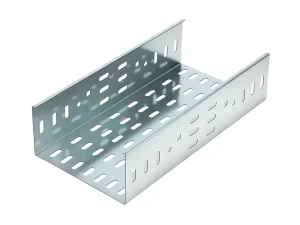
Buy Pre Galvanized Cable Tray With Customizable Parameters Manufacturer, Price
Request Quotation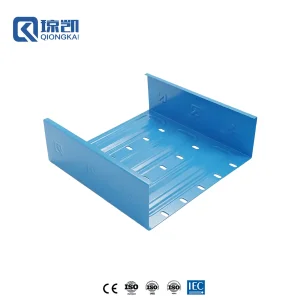
Wholesale Powder Coated Carbon Steel Cost Saving Heavy Duty Reinforced Molded Pre Galvanized Cable Tray with less perforation - RAL5015 Blue 300*100 Suppliers, Factories
Request Quotation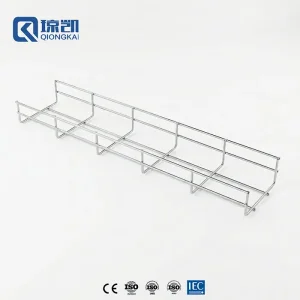
Buy Stainless Steel SS 304 316 Basket Wire Mesh Grid Cable Tray 100*50 Manufacturer, Manufacturers
Request Quotation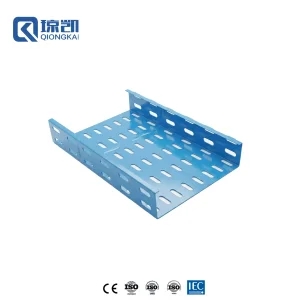
Wholesale Powder Coated Carbon Steel Pre Galvanized PG Cable Tray with Reinforce Ribs - RAL5015 Blue 200*50 Manufacturers, Factories
Request Quotation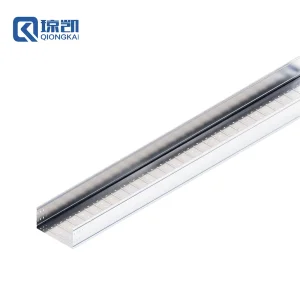
Buy Cost Saving Heavy Duty Reinforced Molded Pre Galvanized Cable Tray 400*200 Manufacturers, Factory
Request Quotation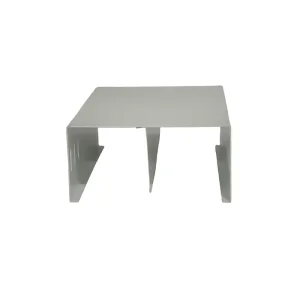
Buy Split Cable Trunking With partition in between Supplier, Factories
Request Quotation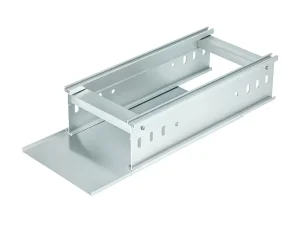
Buy Pre Galvanized ladder type cable tray Gi and HDG customizable reinforcing Manufacturers, Suppliers
Request Quotation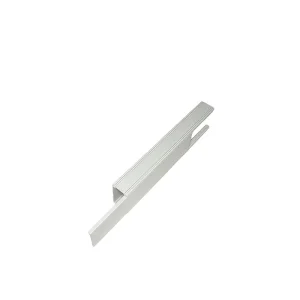
Wholesale UPVC Cable Trunking Thermal Insulated Anti-corrosion Resistance_ Manufacturers, Price
Request QuotationPowder Coated Cable Trays: Engineering Chemistry & Selection
An authoritative analysis of electrostatic thermoset coatings, polymer crosslinking mechanisms, corrosion barriers, and total cost of ownership (TCO) benchmarks for modern electrical EPC projects.
Polymer Chemistry & Barrier Defense
Powder coating applies a solventless, dry thermoplastic or thermosetting polymer electrostatically, cured under convective thermal ramps (180°C–200°C). Unlike conventional solvent paints that release volatile organic compounds (VOCs) and leave micro-pinholes during solvent evaporation, thermoset powder creates a non-porous, crosslinked molecular envelope over cold-rolled steel (SPCC) or pre-galvanized substrates (Q235B).
- Polyester TGIC / Primid for exceptional UV outdoor stability
- Epoxy powder formulations for aggressive chemical resistance
- Epoxy-polyester hybrid for optimized commercial economics
Corrosion Passivation Matrix
When specified over a zinc substrate (Pre-Galvanized PG base or Hot-Dip Galvanized HDG base), electrostatic powder coating yields a synergistic "Duplex System". Zinc provides sacrificial cathodic protection against galvanic oxidation, while the polymerized topcoat acts as a durable dielectric barrier that shields the metallic lattice from chlorides, sulfur dioxide, acid mist, and mechanical abrasive wear.
- ASTM B117 Neutral Salt Spray rating exceeding 1,000–1,500 hours
- ASTM D3359 Cross-Hatch Adhesion classification Grade 4B–5B
- Impact resistance exceeding 50 kg·cm without micro-cracking
System Identification & Esthetic Value
Modern mega-scale facilities, particularly hyperscale data center white spaces and high-density industrial halls, require deterministic routing identification. Powder coating enables standard RAL color coding (such as RAL 5015 Sky Blue, RAL 7035 Light Grey, RAL 9005 Jet Black, RAL 3000 Flame Red, and RAL 1021 Colza Yellow) without sacrificing structural rigidity.
- Dedicated color channels for LV Power, HV Feeders, Telecom & Fiber
- Visual validation during MEP audits and emergency interventions
- Smooth edge finish reduces jacket drag during rapid cable pulls
Procurement Search Intent Intelligence: Beyond Lowest Initial Unit Cost
In modern industrial MEP tenders, searching for "Buy Powder Coated Cable Trays Supplier & Price" indicates a technical buyer balancing lifecycle CAPEX with stringent project aesthetics, environmental classifications (C1 through C4 per ISO 12944), and cable jacket sheath preservation. Powder coated steel trays provide a 25%–40% cost reduction compared to 304 stainless steel while offering superior color discipline and interior architectural cohesion compared to standard zinc spangle hot-dip galvanized trays.
Engineering Performance Benchmark Matrix
Compare mechanical, chemical, and cost profiles across primary cable management surface treatments to make informed engineering specifications.
| Finish / Material System | Coating Thickness (µm) | Corrosion Tier (ISO 12944) | ASTM B117 Salt Spray | Dielectric Insulation | Relative Cost Factor | Primary Target Environment |
|---|---|---|---|---|---|---|
| Pre-Galvanized (PG) Plain | 12 – 20 µm (Zinc) | C1 – C2 (Low) | 72 – 120 Hours | Conductive | 1.0x (Baseline) | Standard indoor commercial plenums, dry HVAC risers |
| Powder Coated over Carbon Steel | 60 – 100 µm (Polymer) | C2 – C3 (Medium) | 500 – 800 Hours | Dielectric Insulator | 1.18x – 1.28x | Data halls, cleanrooms, architecturally exposed MEP |
| Powder Coated over PG (Duplex) | 15 µm Zn + 70 µm Resin | C3 – C4 (High) | 1,000 – 1,500 Hours | High Dielectric Barrier | 1.30x – 1.45x | High-humidity manufacturing, coastal indoor hubs, pharma |
| Hot-Dip Galvanized (HDG) | 65 – 85 µm (Zinc-Iron) | C3 – C4 (High) | 1,000 – 2,000 Hours | Conductive | 1.40x – 1.60x | Outdoor substations, petrochemical racks, industrial roofs |
| Stainless Steel (SS304 / SS316) | N/A (Passivated Alloy) | C4 – C5 (Severe Marine) | 3,000+ Hours | Conductive | 3.20x – 4.80x | Offshore platforms, caustic chemical washdown, marine |
| Glass Fiber Reinforced Polymer (FRP) | Solid Composite Matrix | C5-M (Severe Chemical) | 5,000+ Hours | Full Non-Conductive | 2.50x – 3.60x | Acid pickling plants, fertilizer processing, battery facilities |
Substrate Pre-Treatment: 7-Stage Immersion Standard
A flawless powder coating depends on base metal cleanliness. At Shanghai Qiongkai, cold-rolled and pre-galvanized profiles undergo an automated 7-stage chemical pre-treatment cycle before powder deposition. This sequence includes ultrasonic alkaline degreasing, twin DI water rinses, acid pickling/surface activation, nano-ceramic or micro-crystalline zinc-phosphating, passivation seal, and high-velocity dehydrating drying at 120°C. This chemical bridge ensures inter-coat mechanical bonding that prevents flaking during jobsite cutting, field punching, or high seismic vibrations.
Electrical Continuity & Bonding Considerations
Because cured thermoset powder possesses high dielectric resistivity (>10¹⁴ Ω·cm), electrical bonding requires careful engineering attention. While non-conductive cable contact surfaces prevent micro-abrasion of power sheath insulation, NEC Article 392 and IEC 61537 dictate continuous ground return paths. Qiongkai designs its powder-coated tray series with pre-masked bonding zones, serrated star-washer grounding bolts, and specialized copper-braided earth jumpers to ensure path-to-ground resistance remains below 0.005 Ω across every splice joint.
Pricing Drivers: How Powder Coated Tray Prices are Built
An engineering cost model explaining factory pricing per linear meter, material formulas, and bulk procurement advantages for global EPC contractors.
1. Base Steel Strip Index (60%–70%)
Cable tray pricing is fundamentally indexed to cold-rolled commercial steel (SPCC) or continuously hot-dipped zinc-coated coil (DX51D+Z / SGCC) commodity rates. Pricing fluctuates with global metallurgical indices. Sheet thicknesses typically range from 1.0 mm (light duty data cabling) to 1.2 mm, 1.5 mm, and 2.0 mm (heavy-duty industrial rungs and side rails). Molded reinforcing ribs engineered along the bottom and sidewalls allow Qiongkai trays to achieve equivalent deflection load ratings with up to 15% lower metal weight.
2. Polymer Resin & Curing Cost (12%–18%)
Powder coating material cost is calculated by surface area coverage (m²) multiplied by dry film thickness (DFT: typically 60–90 µm) and specific powder gravity (1.2–1.7 g/cm³ depending on pigment volume concentration). Standard TGIC polyester or epoxy-polyester hybrid resins represent an economical, high-coverage option ($2.80–$3.80/kg of virgin powder), while specialized architectural fluoropolymer powders (PVDF) or anti-static electrostatic dissipative (ESD) powders command higher premiums.
3. Processing, Logistics & Packing (15%–22%)
Automated continuous roll forming lines minimize labor hours per metric ton compared to manual press-brake forming. Electrostatic spraying in an automated recirculating booth ensures powder utilization rates up to 96%. Furthermore, our factory packs straight tray sections with nested stacking geometries, separated by polyethylene scratch-resistant films, corrugated protective corners, and fumigated timber crates—maximizing sea container cube utilization.
| Nominal Tray Size (W × H × L) | Wall Gauge (mm) | Base Substrate | Powder System | Est. Weight / Meter | Indicative FOB Price / Meter (USD)* |
|---|---|---|---|---|---|
| 100 mm × 50 mm × 2000 mm | 1.0 mm | Pre-Galvanized (PG) | Polyester Hybrid 60–80 µm | ~1.65 kg/m | $3.20 – $4.10 / m |
| 200 mm × 50 mm × 3000 mm | 1.2 mm | Pre-Galvanized (PG) | Polyester RAL 5015 70–90 µm | ~2.85 kg/m | $5.40 – $6.80 / m |
| 300 mm × 100 mm × 3000 mm | 1.5 mm | Reinforced Cold-Rolled | Pure Polyester Exterior Grade | ~5.40 kg/m | $9.80 – $12.30 / m |
| 400 mm × 100 mm × 3000 mm | 1.5 mm | High-Strength Q235B | Epoxy-Polyester Heavy Duty | ~6.80 kg/m | $12.50 – $15.80 / m |
| 600 mm × 150 mm × 3000 mm | 2.0 mm | Pre-Galvanized + Ribbed | Duplex C4 Polyester 90 µm | ~12.20 kg/m | $22.00 – $27.50 / m |
*Prices are indicative engineering FOB baseline estimates based on prevailing hot-rolled steel prices. Final contract unit pricing depends on project order tonnage, hole punch layout, custom RAL requirements, and hardware kit integration.
Field Applications: Where Powder Coated Trays Excel
From dense server white spaces to harsh coastal transport corridors, custom-finished cable trays deliver reliable physical and operational performance.
Hyperscale Cloud & AI Data Centers
Modern data centers demand exceptional dust-free environments to protect optical transceivers from conductive airborne particles (such as zinc whiskers that can detach from electro-galvanized components). Powder-coated cable runways, perforated trays, and wire mesh systems eliminate zinc whisker shedding completely. Overhead white space tray color coding simplifies complex multi-tenant structured cabling pathways.
Pharmaceutical & Semiconductor Cleanrooms
ISO Class 4 through Class 8 cleanrooms require smooth, cleanable, and non-shedding surfaces that resist regular washdowns with hydrogen peroxide, isopropanol, or quaternary sanitizers. Qiongkai's high-gloss white (RAL 9010/9016) antimicrobial powder coatings eliminate crevices where particulate or biological matter can accumulate, satisfying stringent FDA and GMP facility hygiene requirements.
Metro Rail & International Airport Transit
Underground passenger tunnels and high-traffic airport terminals present complex fire life safety constraints. Qiongkai powder-coated split trunking and cable channels utilize low-smoke, zero-halogen (LSZH) thermoset powders. Even under electrical arc fault conditions or exposure to high temperatures, our coating system does not emit corrosive acid gases (halogen halides), protecting public safety and delicate control avionics.
Food Processing & Industrial Kitchens
Food manufacturing spaces operate under alternating high humidity and aggressive alkaline clean-in-place (CIP) spray-downs. Duplex-coated (pre-galvanized steel sealed with food-grade epoxy powder) cable trays prevent zinc salts from leaching into production lines while offering superior thermal cycling resilience up to 120°C in cooking and baking facility perimeters.
Commercial Hubs & Exposed Architectural Plenums
Contemporary commercial architecture frequently features open-ceiling mechanical designs. Standard dull galvanized metal can look unfinished in exposed retail, corporate headquarters, and exhibition centers. Powder-coated cable tray profiles in matte black, anthracite grey, or custom branding colors blend seamlessly into interior finishes while maintaining heavy-duty electrical cable support capacity.
Shanghai Qiongkai: Factory Resilience & Global Capacity
Headquartered in the Songjiang High-Tech corridor, Shanghai Qiongkai Industry Co., Ltd. combines advanced roll forming automation with deep port logistics access to support global EPC deliverables.
Integrated 3-Plant Scale
Our three production facilities span over 30,000 square meters of modern manufacturing floor space. Housing 12 automated production lines and more than 60 heavy-duty hydraulic stamping, CNC turret punching, and precision cold-roll-forming machines, we deliver over 2,500 metric tons of cable management systems each month.
Automated Electrostatic Line
Our closed-loop coating workshop features Swiss Gema automatic electrostatic reciprocating spray guns and a 120-meter overhead power-and-free conveyor system. Continuous optical sensors adjust powder gun stroke and current in real time, guaranteeing uniform 60–120 µm film deposition without edge beading or pinholing.
Port Logistics Proximity
Located just 45 kilometers from Shanghai Waigaoqiao Container Terminal and within rapid transit to Yangshan Deep-Water Port, our logistics operations move freight efficiently. We load export containers directly from our factory doors, securing prompt dispatch, competitive ocean freight rates, and on-time global jobsite delivery.
Technology Roadmap: The Future of Cable Containment
How materials science, digital engineering, and circular manufacturing are transforming powder-coated cable tray design.
Graphene-Enhanced Polymers
Integrating functionalized graphene nanoplatelets into thermoset polyester resins increases surface hardness to 4H pencil rating while imparting tunable electrical anti-static conductivity (10⁶–10⁹ Ω/sq), eliminating grounding bridges without sacrificing corrosion protection.
AI-Guided Profile Optimization
Finite element analysis (FEA) and machine learning mold-flow modeling help design reinforcing stiffener ribs along the tray base. This yields up to a 28% increase in safe working load (SWL) over 3.0-meter spans while reducing raw steel consumption and overall product carbon footprints.
BIM & Digital Twin Integration
Every standard and custom powder-coated component is modeled with full Autodesk Revit MEP BIM families (LOD 400). Accurate geometrical dimensions, hole centers, fitting radius profiles, and load capabilities streamline clash detection within digital construction twins.
Zero-VOC Powder Reclamation
In accordance with ISO 14001, our production lines utilize cyclone multi-stage powder recovery systems operating at 98% efficiency. Reclaimed overspray is automatically filtered and reintroduced into the production cycle, ensuring zero VOC release and minimal process waste.
International Quality Standards & EPC Support
Our manufacturing and quality assurance frameworks align with rigorous global electrical codes, backed by specialized engineering documentation.
IEC 61537 / NEMA VE 1 Compliance
Our cable trays, strut channels, and accessories undergo rigorous third-party load deflection testing in compliance with IEC 61537 and NEMA VE 1 / VE 2 guidelines. Trays undergo full-span load validation at 1.5x safe working load safety factors without weld detachment, joint yielding, or structural failure.
FAT, Mill Test Certificates & Inspection
Every commercial export order includes comprehensive documentation: EN 10204 3.1 Mill Test Certificates for raw steel chemistry, ultrasonic DFT coating thickness reports, cross-hatch adhesion test logs, and comprehensive pre-shipment photographic Factory Acceptance Test (FAT) records.
Global Field Engineering Support
We assign a dedicated MEP application engineer to every international account. From initial bill of quantities (BOQ) take-offs and span load calculations to customized bracketry designs for seismic zones (ASCE 7-22), we ensure your system arrives complete and jobsite-ready.
Frequently Asked Engineering Questions
Detailed technical answers to common queries raised by procurement directors, consulting engineers, and jobsite MEP installation teams.
What are the key technical advantages of powder-coated cable trays over hot-dip galvanized (HDG) trays?
While Hot-Dip Galvanizing (HDG) provides exceptional outdoor corrosion resistance via thick zinc coatings (65–85 µm), it features a rough surface texture with occasional zinc teardrops and sharp burrs that can snag and damage delicate polymer cable jackets during pulling operations. Furthermore, HDG steel in indoor cleanroom or data center environments can develop "zinc whiskers"—microscopic conductive zinc filaments that can detach, circulate in cooling airflows, and cause electrical short circuits on IT circuit boards. Powder-coated cable trays deliver an ultra-smooth, uniform finish (60–100 µm) with zero risk of zinc whisker formation, complete electrical cable jacket protection, and precise RAL color coding for simple sub-system identification.
How is electrical grounding and bonding continuity maintained across powder-coated tray joints?
Because cured electrostatic thermoset powders (epoxy, polyester) are electrical insulators with high dielectric resistance, continuous electrical grounding across tray splices requires thoughtful connection details. Per IEC 61537 and NEC Article 392, electrical continuity is established by using: (1) Pre-masked unpainted contact surfaces at joint bolt holes; (2) Serrated flange head bolts and star lock washers that bite through the powder film to contact the base metal; or (3) External flexible tinned copper grounding bonding jumpers (typically 16 mm² to 35 mm²) bridging each splice plate. Using these standard methods, path-to-ground resistance across each connection easily remains below 0.005 Ω.
Can powder-coated cable trays be deployed outdoors, and what resin formulation is recommended?
Yes, provided the proper polymer chemistry and substrate pre-treatment are specified. For outdoor installations, pure epoxy powders must be avoided because solar ultraviolet (UV) radiation rapidly degrades the epoxy matrix, causing surface chalking and loss of barrier protection. The proper specification for outdoor exposure is a pure polyester (TGIC or Primid) or fluoropolymer (PVDF) powder applied over a hot-dip galvanized or pre-galvanized steel base (creating a Duplex System). This duplex synergy provides cathodic protection from the zinc layer alongside the UV and chemical resistance of the polymer shell, easily delivering 15 to 25 years of service life in outdoor C3/C4 environments.
How does Shanghai Qiongkai handle jobsite cuts and field modifications without compromising rust resistance?
During field installation, cutting, drilling, or notching can expose raw carbon steel edges to atmospheric moisture. Qiongkai supplies color-matched air-drying acrylic polyurethane or cold-zinc rich aerosol touch-up kits alongside every major project order. Field procedures require: (1) Deburring all raw cut edges with a fine metal file; (2) Cleaning the edge with an alcohol solvent wipe; (3) Applying a rich zinc primer layer; and (4) Applying two coats of the color-matched touch-up paint over the repaired edge. Additionally, we provide custom factory-formed bends, tees, reducers, and pre-punched connector brackets, minimizing the need for manual on-site cutting.
What parameters most significantly influence FOB unit pricing per linear meter?
Five core parameters determine cable tray unit pricing: (1) Metal Sheet Thickness: Steel strip thickness (typically 1.0 mm to 2.0 mm) represents 60–70% of material cost; (2) Tray Profile Geometry: Solid bottom, perforated trough, or ladder configurations alter tooling setup and punching scrap ratios; (3) Base Substrate: Cold-rolled steel (SPCC) versus continuous hot-dip galvanized strip (DX51D+Z) creates a baseline substrate differential; (4) Powder Chemistry: Standard hybrid epoxy-polyesters cost less than exterior UV-rated pure polyesters or specialized anti-static electrostatic dissipative (ESD) powders; and (5) Total Order Volume & Container Packing Efficiency: Full Container Load (FCL) orders benefit from automated high-speed roll-forming setups and optimized nested container packing.
What quality inspection and testing reports are supplied with each export shipment?
Each export container leaves Shanghai Qiongkai accompanied by an exhaustive Quality Inspection Dossier. This includes: (1) Raw Material Mill Test Certificates (MTC 3.1) showing yield strength, tensile elongation, and chemical analysis; (2) Dry Film Thickness (DFT) calibration test logs measured across flange, sidewall, and tray bottom; (3) ASTM D3359 cross-hatch tape adhesion reports; (4) Impact resistance test certification; (5) Dimensional tolerance inspection certificates; and (6) Photographic Factory Acceptance Test (FAT) records documenting finished pallet packaging, corner protection, and container loading security.
Specialized Modular & Structural Accessories
Complete your cable management run with wire mesh systems, precision slotting channels, FRP composite troughs, and modular factory fittings.
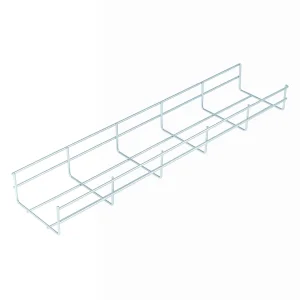
Wholesale Pre Galvanized grid Cable tray100mm50mm Suppliers, Factory
Request Quotation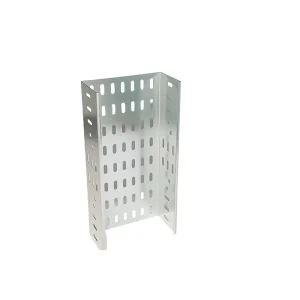
Wholesale Slotting Pattern Customizable Pre Galvanized Cable Trays Manufacturer, Factory
Request Quotation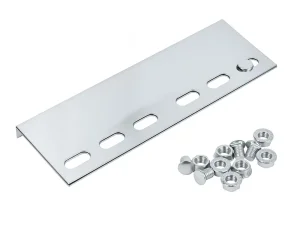
Wholesale Pre-Galvanized Cable Tray Connections spare parts Supplier, Price
Request Quotation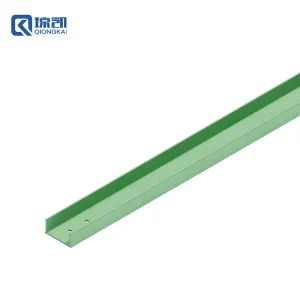
Wholesale FRP Cable Trunking Trough Type Channel 100*50 Manufacturer, Factories
Request Quotation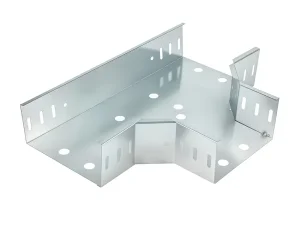
Buy Pre Galvanized TEE for cable tray Manufacturers, Price
Request Quotation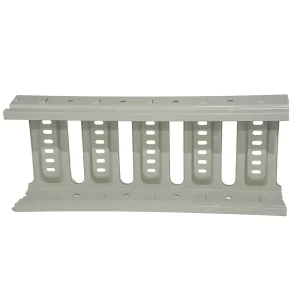
Wholesale Powder Coated Perforated Ladder Type Cable Tray Customizable Factory, Factories
Request Quotation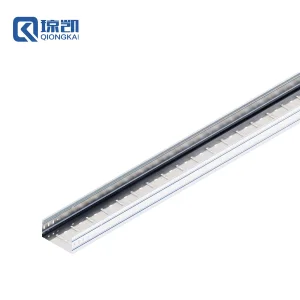
Wholesale Cost Saving Heavy Duty Reinforced Molded Pre Galvanized Cable Tray 200*100 Supplier, Price
Request Quotation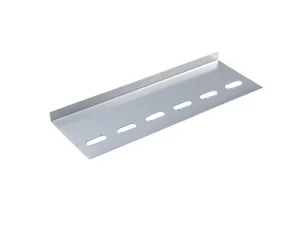
Wholesale Pre-Galvanized Connections spare parts Manufacturers, Factory
Request QuotationReady to Request a Detailed BOQ Quotation?
Connect directly with Shanghai Qiongkai's export engineering department. Send your single-line diagrams, routing specifications, or project bill of quantities (BOQ) to receive a full structural quotation, loading analysis, and certified finish proposal within 24 business hours.