Precision-Engineered Electrical Raceway & Strut Systems
Review our high-demand standard profiles manufactured in accordance with IEC 61537, NEMA VE 1, and UL guidelines. Directly request unit quotes, weight-per-meter specifications, and batch pricing matrices.
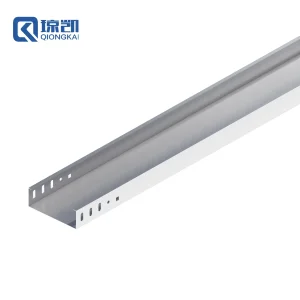
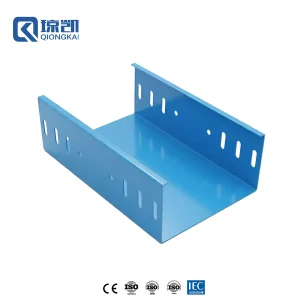
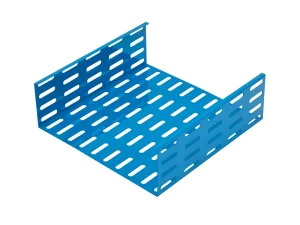
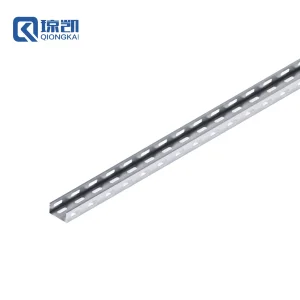
How Direct Factory Prices of Electrical Cable Supports Are Calculated
Understanding the pricing structure of industrial cable containment systems requires examining the raw mill material index, surface conversion chemistry, roll-forming mechanical overhead, and automated perforation cycles. For international EPC contractors and mechanical-electrical consultants, looking past the upfront invoice sticker price toward the lifecycle landed cost determines project margins.
Raw Coil Metallurgical Grade
Raw material constitutes 55% to 72% of total ex-factory pricing. Hot-rolled carbon steel (Q235B / SS400) provides economical structural rigidity. Upgrading to Austenitic Stainless Steel (AISI 304 or 316L) increases the raw baseline 3.2× to 4.8×, but provides passive chromium oxide films vital for chloride survival.
- Baosteel / Shagang Tier-1 hot-rolled coils
- Verified mill test certificates (MTC EN 10204 3.1)
- Strictly controlled silicon contents for zinc absorption
Zinc Immersion & Finishing
Galvanizing cost correlates with zinc ingot prices on the London Metal Exchange (LME) and process dwell times. Pre-galvanized (PG) strip sheet (Z120–Z275 g/m²) is cost-effective for indoor work, while post-fabrication Hot-Dip Galvanizing (HDG) per ASTM A123/ISO 1461 demands 65–85 μm minimum coating thickness for decades of outdoor durability.
- Zinc bath temperature held at steady 450°C
- Intermetallic gamma, delta, and zeta alloy layers
- Zero pinholing, flaking, or zinc slag residues
Tooling & Cold Roll-Forming
Modern roll-forming line automation slashes manual labor from the cost equation. Continuous automated multi-station roll-forming lines bend tray sidewalls and return flanges without inducing micro-fractures in the base steel, reducing unit manufacturing margins while improving deflection stiffness by up to 26%.
- Precision CNC high-speed punching presses
- Continuous longitudinal rib stiffening profiles
- Automated inline flying cutoff tracking systems
| Material / Treatment System | Relative Cost Baseline | Target Coating / Alloy Purity | Deflection Load Safety | Recommended Service Life |
|---|---|---|---|---|
| Pre-Galvanized (PG) Carbon Steel | 1.00x (Baseline) | Z120 – Z275 g/m² (Double-Sided) | NEMA 8C / IEC Class C | 15–20 Years (Controlled Indoor) |
| Hot-Dip Galvanized After Fabrication (HDG) | 1.28x – 1.45x | ≥ 65–85 μm (ASTM A123 / ISO 1461) | NEMA 12C / 16C / 20B | 35–50+ Years (Outdoor / Industrial) |
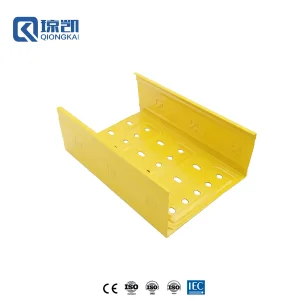
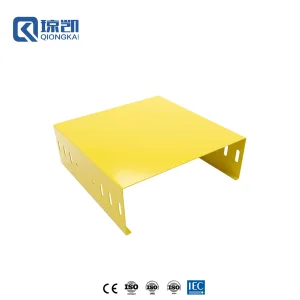
| Architectural Polyester Powder Coated (over PG/CR) | 1.18x – 1.35x | 60–90 μm Electrostatic Curing | NEMA 8A / 8B / 12A | 20–25 Years (Color-Coded Infrastructure) |
| Stainless Steel AISI 304 / 304L | 3.10x – 3.40x | 18% Cr / 8% Ni Austenitic Matrix | NEMA 20A / 20B / 20C | 50+ Years (Washdown / Food Processing) |
| Marine Stainless Steel AISI 316 / 316L | 4.10x – 4.60x | 16% Cr / 10% Ni / 2.0% Mo (PREN ≥ 23) | NEMA 20C / Extreme Heavy Duty | 60+ Years (Offshore LNG / Coastal) |
| Pultruded FRP / GRP (Vinyl Ester Resin) | 2.20x – 2.80x | Glass Content ≥ 55% / Class 1 Flame Spread | NEMA 20C / High Elastic Recovery | 40+ Years (Acid Tank Farms / Corrosive Gas) |
Localized Application Environments & Structural Demands
Raceway systems are structural foundations for power transmission and mission-critical data backbones. Cable support designs must reflect environmental nuances—from chloride-dense ocean air in the Arabian Gulf to sub-zero industrial applications in Northern Europe.
Hyperscale AI & Colocation Data Centers
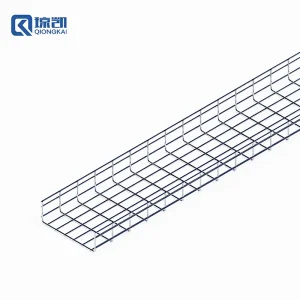
Modern server farms require high-density copper and fiber cable routing across white space ceilings. Electro-galvanized or powder-coated wire mesh basket trays prevent hot-spot air trapping and mitigate zinc whiskers—microscopic zinc filaments that can cause catastrophic motherboard short-circuits.
- 50×100 mm mesh matrix eliminates cable droop
- Toolless snap-in fast-couplers cut labor by 40%
- Non-zinc whisker finishes protect server hardware
Offshore Marine, LNG & Desalination
Coastal and marine projects operate in ISO 12944 C5-M or CX atmospheric corrosivity categories. For offshore LNG operations in Qatar and chemical plants along Southeast Asian coastlines, stainless steel 316L and fire-retardant vinyl ester FRP cable systems prevent salt mist pitting and galvanic degradation.
- PREN ≥ 23 to resist localized pitting and crevice corrosion
- Non-metallic FRP profiles provide zero-sparking intrinsic safety
- Temperature resilient across -40°C to +120°C cycling
Metro Rail, Aviation & Subsea Tunnels
Public transit demands halogen-free raceways and proven seismic stability. Having supplied the CT series trunking to Shanghai Hongqiao International Airport and European high-speed rail lines, our seismic brackets and heavy-duty return-flange trays absorb train vibration while sustaining circuit integrity under emergency fire conditions.
- Conforms to DIN 4102-12 E30/E90 fire integrity standards
- Anti-vibration serrated channels lock channel nuts
- Zero halogen and low-smoke resin selections
China Factory Supply Chain Resilience & Cost Efficiency
Operating from the Songjiang Port Science and Technology industrial corridor in Shanghai since 2005, Shanghai Qiongkai Industry Co., Ltd. uses China's integrated steel supply chain to deliver reliable, high-volume production for international construction projects.
Unlike regional trading middlemen who assemble piecemeal components from disparate workshops, Qiongkai consolidates slitting, stamping, multi-stage cold roll-forming, hot-dip galvanizing baths, and automated electrostatic powder coating lines under one ISO 9001-certified manufacturing system.
Our immediate physical proximity to Yangshan Deepwater Container Port and Waigaoqiao Port cuts inland haulage fees, prevents transit corrosion from prolonged yard dwell times, and enables direct container stuffing with custom wooden crates and steel skids.
Shanghai Manufacturing Advantages
Direct rail and waterway delivery of primary steel coils directly from Yangtze River Delta mills guarantees stable raw material supply, even during global market disruptions.
Technology Roadmap: The Next Generation of Cable Support Systems
Electrical raceways are evolving from simple static sheet metal channels into engineered, lightweight structural systems modeled in digital BIM environments and verified for complex dynamic loads.
LOD 400 BIM Integration
Revit-native parametric 3D families of every tray, reducer, elbow, and strut bracket. Precise collision-avoidance clash detection avoids costly jobsite cutting and re-welding in MEP corridors.
High-Strength Lightweight Alloys
Transitioning to micro-alloyed High-Strength Low-Alloy (HSLA) structural steels reduces raw material weight by up to 22% while matching standard yield points (≥ 355 MPa) and span load criteria.
Eco-Friendly Passivation
Zero-trivalent chromium and closed-loop water treatment in our galvanizing processes lower the carbon footprint per linear meter, satisfying Green Building LEED and BREEAM procurement standards.
Seismic Strut Engineering
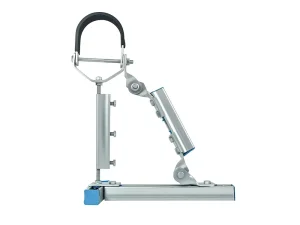
Rigorous dynamic shake-table testing of our 41×41 and 41×82 back-to-back strut profiles ensures raceway integrity under Zone 4 seismic activity without exceeding allowable deflection.
Verified Compliance: NEMA, IEC, UL & ISO Testing
Buying directly from a manufacturer requires full verification of structural integrity, electrical continuity, and coating thickness. Our in-house quality assurance laboratory subjects every production batch to rigorous testing protocols.
Structural Safe Working Load (SWL)
Load capacity testing per IEC 61537 Section 10.3 and NEMA VE 1. Trays undergo uniformly distributed mechanical loads over single and multi-span setups with a 1.5x structural safety factor. Mid-span deflections are recorded with digital dial gauges to ensure deflection remains under the L/200 limit.
ASTM B117 Neutral Salt Spray (NSS)
Accelerated corrosion tests track resistance to red rust formation. Our hot-dip galvanized and powder-coated samples exceed 1,000 to 3,000 hours of continuous salt fog exposure without blistering or coating degradation, ensuring reliable performance in harsh coastal and industrial environments.
Electrical Continuity & Bonding
Verifying earthing continuity across tray sections and mechanical splice couplers per IEC 61537 Section 10.1. Impedance must remain below 50 mΩ across joints, ensuring fault currents safely reach earth ground without creating dangerous arcing risks.
Heavy-Duty Reinforced & Color-Coded Raceway Systems
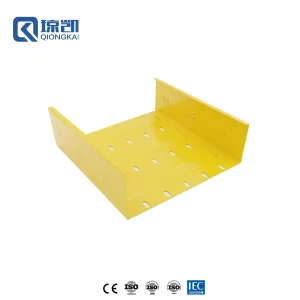
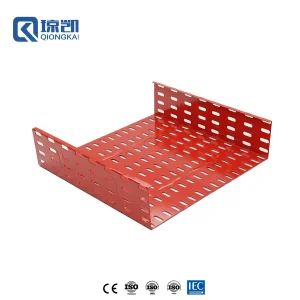
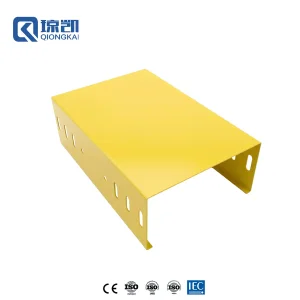
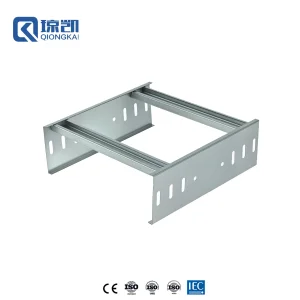
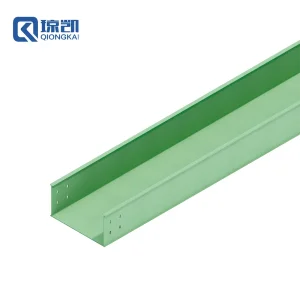
Engineered for demanding industrial installations, these products feature reinforced side rails, molded stiffening ribs, and custom RAL powder coatings. Compare specifications and request direct ex-factory pricing.