
Engineered Support Systems & Raceway Profiles
High-performance structural channels, conduits, and heavy-duty cable management solutions engineered for seamless integration across industrial and commercial facilities.
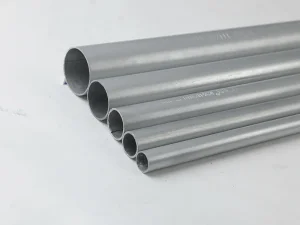
Buy DN20 DN25 conduit Supplier, Factories
Configure & Inquire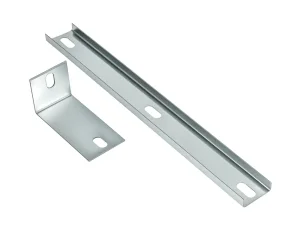
Wholesale Pre Galvanized L typed bracket and Bracket Manufacturer, Supplier
Configure & Inquire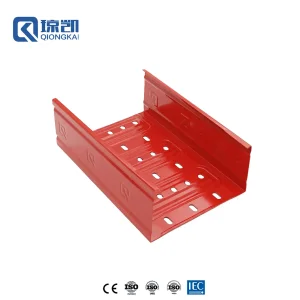
Buy Powder Coated Carbon Steel Cost Saving Heavy Duty Reinforced Molded Pre Galvanized Cable Tray - RAL3020 Red 200*100 Supplier, Factory
Configure & Inquire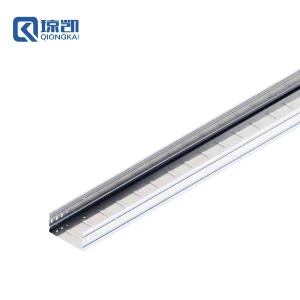
Wholesale Heavy Duty Cost Saving Reinforced Molded Pre Galvanized Cable Trunking Trough Type Channel 200*100 Manufacturer, Factory
Configure & Inquire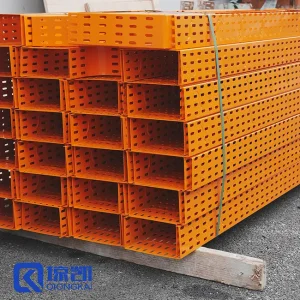
Wholesale Reinforced Medium duty Pre-galvanized Hot-dip-galvanized Powder Coated Perforated Cable Tray 200*100 - Orange Manufacturers, Factories
Configure & Inquire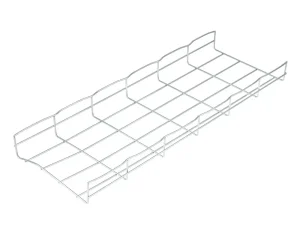
Wholesale Pre Galvanized grid and wire mesh type cable tray Manufacturers, Factories
Configure & Inquire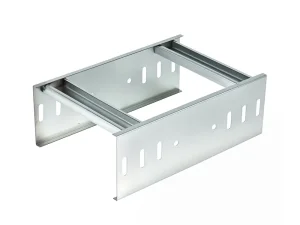
Buy 304 and 316 stainless steel ladder type cable tray customizable perforated design Manufacturer, Factory
Configure & Inquire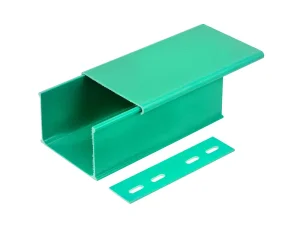
Wholesale FRP Cable Tray 100mm Manufacturers, Supplier
Configure & InquireGlobal Commercial Landscape & Industrial Demand Analysis
In contemporary industrial structural engineering, the specification of Stainless Steel Strut Channels (Unistrut-compatible metal framing) has transitioned from an occasional contingency for extreme environments to a baseline engineering mandate. Valued globally at over USD 3.8 billion across modern MEP (Mechanical, Electrical, and Plumbing) framing sectors and projected to surpass USD 5.7 billion by 2032, stainless steel metal framing systems represent the definitive standard for lifecycle reliability.
Global EPC contractors across North America, the European Union, the Middle East, and the Asia-Pacific region are actively phasing out conventional electro-galvanized and painted carbon steel supports in aggressive microclimates. The vulnerability of thin zinc coatings to micro-fissuring during site cutting, drilling, and mechanical vibration leads directly to catastrophic crevice corrosion and structural load failure. By procuring directly from dedicated stainless steel strut channel manufacturers and factories, tier-one project managers mitigate costly field rework, guarantee metallurgical batch traceability, and achieve compliance with international building mandates.
Shanghai Qiongkai Industry leverages two decades of cold-roll forming mastery, producing high-precision, slotted, solid, back-to-back, and seismic-rated channels. Our precision roll-forming tolerances adhere to MFMA-4 (Metal Framing Manufacturers Association) standards, ensuring exact slot pitch, inward lip curvature, and channel nut biting strength under continuous dynamic loads.
The 2026–2035 Industry Evolution & Mega-Trends
The continuous expansion of hyperscale artificial intelligence data campuses, semiconductor cleanrooms, offshore wind substations, and green hydrogen electrolyzer plants is radically reshaping procurement specifications:
Austenitic Stainless Steel Grades: SS304 vs. SS316 vs. SS316L
Selecting the proper alloy grade is critical to prevent intergranular stress corrosion cracking, pitting attack, and galvanic degradation in aggressive operational environments.
| Alloy Grade | UNS / EN Standard | Chemical Composition | PREN Rating | Yield Strength (Rp 0.2) | Optimal Project Application |
|---|---|---|---|---|---|
| AISI 304 | UNS S30400 / 1.4301 | 18.0-20.0% Cr, 8.0-10.5% Ni | ~18.0 - 20.0 | ≥ 205 MPa | Commercial indoor framing, data centers, cleanrooms, food processing plants. |
| AISI 316 | UNS S31600 / 1.4401 | 16.0-18.0% Cr, 10.0-14.0% Ni, 2.0-3.0% Mo | ~23.0 - 25.5 | ≥ 220 MPa | Chemical manufacturing, coastal infrastructure, wastewater management facilities. |
| AISI 316L | UNS S31603 / 1.4404 | Low Carbon (≤0.03%), 16-18% Cr, 10-14% Ni, 2-3% Mo | ~23.5 - 26.0 | ≥ 220 MPa | Marine platforms, offshore LNG processing, welding-intensive structural seismic skids. |
| Super Duplex 2507 | UNS S32750 / 1.4410 | 25% Cr, 7% Ni, 4% Mo, 0.28% N | ≥ 42.0 | ≥ 550 MPa | Subsea conduits, extreme sour gas (H2S) platforms, high-saline splash zones. |
Pitting Resistance Equivalent Number (PREN)
The metallurgical defense against localized chloride attack is mathematically modeled by PREN:
PREN = %Cr + 3.3(%Mo) + 16(%N)
In coastal regions where airborne marine sodium chloride concentrations exceed 15 mg/m²/day, materials with PREN values below 22 (such as Grade 304) experience brown tea-staining, which quickly degenerates into deep pitting crevices. For installations within 5 kilometers of coastlines or splash zones, our manufacturing facility strictly mandates AISI 316 or 316L with an independently verified PREN of ≥ 24.
Passivation & Surface Metallurgy
Cold roll forming alters the austenitic grain boundary structure, introducing micro-strains and embedded free iron particles from forming rollers. To guarantee genuine chemical passivity, Shanghai Qiongkai subjects every production run of stainless strut channels to fully automated nitric or citric acid chemical pickling and passivation in compliance with ASTM A967 / ASTM A380.
This process dissolves exogenous free iron and generates an enriched, self-healing Chromium Oxide (Cr₂O₃) surface layer measuring 2 to 3 nanometers in thickness, ensuring immediate re-passivation even when exposed to acidic environmental condensation.
Standard 41mm Strut Profiles & Beam Load Dynamics
Engineered to MFMA-4 dimensional standards, our roll-formed channel profiles integrate inwardly curved retaining lips with precision serrations that lock channel nuts rigidly in place.
41 × 21 mm (1-5/8" × 13/16")
Wall Thickness: 1.5mm, 2.0mm, 2.5mm (12 to 16 Gauge)
Moment of Inertia (Ix): ~0.84 cm⁴
Primary Function: Low-clearance wall framing, instrument tubing arrays, shallow ceiling runs, and light-duty secondary raceway supports.
41 × 41 mm (1-5/8" × 1-5/8")
Wall Thickness: 1.5mm, 2.0mm, 2.5mm, 2.7mm (12 to 14 Gauge)
Moment of Inertia (Ix): ~4.12 cm⁴
Primary Function: The global standard for MEP trapeze hangers, heavy industrial pipe clamping, and primary cable ladder support.
41 × 82 mm (1-5/8" × 3-1/4")
Wall Thickness: Dual-welded or continuous stamped profiles
Moment of Inertia (Ix): ~20.5 cm⁴
Primary Function: High-moment cantilever arms, long spans up to 6 meters, heavy mechanical risers, and seismic bracing hubs.
| Span Length (mm) | 41×41 (2.5mm / 12Ga) Uniform Load (kN) | 41×41 Deflection @ Load (mm) | 41×82 BTB (2.5mm) Uniform Load (kN) | 41×82 Deflection @ Load (mm) |
|---|---|---|---|---|
| 600 mm (approx. 24") | 14.80 kN | 0.72 mm | 35.40 kN | 0.31 mm |
| 1,200 mm (approx. 48") | 7.40 kN | 2.88 mm | 17.70 kN | 1.24 mm |
| 1,800 mm (approx. 72") | 4.92 kN | 6.45 mm | 11.80 kN | 2.78 mm |
| 2,400 mm (approx. 96") | 3.68 kN | 11.45 mm | 8.85 kN | 4.95 mm |
| 3,000 mm (approx. 120") | 2.95 kN | 17.90 mm | 7.08 kN | 7.72 mm |
*Calculated based on yield strength of 205 MPa (SS304) and 220 MPa (SS316), applying a 1.67 safety factor per AISI cold-formed steel specification. Deflection limit based on L/200 for MEP serviceability.
Mission-Critical Industrial Applications & Case Scenarios
From high-salinity maritime gas terminals to ultra-clean pharmaceutical suites, discover how Qiongkai stainless strut framing solves real-world structural challenges.
Offshore Processing Platforms
Target Grade: AISI 316L / Super Duplex
Operational Exposure: Continuous high-velocity saline spray, diesel exhaust fumes, severe cyclic wave vibrations.
Engineering Solution: Custom roll-formed 41×41mm and 41×82mm heavy-gauge channels with anti-seismic indented lips. Qiongkai supplied custom profiled section solutions for offshore LNG processing in Qatar, eliminating crevice degradation and resisting aggressive wind uplift.
Pharmaceutical Wash-Down Zones
Target Grade: AISI 304 / Electropolished 316L
Operational Exposure: Daily CIP (Clean-in-Place) high-pressure washdowns using chlorine dioxide, caustic soda, and aggressive vaporized hydrogen peroxide (VHP).
Engineering Solution: Slotted strut channels with electropolished surfaces (≤ Ra 0.4 μm) preventing microbial accumulation, eliminating surface oxidation, and ensuring compliance with FDA and cGMP hygiene criteria.
Semiconductor Cleanrooms & Data Halls
Target Grade: AISI 304 High-Precision Slotted
Operational Exposure: Class 1 to Class 100 cleanrooms where airborne molecular contamination (AMC) and micro-particulates jeopardize nanometer-scale wafer yields.
Engineering Solution: Completely ungalvanized, 100% zinc-free austenitic stainless strut systems. Eliminates zinc whisker growth while providing extreme dimensional straightness (≤ 1.0mm per 3 meters) for overhead optical busways.
Wastewater & Desalination Plants
Target Grade: AISI 316 / 316L
Operational Exposure: High concentrations of Hydrogen Sulfide (H₂S) biogenic sulfuric acid gas, chloramines, and damp aeration basin micro-atmospheres.
Engineering Solution: 41-series channels combined with stainless steel back plates, isolation neoprene pads (preventing galvanic couples against carbon steel building frames), and M10/M12 stainless serrated flange bolts.
Metro Tunnels & High-Speed Rail
Target Grade: AISI 316 Anti-Seismic
Operational Exposure: Train-induced aerodynamic piston suction pressures, brake dust accumulation, and inaccessible maintenance intervals.
Engineering Solution: Anti-seismic back-to-back strut framing certified for 2 million cycles of fatigue vibration. Installed across extensive Chinese high-speed rail corridors and civil airport transit hubs like Shanghai Hongqiao International Airport.
Coastal Solar & Hydrogen Storage
Target Grade: AISI 304 / 316
Operational Exposure: 25-30 year continuous outdoor exposure, ultraviolet radiation, shifting thermal delta (-30°C to +75°C).
Engineering Solution: Heavy-duty slotted channel rails that accommodate linear thermal expansion without warping, paired with modular stainless quick-locking clamps for solar inverter skids.
Cold-Roll Forming Precision & Factory Capabilities
Unlike small regional fabricators that use press brakes to bend short stainless sheets—resulting in uneven internal stress concentrations and flared edges—Shanghai Qiongkai utilizes continuous CNC multi-station cold roll forming lines:
- 18-Pass Progressive Rolling: Progressively forms the 41mm profile in 18 incremental stages, preventing work hardening micro-fractures along the 90° bends and conserving native austenitic ductility.
- Continuous In-Line Punching: High-speed servo punches pierce 14×28mm or 11×25mm slots with zero burr formation, perfectly centered along the profile web with a ±0.25mm dimensional tolerance.
- Laser In-Line Dimensional Verification: Non-contact laser sensors continuously verify the 22.2mm (7/8") internal opening width and lip curl radius, ensuring snag-free channel nut sliding during field assembly.
- Flying Hydraulic Cut-to-Length: Burr-free rotary cold cut-off units cut exact site lengths from 1.0 to 12.0 meters, preventing the heat-affected sensitization caused by field abrasive disc saws.
2026–2035 Technology Roadmap: BIM & Smart Framing
The strut channel manufacturing sector is transitioning toward deep digital integration and advanced structural modeling:
All Qiongkai standard and back-to-back profiles are mapped into native Autodesk Revit / BIM libraries with pre-embedded FEA load-deflection attributes for automated MEP collision checking.
Integrating cold-forged micro-serrations directly onto the channel return lips. This creates a mechanical interlocking grip with case-hardened channel nut teeth, increasing slip resistance by over 45% under vertical seismic shock.
Transitioning raw coil sourcing to 85%+ recycled stainless scrap processed in Electric Arc Furnaces (EAF), delivering ultra-low embodied carbon profiles certified with Environmental Product Declarations (EPD).
Total Cost of Ownership (TCO): Stainless Steel vs. HDG Carbon Steel
While initial procurement for stainless steel strut channels is higher than galvanized carbon steel, a comprehensive 25-year lifecycle financial model reveals massive net cost savings.
| Evaluation Parameter | Hot-Dip Galvanized (HDG) Carbon Steel | Austenitic Stainless Steel (AISI 316) | Lifecycle Procurement Advantage |
|---|---|---|---|
| Initial Material Capex | Baseline (1.0x) | Higher initial investment (approx. 2.2x - 2.8x) | HDG has lower upfront material outlay. |
| On-Site Fabrication Speed | Cut ends require cold-galv zinc touch-up painting; drilling destroys coating. | 100% homogenous alloy; instant cutting and bolting without secondary coatings. | 30% Faster Installation: Eliminates volatile primer painting steps on site. |
| Maintenance & Re-coating | Required every 5-7 years in aggressive industrial atmospheres. | Zero maintenance; self-healing native Cr₂O₃ passive oxide film. | Zero Opex: Zero shutdown windows or scaffold repainting costs. |
| Service Lifespan (C3 to C5 Zone) | 7 to 12 years before structural rust breakthrough. | 50+ years with complete structural integrity preserved. | 4x Longer Service Life: Outlasts the lifespan of the underlying facility. |
| 25-Year Cumulative TCO | Material + 3x Maintenance + Replacement Downtime = 4.8x Baseline | Initial Material + Single Installation = 2.8x Baseline | 42% Net Lifecycle Savings: Considerably superior ROI for project owners. |
Cable Management Systems & Seismic Bracing Hardware
Complement your strut channel infrastructure with factory-manufactured cable trays, ladder racks, stainless wire mesh, and seismic seismic brackets.
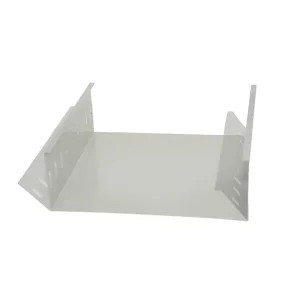
Wholesale Non-perforated Powder Coated Cable Tray_ Suppliers, Factories
Configure & Inquire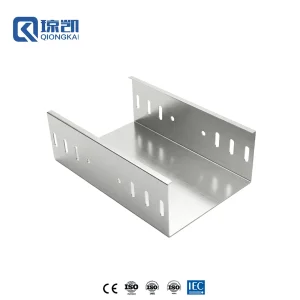
Wholesale Stainless Steel SS 304 316 Cable Trunking 200*100 Manufacturer, Suppliers
Configure & Inquire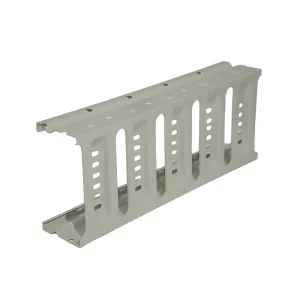
Buy Powder Coated Customizable Ladder Perforated Cable Tray Manufacturer, Factory
Configure & Inquire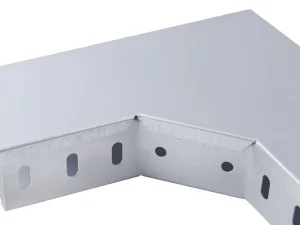
Buy Pre Galvanized Elbow / Tee / X for cable tray with cover product Manufacturer, Supplier
Configure & Inquire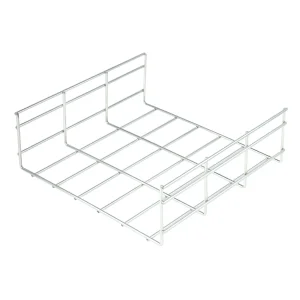
Buy Stainless Wire Mesh Cable Tray 300mm Manufacturers, Supplier
Configure & Inquire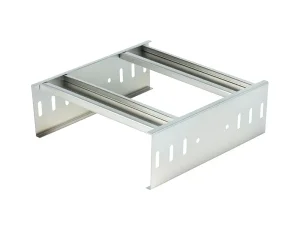
Buy Stainless Cable ladder Factories, Price
Configure & Inquire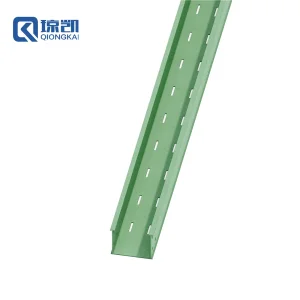
Wholesale FRP Perforated Cable Tray 200*100 Manufacturer, Factory
Configure & Inquire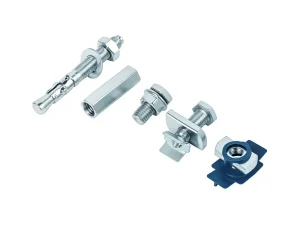
Buy Seismic Resistant Bracket acesssories Supplier, Suppliers
Configure & InquireFrequently Asked Questions: Sourcing & Engineering
Direct engineering answers covering international structural standards, metallurgical selections, fabrication parameters, and global export shipping logistics.
What specific manufacturing standards and tolerances do Qiongkai stainless strut channels meet?
How do I avoid galvanic corrosion when connecting stainless strut to carbon steel building beams?
What is the difference between solid channel and slotted channel load capacities?
Can Qiongkai manufacture custom profile heights, slot dimensions, and special lengths?
What mill test documentation and batch verification accompany export orders?
What are the recommended procedures for cutting and drilling stainless steel strut channels on-site?
Engineer Your Heavy-Duty Structural Support Grid Today
Connect directly with Shanghai Qiongkai’s engineering department. Request full-scale 2D/3D BIM models, load-deflection calculation packages, custom roll-forming quotations, and EN 10204 3.1 certified material samples.