
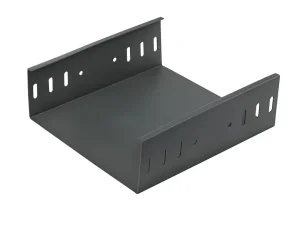
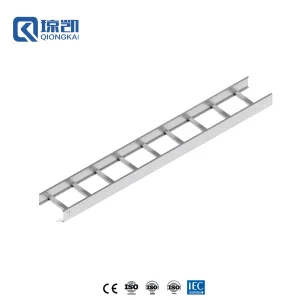
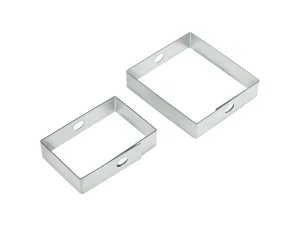
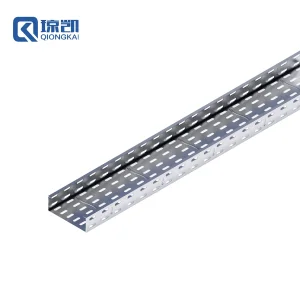
Featured Cable Tray & Strut Support Hardware
Precision roll-formed containment channels, ladders, and perforated trays designed for rigorous static loading, mechanical impact resistance, and extended atmospheric durability.
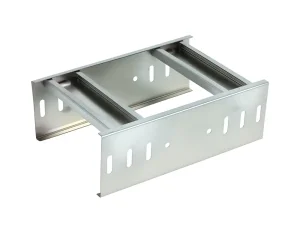
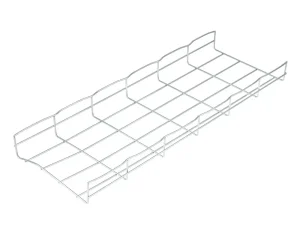
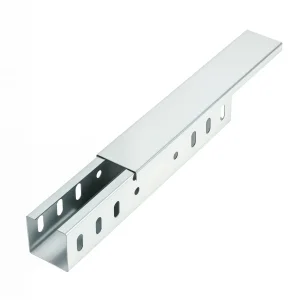
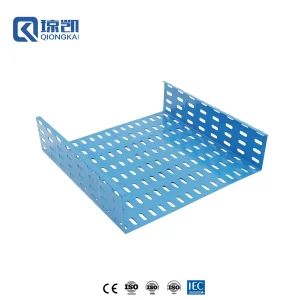
Global Strut Channel Market Evolution & Procurement Cost Drivers
Modern engineering contracts demand more than just cold metal channels; they mandate strict compliance with cold-formed steel framing specifications (AISI S100, BS EN 1993-1-3), full trace certification, and tight dimensional control. As industrial electrification, battery gigafactories, and hyperscale data halls accelerate worldwide construction, global EPC contractors require predictable price transparency and advanced material performance.
Material Metallurgy Dynamics
The baseline price of strut channels is heavily indexed against structural carbon coil grades (such as Q235B, S250GD, and ASTM A1011 SS Grade 33). Variations in zinc commodity pricing directly influence Hot-Dip Galvanizing (HDG) and Pre-Galvanized (PG) surcharges, dictating up to 45% of total landed unit costs.
- Mill Test Certification per EN 10204 3.1
- Real-time raw coil indexation models
- Scrap reduction via automated slitting lines
Manufacturing Geometries & Tooling
Continuous cold roll-forming lines operate through 16 to 24 progressive stations to guarantee sharp 90° bends and uniform inward-curling return lips. High-speed progressive punching tools eliminate micro-cracking around slotted channels, preserving the rated yield strength.
- Tolerances controlled within ±0.15mm
- Serrated channels for 35% higher slip resistance
- Custom slot patterns (9/16" × 1-1/8")
Supply Chain & Modular MEP
Prefabricated modular assemblies and trapeze kits minimize on-site field cuts, hot work, and installation labor. Direct ocean container stuffing from factory docks in Shanghai ensures rapid consolidation of strut profiles, channel nuts, fittings, and cable trays under one bill of lading.
- Bundling with moisture-resistant timber dunnage
- Direct sea transit via Yangshan / Waigaoqiao
- Pre-cut fixed lengths (3m, 6m, 10ft, 20ft)
Procurement Benchmark Pricing Guide (Factory Baseline, FOB Shanghai)
The pricing below reflects wholesale batch manufacturing parameters across common industrial profiles. Note: Final project prices adjust according to order volume, total tonnage, zinc coating thickness, and specific perforation arrays.
| Profile Dimensions | Gauge / Thickness | Standard Material | Surface Treatment | Beam Load (1.5m Span) | Approx. Price Range (per Meter) | Availability |
|---|---|---|---|---|---|---|
| 41 × 41 mm (Standard Deep) | 12 Gauge (2.5 mm) | Q235B / ASTM A1011 | Pre-Galvanized (PG - Z275) | 7.20 kN / 734 kg | $3.20 - $4.40 / m | Stock Ready |
| 41 × 41 mm (Standard Deep) | 12 Gauge (2.5 mm) | Q235B / S250GD | Hot-Dip Galv (HDG >65μm) | 7.20 kN / 734 kg | $4.80 - $6.20 / m | Production 7-10d |
| 41 × 21 mm (Shallow) | 14 Gauge (2.0 mm) | Q235B Carbon Steel | Pre-Galvanized (PG) | 2.15 kN / 219 kg | $2.10 - $2.90 / m | Stock Ready |
| 41 × 21 mm (Shallow) | 14 Gauge (2.0 mm) | Stainless Steel 316L | Pickled & Passivated | 2.40 kN / 245 kg | $9.50 - $13.00 / m | Custom Order |
| 41 × 62 mm (Heavy Deep) | 12 Gauge (2.5 mm) | Q235B / S355JR | Hot-Dip Galv (HDG) | 12.8 kN / 1,305 kg | $6.80 - $8.90 / m | Production 10d |
| 41 × 82 mm (Back-to-Back BTB) | 12 Gauge (2.5 mm × 2) | Q235B Double Welded | HDG / Marine Coat | 18.4 kN / 1,875 kg | $11.50 - $15.80 / m | Engineered Line |
Mechanical Loading Mechanics & Deflection Analysis
Designing MEP and tray supports requires verifying moment of inertia, section modulus, and seismic resistance factors under real-world static and dynamic stress conditions.
Bending Moment & Allowable Deflection
When utilizing strut channel as a horizontal simply supported beam, the maximum allowable uniform load ($W$) is governed by the yield strength of the steel ($\sigma_y \approx 235\text{ MPa}$) with an engineered safety factor of 1.5 to 2.0. The standard allowable deflection ($\Delta$) is restricted to $L/200$ for general industrial services and $L/360$ for sensitive architectural ceiling grids or busway distribution lines:
Deflection: $\Delta = \frac{5wL^4}{384EI}$ | Bending Stress: $\sigma = \frac{M_{\max}}{S} \le [\sigma_{\text{allowable}}]$
Where $E = 205\text{ GPa}$, $I$ is the moment of inertia, and $S$ is the section modulus along the major X-X bending axis.
For back-to-back 41×82 profiles, continuous resistance spot welding every 75mm on center increases structural torsional stiffness by over 280% compared to unbolted single profiles placed side by side.
Seismic Restraint Bracing (ASCE 7-22)
Critical installations—such as hospital life safety conduits, cleanroom ducts, and data infrastructure—must withstand horizontal and vertical seismic accelerations ($F_p$). Strut systems serve as rigid lateral and longitudinal sway braces:
- Triangulated Rigid Bracing: 45° angled strut configurations resist bi-axial cyclic forces without unseating spring channel nuts.
- Serrated Grip Technology: Specially indented grooves inside channel lips engage hardened nut teeth, boosting slip resistance up to 6.5 kN per connection.
- NFPA 13 & IBC Compliance: Certified seismic brackets eliminate overhead sway across critical water containment and fire protection pipelines.
Years of continuous metal manufacturing excellence since 2005.
Consolidated heavy manufacturing floor across 3 modern Shanghai plants.
Automated cold roll-forming lines running high-precision strut & trays.
Peak annual export and supply turnover delivering to tier-1 EPC contractors.
Metallurgy, Zinc Thickness & Environmental Classes
Specifying the correct alloy and finish prevents catastrophic failure across corrosive industrial, coastal, and underground environments (ISO 12944 classification).
Pre-Galvanized (PG / Mill Galv)
Continuous hot-dip zinc coating applied to coil sheets before roll forming (ASTM A653 / EN 10346, Z275 coating mass ≈ 20μm per side).
- Environment: ISO 12944 C1 to C2 (Heated interiors, offices, commercial HVAC).
- Salt Spray Rating: 120 - 240 Hours (ASTM B117).
- Advantage: Lowest initial unit cost, uniform surface appearance, clean assembly handling.
Hot-Dip Galvanized (HDG)
Profiles are punched and cut completely before total immersion into a molten zinc bath at 450°C (ASTM A123 / ISO 1461), creating metallurgical zinc-iron alloy layers.
- Environment: ISO 12944 C3 to C4 (Chemical plants, outdoor utility racks, wastewater).
- Coating Thickness: 65μm to 85μm+ (460 to 610 g/m²).
- Advantage: Self-healing sacrificial anode protection covering all cut edges and punched slots.
Stainless Steel (AISI 304 / 316L)
Austenitic chromium-nickel alloy with added molybdenum (2-3% in 316L) providing exceptional passive layer resistance against pitting and crevice corrosion.
- Environment: ISO 12944 C5-M & CX (Offshore platforms, coastal LNG, marine spray).
- Surface Treatment: Acid pickled and passivated to restore chromium oxide film.
- Advantage: Lifetime durability exceeding 50 years without structural maintenance.
Engineered Solutions for Global Reference Projects
From high-density civil transit terminals to offshore energy infrastructure, our engineered strut and cable tray systems are tested under extreme operational constraints.
Shanghai Hongqiao International Airport
Project Scope: Comprehensive terminal expansion and underground multi-tier electrical raceway support.
Engineering Challenge: High human traffic zones requiring zero-halogen powder-coated cable trunking (CT series) combined with fire-rated ceiling trapeze systems. Rigid deflection limits were established at $L/360$ under maximum cable filling weight.
Delivered System: Custom reinforced pre-galvanized trunking with snap-fit covers, backed by vibration-resistant 41×41 slotted strut channel supports and zinc-nickel plated grade 8.8 hex hardware.
Offshore LNG Extraction & Processing – Qatar
Project Scope: Salt-laden marine atmosphere and extreme ambient temperatures reaching 52°C in Persian Gulf environments.
Engineering Challenge: Conventional galvanized steels suffer rapid pitting corrosion from chloride aerosol deposition. Standard profile sections failed to provide sufficient horizontal span between structural pipeline pilings.
Delivered System: Specialized non-standard custom profiled sections combined with pultruded Fiberglass Reinforced Polymer (FRP) and AISI 316L stainless strut channels with anti-seismic lock nuts.
Thailand High-Humidity Industrial
High-load FRP-lined steel composite cable trays and strut trapeze systems resilient against constant monsoonal precipitation and industrial acid washdowns.
Paraguay Agro-Industrial Facility
Cost-optimized heavy-duty cable management and channel infrastructure built with high ammonia resistance for large-scale livestock and bio-methane processing plants.
Italian Industrial Automation Hub
Batch export of Hot-Dip Galvanized perforated cable trays and matching precision-slotted framing channels compliant with European CE and IEC 61537 directives.
Quality Control, Mill Certificates & Regulatory Compliance
Every production lot undergoes rigorous mechanical, metallurgical, and dimensional validation prior to ocean container sealing.
Mill Test Reports (MTR)
Complete heat lot traceability back to raw blast furnace chemistry. Reports detail chemical breakdown (%C, %Mn, %Si, %P, %S) and mechanical attributes including ultimate tensile strength ($R_m$) and yield point ($R_{eH}$).
Coating Thickness Testing
Magnetic induction and eddy-current thickness testing across top faces, radius corners, and internal return lips. Conforms to ASTM B499 and ISO 2178 to guarantee uniform micro-inch zinc coverage.
Destructive Load Validation
Hydraulic ram test benches verify ultimate load ratings, beam collapse profiles, and weld shear limits on back-to-back channels according to MFMA-4 (Metal Framing Manufacturers Association) procedures.
Digital Twins, BIM & Next-Generation Strut Engineering
The future of modular construction hinges on digital integration, parametric modeling, and decarbonized manufacturing lines.
BIM (Revit / Tekla) LOD 400
All Qiongkai strut channels and fittings are parameterized in native BIM libraries. Engineers can drop precise geometric components into clash detection models, pre-calculating bill-of-materials and center-of-gravity distributions prior to site delivery.
Prefabricated Multi-Service Skids
Shifting away from stick-built field assembly to pre-engineered mechanical skids. Factory-assembled trapeze brackets, wire mesh trays, and pipe clamps arrive tagged per floor and quadrant, reducing site installation hours by over 60%.
Low-Carbon EAF Green Steel
Transitioning toward electric arc furnace (EAF) steel coils made with over 75% recycled scrap content. Enables international projects pursuing LEED v4 and BREEAM certifications to meet strict Embodied Carbon (Scope 3) thresholds.
Frequently Asked Engineering Questions
Straightforward answers addressing structural specifications, procurement logistics, and manufacturing lead times.
What are the key factors determining strut channel wholesale price per meter?
Strut channel pricing depends on four primary parameters:
1. Steel Thickness & Profile Geometry: A 12-gauge (2.5mm) 41×41 profile uses approximately 40% more steel by weight than a 14-gauge (2.0mm) equivalent, directly increasing the coil raw material cost.
2. Surface Coating: Pre-galvanized (PG) steel coils have a lower processing cost. Hot-dip galvanizing (HDG) post-fabrication requires manual acid pickling, dipping in molten zinc baths, and centrifuge cleaning, adding $1.40 to $2.20 per meter depending on steel weight.
3. Perforation Pattern: Plain (solid) channels run faster on roll-forming lines. Slotted channels require continuous high-speed mechanical punching which incurs tooling maintenance and scrap metal extraction costs.
4. Order Volume & Packaging: Full container load (FCL) orders benefit from automated high-speed bundling and direct mill coil pricing, yielding significant unit discounts over partial loads (LCL).
How do I choose between Slotted vs Plain (Solid) Strut Channels?
Slotted Strut Channels feature elongated holes (typically 9/16" × 1-1/8" or 14mm × 28mm) spaced on 2-inch (50mm) centers. They provide vital positional flexibility for mechanical threaded rods, conduit hangers, and cable tray clamps without requiring on-site drilling or torch cutting. However, slotting reduces the channel's moment of inertia and overall beam load capacity by roughly 10% to 15%.
Plain (Solid) Strut Channels have unperforated webs, offering maximum torsional rigidity, pure beam loading capacity, and greater structural column strength. They are predominantly specified for primary structural frames, heavy equipment trapezes, and pre-welded industrial skids where exact fastener positions are engineered in advance.
When should Hot-Dip Galvanized (HDG) be chosen over Pre-Galvanized (PG)?
Pre-Galvanized (PG) steel is roll-formed from steel sheets that are zinc-coated at the rolling mill (average 15-20μm zinc thickness). While cost-effective and aesthetically clean, cutting or punching pre-galvanized steel leaves exposed raw steel edges that rely purely on electrolytic protection. PG is ideal for dry, climate-controlled interiors (ISO 12944 Category C1-C2).
Hot-Dip Galvanized (HDG) channels are immersed in 450°C molten zinc after all cutting, punching, and deburring are completed. This forms an unbroken, alloyed zinc-iron barrier with a coating thickness between 65μm and 85μm+ (ASTM A123 / ISO 1461). HDG is non-negotiable for outdoor solar arrays, industrial processing plants, coastal infrastructure, and moist underground utility tunnels (Category C3-C4).
Can Qiongkai manufacture custom profiles and non-standard gauges?
Yes. Operating 12 dedicated cold roll-forming lines and over 60 heavy-duty hydraulic and mechanical stamping presses across 3 Shanghai production plants, we engineer custom side-rail heights, channel depths (e.g., 41×62mm, 41×82mm, 41×123mm), and variable gauge thicknesses from 1.5mm up to 3.0mm.
We routinely produce custom slotted patterns, special anti-seismic lip crimps, and pre-punched mounting holes according to client mechanical shop drawings—demonstrated by our custom section supply for the Qatar Offshore LNG project.
What third-party test documentation and quality certificates are supplied?
Every shipment is accompanied by an inspection dossier including EN 10204 3.1 Mill Test Reports (MTR) detailing chemical analysis and physical tensile/yield testing, dry-film coating thickness inspection logs (magnetic gauge test per ISO 2178), and dimensional tolerance verification records.
Third-party witnessing and testing by independent agencies (SGS, TÜV, Bureau Veritas) can be coordinated for major government tenders, verifying salt spray resistance (ASTM B117) and mechanical deflection limits under working loads.
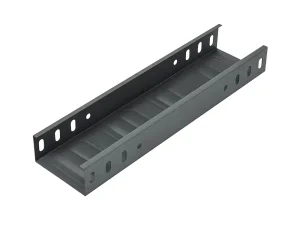
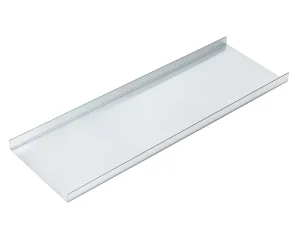
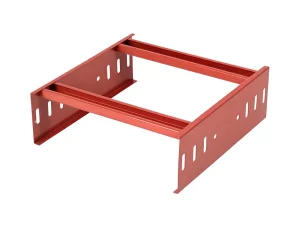
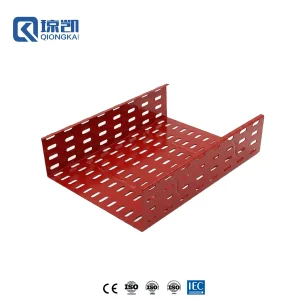
Engineered Channel Fittings, Covers & Ladder Racks
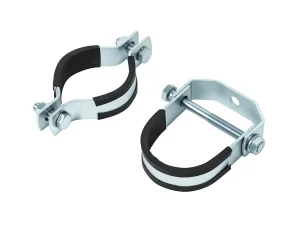
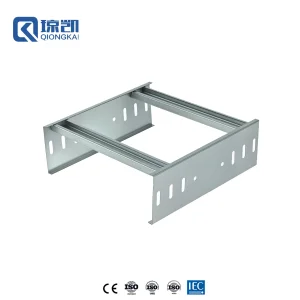
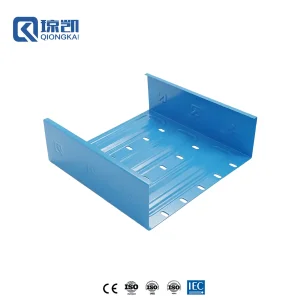
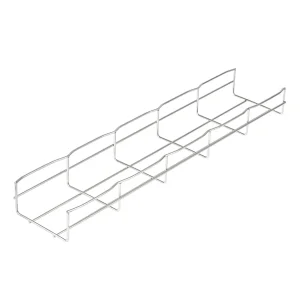
Integrated raceway and clamping components engineered to couple directly with our standard 41mm strut channels for end-to-end cable safety.
Accelerate Your Infrastructure Procurement with Direct Factory Engineering
Whether submitting an EPC project tender, confirming non-standard 41-series strut dimensions, or securing volume-indexed container shipping rates from Shanghai ports, our bilingual structural engineering division delivers verified BOQs and structural calculations within 24 business hours.