
Engineered Cable Routing & Primary Support Assemblies
High-integrity pre-galvanized, powder-coated, and heavy-duty structural cable containment systems engineered to interface seamlessly with standard M6 to M16 threaded support rods and seismic trapeze channel drops.
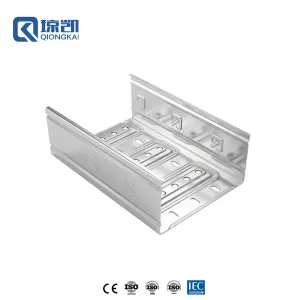
Buy Cost Saving Heavy Duty Reinforced Molded Pre Galvanized Cable Tray Logo Punched Reinforcement on Side Plates 300*100 Factory, Price
View Factory Price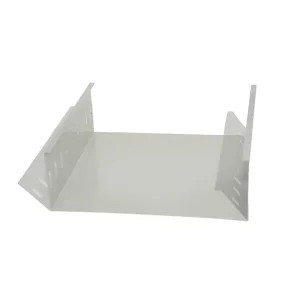
Wholesale Non-perforated Powder Coated Cable Tray Suppliers, Factories
View Factory Price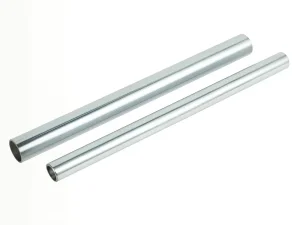
Wholesale Pre Galvanized conduit Supplier, Suppliers
View Factory Price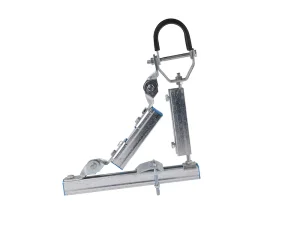
Buy Reliable heavy duty seismic resistant bracket Factories, Price
View Factory Price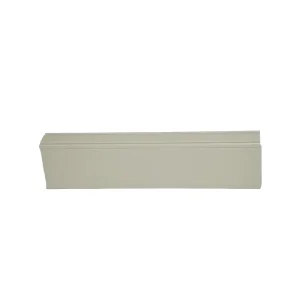
Wholesale UPVC 100*50 Cable Trunking Lightweight Manufacturer, Price
View Factory Price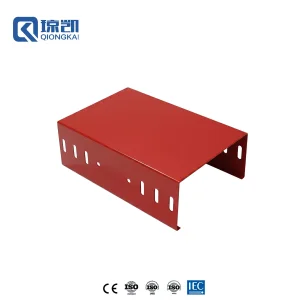
Wholesale Powder Coated Carbon Steel PG Pre Galvanized Cable Trunking Trough Type Channel - RAL3020 Red 200*100 Suppliers, Factory
View Factory Price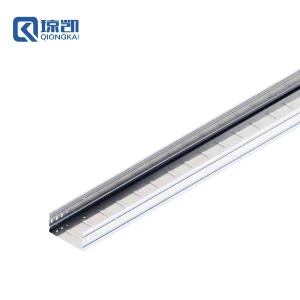
Wholesale Heavy Duty Cost Saving Reinforced Molded Pre Galvanized Cable Trunking Trough Type Channel 200*100 Manufacturer, Factory
View Factory Price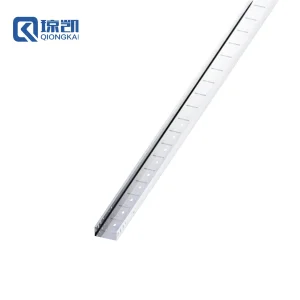
Wholesale Cost Saving Heavy Duty Reinforced Molded Pre Galvanized Cable Tray with less perforation 100*50 Suppliers, Factory
View Factory PriceThreaded Rod Engineering for Cable Tray Trapeze: Tension, Shear & Metallurgy
All-Thread Rods (ATR) provide the primary vertical tension load path in suspended overhead electrical containment systems. Selecting the appropriate rod diameter, thread pitch, steel grade, and plating thickness is critical to eliminating progressive mechanical failure and ensuring compliance with NEMA VE 1 / VE 2, IEC 61537, and NFPA 70 (NEC).
In suspended electrical cable tray infrastructures, continuous threaded rods (commonly fabricated from low-carbon Q235B steel, medium-carbon 1045 steel, structural alloy 40Cr, or austenitic 304/316 stainless steel) bear the entire dead weight of the containment system plus dynamically surging cable runs. When engineering a dual-rod trapeze drop, total system load $W_{\text{total}}$ consists of tray unit weight ($W_{\text{tray}}$), total continuous cable volume weight ($W_{\text{cable}}$), incidental dynamic loads from maintenance pull forces ($W_{\text{pull}}$), and potential environmental accumulations such as ice, dust, or saline condensate ($W_{\text{env}}$):
$$P_{\text{rod}} = \frac{(W_{\text{tray}} + W_{\text{cable}} + W_{\text{env}}) \times L_{\text{span}} \times S_{f}}{2 \times \cos(\theta)}$$
Where $L_{\text{span}}$ is hanger center-to-center distance, $S_f$ is safety factor (≥ 3.0), and $\theta$ is sway displacement angle.
A frequent error made by overseas procurement managers during sourcing is specifying thread sizing purely by nominal external diameter ($d$) rather than root core area ($A_s$). Because the helical thread groove reduces effective solid metal area, tensile stresses concentrate directly at the thread root trough. As a primary manufacturer, Shanghai Qiongkai roll-forms all threads under controlled multi-axis CNC cold rolling pressure rather than traditional lathe cutting. Cold thread rolling preserves the longitudinal metallurgical grain structure of the steel bar, increases root surface hardness by 18% to 24% via cold work hardening, and eliminates micro-notches that propagate fatigue cracks under cyclic electrical vibration.
| Metric / Imperial Size | Nominal Core Diameter (mm) | Tensile Stress Area $A_s$ (mm²) | Grade 4.8 Yield Limit (kN) | Grade 8.8 Yield Limit (kN) | Safe Working Load SWL (kg, SF=3:1) | Recommended Tray Span Capacity |
|---|---|---|---|---|---|---|
| M6 × 1.00 (1/4"-20) | 4.77 mm | 20.1 mm² | 6.4 kN | 12.8 kN | 135 kg | Light data trunking, wire basket ≤ 100mm |
| M8 × 1.25 (5/16"-18) | 6.47 mm | 36.6 mm² | 11.7 kN | 23.4 kN | 245 kg | Perforated tray ≤ 200mm, lighting runs |
| M10 × 1.50 (3/8"-16) | 8.16 mm | 58.0 mm² | 18.6 kN | 37.1 kN | 395 kg | Standard commercial heavy tray 200-300mm |
| M12 × 1.75 (1/2"-13) | 9.85 mm | 84.3 mm² | 27.0 kN | 53.9 kN | 575 kg | Industrial ladder tray 400-600mm, heavy LV cables |
| M16 × 2.00 (5/8"-11) | 13.55 mm | 157.0 mm² | 50.2 kN | 100.4 kN | 1,070 kg | Multi-tier trapeze, high-voltage substation feeds |
Galvanic Corrosion Matrix Warning: Mixing Fasteners with Trays
Direct contact between electro-galvanized (EG) threaded rods and hot-dip galvanized (HDG) or stainless steel cable trays accelerates sacrificial zinc loss due to galvanic potential differences. In coastal and industrial plants (ISO 12944 C3 to C5 classifications), Shanghai Qiongkai mandates either matching HDG threaded rods with spun/chased nut fittings or complete 316-grade stainless steel assemblies to prevent premature thread stripping and structural collapse.
Direct Factory Pricing Breakdown: Cost Drivers & Volume Tiers
Understanding how continuous threaded rods are priced at the factory level allows general contractors and commercial distributors to eliminate trader markups and optimize import shipping economics.
Raw Wire Coil Indexing
Pricing correlates 65% with Baosteel / Shagang Q235B high-speed wire rod billet futures. Transparent contracts link per-meter pricing directly to the daily Shanghai Metal Exchange billet average, insulating procurement teams from hidden distributor buffers.
Surface Treatment Deltas
Electro-galvanizing (EG) provides the lowest price entry ($0.08–$0.12/m overhead for M10), but yields only 5–12μm zinc. Hot-Dip Galvanizing (HDG) per ASTM A153 requires pickling and post-centrifuge thread spinning, representing a 25%–35% cost premium that triples outdoor service lifespan.
Volumetric Container Cubing
Threaded rods weigh heavily (high bulk density) but bundle compactly. Shanghai Qiongkai nests threaded rod tubes inside cable tray channels during 40ft High Cube container stuffing, driving freight costs down to near zero per linear meter of rod.
Direct Factory Price Matrix Benchmark (USD per 1,000 Meters)
The following representative matrix details volume pricing brackets for 3,000mm standard lengths, FOB Shanghai Port, based on Q235B carbon steel and 316 stainless steel at standard market baseline indexation:
| Nominal Size | Pitch & Length | Finish Specification | MOQ (Meters) | Tier 1 (1k - 5k m) | Tier 2 (5k - 20k m) | Tier 3 Container Load (>20k m) |
|---|---|---|---|---|---|---|
| M8 | 1.25 mm × 3.0 m | Electro-Galvanized (EG, 8μm) | 1,000 m | $380 / 1000m | $340 / 1000m | $295 / 1000m |
| M10 | 1.50 mm × 3.0 m | Electro-Galvanized (EG, 8μm) | 1,000 m | $590 / 1000m | $530 / 1000m | $465 / 1000m |
| M10 | 1.50 mm × 3.0 m | Hot-Dip Galvanized (HDG, ≥55μm) | 1,500 m | $780 / 1000m | $710 / 1000m | $625 / 1000m |
| M12 | 1.75 mm × 3.0 m | Hot-Dip Galvanized (HDG, ≥65μm) | 1,000 m | $1,120 / 1000m | $1,020 / 1000m | $890 / 1000m |
| M12 | 1.75 mm × 3.0 m | Stainless Steel AISI 316 (Marine) | 500 m | $4,650 / 1000m | $4,250 / 1000m | $3,850 / 1000m |
Engineered Fastening Solutions across Critical Infrastructure
Different operational environments place distinct demands on suspension hardware. Shanghai Qiongkai delivers purpose-engineered rod, strut channel, and bracket combinations tailored to rigorous mission profiles.
Hyperscale Cloud Data Centers
Demands zinc-whiskering-free finishes to safeguard high-density servers. Qiongkai supplies high-adhesion powder-coated and Geomet-treated threaded rods paired with wire basket trays, eliminating airborne metallic conductive flakes.
Offshore LNG & Desalination Plants
Exposed to severe C5-M marine saline atmospheres. We deliver passivated SS316L and duplex 2205 threaded rods integrated with FRP cable trays, engineered to withstand aggressive chloride stress-cracking over a 30-year design life.
Heavy Petrochemical & Refineries
High thermal cycling and sulfur-rich exhaust gases require ASTM A193 Grade B7 alloy steel threaded rods with continuous hot-dip galvanizing, providing high yield margins against thermal elongation and vibrational unseating.
China Factory 4.0: Precision Thread Rolling & Supply Chain Resilience
Shanghai Qiongkai integrates automated cold-heading wire processing, continuous inline laser thread verification, and computer-controlled eco-friendly galvanizing baths across our Songjiang manufacturing facilities.
Traditional threaded rod processing relies on segmented manual feeding machines with wide thread tolerance scatter (often Class 8g), resulting in loose nut play or excessive thread interference during rapid field installation. In contrast, our Industry 4.0 production lines deploy continuous high-speed hydraulic rolling machines featuring double cylindrical dies that uniformly press precise Class 6g (metric) or Class 2A (unified UNC) external threads across 100% of the bar length.
Through our Manufacturing Execution System (MES), every coil of structural wire undergoes heat-lot spectroscopy testing before feeding into our automated straighteners and thread formers. Post-threading, laser optical sensors measure outer pitch diameter, lead deviation, and taper in real time, automatically rejecting segments outside ±0.03mm tolerance limits.
For hot-dip galvanizing, spun-centrifuging cycles are robotically timed: immediate high-speed centrifugal purging expels excess molten zinc from the thread roots, guaranteeing that standard oversized tap nuts (ISO 965 Class 6AZ or ASTM A563 Grade A oversized) thread smoothly by hand along the entire rod without requiring dangerous on-site re-threading that strips bare protective zinc layers.
Global Code Compliance: NEMA, IEC, UL & Seismic Bracing (ASCE 7)
Structural support integrity is subject to strict regional building codes. Sourcing through Qiongkai ensures verified international specification parity for multi-national EPC projects.
NEMA VE 1 / VE 2 & IEC 61537
Cable tray support systems must withstand both static working load and electrical fault current magnetic repulsive forces. Our rods and strut attachments are tested to verify continuous electrical bonding continuity to ground without localized arcing.
ASCE 7-22 / OSHPD Seismic
Unbraced vertical threaded rods perform poorly under lateral seismic accelerations, developing destructive bending moments. We engineer complete 4-way rigid seismic sway brace kits using 41×41 strut channel stiffeners clamped to rods to withstand ground motions up to $S_{DS} = 2.0\text{g}$.
ASTM A193 / A307 & ISO 898-1
Complete metallurgical documentation: Inspection Certificates per EN 10204 Type 3.1 accompany every shipment, verifying chemical melt analysis (C, Mn, Si, P, S), yield strength, elongation percentage, and Charpy V-notch impact toughness.
Next-Generation Trapeze Hardware: Roadmap & Future Outlook
Shanghai Qiongkai continues to pioneer advancements in mechanical hardware and digital delivery systems to meet increasingly demanding infrastructure construction schedules.
1. Self-Healing Zinc-Aluminum-Magnesium (ZAM) Alloy Coatings
While traditional hot-dip galvanizing remains an industry benchmark, Qiongkai's metallurgical lab is scaling commercial production of continuous threaded rods cold-rolled from high-ductility ZAM wire rod. The presence of 3% Aluminum and 1.5% Magnesium creates a dense, non-porous protective patina that actively migrates over field-cut rod ends, eliminating the labor-intensive requirement for cold-galvanizing aerosol touch-ups on job sites.
2. BIM-Integrated Fastener Kit Tagging
To eliminate site sorting delays on massive clean-energy mega-projects, threaded rods are pre-cut, deburred, paired with hex nuts, washers, and strut channel nuts, and bundled in lot-coded, moisture-proof packets mapped directly to Revit / Navisworks isometric hanger tags. Field installation crews simply open the designated packet for each specific grid coordinate.
3. Smart Strain-Sensing Fastener Pilot
In high-vibration power generation facilities and seismic fault corridors, Qiongkai is piloting piezoelectric washer arrays and fiber-Bragg sensor caps mounted to M16 drop rods. These smart fasteners report live cable load shifts and anchor pull-out relaxation back to the facility SCADA system, alerting maintenance teams before fastener fatigue can lead to cascading ceiling tray collapses.
Frequently Asked Questions: Threaded Rod Sourcing & Engineering
Direct answers to the most critical technical, metallurgical, and supply chain questions encountered by EPC project directors and global sourcing managers.
How do I determine whether to specify M8, M10, or M12 threaded rods for my cable tray run?
Why do Hot-Dip Galvanized (HDG) threaded rods often have fitment issues with standard nuts, and how does Qiongkai resolve this?
What is the practical lifespan difference between Electro-Galvanized (EG) and Hot-Dip Galvanized (HDG) threaded rods?
Can threaded rods be used directly in seismic restraint systems for cable trays?
What are the factory packaging standards to prevent thread damage during long-distance ocean shipping?
How does Qiongkai manage raw steel price fluctuations in long-term EPC supply agreements?
When is Stainless Steel 316 required over Hot-Dip Galvanized carbon steel?
Can you supply non-standard thread pitches (e.g., UNC Imperial threads) for North American export?
What quality inspection reports (MTR) are provided with every factory shipment?
What is the minimum order quantity (MOQ) and standard delivery lead time for factory orders?
Industrial Cable Management & Heavy-Duty Ladder Trays
Explore our complete range of certified ladder racks, wire mesh trays, and stainless containment channels engineered for direct compatibility with Qiongkai threaded suspension hardware.
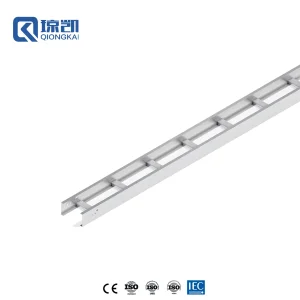
Buy GI Galvanized Cable Ladder 200*100 Supplier, Suppliers
View Factory Price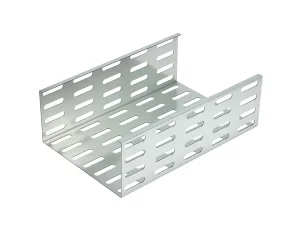
Wholesale Pre Galvanized Cable Tray With Perforation Manufacturers, Factories
View Factory Price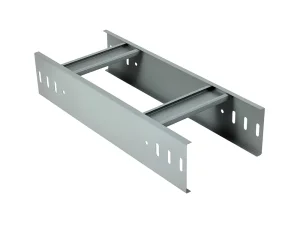
Buy Fireproof powder coated Pre galvanized ladder type cable tray Manufacturer, Manufacturers
View Factory Price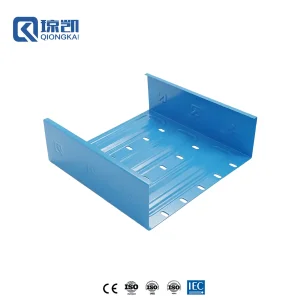
Wholesale Powder Coated Carbon Steel Cost Saving Heavy Duty Reinforced Molded Pre Galvanized Cable Tray with less perforation - RAL5015 Blue 300*100 Suppliers, Factories
View Factory Price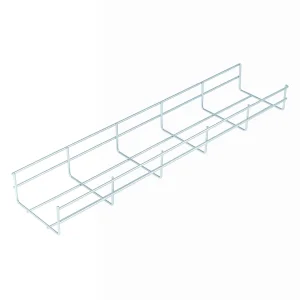
Wholesale Pre Galvanized grid Cable tray100mm50mm Suppliers, Factory
View Factory Price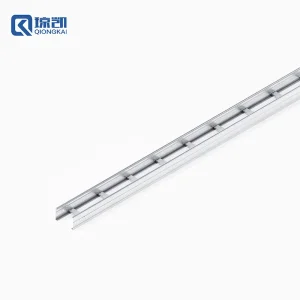
Buy Reinforced Pre Galvanized or HDG Ladder Type Cable Tray 200*100 Manufacturers, Price
View Factory Price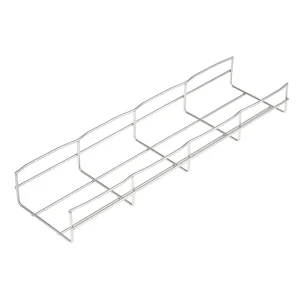
Wholesale Stainless Steel Grid wire mesh cable tray Manufacturers, Suppliers
View Factory Price
Buy Customized Stainless Steel Cable Tray With Surface Treatment Factory, Factories
View Factory PriceShanghai Qiongkai Industry: Global Engineering Commitment
Since 2005, Shanghai Qiongkai Industry Co., Ltd. has delivered integrated cable management containment, strut framing, and structural fastening hardware to commercial and industrial projects across 60+ countries. By operating 3 automated manufacturing bases with 12 assembly lines in Songjiang, Shanghai, we eliminate trading intermediaries, guarantee uncompromised metallurgical standards, and provide direct factory pricing backed by full international code compliance (NEMA VE 1 / IEC 61537 / ISO 1461).