
Engineered Cable Trays, Trunking & Channel Profiles
Immediate procurement lines delivering cold-formed structural integrity, corrosion mitigation, and maximum load capacity for complex electrical distribution networks.
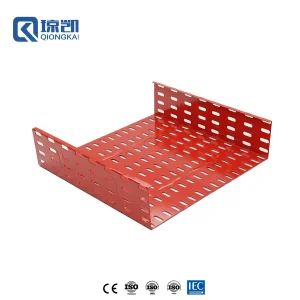
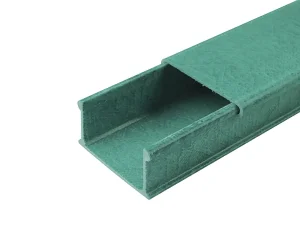
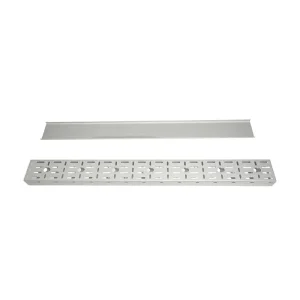
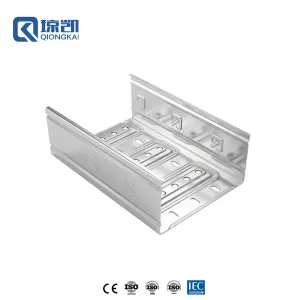
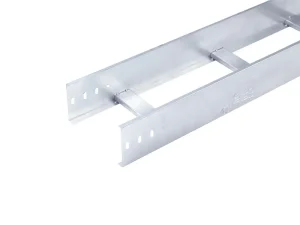
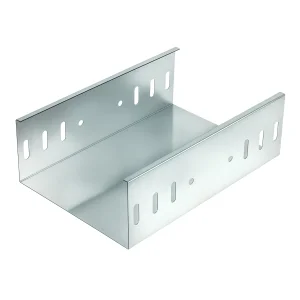
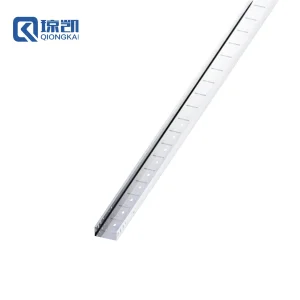
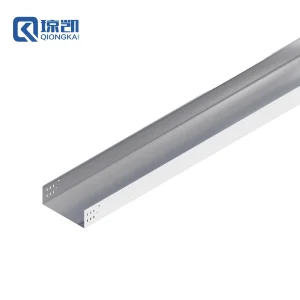
The Mechanics of Modern Unistrut Channel Frameworks
In modern industrial facilities, hyperscale data centers, and advanced manufacturing campuses, structural framing integrity dictates operational safety. When project procurement teams seek to buy Unistrut channel systems from verified suppliers, they are not merely sourcing cold-rolled metal profiles; they are specifying the backbone of all overhead mechanical, electrical, and plumbing (MEP) infrastructure.
A precision-engineered strut channel system relies on cold-roll-formed steel sections with inward-curving lips that create continuous clamping channels. These return lips feature serrated grooves designed to lock with the case-hardened teeth of strut channel nuts. This mechanical interlock transforms linear friction into a high-torsion, slip-resistant union capable of resisting longitudinal sliding forces exceeding 5.0 kN per bolt under dynamic vibration loads.
Shanghai Qiongkai Industry Co., Ltd. manufactures channel profiles adhering strictly to international structural tolerances (cold-formed dimensional tolerances within ±0.15 mm). By deploying continuous CNC automated roll-forming machines, our strut profiles eliminate localized residual stress concentrations, providing consistent section modulus ($S_x, S_y$) and moments of inertia ($I_x, I_y$) across standard 3-meter and 6-meter commercial lengths.
41×41 Standard Channel
The global benchmark for heavy-duty commercial MEP installations. Features symmetrical load distribution along both the horizontal and vertical axes. Available in thicknesses from 1.5 mm (16 gauge) to 2.5 mm (12 gauge) in solid or slotted patterns.
41×21 Shallow Channel
Engineered for tight ceiling voids, raised flooring understructures, and space-constrained architectural assemblies. Minimizes dead-load penalty while providing rigid support for light-to-medium electrical conduit and cable basket runs.
41×62 / 41×82 Deep Profiles
High-load cantilevered configurations designed for extensive span distances where intermediate ceiling hangers cannot be placed. Delivers exceptional beam resistance against vertical deflection under heavy pipe or cable bundle arrays.
Back-to-Back (BTB) Welded
Two symmetrical channels welded along the web via automated robotic spot or continuous seam welding. Yields quadrupled structural moment of inertia, ideal for primary MEP multi-tier trapeze frames and seismic horizontal braces.
Engineering Load Deflection & Metallurgical Specifications
Calculated beam load capacities, deflection safety ratios (L/200, L/360), and steel physical property baselines for engineering design verification.
| Profile Specification | Material Thickness | Yield Strength ($f_y$) | Moment of Inertia ($I_x$) | Section Modulus ($S_x$) | Max Span (Deflection L/360) | Compliance Standards |
|---|---|---|---|---|---|---|
| QK-C4121 (41×21 mm) | 1.5 mm / 2.0 mm | ≥ 235 - 355 MPa | 0.86 cm⁴ | 0.71 cm³ | 1,200 mm (1.82 kN uniform) | BS 6946 / ASTM A1011 |
| QK-C4141 (41×41 mm) | 2.0 mm / 2.5 mm | ≥ 235 - 355 MPa | 5.12 cm⁴ | 2.49 cm³ | 2,000 mm (3.45 kN uniform) | NEMA VE-1 / UL Approved |
| QK-C4162 (41×62 mm) | 2.5 mm | ≥ 355 MPa | 13.84 cm⁴ | 4.32 cm³ | 3,000 mm (4.98 kN uniform) | GB 50981 / ASCE 7-16 |
| QK-C4182 (41×82 mm) | 2.5 mm | ≥ 355 MPa | 28.45 cm⁴ | 6.85 cm³ | 4,000 mm (6.72 kN uniform) | Eurocode 3 / EN 1993 |
| QK-BTB4182 (Double 41×41) | 2.5 mm × 2 | ≥ 235 - 355 MPa | 22.68 cm⁴ | 11.06 cm³ | 3,600 mm (9.80 kN uniform) | Heavy Trapeze Skids |
Rigidity Limits, Deflection Criteria, and Torque Mechanics
Engineering safety guidelines prohibit selecting strut channels based merely on static break-load capacity. The primary failure mode of MEP framework systems in operational environments is excessive mid-span deflection. Under American and European building codes, mid-span deflection is restricted to $\delta = L / 200$ for general industrial services, and tightened to $\delta = L / 360$ for sensitive data halls and vibration-prone refrigeration equipment.
To eliminate channel lip splay under tension, Qiongkai's proprietary anti-seismic channel flange profiles incorporate reinforced cold-forged internal serrations. When torqued with grade 8.8 hex fasteners into our induction-hardened strut channel nuts, the allowable longitudinal slip resistance reaches 6.8 kN, ensuring that bolted brackets maintain absolute positional stability even under cyclic seismic acceleration forces ($S_{DS} > 1.5g$).
Metallurgical Finishes & ISO 12944 Environmental Classification
Over 70% of premature strut system replacements stem from miscalculating atmospheric corrosivity. We engineer surface coatings matching exact environmental degradation categories.
Pre-Galvanized (PG / GI)
Continuous hot-dip mill-galvanized sheet (ASTM A653 / EN 10346, Z275 coating with 20µm thickness). Optimized for indoor climate-controlled environments (ISO 12944 C1-C2), providing cathodic edge-healing across cut ends in commercial ceilings and retail fit-outs.
Hot-Dip Galvanized (HDG)
Batch immersion post-fabrication according to ISO 1461 and ASTM A123. Yields an alloyed zinc-iron metallurgical bond with minimum 65µm - 85µm zinc thickness. Unmatched protection for outdoor industrial plants, chemical processing facilities, and humid port zones (C3-C4).
Stainless Steel 316 / 316L
Austenitic alloy containing 2.0–2.5% Molybdenum. Engineered specifically for marine offshore installations, splash zones, and high-chlorine coastal environments (ISO 12944 C5-M / CX). Virtually immune to pitting and crevice corrosion across 50+ year asset life spans.
| Atmospheric Corrosivity Category (ISO 12944-2) | Typical Industrial Environment | Zinc Loss Rate (µm / Year) | Recommended Strut Metallurgy & Finish | Anticipated Service Life |
|---|---|---|---|---|
| C1 (Very Low) | Heated offices, clean server halls, schools | < 0.1 µm/yr | Electro-Galvanized (EG) / Pre-Galv (PG) | > 25 Years |
| C2 (Low) | Unheated warehouses, sports arenas | 0.1 to 0.7 µm/yr | Pre-Galvanized (PG Z275) / Powder Coated | 15 - 20 Years |
| C3 (Medium) | Urban perimeters, food factories, breweries | 0.7 to 2.1 µm/yr | Hot-Dip Galvanized (HDG 65µm) / SS304 | > 25 Years |
| C4 (High) | Petrochemical refineries, shipyards, swim halls | 2.1 to 4.2 µm/yr | Hot-Dip Galvanized (HDG 85µm) / SS316 | 15 - 20 Years |
| C5 / CX (Very High / Extreme) | Offshore oil rigs, desert LNG plants, coastal surf | 4.2 to 8.4+ µm/yr | Stainless Steel 316L / Pultruded FRP Composite | > 30 Years |
Why Global EPCs Source Strut Channel Systems from Qiongkai
Direct-from-factory procurement in Songjiang, Shanghai eliminates international trading markups, shortens project lead times, and ensures continuous quality tracing from raw steel coil to container dispatch.
Continuous Automated Production
With 12 cold roll-forming lines and over 60 high-tonnage automated eccentric punch presses, our facility delivers over 1,500 metric tons of channel profiles monthly. Automated continuous punching maintains ±0.2 mm slot pitch precision across high-volume production orders.
Raw Coil Price Hedging
Direct procurement contracts with premier domestic steel mills (Baosteel, Shougang) grant us raw material cost stability. We pass these price advantages directly to international buyers, delivering up to 35% overall procurement savings compared to regional domestic distributors.
Port Logistics Consolidation
Located in the Songjiang Port Science and Technology City of Shanghai, our facilities operate less than 60 minutes from Yangshan Deepwater Port and Waigaoqiao Terminals. We consolidate strut channels, cable trays, conduits, and accessories inside shared containers to maximize payload weight.
Quality Assurance Protocols & Mill Verification
Every export batch undergoes Factory Acceptance Testing (FAT) with fully documented EN 10204 Type 3.1 Material Test Reports (MTR). Our on-site metallurgy laboratory executes tensile yield strength checks, Charpy impact toughness testing, micro-thickness magnetic coating measurements, and 500-to-1,000 hour neutral salt spray testing (ASTM B117) to guarantee that incoming channel assemblies align with technical engineering specifications.
Compliance Assurance: Seismic Bracing & International Standards
International MEP specifications enforce dynamic compliance under building life-safety codes. Qiongkai strut assemblies are engineered to satisfy stringent worldwide regulatory frameworks.
ASCE 7-16 / IBC
Calculated seismic restraint systems preventing structural shear collapse of overhead MEP systems during earthquake events. Satisfies seismic design categories C through F.
Eurocode 8 (EN 1998)
Harmonized seismic design for European construction projects. Verifies post-elastic ductilities, anchor tension limits, and dynamic stiffness parameters in mission-critical facilities.
GB 50981-2014
The mandatory national standard for seismic design of building mechanical and electrical engineering in mainland mega-projects, verified through rigorous shaking-table physical validations.
NEMA VE-1 / VE-2
Industry-standard load classifications, deflection limits, and correct installation procedures governing channel-supported cable trays and industrial cable routing hardware.
Emerging Trends Shaping Strut Channel Procurement
Digital fabrication, BIM modeling, and modular pre-assembly are accelerating speed-to-market while reducing field labor risks across global megaprojects.
BIM Revit Integration (LOD 400)
Design offices require digital parametric families for strut channels, beam clamps, and cantilever brackets. Qiongkai provides native Autodesk Revit and IFC digital twins, empowering clash detection, exact bill of materials (BOM) takeoff, and zero-waste factory pre-cutting.
Prefabricated Multi-Service Skids
Contractors are shifting away from manual field cutting. We supply pre-assembled, color-coded, modular trapeze skids directly from our factory floor. Unistrut frames arrive on-site kitted with pre-torqued channel nuts, reducing site installation hours by up to 45%.
Decarbonized & Low-Carbon Steel
Aligning with Scope 3 corporate decarbonization targets, our supply chain incorporates electric arc furnace (EAF) low-carbon steel options and closed-loop scrap recycling, giving developers verified carbon transparency for LEED and BREEAM certifications.
Mission-Critical Deployment Scenarios
From international civil aviation hubs to offshore energy production and hyperscale computing centers, Qiongkai strut channels consistently execute under arduous project parameters.
Shanghai Hongqiao International Airport
Delivered customized corrosion-resistant CT series cable trunking and 41×41 heavy-duty strut channel networks spanning miles of underground passenger transfer concourses and critical electrical substations.
Qatar Offshore LNG Terminal
Engineered non-standard 41×82 deep channel profiles and pultruded composite FRP structures engineered to endure extreme Middle Eastern ambient heat, continuous marine salt fog, and abrasive particulate conditions.
Industrial Agro-Complex, Paraguay
Supplied a value-engineered heavy-duty cable tray and structural strut suspension system customized to withstand severe animal husbandry ammonia vapors and wash-down humidity at optimal budgetary boundaries.
Frequently Asked Questions by Project Engineers & Procurement Buyers
Clear, technically accurate answers to the operational questions mechanical and electrical contractors ask before approving a Unistrut channel supplier.
Unistrut-compatible channels must conform strictly to standard dimensional geometry (external width 41.3 mm, internal opening 22.2 mm, lip depth 5.5 mm) with precise internal return lip curvature and serrations. Inferior generic channels frequently lack sharp serrations or proper cold-forming radii, causing spring nut slippage under vibration and premature beam failure. Qiongkai channels are manufactured to universal modular standards, ensuring seamless compatibility with all international Unistrut-type fittings, spring nuts, and pipe clamps.
Solid (plain) channel provides maximum structural section modulus ($S_x$) and highest beam load resistance because its web remains uninterrupted. It is preferred for heavy industrial pipe racks and cantilever supports. Slotted channel (standard 14×28 mm or 11×25 mm slots on 50 mm centers) provides critical field installation flexibility, allowing threaded drop rods and fasteners to pass through without requiring on-site drilling or torch cutting, saving significant field labor.
Yes. With our 12 automated lines and complete tooling capabilities, we produce custom lengths up to 12 meters, steel gauges from 1.2 mm to 3.0 mm, and custom slot profiles (such as round holes, teardrop slots, or custom company logo embossing). Customizing lengths directly at our factory eliminates jobsite waste, reduces cut-end coating repairs, and drastically simplifies your procurement schedule.
Every shipment from Shanghai Qiongkai Industry includes complete mill test certificates according to EN 10204 3.1, detailing mechanical yield/tensile strength and chemical ladle analysis. Additionally, we provide third-party coating thickness reports (ISO 2178), salt spray corrosion test logs (ASTM B117), Certificates of Origin (CO), and CE Declaration of Conformity documents required for customs clearance and project consultant sign-off.
Pre-galvanized (PG) steel is zinc-coated continuously at the steel mill prior to stamping and roll forming, resulting in unprotected bare cut edges that rely solely on cathodic sacrificial protection. Batch hot-dip galvanizing (HDG) immerses the completely fabricated and punched channel into a bath of molten zinc at 450°C. This forms a series of iron-zinc alloy layers with a heavy total coating thickness (65-85 µm) that completely seals cut edges and internal slot walls against aggressive moisture ingress.
Standard catalogue channel profiles (41×41 and 41×21 in PG and HDG finishes) are typically produced and bundled within 10 to 15 business days. Custom profiles, stainless steel, or large complex BOQ packages generally require 20 to 25 days. Because our Songjiang facility is situated adjacent to Shanghai Yangshan and Waigaoqiao shipping hubs, container dispatch to ocean freight vessels is executed within 48 hours of packaging completion.
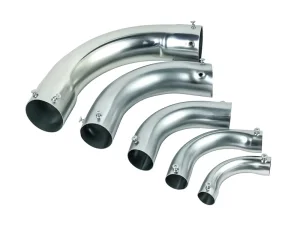
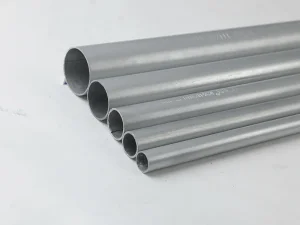
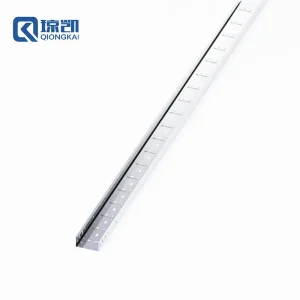
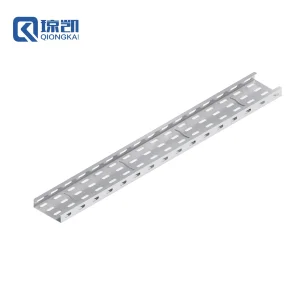
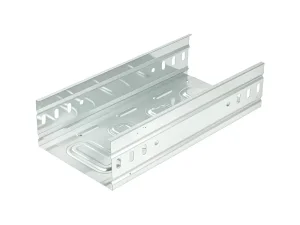
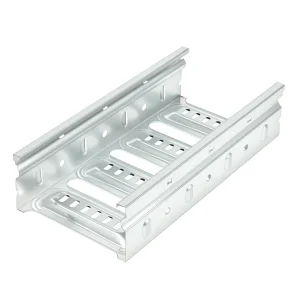
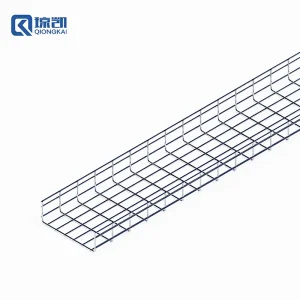
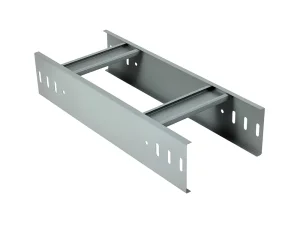
Specialized Cable Containment & Conduit Systems
Heavy-duty molded trays, electrical conduit tubing, and fireproof ladder systems completing your integrated MEP distribution framework.
Accelerate Your Project with Factory-Direct Engineering Support
Submit your project Bill of Quantities (BOQ), structural drawings, or technical specifications. Our Shanghai engineering team delivers structural load calculations, compliance certificates, and a full turnkey manufacturing quotation within 24 hours.