
Heavy-Duty Wall & Infrastructure Cable Channels
Explore standardized and customizable wall-mounted cable trays, raceways, and strut supports engineered to meet NEMA, IEC, and UL specifications.
-
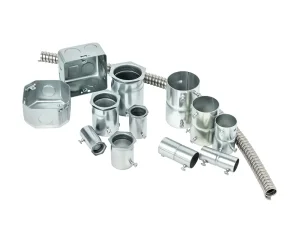
Conduit Accessories, Junction Box & Connectors
View Specs & Price -
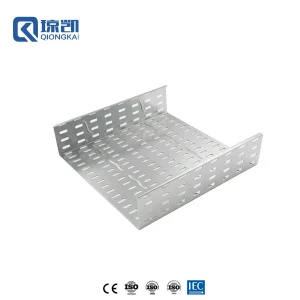
PG/HDG Carbon Steel Cable Tray with Ribs 400*100
View Specs & Price -
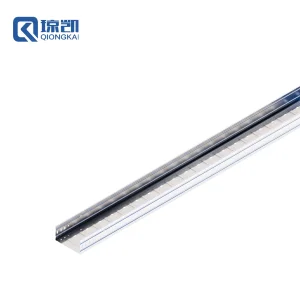
Heavy Duty Molded Pre-Galvanized Tray 200*100
View Specs & Price -
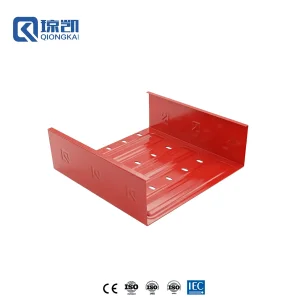
Powder Coated Cable Tray RAL3020 Red 300*100
View Specs & Price -
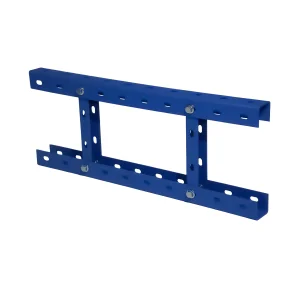
Durable Blue Powder Coated Ladder Cable Rack
View Specs & Price -
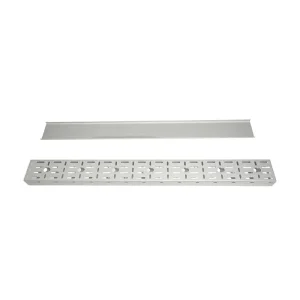
SS316/316L Max Perforated Cable Tray Channel
View Specs & Price -
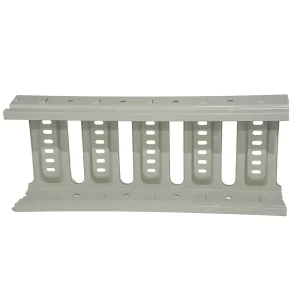
Custom Perforated Ladder Cable Tray Channel
View Specs & Price -
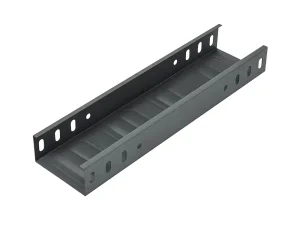
Grey PG Powder Coated Molded Cable Tray
View Specs & Price
Factory Direct Pricing Mechanics & Cost Determinants
Understanding the pricing matrix for wall electrical cable channels, trunking, and strut pathways enables industrial EPCs and distributors to lock in optimal margins without compromising metallurgical safety.
| Profile Specification | Material Grade | Surface Finish | Wall Thickness | Reference Price (USD/Meter) | Target Application |
|---|---|---|---|---|---|
| Solid Wall Channel (100x50mm) | Q235B Carbon Steel | Pre-Galvanized (PG) | 1.2mm - 1.5mm | $2.80 - $4.20 | Indoor Commercial / Dry Server Risers |
| Reinforced Slotted Tray (200x100mm) | Q235B / Cold-Rolled | Hot-Dip Galvanized (HDG) | 1.5mm - 2.0mm | $5.60 - $8.90 | Outdoor Industrial / Substation Perimeter |
| Strut Profile Wall Channel (41x41mm) | High-Strength Steel | HDG / Powder Coated | 2.0mm - 2.5mm | $3.20 - $5.10 | Seismic-Resistant Wall Bracketing |
| Marine Perforated Raceway (300x100mm) | AISI 316L Stainless | Pickled & Passivated | 1.5mm - 2.0mm | $18.50 - $26.00 | Offshore Platforms, Chemical Storage |
| Fiberglass Trough Channel (100x50mm) | FRP / GRP Composite | Flame-Retardant Resin | 3.0mm - 4.0mm | $6.50 - $9.80 | High-Voltage Isolation & Acid Wash Bays |
Why Tier-1 Chinese Factories Lead the Wall Channel Market
Advanced metallurgy, integrated supply chain clusters, and automated roll-forming lines deliver superior mechanical load capacity and cost efficiency.
Full Supply Chain Integration
Direct positioning next to primary steel mills and deep-water ports (such as Shanghai Yangshan and Waigaoqiao) reduces transport overhead and raw material lead times by up to 40%.
Continuous Cold Roll-Forming
Automated multi-station cold rolling lines guarantee precise dimensional tolerances (±0.2mm), reinforced return-flange stiffness, and burr-free perforation edge treatment that preserves cable sheath integrity.
Strict Ecological Hot-Dip Galvanizing
Equipped with standardized acid-pickling and high-efficiency hot-dip galvanizing kettles producing zinc alloy layers up to 85–100μm thick, tested under 1,000-hour salt spray endurance conditions.
Custom Engineered Tooling & OEM
Rapid mold fabrication enables custom flange depths, specific anti-vibration hole slots, bespoke back-to-back configurations, and branded punch codes suited for global distributors.
Modern Trends Transforming Cable Channel Systems
The convergence of modular construction, hyper-scale cloud computing, and green industrial policies is reshaping mechanical containment requirements.
BIM-Integrated Modular Strut Systems
Wall channels are no longer isolated raceways; they interface seamlessly with Building Information Modeling (BIM) frameworks and pre-punched strut bracketing for rapid on-site boltless assembly.
Seismic Bracing & Dynamic Loading
High-hazard seismic zone compliance requires wall-mounted cable channels to carry certified lateral and longitudinal acceleration loads without weld fracturing or wall anchor tear-out.
Circularity & Green Zinc Standards
Leading contractors enforce ISO 14044 Life Cycle Assessment (LCA) verifications, mandating 100% recyclable structural steel substrates and low-emission, non-chromate passivation coatings.
Localized Scenarios & Heavy-Duty Structural Deployments
Wall electrical cable channels must match the physical demands of unique architectural boundaries, from hygienic cleanrooms to coastal petrochemical terminals.
Underground Metro & Tunnel Corridors
Utilizing high-tensile hot-dip galvanized trunking with fire-resistant partition walls to endure piston pressure waves, continuous vibration, and moisture ingress.
Hyperscale Cloud Data Facilities
Electro-galvanized and powder-coated (RAL color-coded) wire mesh and solid wall raceways ensure high EMI shielding, zero zinc-whisker risk, and efficient heat venting for fiber cascades.
Petrochemical & Offshore Terminals
Molybdenum-stabilized AISI 316/316L and FRP fiberglass trough systems withstand sulfur dioxide, marine chlorides, and harsh hydrocarbon wash-down regimens without structural degradation.
Automated Production & EV Gigafactories
Reinforced pre-galvanized ladder and trough channels anchored directly to precast concrete wall panels provide structural support for heavy robotic busways and high-amperage feeder bundles.
Enterprise Procurement Criteria for Tier-1 Contractors
Mitigating cross-border procurement risks requires structured quality assurance protocols, nested container packaging, and full mill certificate traceability.
Mill Test Reports & Material Traceability
Every factory heat batch must be accompanied by EN 10204 3.1 certification verifying mechanical tensile strength, elongation, and chemical composition (Carbon, Silicon, Manganese, Sulfur, and Phosphorus).
Optimized Nested Container Packing
Channel geometry is engineered with incremental widths and tapered profiles to allow internal nesting during sea transit, boosting container volume utilization by up to 35% and cutting freight overhead per linear meter.
Lead Time Agility & Phased Logistics
Factory operations must accommodate just-in-time delivery for mega projects, with batch manufacturing aligned directly with on-site MEP erection milestones to avoid port demurrage and site congestion.
Frequently Asked Questions on Wall Cable Channels & Pricing
Clear, technical explanations addressing design configurations, material selection, installation considerations, and import economics.
What defines the pricing difference between Pre-Galvanized (PG) and Hot-Dip Galvanized (HDG) wall channels?
Pre-galvanized channels are continuously roll-formed from steel coils that already possess a thin zinc coating (typically 12–20μm / Z100–Z275). This provides a smooth aesthetic and lower manufacturing cost, optimal for dry indoor utility corridors. In contrast, Hot-Dip Galvanizing (HDG) occurs after the channel is fully cut, punched, and welded, immersing the entire component into a 450°C molten zinc bath. This creates a multi-layered iron-zinc alloy coating with a minimum thickness of 65–85μm, protecting all cut edges and perforations. HDG commands an average 25% to 40% price premium due to multi-stage chemical cleaning, immersion labor, and zinc weight consumption.
How does wall channel profile thickness impact maximum allowable cable fill capacity?
Under standards such as NEMA VE-1 and IEC 61537, the structural gauge of the wall channel directly governs its section modulus (Z-axis and Y-axis moment of inertia). When mounting channels vertically or horizontally on sheer masonry walls, a thickness increase from 1.2mm to 2.0mm can boost cantilever load capacity by over 80%. This prevents deflection under heavy armored power cables, ensuring the system remains within the 50% cross-sectional cable fill ratio without sagging or pulling wall anchors loose.
When should stainless steel (AISI 304 vs. 316L) be specified over hot-dip galvanized steel?
While HDG excels in general atmospheric exposure (ISO 12944 C3/C4 categories), it rapidly depletes in environments featuring high airborne chloride concentrations, persistent acidic vapors, or aggressive chemical cleaning agents. AISI 304 is ideal for food, dairy, and beverage facilities requiring rigorous caustic wash-downs. AISI 316/316L contains 2%–3% molybdenum, which radically enhances resistance to pitting and crevice corrosion in marine, coastal, and offshore splash zones (ISO 12944 C5-M and CX environments).
What are the key seismic bracketing requirements for wall-mounted channel runs?
Seismic bracketing transforms standard wall channels into dynamic structural containment pathways. In accordance with building code requirements (such as ASCE 7 and IBC), channels must be supported by heavy-duty cold-formed strut brackets (such as 41x41 or 41x82 profiles) anchored with ETA-approved mechanical undercut or chemical expansion bolts. Anti-slip serrated flange nuts and 45-degree lateral bracing struts must be installed at specified engineering intervals (typically every 6 to 9 meters) to resist transverse and longitudinal earthquake acceleration forces.
How do Chinese manufacturing facilities guarantee perforation accuracy and edge safety?
Leading factories employ computer-controlled continuous die punching and CNC high-speed pressing units integrated with automatic roll-forming lines. This ensures hole pitch and slot alignment remain exact across entire production runs. In-line roller deburring and automated edge conditioning smooth out sharp punch lips, eliminating burrs that could strip delicate insulation jackets during high-tension cable pulling operations.
Support Framing, Specialized Channels & High-Load Systems
Complete your cable routing installation with seismic brackets, fiberglass troughs, stainless components, and wire mesh solutions direct from the factory floor.
-
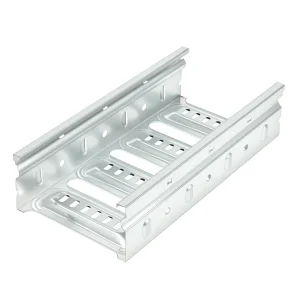
High Load Capacity Pre-Galvanized Cable Tray
View Specs & Price -
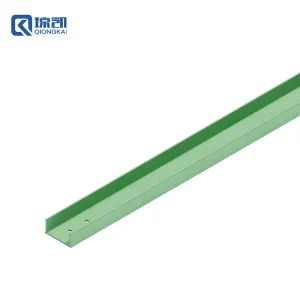
FRP Fiberglass Cable Trunking Trough 100*50
View Specs & Price -
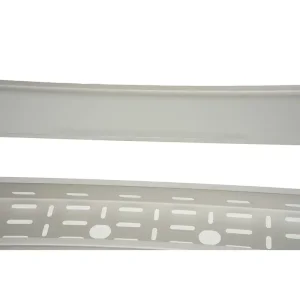
Custom Stainless Steel Cable Tray Channel
View Specs & Price -
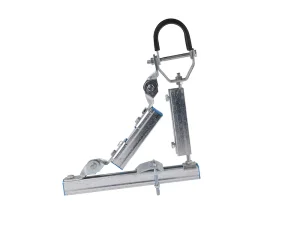
Heavy Duty Seismic Resistant Channel Bracket
View Specs & Price -
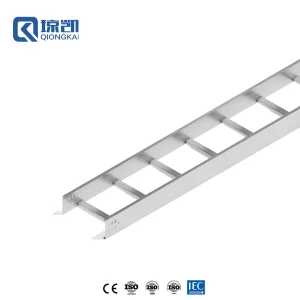
Galvanized Ladder Type Cable Tray 400*150
View Specs & Price -
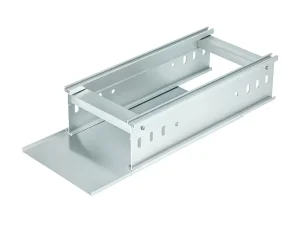
Reinforced GI & HDG Ladder Cable Tray
View Specs & Price -
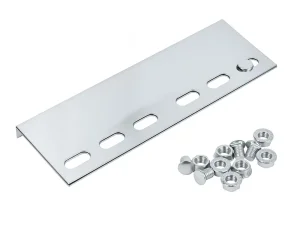
Pre-Galvanized Tray Couplers & Spare Connectors
View Specs & Price -
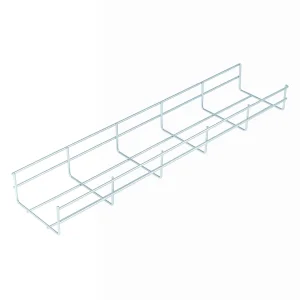
Pre-Galvanized Grid Wire Mesh Tray 100*50mm
View Specs & Price