
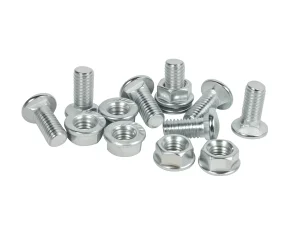
Buy Bridge frame screws Supplier, Factories
Inquire SpecificationsIndustrial-grade modular raceway components and structural fittings directly sourced from ISO-certified production facilities.
Buy Bridge frame screws Supplier, Factories
Inquire Specifications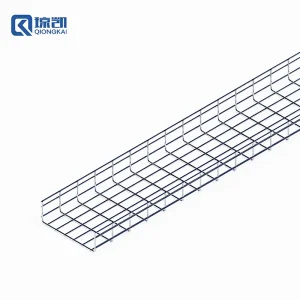
Wholesale Pre-galvanized Basket Cable Tray 300*100 Manufacturers, Price
Inquire Specifications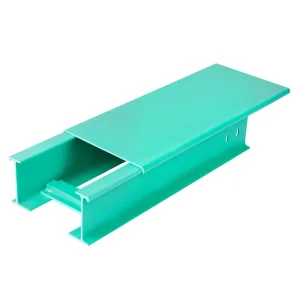
Buy Light Weight FRP Ladder type Cable Tray Manufacturers, Supplier
Inquire Specifications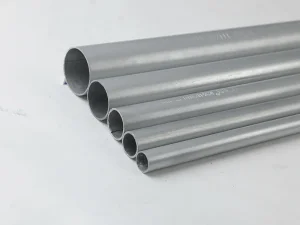
Buy DN20 DN25 conduit Supplier, Factories
Inquire Specifications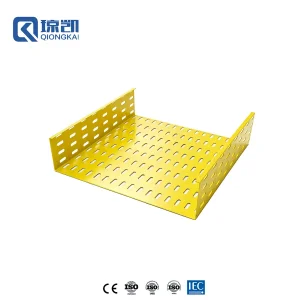
Wholesale PG/HDG Cable Tray with Reinforce Ribs - Yellow 400*100
Inquire Specifications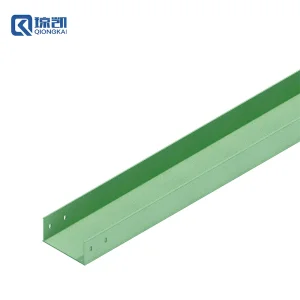
Buy FRP Cable Trunking Trough Type Channel 400*200 Supplier, Factory
Inquire Specifications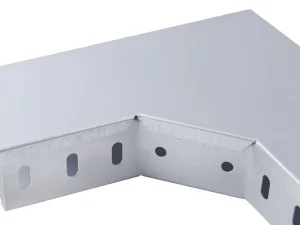
Buy Pre Galvanized Elbow / Tee / X for cable tray with cover
Inquire Specifications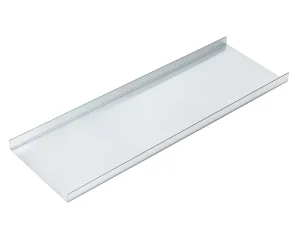
Buy Pre-Galvanized Cable Tray Cover Cable Protection
Inquire SpecificationsIndustrial cable containment relies on structural strength, electrical continuity, and thermodynamic stability. Aluminum cable tray systems with integrated covers represent the pinnacle of modern electrical distribution protection.
The enclosed solid-bottom aluminum trough paired with a tight-fitting flanged cover creates a continuous Faraday cage effect. This shields sensitive telecommunication, fiber optic, and SCADA cables from excessive electromagnetic interference (EMI) in high-voltage industrial sub-stations.
Unlike carbon steel which requires sacrificial zinc coatings, aluminum alloys naturally form an instantaneous, microscopic aluminum oxide (Al₂O₃) passive film when exposed to oxygen. This self-healing boundary provides unmatched resistance to airborne chlorides, moisture, and sulfur dioxide.
Weighing approximately 65% less than structural carbon steel, extruded aluminum trays radically reduce structural deadload on ceiling trusses and pipe racks. This lightweight attribute speeds up field erection times, reduces crane rental fees, and trims global sea freight container tonnage.
Compare mechanical properties across standard industrial containment profiles to ensure your project meets local NEMA VE-1 / CSA C22.2 No. 126.1 requirements.
| Material / Profile Spec | Yield Strength (MPa) | Self-Weight (kg/m @ 300mm) | Thermal Expansion Coeff. | Cover Attachment System | Recommended Project Environment |
|---|---|---|---|---|---|
| Extruded Aluminum 6063-T6 | 215 MPa | 2.45 kg/m | 23.4 × 10⁻⁶ /°C | Snap-on / Heavy-duty Bolt Wrap | Marine, Coastal, High UV Solar Farms, Datacenters |
| Pre-Galvanized Steel (PG) | 250 MPa | 6.80 kg/m | 12.0 × 10⁻⁶ /°C | Turn-Buckle / Flanged Screws | Dry Climate Commercial Plenums & Subfloors |
| Hot-Dip Galvanized (HDG) | 275 MPa | 7.40 kg/m | 12.0 × 10⁻⁶ /°C | External Saddle Clamp Clasp | Heavy Industrial, Smelters, Chemical Petrochem |
| Fiberglass Reinforced Polymer (FRP) | 180 MPa | 3.10 kg/m | 18.0 × 10⁻⁶ /°C | Non-metallic 316SS Peel Latches | Corrosive Acids, Wastewater Refining, Offshore Rig |
How our multi-facility manufacturing ecosystem in Shanghai drives cost optimization, rapid fabrication, and risk-managed delivery for global engineering conglomerates.
By securing direct billet allocations from prime smelting plants, our factories eliminate middleman metal markups, guaranteeing tight dimensional tolerances on sidewall rails.
Our 12 continuous assembly lines feature automated punch tooling, automated seam welders, and precise bending cells ensuring consistent snap-lock cover alignment.
Proximity to Yangshan and Waigaoqiao ports guarantees direct sea freight routes, container stuffing optimization, and minimal drayage costs for global delivery.
Every extruded batch undergoes spectral analysis, eddy-current thickness checks, and destructive mechanical yield testing with traceable mill test certificates (MTC).
Powering multi-billion-dollar infrastructure ventures across APAC, EMEA, and the Americas.
Meeting international electrical, structural, and fire regulations requires precision documentation, engineering calculations, and localized testing standards.
Our aluminum trays are manufactured and batch-verified in strict compliance with NEMA VE-1 for metal cable tray systems, CSA C22.2 No. 126.1, and IEC 61537. Whether your project necessitates Class 20B, 20C or heavy industrial beam spans up to 6 meters, our engineering schedules include deflection profiles and structural capacity ratings.
To eliminate cross-border engineering bottlenecks, our dedicated project managers provide bilingual shop drawing submittals, load schedule calculations, seismic bracing configurations, and custom bill-of-materials (BOM) breakdowns. We supply custom CAD blocks and 3D BIM models ready for clash detection in Revit and Navisworks.
Field-tested installations demonstrating performance in demanding thermal, marine, and hyperscale environments.
Overhead aluminum cable raceways equipped with snap-in covers prevent dust accumulation, restrict unauthorized physical line taps, and ensure strict airflow partition containment between cold and hot aisles.
Heavy salt mist, sea breezes, and ultraviolet degradation rapidly compromise conventional zinc coatings. Marine-grade 6063-T6 aluminum tray systems ensure 30+ year lifecycle resilience without peeling, chalking, or red rust.
DC string cable drops require physical weatherproofing against windborne sand abrasives, direct sunlight UV, and hail impact. Solid-bottom aluminum trunking with peaked shed-type covers guarantees reliable, uncompromised power feed.
The cable containment sector is advancing through smart sensor integration, low-carbon production processes, and pre-engineered modular assembly methods.
Decarbonization is reshaping modern procurement mandates. We are expanding the use of hydro-powered low-carbon aluminum billets, enabling Tier-1 EPC contractors to slash Scope 3 embodied carbon metrics without sacrificing yield strength.
Labor shortages continue to drive up field mechanical installation budgets. Innovative tray covers feature precision spring-cam clip channels that lock firmly into tray side rails without screws, saving up to 40% in field installation labor hours.
Next-generation tray assemblies are integrating fiber optic linear heat sensors directly within the tray sidewall channel. This provides predictive hotspot detection along power cable bundles before insulation breakdown occurs.
Detailed answers to critical engineering and procurement questions regarding aluminum cable trays with covers.
6063-T6 aluminum offers an exceptional strength-to-weight ratio, weighing approximately 65% less than structural steel while retaining a yield strength above 215 MPa. This dramatically lowers dynamic roof loads and labor costs during overhead staging. Furthermore, aluminum forms a self-healing surface oxide film that provides superior corrosion resistance in marine and damp industrial settings without requiring hot-dip maintenance.
According to NEC Article 392 and IEC 61537, installing solid covers over cable trays restricts natural convection cooling, requiring ampacity derating factors (typically between 0.85 and 0.95 depending on conductor packing density). Where high-current cables generate significant heat, we supply louvred (ventilated) covers or raised cover clamps that maintain a 1 to 2-inch continuous ventilation gap while continuing to provide mechanical and debris protection.
We manufacture solid flat covers, flanged covers with turn-buckle clasps, peaked/shed-style covers designed to shed rainwater and debris in outdoor installations, and louvred covers for heat dissipation. Attachment styles range from tool-less snap-fit designs to heavy-duty bolted wraps engineered to withstand high coastal wind loads.
Yes. Extruded 6063-T6 marine-grade aluminum is one of the most durable materials for seaside, offshore, and coastal operations. When paired with 316 stainless steel splice hardware, aluminum systems effectively resist salt spray corrosion and outlast standard pre-galvanized or painted steel installations.
Aluminum is a superior electrical conductor. System bonding is maintained using UL-classified copper or tin-plated bonding jumpers across splice joints, or by utilizing serrated flange hardware that cuts through the aluminum oxide skin to form a verified low-resistance path to ground, in full compliance with NEC 250.96 and 392.60.
Standard profile sizes (100mm to 600mm widths) typically require 15 to 20 days for a 40HQ container load. Bespoke profiles, special anodizing, or custom RAL powder coating generally take 25 to 30 days. Express manufacturing slots can be arranged for priority engineering phases.
Complementary structural components, heavy-duty raceways, and fittings manufactured for global EPC and commercial builds.
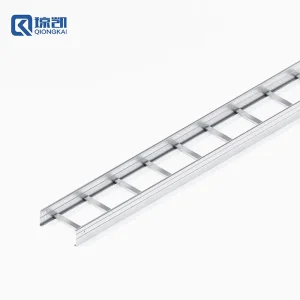
Buy Heavy Duty PG or HDG Cable Ladder 400*150 Manufacturers, Supplier
Inquire Specifications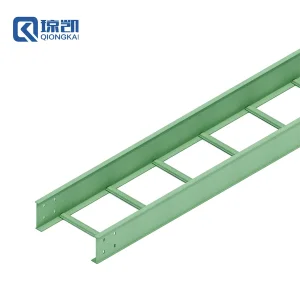
Buy FRP Ladder Type Cable Tray 400*150 Supplier, Factory
Inquire Specifications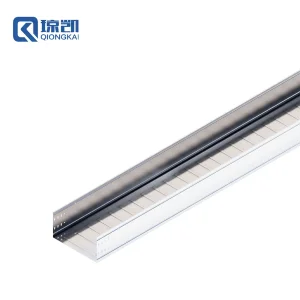
Wholesale Reinforced Molded PG Cable Trunking Channel 400*200
Inquire Specifications
Wholesale 300*100 Powder Coated Cable Trunking Manufacturers
Inquire Specifications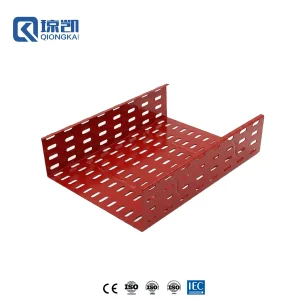
Buy PG Cable Tray with Reinforce Ribs - Red 300*100 Suppliers
Inquire Specifications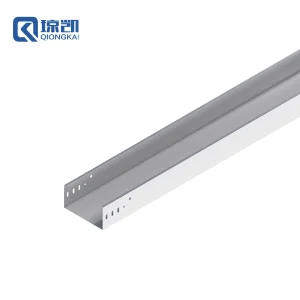
Wholesale Carbon Steel PG HDG SS Cable Trunking 200*100
Inquire Specifications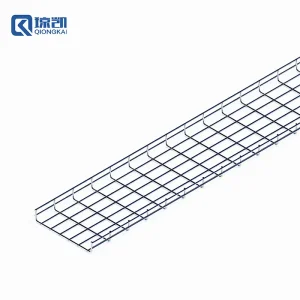
Wholesale Pre-galvanized Grid Cable Tray 300*50 Manufacturer
Inquire Specifications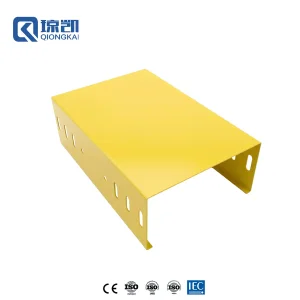
Buy PG Cable Trunking Channel - RAL1080 Yellow 200*100
Inquire Specifications