
Coordinated Raceway & Busbar Distribution Trays
Engineered support channels, perforated raceways, and reinforced cable trunking manufactured to ensure maximum mechanical rigidity, optimized electromagnetic compatibility (EMC), and seamless high-amp busway integration.
The Evolution of Busbar Trunking Systems (BTS) in Megawatt Architectures
Modern electrical distribution has reached a decisive inflection point. The historical paradigm of pulling massive, parallel multicore power cables through cumbersome conduit raceways is increasingly unviable in modern mega-facilities. Complex high-amperage installations demand compact footprints, low electromagnetic field emissions, superior heat transfer dynamics, and reconfigurable plug-in adaptability.
AI Data Centers & Rack Power Densities
With modern accelerated computing clusters and AI servers driving rack power envelopes from 15kW to upwards of 60kW–100kW per footprint, traditional floor-mounted Power Distribution Units (PDUs) and subterranean cable spaghetti present fatal airflow bottlenecks. Overhead open-track busbar trunking systems with rapid plug-in tap-off units (PIUs) have emerged as the global de facto standard, slashing installation timelines by 60% while optimizing airflow and operational transparency.
Enhanced Short-Circuit Current Withstand (Icw)
Electrification in automotive gigafactories, battery storage facilities, and utility substations introduces extreme fault level risks. Modern sandwich busbar trunking designs utilize high-pressure insulated sandwich geometry that inherently neutralizes electrodynamic repulsive forces during transient short circuits, achieving short-time withstand currents exceeding 100kA rms for 1 second, far outclassing standard spaced cable arrays.
LCA Carbon Footprint & Material Circularity
Decarbonization mandates push EPC contractors toward busway topologies utilizing 100% recyclable, extruded aluminum alloy housings (acting as an integrated 50% or 100% ground path) and precision-profiled copper conductors. Busways boast an operating lifespan exceeding 40 years with over 98% end-of-life recyclability, sharply decreasing scope 3 embodied carbon across greenfield developments.
Global Procurement Matrix: Engineering Parameters & Metallurgical Selection
Procurement engineers and mechanical-electrical-plumbing (MEP) directors face rigorous trade-offs between conductor metallurgy, thermal dissipation, footprint constraints, and life-cycle costs. The engineering comparison below provides the quantitative foundation for drafting robust tender specifications.
| Evaluation Parameter | Sandwich Compact Busduct | Cast Resin Solid Busway | Air-Insulated Busduct | Traditional Heavy Multicore Cables |
|---|---|---|---|---|
| Conductor Metallurgy | 99.99% ETP Copper / Nickel-plated Al | High-purity Oxygen-Free Copper | Tinned Copper or EC-Grade Aluminum | Class 2 Stranded Copper / Aluminum |
| Ingress Protection (IP) | IP54 to IP66 | IP68 Submersible | IP30 to IP42 (Indoor dry only) | IP67 (Gland termination dependent) |
| Current Rating Envelope | 250A to 6,300A | 400A to 6,300A | 100A to 2,000A | Individual cable runs (Derated above 600A) |
| Voltage Drop Characteristic | Extremely Low (Minimal inductive reactance) | Very Low (Homogeneous dielectric) | Moderate (Larger conductor spacing) | High (Substantial inductive reactance on long runs) |
| Fire Integrity Rating | Class B or F (Up to 120 min fire-stop) | Class F/H (Exceeds 180 min fire resistance) | Low (Chimney effect in vertical risers) | Requires expensive Mica-tape wrapping |
| Space & Weight Profile | Ultra-compact, low bending radius | Heavy structural load, high rigidity | Bulky enclosure envelope | Bulky tray space, high congestion, heavy bending |
| Tap-off Flexibility | Plug-in ports every 0.6m - 1.0m on demand | Pre-engineered factory fixed tap-offs | Moderate, slide-gate tap-offs | Rigid; requires cable splicing & junction boxes |
Formulaic Voltage Drop Determination
Unlike insulated cable bundles where inductive spacing causes elevated reactive impedance ($X$), compact sandwich busbars maintain an extremely narrow air-gap profile, compressing phase conductors tightly against each other. The formula governing 3-phase line-to-line voltage drop ($\Delta U$) across balanced networks is expressed as:
Because the geometric inductive reactance ($X$) of sandwich busways is roughly 3 to 5 times lower than conventional cable runs, overall voltage drops across 100m vertical risers or massive horizontal plant runs are kept well within the stringent 2% to 3% tolerances mandated by international energy codes.
Metallurgical Engineering: OFHC Copper vs. Bimetal Aluminum
When issuing high-volume wholesale tenders, discerning engineering teams critically distinguish between conductor grades:
- Oxygen-Free High Conductivity (OFHC) Copper: Boasts ≥ 99.95% IACS electrical conductivity, minimum contact resistance at joints, and superior resistance to cyclic thermal creep under surging cyclical loads.
- Electrical Conductor Grade (1350/6101) Aluminum: Offers dramatic mass reduction (nearly 50% lighter than copper installations) and superior cost-effectiveness. High-reliability aluminum busways utilize continuous electro-plating of copper and tin/silver at joint contact zones to permanently eliminate galvanic corrosion and galvanic hot spots.
Macro Industry Solutions: Engineered Systems for Demanding Sectors
Busbar trunking cannot be evaluated in isolation. It functions within an orchestrated structural envelope alongside heavy-duty cable trunking, cable ladders, and unistrut support brackets to guarantee structural integrity and uninterrupted uptime.
Hyperscale Cloud & AI Data Halls
Engineering Challenge: Continuous re-architecting of server racks, extreme reliability constraints, zero tolerated downtime for power expansions.
Turnkey Architecture: Overhead track busways (250A to 800A) coupled with tool-free, hot-swappable plug-in tap-off boxes equipped with circuit breakers, digital power meters, and Modbus/SNMP communications. Paired directly with wire mesh basket cable trays for isolated low-voltage optical fiber pathways.
Super-Tall Commercial Skyscraper Risers
Engineering Challenge: High thermal expansion over 50–100 stories, building sway, vertical structural load deflection, and strict horizontal/vertical fire compartments.
Turnkey Architecture: High-amperage sandwich busbars (1,600A to 4,000A) with internal spring-loaded vertical floor-support hangers, flexible thermal expansion joints every 30 meters, and integrated certified mineral-wool fire-stop barriers achieving up to 4-hour fire integrity per UL 1479 / BS 6387.
Petrochemical & Offshore LNG Facilities
Engineering Challenge: High chloride content in marine ambient air, corrosive atmospheric humidity, explosive vapor zones, and exposure to washdowns.
Turnkey Architecture: Cast resin busbar systems featuring an entirely solid, non-porous composite inorganic resin casing providing true IP68 immersion protection, Class F insulation, and zero combustibility, anchored by heavy-duty 316L stainless steel and hot-dip galvanized unistrut framing.
Automotive Stamping & EV Battery Gigafactories
Engineering Challenge: Dynamic non-linear cyclic loads, significant 3rd/5th harmonic distortion, heavy mechanical vibrations from metal stamping presses.
Turnkey Architecture: Low-impedance busways equipped with oversized 200% neutral conductors to eliminate harmonic overheating, integrated with anti-seismic bracing channels, high-temperature Class B/F joint insulation, and modular tap-off drops feeding robotic weld lines directly.
Global Standards Compliance & Factory-Direct Verification
Shanghai Qiongkai Industry Co., Ltd. operates with end-to-end quality sovereignty across three dedicated manufacturing complexes. As an authoritative supplier to marquee public works—including Shanghai Hongqiao International Airport and offshore energy installations across Qatar and Southeast Asia—every production batch undergoes rigorous routine and type testing.
IEC 61439-6 Compliance
Full third-party type test verification for temperature rise limits, dielectric properties, short-circuit withstand ($I_{cw}$), structural resistance, and protection against electric shock.
Torque-Indicating Fasteners
Joints utilize double-headed shear-off torque bolts. The outer head fractures cleanly at precisely calibrated torque (e.g., 55 N•m), eliminating human error during site assembly.
Class F / H Insulation
Multi-layer automatic automated polyester / epoxy / polyamide films wrap conductors seamlessly, delivering 130°C to 180°C thermal withstand with zero halogen gas emission.
Seismic Seismic Bracing
Certified tri-axial shake-table tested to AC156 criteria and IBC Seismic Zone 4 parameters, safeguarding vital operational power networks against earthquake disruptions.
Direct Factory Engineering Muscle
Eliminating intermediary trading overhead, Qiongkai deploys more than 60 heavy-duty production machines, high-precision automated punch presses, and multi-stage CNC bending cells. Our in-house technical bureau collaborates with client BIM/MEP teams, ingesting AutoCAD / Revit models to generate exact 3D spatial routing layouts, clash-detection reports, and fully prefabricated feeder elbows before steel is cut.
Rapid Spares & Local Site Packaging
Export orders are custom packed with IP65 moisture-barrier shrink-wrapping, reinforced export crates, and barcoded segment identifiers matching site installation schematics. Joint packages, standard monoblock splice kits, extra terminal end-feed boxes, and spare connection hardware ship directly to project ports in Europe, the Middle East, Southeast Asia, and the Americas.
Technological Roadmap: Intelligent, Self-Monitoring Busways (2025–2035)
The frontier of busbar trunking systems combines electrical power conductivity with edge intelligence, integrated diagnostics, and materials science breakthroughs.
IoT-Enabled Thermal & Partial Discharge Sensors
Embedding wireless Surface Acoustic Wave (SAW) sensors and passive RFID thermal tags directly inside joint splice plates. Operating without internal batteries, these micro-transponders relay millisecond temperature data to central BMS systems, identifying micro-ohm resistance anomalies months before thermal runaway or insulation flashover occurs.
Graphene-Enhanced Thermal Dissipation Coatings
R&D breakthroughs in exterior extruded aluminum housing treatments now incorporate graphene-infused electro-deposition polymers. These advanced coatings accelerate radiative heat transfer from the core sandwich assembly into ambient space by up to 18%, allowing engineers to increase nominal current density without exceeding internal temperature rise limits.
Modular DC High-Voltage Distribution Systems
Driven by renewable microgrids, battery energy storage systems (BESS), and hyperscale direct-DC computing racks, future busway designs are transitioning from 415V/690V AC to 800V/1500V DC topologies. This architecture eliminates conversion losses, requiring specialized internal arc-quenching geometries and ultra-dielectric phase insulation layers.
Frequently Asked Questions: Busbar Trunking Systems & Technical Logistics
Concrete technical responses addressing key queries raised by project managers, electrical MEP consultants, and procurement directors during project design and vendor shortlisting.
What structural advantages does a compact sandwich busway hold over traditional cable-in-tray systems?
How does conductor material choice (Copper vs. Aluminum) affect performance, footprint, and total cost?
What ingress protection (IP) ratings are necessary for indoor, outdoor, and harsh environment installations?
How is fire-stop and circuit integrity maintained across concrete floor slabs and partition walls?
How are thermal expansion and seismic vibrations accommodated along long busway lengths?
What prevents joint contact failure or loose connections over decades of thermal cycling?
Can plug-in tap-off units (PIUs) be safely connected or disconnected while the busway is energized?
What harmonics mitigation strategies exist for high non-linear computer or variable-frequency drive (VFD) loads?
What documentation, testing certificates, and BIM resources are provided with wholesale export shipments?
What are standard lead times, container packing methodologies, and minimum wholesale order parameters?
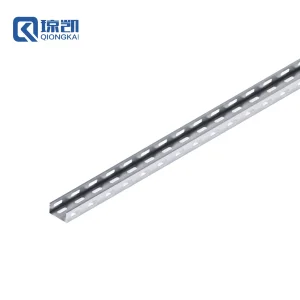
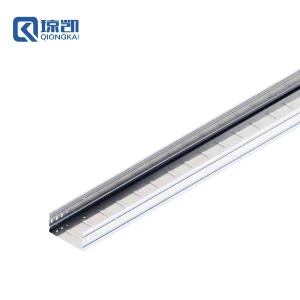
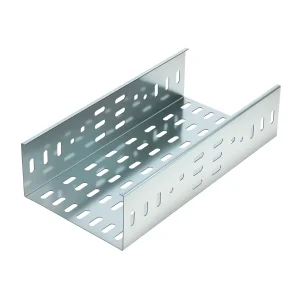
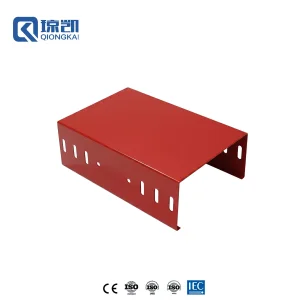
High-Capacity Structural Raceways & Specialized Cable Trunking
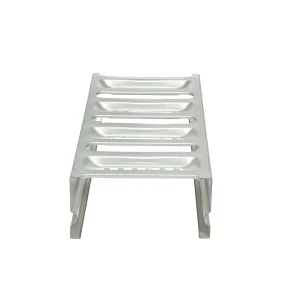
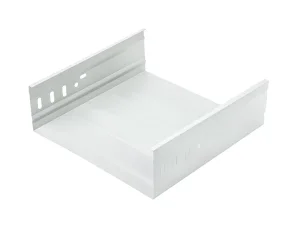
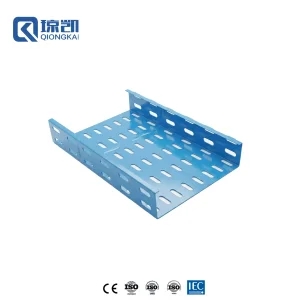
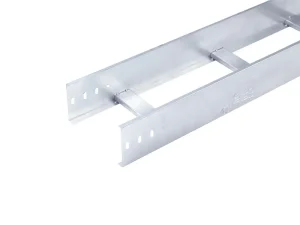
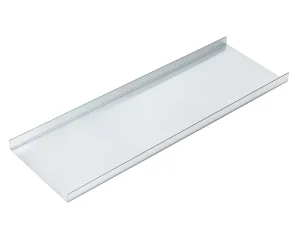
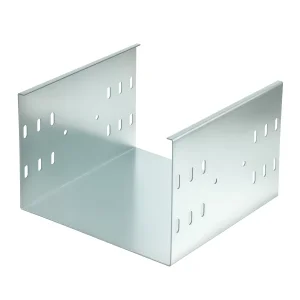
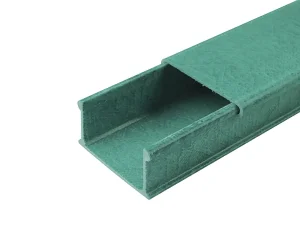
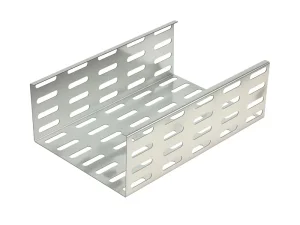
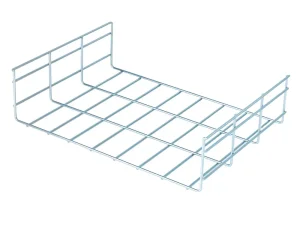
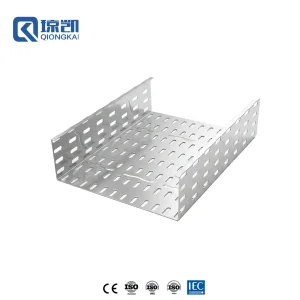
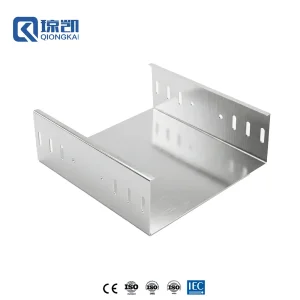
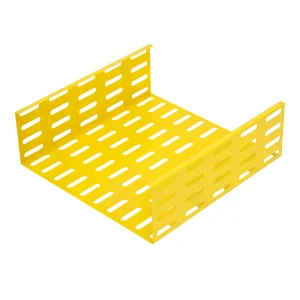
Complementary heavy-gauge cable trunking channels, perforated cable trays, and hot-dip galvanized protective covers designed to house control lines, auxiliary circuits, and feeder trunking infrastructure.
Architect Your High-Amperage Distribution with Factory Precision
Upload your project single-line diagrams (SLD), bill of quantities (BOQ), or spatial layout models. Our senior electrical engineering team delivers complete takeoff calculations, voltage drop verification, and factory-direct wholesale pricing within 24 business hours.