
Featured Cable Support & Structural Enclosure Assemblies
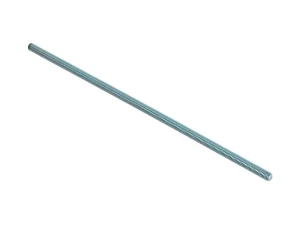
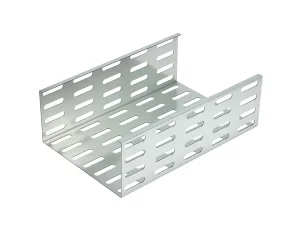
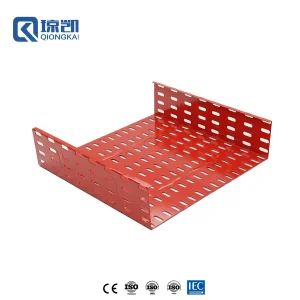
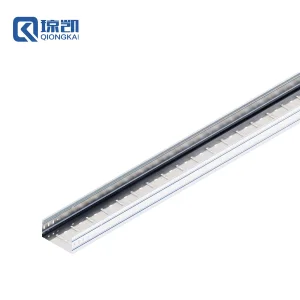
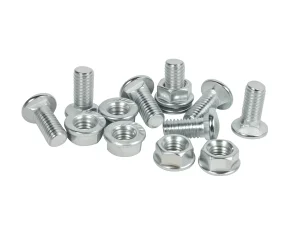
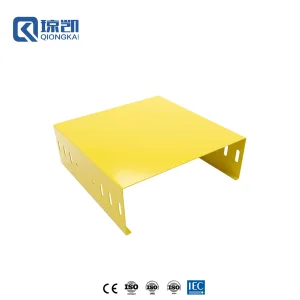
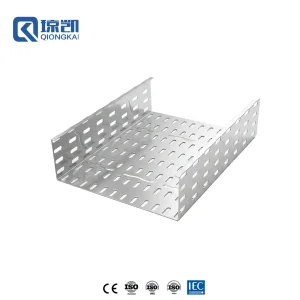
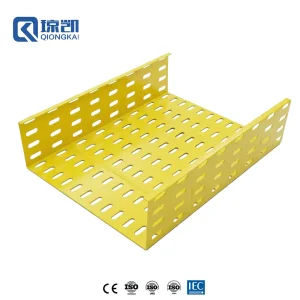
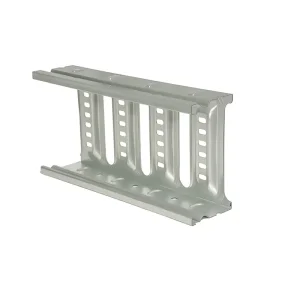
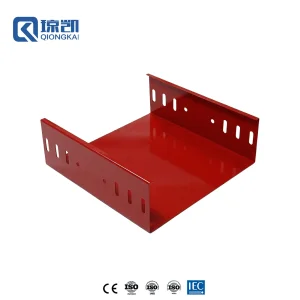
Engineered components, threaded rods, perforated support profiles, and heavy-duty reinforced powder-coated channels produced in our Songjiang and regional fabrication lines for severe industrial applications.
Wholesale Cable Bus Systems: The Modern Bulk Power Alternative
As contemporary industrial loads expand and electrical infrastructure transitions toward higher efficiency, traditional sandwich-style non-segregated bus ducts and multiple conduit banks frequently exhibit severe engineering bottlenecks. Engineered cable bus duct systems manufactured by Qiongkai deliver a completely coordinated, short-circuit proof, free-air rated continuous conductor power feeder network designed for primary substation-to-switchgear, generator tie-in, and high-megawatt industrial distribution.
Information Gain Paradigm: Unlike conventional bus duct systems that rely on mechanical friction joints susceptible to moisture ingress, thermal cycling bolt loosening, and irreversible flashover propagation, our wholesale cable bus systems employ unbroken insulated copper or aluminum conductors arranged in rigid non-magnetic blocks within a ventilated protective metal housing. This ensures 100% continuous phase integrity without internal joints from terminal to terminal.
Phase Transposition & Balanced Impedance
Current imbalance in high-ampacity parallel cable runs can trigger severe localized overheating and transformer harmonic reflection. Our cable bus systems utilize precision-engineered phasing geometry (including triangular and trefoil cluster positioning). By actively neutralizing self-inductance and mutual-inductance across conductors, we ensure balanced load current distribution within ±2%, optimizing transmission efficiency and preventing localized neutral overloading.
Electrodynamic Fault Stabilization
During a transient through-fault or sub-transient short circuit, parallel cables experience extreme mechanical repulsion forces governed by Ampere's Law ($F \propto I^2 / d$). Qiongkai integrates CNC-machined, high-dielectric, non-hygroscopic glass-filled polyester or cycloaliphatic support blocks spaced at mathematically calculated critical intervals (typically 450 mm to 900 mm), mechanically restraining dynamic conductor deformation during 100 kA RMS symmetrical fault surges.
Unrestricted Natural Convection (Free-Air Rating)
Enclosed steel conduits and non-ventilated ducts penalize conductor ampacity with severe thermal derating factors (often requiring a 40–50% cross-section upsize per NEC Table 310.15). Our ventilated extruded aluminum housing maintains continuous air circulation, allowing cables to operate at their true 90°C or 105°C free-air ratings per NEC Article 392, drastically reducing the conductor weight and lowering copper procurement expenditures.
Macro Industry Solutions & Infrastructure Integration
From energy transition assets to intensive manufacturing plants, Qiongkai cable bus systems eliminate installation friction and safeguard electrical reliability across critical global operations.
Hyperscale Data Centers & Mission-Critical AI Campuses
Modern AI computing clusters demand immense continuous current densities with zero fault tolerance. Sandwich bus ducts installed in overhead service corridors present catastrophic risks from condensation accumulation and sprinkler leakage. Qiongkai cable bus systems utilize completely insulated, moisture-impermeable single conductors housed in non-combustible enclosures, providing continuous, uninterruptible power between step-down transformers, medium-voltage switchgear, and backup diesel/UPS generator banks.
Utility Substation Upgrades & Generation Tie-Ins
Interconnecting primary step-up transformers (GSU) to substation switchgear yards requires resilience against severe atmospheric conditions, lightning impulses, and seismic ground acceleration. With high mechanical stiffness, span capabilities up to 6 meters (20 feet) between structural bents, and integrated grounding profiles, our wholesale cable bus assemblies simplify long-distance outdoor substation routing where underground duct banks are prohibitively expensive or water-logged.
Petrochemical, LNG & Heavy Metallurgical Facilities
Corrosive petrochemical atmospheres (sulfur dioxide, hydrogen sulfide, saline mist) rapidly degrade conventional electrical sheet-metal enclosures. Leveraging our extensive project background—such as custom profiled solutions delivered for Qatar offshore LNG installations and heavy-duty systems for Southeast Asian chemical sites—Qiongkai produces marine-grade 6063-T6 aluminum, SS316 stainless steel, and FRP-coated enclosures that guarantee 30+ years of operational durability in severe ISO 12944 C5-M marine/industrial environments.
Comparative Engineering Matrix: Cable Bus vs. Legacy Systems
Quantitative evaluation for consulting electrical engineers, specifying authorities, and EPC contractors seeking lifecycle cost optimization and risk minimization.
| Performance Parameter | Qiongkai Engineered Cable Bus | Sandwich Non-Segregated Bus Duct | Multiple Rigid Steel Conduit Banks |
|---|---|---|---|
| Internal Splice Joints | 0 Joints (Continuous Run) | Joint bolted every 3 meters (Failure prone) | Zero joints, but multiple difficult pull boxes |
| Short-Circuit Bracing | Up to 100kA+ RMS Sym. | 65kA to 100kA (High joint vulnerability) | Limited by conduit spacing and pulling tension |
| Thermal Rating & Derating | 100% Free-Air Ampacity | Internal heat trapping; strict derating required | Severe thermal derating (Up to 50% derate) |
| Moisture & Ingress Resistance | IP33 / IP55 / IP66 Ventilated/Sealed | Vulnerable; seal breakdown causes internal arc | Moisture collects in low conduit traps |
| Enclosure Material | Marine 6063-T6 Aluminum / SS316 / HDG | Galvanized sheet steel or thin aluminum | Carbon steel, PVC coated, or rigid aluminum |
| Structural Weight / Footprint | Compact & Lightweight | Heavy; complex structural hanger design | Extremely heavy; massive structural support racks |
| Maintenance Requirements | Virtually Zero Maintenance | Annual thermography & bolt retorquing | Periodic cable inspection and water pumping |
Global Compliance Standards & Quality Engineering
Every cable bus housing, support block, and accessory batch produced across our 3 manufacturing centers undergoes rigorous mechanical, electrical, and metallurgical verification to ensure flawless conformance with international standard frameworks.
North American Standard Harmonization
Fully compliant with IEEE C37.23 (Standard for Metal-Enclosed Bus), NFPA 70 / NEC Article 368 & 392, and UL 857. Support block assemblies fulfill UL 94 V-0 flame-retardant self-extinguishing criteria, ensuring maximum safety within commercial and industrial facilities.
IEC & International Utility Norms
Certified in accordance with IEC 61439-6 (Low-voltage switchgear and controlgear assemblies – Part 6: Busbar trunking systems) and IEC 60529 for enclosure protection ingress classes. Complete load deflection verification conducted strictly according to NEMA VE 1 / VE 2 loading guidelines.
Seismic Zone 4 & Extreme Environmental Rating
Structurally calculated and dynamic shake-table tested to withstand Seismic Zone 4 accelerations under the International Building Code (IBC) and California OSHPD criteria. Optimized for extreme ambient extremes from -50°C arctic conditions up to +60°C high-solar-load desert installations.
Proven On-Site Performance: Global Case Deployments
Since our inception in 2005 in Songjiang, Shanghai, Qiongkai has expanded from core prefabricated components to engineering and exporting heavy electrical support and bus systems worldwide.
Aviation Hub: Shanghai Hongqiao Airport
Supplied engineered, high-durability CT series trunking and support channel systems for mission-critical power distribution rooms and high-density passenger terminal service corridors, meeting stringent public facility fire-retardant and smoke emission requirements.
Offshore LNG Complex: Qatar Energy Expansion
Engineered and fabricated custom high-load non-magnetic profiled sections and FRP-lined support frames designed to resist extreme Persian Gulf ambient thermal exposure and persistent marine chloride attack.
Heavy Industrial Infrastructure: EU & Italy
Successfully packed and exported containerized hot-dip galvanized cable trays, structural channel brackets, and heavy-gauge power duct enclosures for major industrial plants in Italy conforming directly with stringent European CE manufacturing norms.
Technology Roadmap: Next-Generation Cable Bus Systems
As power networks adopt digitized asset management and low-carbon materials, Qiongkai continues investing in next-generation manufacturing technologies to deliver smarter, greener transmission housings.
Distributed Fiber-Optic Thermal Sensing (DTS)
Integrating micro-conduit channels directly within the cable bus housing allows optical fiber thermal cables to monitor conductor surface temperatures in real time with 0.1°C precision, predicting thermal anomalies before insulation degradation occurs.
Decarbonized Metallurgy & Circular Aluminum
Accelerating sustainability goals through green certified hydroelectric-smelted aluminum profiles and scrap-recycled galvanized alloys, cutting embedded carbon footprints by up to 45% to help clients achieve Scope 3 LEED and BREEAM certifications.
BIM LOD 400 Digital Twin Fabrication
Providing native Revit, STEP, and IFC parametric models directly for contractor engineering teams, enabling 100% collision-free layout planning around complex MEP piping, HVAC systems, and structural building elements before factory fabrication begins.
Frequently Asked Questions: Cable Bus Systems
In-depth technical answers addressing electrical configuration, impedance calculation, short-circuit withstand capabilities, and direct factory procurement.
What fundamentally distinguishes a cable bus system from a conventional non-segregated bus duct?
How does cable bus achieve a "free-air" rating under NEC and IEC regulations?
Why is phase configuration critical in parallel cable bus layouts?
What short-circuit withstand ratings can Qiongkai cable bus assemblies accommodate?
Can Qiongkai manufacture custom enclosures for corrosive or hazardous coastal installations?
How does the total installed capital cost (CAPEX) compare to conduit banks or traditional bus duct?
What engineering documentation does Qiongkai provide during project execution?
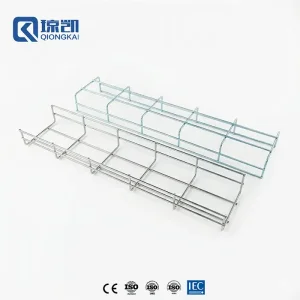
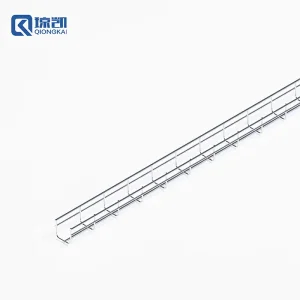
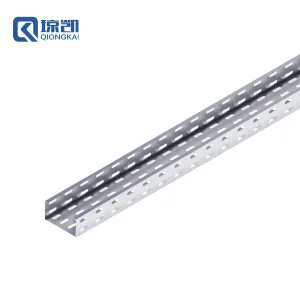
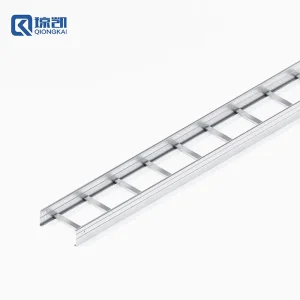
Heavy-Duty Cable Trays, Wire Mesh & Structural Ladders
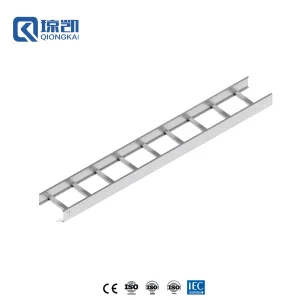
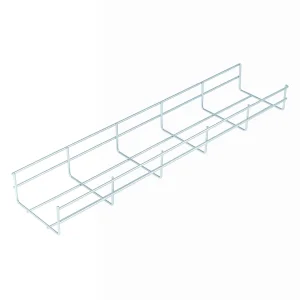
Explore additional heavy-duty structural cable management profiles, pre-galvanized and hot-dip galvanized wire mesh trays, and engineered ladder assemblies ready for worldwide delivery.
Optimize Your Industrial Cable Bus System With Qiongkai
Submit your project one-line diagram (SLD), continuous ampacity requirements, short-circuit fault levels, and physical routing restrictions. Our dedicated senior engineering team will provide a comprehensive engineering layout, phase transposition schedule, and direct factory pricing proposal.