Direct Sourcing Catalog
High-Performance Cable Tray & Ladder Series
Explore production-grade cable ladder and tray systems engineered for mission-critical infrastructure, industrial processing, and extreme thermal resilience.
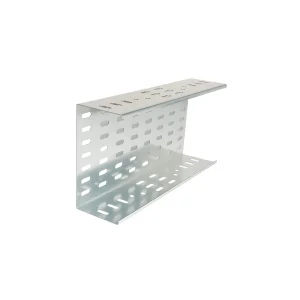
Buy Pre Galvanized High load capacity cable tray Factory, Price
Request Direct Quote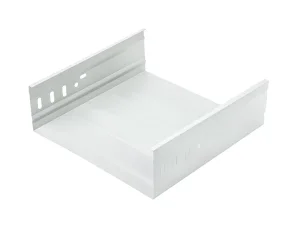
Wholesale Lightweight tenacity aluminium molded cable tray Suppliers, Price
Request Direct Quote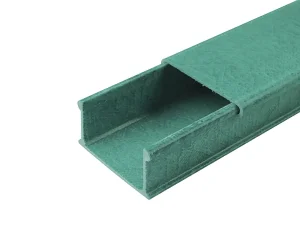
Wholesale High Quality FRP Cable Tray With Cover Suppliers, Factory
Request Direct Quote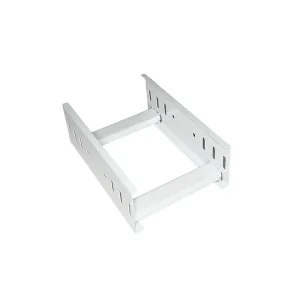
Buy Powder Coated Cable Ladder Manufacturers, Price
Request Direct Quote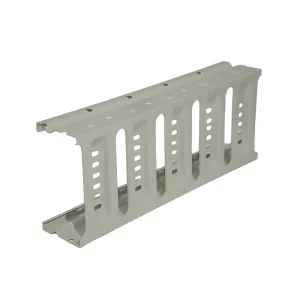
Buy Powder Coated Customizable Ladder Perforated Cable Tray Manufacturer, Factory
Request Direct Quote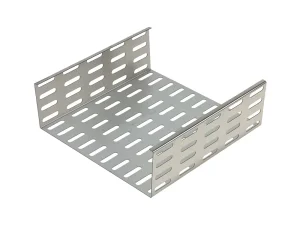
Wholesale Stainless Perforated Cable Tray 300mm - SS304 Suppliers, Factory
Request Direct Quote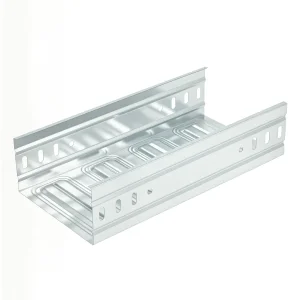
Buy Pre Galvanized molded cable tray200mm Suppliers, Factory
Request Direct Quote
Industry Whitepaper
Macro Industry Solutions & Global Deployment Status
Analyzing structural cable containment trends across modern mega-developments, hyperscale data farms, and high-corrosion process corridors.
Industrial Paradigm Shift: Cable Ladders vs Traditional Containment
In modern electrical systems, the continuous deployment of high-voltage transmission lines, instrument control networks, and dense fiber optics demands structural support systems that combine physical integrity with thermal mitigation. While solid-bottom trunking offers continuous physical shielding, it creates thermal traps that trigger conductor ampacity derating. The cable ladder architecture—comprising two longitudinal side rails joined by individual transverse rungs—remains the global benchmark for heavy power distribution.
With an open operational surface area exceeding 70%, cable ladders maximize natural convective airflow, reducing heat buildup in thick-jacketed power cables and allowing systems to operate at full ampacity ratings. For wholesale distributors and EPC procurement directors, factory-direct sourcing delivers verified rung-weld integrity, certified section modularity, and tight cost control across multi-kilometer rollouts.
| Containment System | Ventilation Efficiency | Span Load Deflection | Factory Processing & Handling | Recommended Deployment Corridors |
|---|---|---|---|---|
| Heavy-Duty Cable Ladder | High convective venting (>75% air contact) | NEMA 20C / IEC 61537 Class D (up to 6m spans) | Cold-formed rails, robotically welded rungs | Substations, Oil & Gas Racks, Mining & Heavy Manufacturing |
| Perforated Tray | Moderate convective venting (20-35% perforation) | Standard span (2m to 3m supports) | High-speed multi-stage punch pressing | Commercial risers, institutional MEP, light manufacturing |
| Wire Mesh Tray | Omnidirectional airflow (point-contact support) | Light to medium loading (1.5m to 2m spans) | Resistance-welded carbon/stainless wire grid | Data centers halls, overhead fiber routes, food cleanrooms |
| Solid Channel Trunking | Zero airflow (enclosed, derating required) | Medium deflection resistance depending on gauge | Continuous roll-forming with stamped snap-lids | EMC shielding, hazardous gas isolation, exposed exterior runs |
20+
Years Continuous Manufacturing (Est. 2005)
3
Specialized Shanghai Manufacturing Plants
30,000m²
Integrated Workshop & Warehouse Footprint
12
High-Precision Automated Roll-Forming Lines
Direct Factory Cost Engineering
Wholesale Cable Ladder Pricing Architecture
Understanding cost mechanics: raw material indices, coating metallurgies, freight geometry, and factory-level volume pricing.
Material Index & Coil Optimization
Factory tiering relies on base coil purchasing at scale (Q235B Carbon Steel, Marine-Grade Al-6063-T6, SS304/316L). By running automated coil-slitting directly in front of roll-forming setups, we reduce edge trim scrap from 8% down to under 1.8%, protecting unit prices from raw steel market swings.
Corrosion Barrier Cost Structures
Finish treatments define the pricing curve. Pre-galvanized (PG) steel delivers the lowest baseline per meter for controlled interiors. Hot-dip galvanization (HDG, ISO 1461, ≥65-85μm) requires molten zinc immersion, scaling pricing with piece weight. Pultruded FRP and passivated SS316 carry higher raw material costs, but eliminate field replacement cycles in harsh environments.
Container Nesting & Shipping Geometry
Cable ladders can drive high ocean freight bills if shipped improperly. Our systems use nested side-rail designs and modular rung assemblies that pack up to 45% more volume into 40ft HQ containers compared to pre-assembled rigid boxes. That saves wholesale buyers $0.80 to $1.40 per meter in ocean freight landed cost.
Standards & Compliance
Engineering Compliance & Structural Traceability
Stringent production controls that satisfy third-party engineering audits, seismic certifications, and regional safety mandates.
IEC 61537 & NEMA VE-1 Compliance
Every cable ladder run matches NEMA VE-1 load classifications and IEC 61537 mechanical deflection requirements. Verified Safe Working Load (SWL) curves ensure no more than 1/200th of span deflection under full cable packs and point-load scenarios.
Bonding & Earth Continuity
Electrical safety relies on low electrical resistance. Our precision-punched splice plate zones maintain cross-joint continuity below 0.05 ohms. That supports structural earth grounding pathways without requiring separate bonding jumpers across standard joints.
Seismic & Environmental Testing
Coupled with our 41-series seismic strut brackets, our ladders undergo full vibration and lateral seismic modeling (GB 50981, ASCE 7). Heavy zinc coatings (ASTM A123) pass rigorous neutral salt-spray (NSS) testing for coastal and offshore reliability.
Global Case Proof
Proven Deployments Across Global Infrastructure
Real-world project performance: from Shanghai transit hubs to Qatar LNG production tracks and European industrial installations.
Aviation Infrastructure
Shanghai Hongqiao International Airport
Engineered and supplied the corrosion-resistant CT series cable trunking and ladder network. Handled complex MEP routing across expansive passenger concourses and baggage facilities under strict fire safety and operational continuity guidelines.
Extreme Environment / LNG
Offshore LNG Terminal Platforms — Qatar
Engineered non-standard structural profiled support sections combined with high-grade pultruded FRP cable ladders. Withstands continuous UV degradation, saline fog, and ambient heat above 48°C without polymer degradation.
Heavy Manufacturing & Agritech
Paraguay Agri-Industrial Complexes
Supplied a high-load, value-engineered cable ladder infrastructure for large agricultural and feed production centers. Addressed organic ammonia-induced corrosion while keeping total installed costs within private capital budgets.
EU Industrial Sourcing
Shipment of HDG Cable Systems to Italy
Delivered automated, container-optimized runs of heavy-duty hot-dip galvanized cable trays and matching hardware. All components met CE electrical and mechanical standards for integration into Italian manufacturing corridors.
R&D Direction
Technical Roadmap: Next-Generation Cable Support
Advancing structural containment with smart metallurgy, automated modular joints, and lower carbon footprints.
Smart Manufacturing & High-Yield Metallurgy
As hyperscale cloud centers expand and offshore wind hubs require multi-decade warranties, we are evolving beyond traditional post-weld galvanizing by integrating Zinc-Aluminum-Magnesium (ZAM) alloy-coated steels. ZAM coatings provide self-healing protection on sheared edges, resisting red rust up to three times longer than standard HDG in high-chloride settings, while reducing processing energy.
Our production roadmaps focus on expanding flexible, bolt-free snap-lock rung connections and integrated slot configurations for sensor and telemetry lines. By manufacturing rungs that accept automated tool-less cable clamps, we help contractor teams cut site assembly hours by up to 35% on major projects.
Procurement Clarifications
Frequently Asked Technical & Commercial Questions
Key technical details and purchasing policies for EPC contractors, MEP firms, and regional distributors.
What sets industrial cable ladders apart from perforated cable trays in load design?
Cable ladders are engineered with rolled I-beam or C-beam side rails and welded cross rungs, giving them a much higher strength-to-weight ratio over spans from 3m to 6m. Perforated trays are suited for light-to-medium cables on shorter 1.5m to 2.4m support grids. Cable ladders also provide open airflow that prevents conductor derating in heavy power feeders.
How do factory-direct wholesale pricing tiers work for export projects?
Wholesale pricing is based on tonnage, coil width utilization, finish thickness (e.g., standard 65μm vs marine-grade 85μm HDG), and packaging efficiency. We pass on material savings through optimized container nested loading, volume purchasing of steel and aluminum coils, and automated roll-forming that keeps production waste under 2%.
Which finish is recommended for coastal or marine industrial facilities?
For coastal sites within 5km of the sea, we recommend heavy Hot-Dip Galvanized steel (HDG ≥85μm) or passivated 316L stainless steel. For environments with both coastal salt and chemical gases (such as LNG terminals, refineries, or desalination sites), pultruded Fiber-Reinforced Polymer (FRP) provides permanent corrosion resistance and eliminates field repainting.
Can Qiongkai manufacture customized heights, rungs, and bend radii?
Yes. With 12 dedicated lines and around 60 production machines across three facilities, we produce customized side-rail heights (75mm, 100mm, 125mm, 150mm, 200mm), tailored rung spacings (150mm, 225mm, 300mm), and custom radiused fittings (300mm to 900mm) to match your cable minimum bend requirements.
What engineering documentation and mill certificates come with orders?
Every shipment includes comprehensive Quality Assurance documentation: EN 10204 3.1 Mill Test Certificates for raw steel, galvanizing thickness reports (magnetic gauge verified), third-party load deflection test reports, and electrical continuity certificates to streamline site sign-offs.
Comprehensive Solutions
Engineered Cable Routing & Trunking Products
Complete your cable run with heavy-duty ladders, mesh pathways, and custom molded systems designed for rapid field assembly.
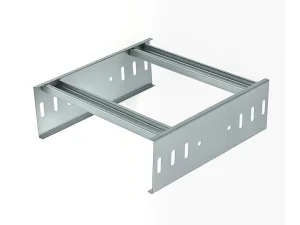
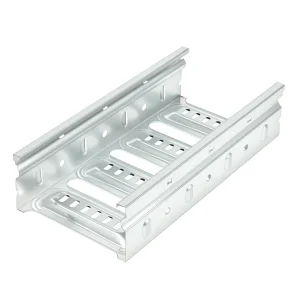
Wholesale Pre Galvanized light weight cable ladder Manufacturer, Price
Request Direct Quote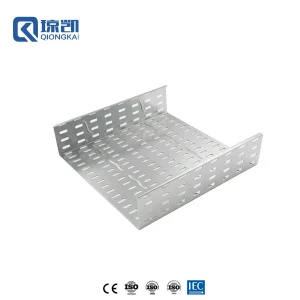
Wholesale Carbon Steel Pre Galvanized PG Hot Dip[ Galvanized HDG Cable Tray with Reinforce Ribs 400*100 Supplier, Suppliers
Request Direct Quote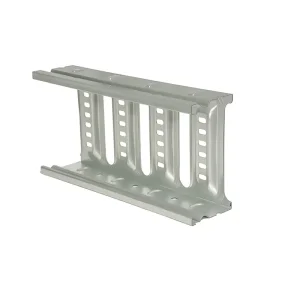
Wholesale Pre Galvanized Customizable Ladder Heavy Duty Cable Tray Manufacturers, Price
Request Direct Quote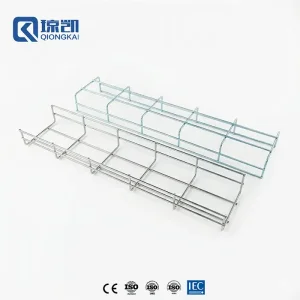
Wholesale Electro Galvanized Carbon Steel EG Stainless Steel SS 304 316 Basket Wire Mesh Grid Cable Tray 100*50 Factory, Factories
Request Direct Quote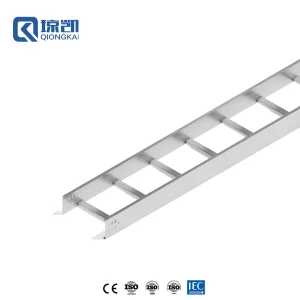
Wholesale Galvanized Ladder Type Cable Tray 400*150 Suppliers, Factory
Request Direct Quote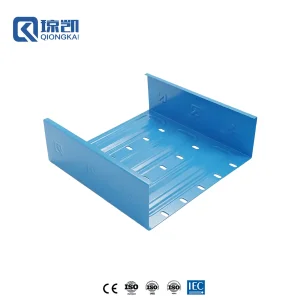
Wholesale Powder Coated Carbon Steel Cost Saving Heavy Duty Reinforced Molded Pre Galvanized Cable Tray with less perforation - RAL5015 Blue 300*100 Suppliers, Factories
Request Direct Quote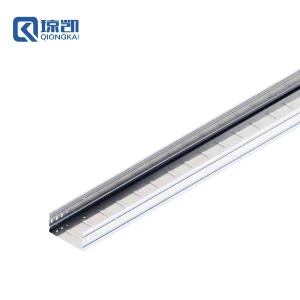
Wholesale Heavy Duty Cost Saving Reinforced Molded Pre Galvanized Cable Trunking Trough Type Channel 200*100 Manufacturer, Factory
Request Direct Quote