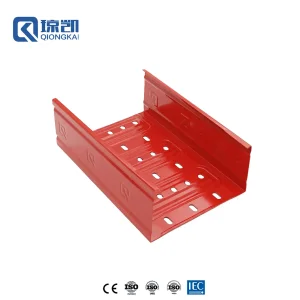
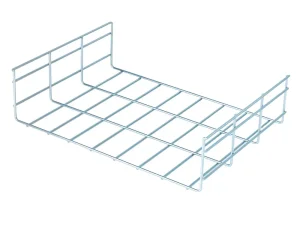
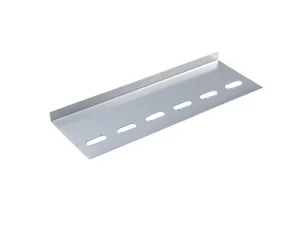
Featured Cable Containment & Structural Hardware Systems
Direct-from-factory production systems engineered to match NEMA VE 1, IEC 61537, and seismic containment tolerances.
The Critical Engineering Role of Cable Tray Connector Plates
Structural continuity, electrical fault clearance, and mechanical load distribution across high-capacity raceway systems.
According to international electrical installation codes (such as IEC 61537 and NEMA VE 1 / NFPA 70 National Electrical Code), cable tray joints cannot simply function as resting brackets. They must be rigid structural elements capable of transferring longitudinal bending moments, mitigating shear loads across unsupported intermediate spans, and sustaining electrical continuity without catastrophic resistance spikes during transient short circuits. An inferior connector plate introduces micro-deflections that crack powder-coat seals, accelerate galvanic pit corrosion, and generate high-resistance thermal hotspots during phase-to-ground faults.
Mechanical Load Redistribution
Precision cold-stamped connector plates maintain continuous section modulus across modular joints, ensuring that tray payload limits (Safe Working Load - SWL) do not experience sudden shear collapse or unacceptable sag ratios (>1/200th of span length).
Equipotential Fault Bonding
Designed with serrated biting washers, low-impedance interface contact patches, and integral copper/bimetal bonding jumpers, ensuring electrical resistance across any tray-to-tray splice plate remains well below 50 mΩ as enforced by UL 568.
Thermal Expansion Compliance
Specially engineered expansion splice plates feature calibrated slotted oval holes that permit axial thermal contraction and expansion across extreme temperature deltas (-40°C to +80°C) without buckling vertical sidewalls or sheering fixings.
Global Commercial & Industrial Landscape: EPC Demands
Navigating electrification megatrends, modularized prefabrication, and the economics of global tier-1 supply chains.
The international cable management sector has pivoted drastically over the past decade. Driven by the explosion of hyperscale AI data centers, gigawatt battery facilities, offshore wind farms, and multi-train LNG export terminals, structural raceway designs have shifted from low-cost static installations to mission-critical engineering components. Tier-1 engineering procurement construction (EPC) contractors now enforce stringent supply audits targeting total cost of ownership (TCO), material traceability, and rapid on-site assembly mechanisms.
Hyperscale Data Halls
Requiring ultra-smooth zinc-whiskers-free electro-galvanized and powder-coated connector plates that eliminate micro-particle shedding risks inside server cleanrooms while speeding up ceiling suspended cable basket deployment.
Offshore LNG & Marine
Demanding high-molybdenum austenitic stainless steel (SS316L) or hot-dip galvanized plates with >85μm zinc thickness to withstand salt-spray exposure, marine chlorides, and cyclic offshore wave buffeting.
Battery & Solar Megasites
Calling for UV-stable, corrosion-resilient pre-galvanized and painted systems capable of surviving wide diurnal thermal cycling, high wind shear forces, and high DC load currents across multiple kilometers of field cabling.
Supply Chain Resilience
Bypassing multiple intermediary markups by partnering directly with deep-tier Chinese manufacturing centers capable of providing complete documentation packages, Mill Test Certificates (MTCs), and standardized containerized logistics.
Technical Engineering Anatomy & Metallurgical Specifications
Comprehensive chemical, dimensional, and mechanical benchmarks across connector plate configurations.
Connector plates engineered by Shanghai Qiongkai Industry are fabricated utilizing high-grade structural carbon steels (Q235B, Q355B conforming to GB/T 700 / ASTM A36) alongside premier non-ferrous alloys including marine-grade AISI 316L (EN 1.4404) and aircraft-spec extruded aluminum 6063-T6. Every connector plate undergoes tight-tolerance CNC precision stamping, multi-stage burr neutralization, and automated edge conditioning to eliminate any sharp metallic burrs that could compromise cable insulation during dynamic pull-through operations.
| Connector Plate Variant | Primary Material & Grade | Surface Treatment / Coating | Standard Thickness | Applicable Tray Profiles | Bonding / Load Standard |
|---|---|---|---|---|---|
| Standard Flat Splice Plate | Carbon Steel Q235B / Q355B | Pre-Galvanized (PG) / Hot-Dip (HDG) | 1.5 mm – 3.0 mm | Perforated, Solid Bottom, Trunking | IEC 61537 Class C / D |
| Reinforced Step-Rib Splice Plate | Structural Carbon Steel Q355B | HDG (≥85μm) / Epoxy Powder Coated | 2.0 mm – 4.0 mm | Heavy Duty Molded Rib Trays, Ladders | NEMA VE 1 / Class 20C |
| Adjustable Vertical Splice Joint | Q235B / SS304 / SS316 | Hot-Dip Galvanized / Passivated | 2.0 mm – 3.0 mm | Elevation Riser Transitions, Drops | UL 568 / NFPA 70 Sec 392 |
| Adjustable Horizontal Angle Plate | Carbon Steel / Marine SS316L | HDG / Pickled & Passivated | 2.0 mm – 3.0 mm | Horizontal Angular Sweeps (0° - 90°) | IEC 61537 Mechanical Deflection |
| Slotted Thermal Expansion Joint | Q235B Carbon / Marine SS316 | HDG / Flurocarbon Coated | 2.5 mm – 4.0 mm | Long Continuous Spans (>30m outdoor) | NEMA VE 2 Thermal Rules |
| Wire Mesh Quick-Splice Coupler | Spring Steel / Stainless 304/316 | Electro-Galvanized / Geomet / Passivated | 1.2 mm – 2.0 mm | Wire Mesh Grid & Basket Raceways | Toolless Snap-Fit / UL Listed |
Bolting dynamics represent a critical element of connector plate specification. Standard installations utilize M6, M8, or M10 carriage bolts with matching flanged serrated locking nuts. The squared neck beneath the domed carriage head nests firmly into precision-punched rectangular connector plate slots, enabling a single installer to tighten the assembly from the exterior using a pneumatic impact wrench without slippage. This design reduces field labor overhead by over 40% across commercial projects.
Chinese Factory Supply Chain Resilience & Production Scalability
Deep industrial integration, strategic Shanghai port proximity, and vertically integrated stamping facilities.
Vertical Manufacturing Control
From bulk coil slit processing and progressive stamping lines to automated CNC punch presses and in-house powder coating spray booths, our 3 production facilities in Shanghai eliminate multiple outsourced handling delays.
Port Proximity & Logistics
Located in Shanghai Songjiang, our manufacturing hub operates within immediate trucking distance to both Yangshan Deep-Water Port and Waigaoqiao Terminals, slashing container drayage transit and expediting urgent maritime dispatch.
60+ Heavy-Duty Machine Fleet
Equipped with heavy continuous stamping presses, specialized robotic roll-formers, and dedicated sheet metal laser cutting beds, enabling production throughput of hundreds of thousands of precision plates per operational cycle.
Agile Customization & Tooling Flexibility
Unlike standardized distributors bound to rigid third-party catalogs, our factory floor engineers internal stamping dies directly. Whether your engineering consultant specifies a custom 8-hole heavy seismic fishplate for high-deflection bridges, or non-standard hole pitch patterns matching imported legacy European cable ladders, our toolmaking division delivers physical prototypes within 5 working days, followed by mass stamping at full industrial scale.
Localized Application Scenarios & Project Engineering
Precision joinery solutions tuned to regional climatic, seismic, and chemical operational conditions.
Middle East LNG & Desalination
Environmental Challenge: Ambient temperatures surpassing 50°C, direct UV exposure, high airborne chloride content, and volatile hydrogen sulfide fumes across Qatar and Saudi coastal energy zones.
Engineered Solution: Stainless steel 316L connector plates passivated to ASTM A380 with Teflon-coated hardware to resist pit corrosion and prevent bolt galling during high-torque tightening.
European Hyperscale Data Centers
Environmental Challenge: Strict cleanroom environmental standards prohibiting zinc whiskering, combined with intensive multi-tier overhead wire basket runs supporting optical fiber bundles.
Engineered Solution: Fast-lock snap-in connector plates with smooth deburred edges, finished with high-durability epoxy-polyester powder coats (RAL 7035 / RAL 9005) ensuring zero conductive flake emission.
Southeast Asia Tropical Transit
Environmental Challenge: Extreme humidity cycles, underground tunnel water seepage, dynamic train-induced vibrational harmonics, and intensive mass transit electrical loads in Thailand and Malaysia.
Engineered Solution: Heavy-duty hot-dip galvanized step-rib splice plates equipped with serrated Nord-Lock anti-vibration washers and redundant bimetal grounding straps.
Technology Roadmap: Next-Gen Cable Tray Joint Engineering
Embracing digital twin integration, automated toolless connections, and sustainable low-carbon metallurgy.
Toolless Click-Lock
R&D patent-pending high-tensile spring steel plates that latch securely into perforated tray sidewalls in seconds, decreasing labor hours by over 60% with full mechanical lock security.
BIM Level 3 Modeling
Full Revit & IFC parametric object libraries available for our entire connector plate catalog, enabling clash detection, precise bill of materials generation, and structural FEA simulations.
Green Zinc Formulations
Transitioning toward closed-loop acid pickling, zero-trivalent chromium passivation, and lead-free hot-dip galvanizing kettles to satisfy Scope 3 ESG corporate procurement mandates.
IoT Strain Monitoring
Integration of passive RFID and micro-strain sensor interfaces within expansion connector plates to monitor real-time thermal expansion shifts and bridge deflection in mega infrastructure.
Quality Assurance, Testing Regimes & Global Compliance
Audited testing methods ensuring every connector plate batch withstands mechanical shear, vibration, and salt-fog degradation.
Every export container of connector plates is accompanied by comprehensive quality dossiers containing mechanical yield certificates, zinc coating thickness ultrasonic gauge reports conforming to ISO 1461 / ASTM A123, and continuous electrical continuity logs.
Mechanical Tensile & Shear Proofing
Universal hydraulic tensile testers verify yield, ultimate tensile strength, and shear modulus of both the plate geometry and the fastened bolt matrix, verifying that the joint maintains an integrity factor ≥1.5x the rated SWL of the cable tray.
Salt Spray Corrosion Chambers
ASTM B117 neutral salt spray (NSS) chamber testing confirms corrosion longevity: HDG connector plates routinely surpass 1,000+ continuous hours without base metal red rust development; stainless steel grades surpass 3,000+ hours.
Micro-Ohm Bonding Impedance
Precision micro-ohmmeters test assembled joints under rated currents. Tested contact resistances average below 15 mΩ, far exceeding the 50 mΩ maximum limit mandated by UL 568 and IEC 61537 clause 9.3.
Frequently Asked Technical & Commercial Questions
Authoritative engineering insights to assist procurement specialists and electrical design consultants.
Complete Cable Management & Hardware Assembly Catalog
Heavy-duty cable trays, spare connectors, and fireproof raceway profiles ready for global shipment.