
Engineered Cable Containment: Primary Industrial Series
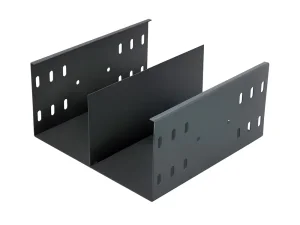
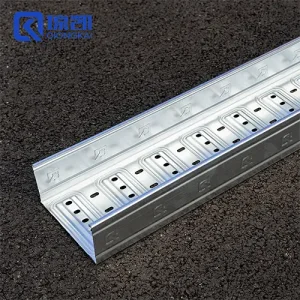
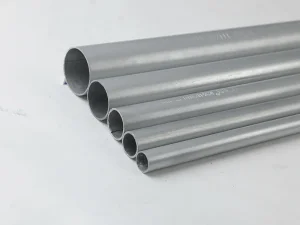
Procure custom-engineered cable trays, solid-bottom trunking, and structural conduit channels built for accelerated EPC project workflows.
Years of Engineering Excellence (Since 2005)
Advanced Production Bases in Shanghai
Precision Fabrication & Roll-Forming Area
Continuous Fully Automated Assembly Lines
The Global Cable Tray Ladder Landscape: Commercial & Industrial Realities
Analyzing the shift toward heavy-capacity raceways amid worldwide grid modernization, hyper-scale computing, and offshore energy infrastructure.
Across modern capital-intensive developments, the cable tray ladder system has transitioned from an ordinary electrical accessory into a critical structural asset. The rapid electrification of global industries—spanning gigawatt-scale data campuses, liquid natural gas (LNG) export terminals, semiconductor cleanrooms, and renewable hydrogen infrastructure—has placed immense mechanical demands on cable support systems. Unlike solid-bottom cable trunking or light wire mesh, ladder cable trays are fundamentally engineered to carry heavy-duty, large-diameter medium and high-voltage power feeder cables across expanded spans reaching 3 to 6 meters.
In North American and European industrial design practices governed by NEMA VE 1 / CSA C22.2 No. 126.1 and IEC 61537, the choice of open ladder profiles provides an engineering advantage that cannot be matched by enclosed conduit or standard raceways: free-air conductor ampacity ratings. By allowing maximum natural air circulation around bundled copper and aluminum power conductors, ladder trays prevent thermal accumulation, mitigating ohmic losses and eliminating the costly need to oversize electrical conductors.
Engineering Value Insight: Thermal Dissipation & Ampacity Optimization
Operating power distribution systems inside open-rung cable ladders permits electrical engineers to design circuits according to free-air ambient ampacity tables (NEC Article 392). This reduces conductor conductor sizes by up to 25% compared to closed duct banks, generating massive CAPEX savings in electrical copper procurement across multi-kilometer industrial sites.
Simultaneously, the commercial landscape reflects strict supply chain constraints. Engineering, Procurement, and Construction (EPC) conglomerates are no longer satisfied with regional distributors who act purely as middlemen with marked-up prices and multi-tier delays. Mega-projects necessitate direct relationships with scalable OEM/ODM manufacturers capable of supplying millimeter-precise engineering submittals, full metallurgical trace certificates (MTRs), mill test reports conforming to ASTM/BS EN specs, and fully coordinated support systems that integrate seamless strut channels and anti-seismic bracing.
Chinese Manufacturing Ecosystem: Operational Efficiency & Scalability
Why Tier-1 Chinese manufacturers like Shanghai Qiongkai Industry provide unmatched throughput, metallurgical precision, and total project economy.
Upstream Steel Clustering
Shanghai Qiongkai’s location within the Songjiang Port Science and Technology corridor connects our 3 production facilities directly to prime Baosteel metallurgical supply lines. This geographic clustering eliminates raw material transit bottlenecks.
- Immediate access to virgin Q235B, SS304, and SS316L coils
- Zero middleman markups on heavy raw sheet stocks
- Guaranteed yield strength and elongation certifications
Automated Continuous Forming
Operating 12 continuous roll-forming lines and over 60 heavy-duty CNC punch presses allows continuous precision shaping of side rails, I-beam ladder rails, and swaged rung integrations without thermal distortion or micro-cracks.
- High-speed robotic rung welding and clinching
- Tolerances maintained within ±0.5mm across 6m spans
- Daily manufacturing volume exceeding 8,500 linear meters
Maritime Port Velocity
Proximity to Shanghai Waigaoqiao and Yangshan Deep-Water Ports enables rapid containerization, pre-cleared customs documentation, and scheduled freight departures to major logistics nodes in Europe, the Middle East, and the Americas.
- Nested stack packaging minimizing shipping volume
- Custom steel banding and export wooden crating
- Direct container stuffing on factory loading docks
Surface Treatment Engineering: ISO 12944 Environmental Classification
Aligning raw substrate chemistry and anti-corrosive passivation to real-world industrial atmospheric exposure categories.
| Material / Treatment Specification | Standards Compliance | Corrosion Class (ISO 12944) | Tensile / Yield Behavior | Primary Industrial Sector Applications |
|---|---|---|---|---|
| Pre-Galvanized (PG) Carbon Steel Continuous zinc coating ~180-275 g/m² |
ASTM A653 / EN 10346 | C1 - C2 Low | Yield: 235–275 MPa Tensile: 360–510 MPa |
Data halls, clean commercial plenums, HVAC riser shafts, controlled substations. |
| Hot-Dip Galvanized After Fab (HDG) Molten bath zinc layer ≥65-85 μm (500+ g/m²) |
ASTM A123 / ISO 1461 | C3 - C4 High | Yield: ≥235 MPa Tensile: 370–500 MPa |
Petrochemical refineries, power utility plants, coastal infrastructure, outdoor solar farms. |
| Stainless Steel 304 / 304L (SS304) Austenitic 18/8 alloy with pickling & passivation |
ASTM A240 / EN 10088 | C4 Industrial | Yield: ≥205 MPa Tensile: ≥515 MPa |
Food and beverage processing, dairy factories, pharmaceutical manufacturing, indoor washdown bays. |
| Marine Stainless Steel 316 / 316L Molybdenum-bearing 2-3% Mo alloy |
ASTM A240 / AISI 316L | C5 - CX Extreme | Yield: ≥220 MPa Tensile: ≥520 MPa |
Offshore oil and gas platforms, FPSO vessels, marine docks, coastal desalination installations. |
| Fiberglass Reinforced Polymer (FRP) Pultruded isophthalic polyester / vinyl ester |
ASTM D635 / UL 94 V-0 | Chemical Immune | Flexural: ≥200 MPa Tensile: ≥200 MPa |
Chemical chlor-alkali plants, battery manufacturing facilities, sulfuric acid processing, tropical marshes. |
| Thermoset Powder Coating over PG/HDG Epoxy-polyester hybrid coating (60-120 μm) |
Qualicoat / ISO 2810 | C2 - C3 Color ID | Impact: ≥50 kg·cm Cross-cut: Class 0 |
Mission-critical data centers (RAL code segregation: red fire, blue network, yellow high-voltage). |
Engineered Project Scenarios: Tested Under Extreme Site Realities
From cryogenic marine energy corridors to hyper-scale cloud server environments, explore how our systems perform across diverse sectors.
Offshore LNG Terminals (Qatar)
LNG regasification plants face relentless marine atmospheric salinity and desert dust abrasion. For offshore processing facilities, Qiongkai engineered custom cold-formed structural profiles utilizing thick-gauge 316L marine stainless steel paired with anti-vibration clamp saddles.
Outcome: Complete immunity to chloride stress corrosion cracking with a 30-year design life warranty.
Cloud Hyperscale Data Halls
Modern AI GPU training data clusters demand massive overhead fiber and copper cable management. We delivered yellow RAL1080 and blue RAL5015 powder-coated ladder raceways with quick-drop waterfall accessories and customized radius bends.
Outcome: Guaranteed bend radius protection for Cat6A and multi-fiber optical lines, avoiding signal attenuation.
Civil Aviation Hubs (Hongqiao Airport)
Shanghai Hongqiao International Airport required ultra-reliable, corrosion-resistant CT series enclosed trunking and heavy-duty rung ladders spanning multi-kilometer utility subterranean service tunnels subjected to condensation and ground moisture.
Outcome: Fully certified continuous earth bonding and fire-rated integrity preserving critical terminal runway lighting circuits.
Emerging Trends Reshaping Cable Support Engineering
From modular tool-less assembly systems to seismic resilience calculations and decarbonized green steel initiatives.
1. Tool-Less Snap Couplers & Modular Splices
Field installation labor accounts for upwards of 55% of the total installed cost of industrial cable support routes. The international market is shifting away from traditional 4-bolt fishplate connections toward snap-lock click connectors and tool-less splice plates.
By re-engineering the profile stamping on side rails, Shanghai Qiongkai manufactures cable ladders that interlock before securing, slashing site installation time by up to 40% while preserving continuous electrical continuity for grounding without secondary jumper cables.
2. Integrated Anti-Seismic Bracing & Dynamic Load Calculations
Modern building safety codes (such as ASCE 7-22 in the US and Eurocode 8) mandate rigorous seismic verification for all non-structural MEP components. In the event of ground motion, lateral and longitudinal inertial forces can rip standard trapeze hangars from concrete soffits.
We supply engineered back-to-back strut channels (41×41, 41×82) combined with certified seismic brace arms and serrated channel nuts that grip channel lips under high cyclic loads, maintaining cable circuit integrity during high-magnitude earthquake events.
3. Decarbonized Metallurgy & EPD Transparency
As multinational EPCs strive toward Net Zero construction, international tenders increasingly evaluate the embodied carbon footprint of structural raceways. Environmental Product Declarations (EPDs) certified under ISO 14025 are becoming mandatory procurement gates.
Qiongkai utilizes high-recycled-content electric arc furnace (EAF) carbon steels and optimized low-sludge hot-dip galvanizing baths that recover and recirculate flux chemistries, helping developers secure LEED Platinum, BREEAM Outstanding, and DGNB Gold certifications.
4. BIM Integration & Parametric Digital Twins
Clash detection within complex MEP spatial zones demands that cable ladder manufacturers provide millimetrically exact 3D parametric BIM models (Revit, IFC formats).
Our in-house engineering team converts client 2D single-line diagrams directly into 3D load-verified raceway paths, supplying exact quantities of horizontal elbows, vertical tees, reducers, and strut supports to ensure zero site cut-and-weld modifications.
Enterprise Procurement Criteria: What Global Buyers Must Specify
A rigorous checklist for QA/QC engineers and commercial directors vetting tier-1 cable tray factories.
To avoid structural deflection failures, catastrophic electrical shorts, or severe premature corrosion, procurement departments must enforce strict verification protocols prior to issuing Letters of Credit (LC) or Purchase Orders:
1. Safe Working Load (SWL) Testing
Demand independent laboratory deflection destruction curves conforming to NEMA VE 1 Section 5.2 or IEC 61537 Section 10.3. A legitimate manufacturer must prove a Safety Factor (SF) of 1.5 for steel and 1.5 for aluminum without irreversible residual deformation at 100% test load.
2. Zinc Coating Weight Verification
For outdoor HDG installations, reject suppliers quoting nominal microns without magnetic gauge verification. Insist on ASTM A123 / ISO 1461 compliance: minimum 85 μm local thickness on steel ≥6mm and 65 μm on steel <6mm, backed by salt spray testing over 720–1000 hours.
3. Comprehensive Accessory Coordination
A cable tray run is only as reliable as its fittings. Verify that the factory supplies matched-gauge splice connectors, expansion guide clamps (for thermal bridge expansion), heavy-duty hold-down brackets, barrier strips, and factory-crimped radius tees to eliminate on-site makeshift welding.
Frequently Asked Questions: Engineering & Sourcing Answers
Authoritative technical guidance compiled by senior structural MEP designers and metallurgical specialists.
What are the fundamental mechanical differences between cable ladder and perforated cable trays?
How do you calculate the thermal expansion of long outdoor cable ladder runs?
Why is Hot-Dip Galvanizing (HDG) after fabrication superior to Pre-Galvanized (PG) steel?
Can Shanghai Qiongkai manufacture ladder trays complying with NEMA VE 1 Class 20C?
What electrical grounding and bonding tests are carried out on Qiongkai cable trays?
How do you ensure export cargo safety and prevent white rust during ocean transit?
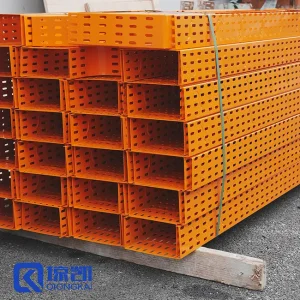
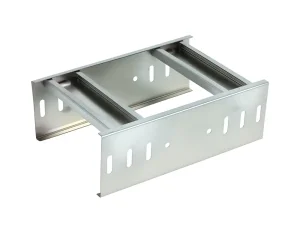
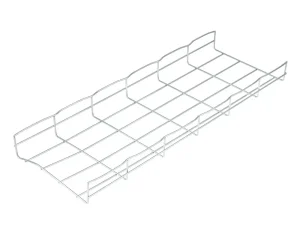
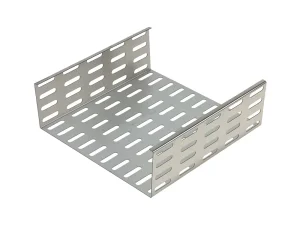
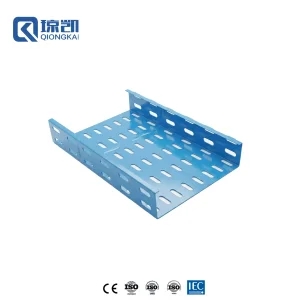
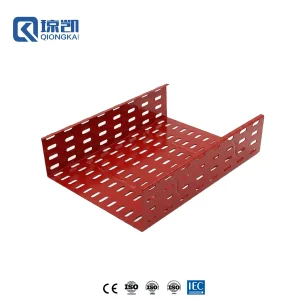
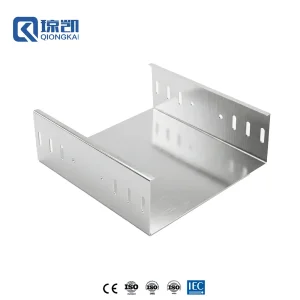
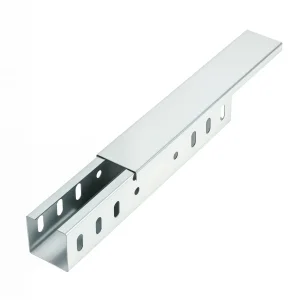
Precision Structural Cable Trays: Secondary Heavy-Duty Series
Explore specialized ladder variants, wire mesh baskets, ribbed heavy-duty trays, and modular trunking for heavy industrial infrastructure.
Accelerate Your Industrial Project with Direct Factory Submittals
Connect directly with our Shanghai manufacturing facility. Share your Single Line Diagrams (SLD), Cable Schedules, or Bill of Quantities (BOQ) to receive fully engineered layout designs, NEMA/IEC load deflection calculations, and competitive wholesale factory pricing.