
Direct Factory Inventory
Featured Cable Trays & Modular Support Systems
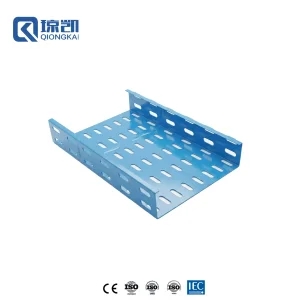
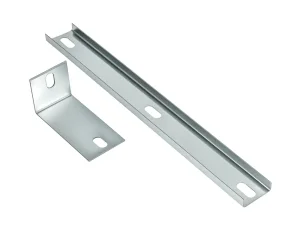
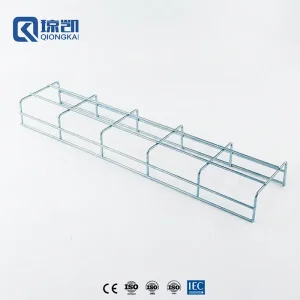
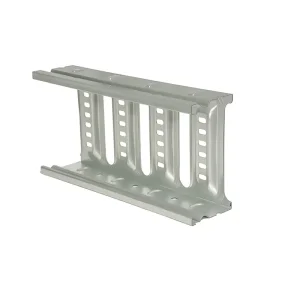
Direct access to certified pre-galvanized channels, wire mesh grids, powder-coated troughs, and heavy-duty seismic mounting components.
Industry White Paper & Standards
Engineering Blueprint: Decoding the Cable Tray Technical Data Sheet
A certified Technical Data Sheet (TDS) is not merely a sales brochure; it serves as a legally binding engineering agreement between the EPC contractor, the project consultant, and the original manufacturing plant. Here is how modern industrial infrastructure interprets essential parameters.
NEMA VE 1 vs. IEC 61537
The standard technical data sheet categorizes mechanical deflection under working loads. While NEMA VE 1 establishes load class classifications (e.g., Class 12C, 20B) with safety factors of 1.5, IEC 61537 defines Safe Working Load (SWL) with long-span deflection criteria limited to L/100 or L/200, essential for high-density hyperscale data centers and refinery racks.
Metallurgical Thickness Tolerances
Global project failures frequently stem from mill-run gauge thinning. Legitimate technical data sheets specify base metal thickness (BMT) vs. nominal thickness post-coating. For instance, pre-galvanized sheet per EN 10346 allows minimal gauge loss, whereas ISO 1461 hot-dip galvanizing adds 60–85µm zinc layers, fundamentally altering hole center distances and fastener tolerances.
Electrical Continuity & Bonding
Under international electrical safety directives, cable tray containment systems must function as equipment grounding conductors (EGC). A certified data sheet reports electrical impedance across splice plates (typically <50 mΩ per joint), verifying fire-life safety grounding during transient ground faults without adding auxiliary bare copper grounding loops.
| Containment Profile Type | Standard Dimension Range (W×H mm) | Material / Surface Finish | Standard Load Class (Span: 3.0m) | Salt Spray Resistance (ASTM B117) | Primary Industrial Sector |
|---|---|---|---|---|---|
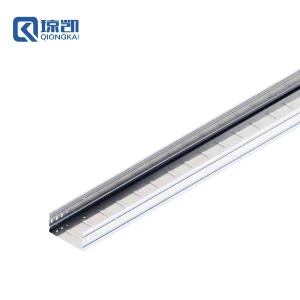
| Heavy-Duty Ladder Tray | 150×100 to 1000×150 | Hot-Dip Galvanized / SS316L | NEMA 20C / 200 kg/m | 1,500+ Hours to Red Rust | Offshore Oil & Gas, LNG Terminals |
| Precision Wire Mesh Basket | 50×50 to 600×100 | Electro-Galv / SS304 Clean Pickled | IEC 61537 Type II / 45 kg/m | 96 to 480 Hours | Cloud Data Centers, Telecom Rooms |
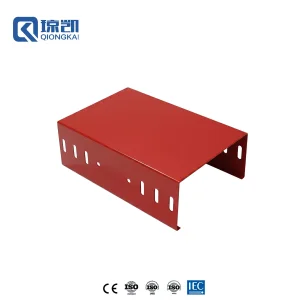
| Continuous Solid Bottom Trough | 100×50 to 600×100 | Pre-Galvanized + RAL Powder Coat | NEMA 12B / 112 kg/m | 720 Hours (Multi-layer) | Airport Terminals, Metro Transit |
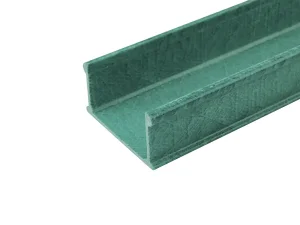
| Pultruded FRP / GRP Tray | 100×50 to 800×150 | Isophthalic / Vinyl Ester Resin | ASTM E84 Class 1 / 160 kg/m | Immune to Halide & Acid Attack | Chlor-Alkali, Desalination, Marine |
Smart Manufacturing Ecosystem
China Factory 4.0: Supply Chain Agility & Price Efficiency
Why tier-1 global contractors bypass middlemen: Our Shanghai manufacturing hub integrates raw coil slitting, robotic fiber laser punching, automated roll-forming, and unified port logistics.
Automated High-Speed Roll Forming
Our continuous automated roll-forming production lines process structural carbon steel sheets up to 3.0mm thickness with zero micro-cracking at structural return bends. By maintaining in-house tool and die fabrication, custom rung-to-rail swaging cycle times drop by 68% compared to conventional press brake workflows.
Port-Proximity Freight Optimization
Located in the Songjiang High-Tech Cluster of Shanghai, our facilities sit within a direct 45-minute radius of Yangshan Deep-Water Port and Waigaoqiao Terminals. Seamless nested packing architectures reduce ocean freight cubic meters (CBM) by up to 35%, shielding EPC buyers from international shipping volatility.
Transparent Wholesale Cost Algorithms
Cable tray pricing directly correlates with global hot-rolled coil (HRC) indexes and zinc ingot costs on the Shanghai Futures Exchange (SHFE). By securing 10,000+ tons of quarterly upstream mill allotments from Baosteel and Shougang, Qiongkai offers formula-based, unhedged wholesale tier rates directly to overseas project contractors.
Macro Sourcing Dynamics
Global Procurement Paradigms: Where Engineering Meets Budget
Cable containment procurement is experiencing unprecedented structural shifts driven by global mega-trends: AI hyperscale computational centers, green hydrogen initiatives, modular petrochemical skids, and port electrifications.
Data Center Mega-Clusters
Modern AI hyperscalers consume massive volumes of copper-heavy 48V busbars and heavy multi-fiber bundles. Conventional lightweight trays cannot manage these dynamic static loads without noticeable sag. Technical sheets are now prioritized based on dynamic torsional resistance and low electrical resistance under high airflow cooling environments.
Coastal LNG & Desalination
Middle Eastern and Southeast Asian coastal infrastructure projects are actively replacing standard HDG steel with advanced vinyl ester FRP and dual-certified SS316L cable management. The Total Cost of Ownership (TCO) methodology favors non-conductive, chemical-proof resin trays that eradicate scheduled maintenance shutdowns in hyper-saline maritime atmospheres.
Seismic Bracing Compatibility
In high seismic zones (IBC Seismic Design Category D through F), technical sheets must confirm bracket reaction forces and strut channel flange yield capacities. Qiongkai's integrated back-to-back 41×82 anti-seismic profiles eliminate the necessity for multi-vendor structural compatibility calculations.
Empirical Track Record
Field-Validated Projects Across Five Continents
Real operational engineering scenarios where Qiongkai's certified technical data sheets fulfilled stringent project specifications on time and on budget.
Aviation Hub
Shanghai Hongqiao Int. Airport
Supplied continuous corrosion-resistant CT series cable trunking to protect mission-critical baggage handling, airfield illumination, and ground communication networks against terminal vibration stresses.
Extreme Climate
Qatar & Thailand LNG Facilities
Engineered custom pultruded FRP/GRP cable tray networks capable of withstanding desert ambient operating temperatures above 52°C alongside tropical maritime monsoon humidity without structural creep.
Agri-Industrial
Paraguay High-Density Facilities
Delivered a value-engineered heavy-duty cable tray deployment tailored for agricultural facilities, providing certified ammonia corrosion resistance while maximizing span distances to lower bracket quantities.
EU Infrastructure
Direct HDG Shipments to Italy
Fabricated heavy-duty hot-dip galvanized cable trays and custom radius accessories matching strict European CE / EN 61537 requirements, pre-cleared for direct logistics delivery into northern Italian industrial sites.
Certified Components & Profiles
Engineered Trays, Brackets & Electrical Conduits
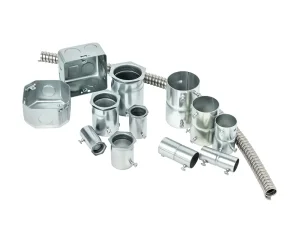
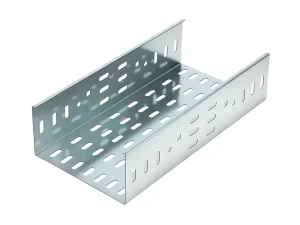
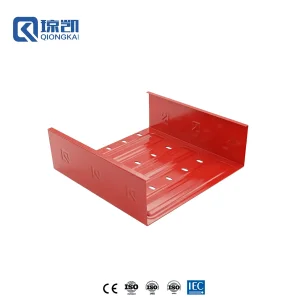
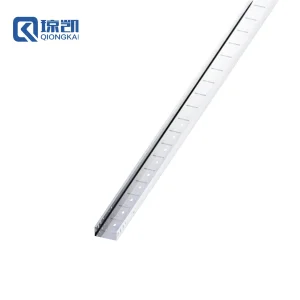
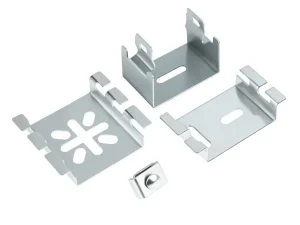
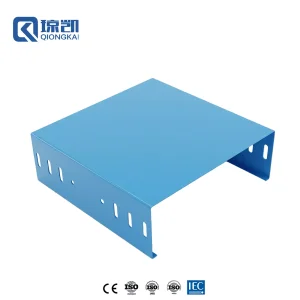
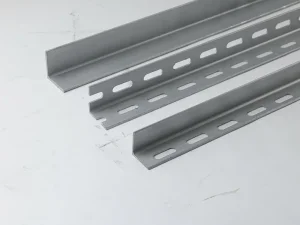
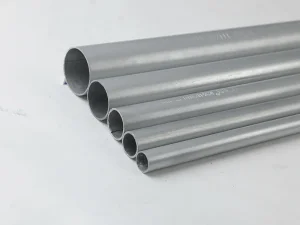
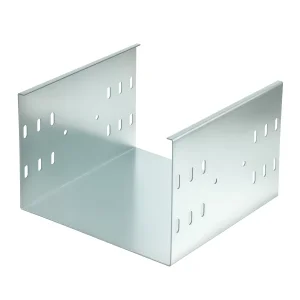
Select from our direct factory catalog of perforated trays, solid channels, heavy-duty fittings, and industrial conduits.
Procurement Intelligence FAQ
Technical & Commercial Inquiries Resolved
Addressing critical engineering standards, export pricing formulas, and metallurgical verifications for global sourcing managers.
How do I interpret the safe working load on a cable tray technical data sheet?
Safe Working Load (SWL) specifies the maximum uniformly distributed weight (in kg/m or lbs/ft) a tray profile can support across a specific support span (typically 1.5m, 2.0m, or 3.0m) without exceeding allowable deflection. Per IEC 61537, maximum allowable longitudinal deflection is restricted to L/100, while many industrial EPC specs enforce a tighter L/200 limit. When evaluating technical data sheets, always verify whether the stated capacity includes a structural safety factor (typically 1.5 per NEMA VE 1).
How does Qiongkai formulate wholesale export prices for international projects?
Our wholesale price model is based on transparent cost indices: Base Steel Coil Price (per metric ton) + Processing Conversion (punching, roll forming, welding) + Surface Treatment (HDG per micron or electrostatic RAL powder coating) + Export Packaging. By procuring raw materials in high-volume monthly mill runs, we offer fixed pricing terms for long-term construction schedules, mitigating price volatility on extended megaprojects.
What are the key technical trade-offs between Pre-Galvanized (PG) and Hot-Dip Galvanized (HDG)?
Pre-galvanized (PG) steel coils (EN 10346) are continuously zinc-coated at the steel mill prior to punching, leaving cut edges protected through cathodic sacrificial protection up to 20µm coating thickness. It is best suited for dry, indoor, HVAC-controlled spaces. Hot-dip galvanizing (HDG) to ISO 1461 occurs after complete fabrication, immersing the entire welded assembly into molten zinc (450°C) to form a metallurgical iron-zinc alloy layer 65–85µm thick. HDG is mandatory for outdoor, humid, industrial, and coastal installations.
Can Qiongkai manufacture customized profiles and punch patterns for non-standard cable routes?
Yes. With 12 automated roll-forming lines, 60+ heavy-duty press units, and flexible CNC turret stations across our three factories, we engineer custom tray widths (up to 1200mm), enhanced side heights (up to 200mm), variable rung spacing, and custom perforation profiles. For the Qatar LNG offshore terminal, we developed and supplied custom engineered profiled support sections that fully adhered to third-party offshore engineering guidelines.
What mill test certificates and third-party validation documents accompany each shipment?
Every commercial export consignment is backed by comprehensive quality control documentation, including EN 10204 3.1 Mill Test Certificates (chemical analysis and tensile mechanical properties), dry film thickness (DFT) coating verification reports, electrical bonding continuity test certificates, and salt spray exposure data. Third-party visual and load testing inspections (SGS, TÜV, Bureau Veritas) can be coordinated upon request prior to container dispatch.