
Featured Cable Tray Systems & Pre-Galvanized Solutions
Standard and custom profile cable containment assemblies built strictly to IEC 61537, NEMA VE-1, and UL classifications for high-density power and communication topologies.
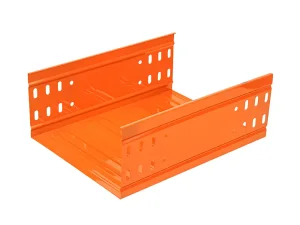
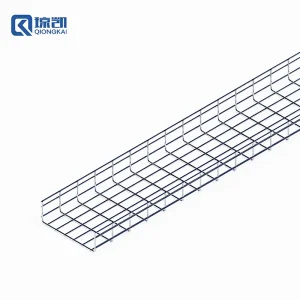
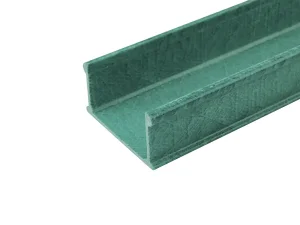
Wholesale Fireproof Pre Galvanized Powder coated molded cable tray Supplier, Suppliers
View Technical Specs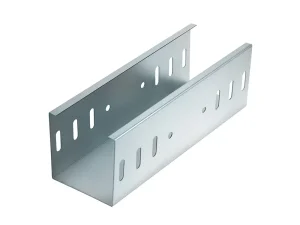
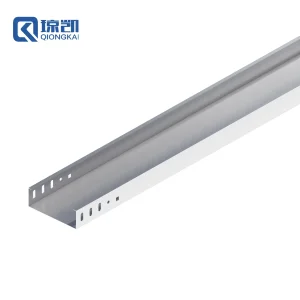
Buy Carbon Steel PG Pre Galvanized HDG Hot Dip Galvanized SS Stainless Steel Cable Trunking Trough Type Channel 150*50 Manufacturers, Price
View Technical Specs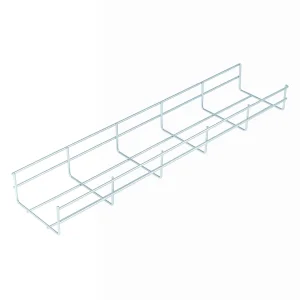
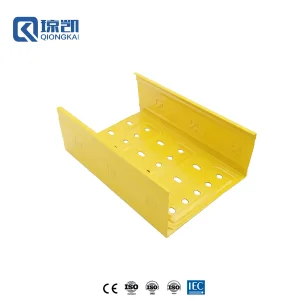
Buy Powder Coated Carbon Steel Cost Saving Heavy Duty Reinforced Molded Pre Galvanized Cable Tray - RAL1080 Yellow 200*100 Supplier, Price
View Technical Specs
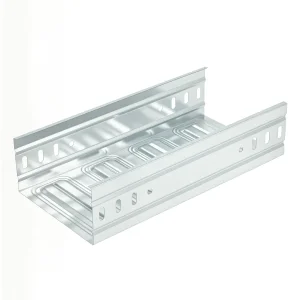
Megatrends Reshaping the Global Cable Containment Sector
The global electrical cable tray market is undergoing a structural paradigm shift driven by hyperscale artificial intelligence data center construction, grid modernization, gigawatt-scale solar installations, and offshore energy infrastructure. Modern cable trays are no longer treated as passive metal brackets; they represent critical infrastructure that governs thermal dissipation, short-circuit containment, electrical grounding continuity, and structural safety under dynamic environmental stress.
Technical Information Gain: Under high-voltage distribution environments, every 10°C drop in cable bundle temperature achieved through optimized tray perforation geometry reduces conductor resistance, yielding measurable megawatt-hour energy conservation across industrial operational life cycles.
Hyperscale AI Cloud Facilities
High-density computing demands cable raceways with immense volume capacities and superior ventilation. Electro-galvanized wire mesh baskets and custom powder-coated ladder racks with high load-deflection ratios ensure unimpeded air passage, preventing localized hot spots around critical high-speed fiber-optic and power delivery harnesses.
Solar & Renewable Electrification
Utility-scale photovoltaic fields and offshore wind transformer stations require containment that resists extreme ultraviolet radiation, ammonia degradation, and saline atmospheric exposure. Heavy Hot-Dip Galvanized (HDG) with ≥85µm zinc coating and pultruded Fiberglass Reinforced Polymer (FRP) trays provide over 30 years of maintenance-free service.
Rigorous Functional Fire Integrity
Commercial megaprojects and transit tunnels enforce strict compliance with DIN 4102-12 (E30 to E90 fire endurance) and IEC 60331 standards. Specialized fire-rated molded channels and high-temperature intumescent powder finishes guarantee structural containment for emergency circuits during high-heat fires, allowing critical ventilation and egress systems to operate uninterrupted.
Demystifying Wholesale Cable Tray Pricing: Factory Cost Breakdown
Procurement officers and EPC project controllers frequently encounter vast price disparities in international bidding. Understanding the cost mechanics of continuous steel roll-forming, zinc mass per square meter, sheet gauge tolerances, and automated punching eliminates contractor markups and safeguards project margins.
Steel Coil Metallurgical Grade
Raw Q235B vs. Q345B structural carbon steel. Prime cold-rolled coils ensure uniform wall thickness within ±0.03mm, whereas sub-standard re-rolled slit strips introduce micro-cracks and premature structural sagging under full cable load.
Zinc Mass & Bath Quality
Pre-galvanized coils (Z120 to Z275 g/m²) offer standard indoor economy. Post-fabrication Hot-Dip Galvanizing (ISO 1461 / ASTM A123) requires certified high-grade molten zinc baths to reach 65–100µm coatings without brittle dross formation.
Continuous Stamping Precision
High-speed CNC progressive perforation tooling creates rounded, burr-free slots. This eliminates sharp knife-edges that slice cable jackets during pulling, saving thousands in insulation testing failures.
Container Nesting Efficiency
Intelligent profile design featuring slight inward tapers or alternating widths allows nesting of perforated channels inside larger troughs. This increases 40ft High Cube container volumetric utilization by 35% to 45%, significantly slashing ocean freight costs per meter.
China Factory 4.0: Supply Chain Agility & Manufacturing Depth
Headquartered in Songjiang Port Science and Technology City, Shanghai Qiongkai Industry Co., Ltd. demonstrates modern automated manufacturing capabilities. Operating 3 dedicated factories across 30,000 m² of production space, Qiongkai eliminates intermediary markups by orchestrating automated roll-forming, robotic welding, and inline continuous galvanizing under unified quality systems.
Years Engineering Cable Management Infrastructure (Est. 2005)
Automated Continuous Roll-Forming & Punching Lines
Heavy-Duty Hydraulic Stamping & Bending Workstations
USD Peak Annual Global Production Volume
Direct Deep-Water Port Proximity
Strategically positioned in Shanghai close to Yangshan Deep-Water Port and Waigaoqiao Terminals. Direct container drayage reduces domestic logistics transit to hours, preventing coastal corrosion exposure prior to oceanic shipping and ensuring dependable delivery schedules for global contracts.
Inline Robotic Precision Welding
Automated robotic rung-to-side-rail welding systems deliver consistent penetration, eliminating cold joints in heavy-duty ladder racks. Standardized welding geometries prevent stress fractures under high-vibration wind and dynamic operating conditions.
Full Material Traceability & MTC 3.1
Every production heat number is tracked through incoming spectroscopic chemistry checks, ultrasonic thickness measurements, and EN 10204 3.1 inspection certification, providing complete engineering documentation for nuclear, petrochemical, and defense auditors.
Engineering Metallurgy & Surface Treatment Specification
Choosing the right material prevents costly premature structural failure. The matrix below contrasts operational performance metrics against ISO 12944 atmospheric corrosivity categories.
| Material / Treatment Type | Standards Baseline | Average Coating / Purity | Corrosivity Category | Salt Spray Test Life (ASTM B117) | Optimal Project Environments |
|---|---|---|---|---|---|
| Pre-Galvanized Mill Steel (PG) | EN 10346 / ASTM A653 | 12–20 µm (Z180–Z275) | C1 – C2 | 96 – 150 Hours | HVAC plenums, residential risers, commercial ceiling grids, dry interior facilities. |
| Electro-Galvanized (EG) | BS 7371 / ASTM B633 | 5–12 µm Blue-White Passivation | C1 – C2 | 72 – 120 Hours | Telecommunications wire mesh baskets, server rooms, controlled cleanrooms. |
| Hot-Dip Galvanized (HDG) | ISO 1461 / ASTM A123 | 65–100 µm (500–700 g/m²) | C3 – C4 | 750 – 1,500+ Hours | Rooftop solar, power plants, petrochemical refineries, coastal infrastructure, outdoor rail. |
| Architectural Powder Coated | RAL / ASTM D3451 | 60–120 µm Epoxy-Polyester | C2 – C3 | 500 – 800 Hours | Mission-critical data center cable segregation (yellow/blue power/data routing), retail lofts. |
| Stainless Steel 304 (SS304) | AISI 304 / EN 1.4301 | 18% Cr / 8% Ni Chemistry | C3 – C4 | 1,000+ Hours | Food, dairy & beverage processing, sanitary washdown bays, sterile pharmaceutical plants. |
| Stainless Steel 316L (SS316L) | AISI 316L / EN 1.4404 | 16% Cr / 10% Ni / 2% Mo | C5 – CX Extreme | 3,000+ Hours | Marine vessels, offshore oil platforms, subsea tunnel air ducts, coastal LNG storage. |
| Pultruded FRP / GRP Composite | ASTM D3917 / UL 94 V-0 | Vinyl Ester / Polyester Resin | C5 – Chemical | Immune to Rust | Battery manufacturing rooms, chemical pickling lines, acidic wastewater plants, tropical ports. |
Field-Tested Reliability in Mission-Critical Projects
From extreme Middle Eastern desert heat to humid tropical environments and European industrial retrofits, Qiongkai containment systems are engineered to withstand demanding operating environments.
Shanghai Hongqiao International Airport
Supplied comprehensive corrosion-resistant CT series cable trunking networks connecting Terminal 2 and transportation interchanges. Delivered high electromagnetic shielding and rapid installation across restricted-clearance drop-ceiling tunnels.
Offshore LNG Complex – Qatar
Engineered custom heavy-duty profiled FRP and SS316L cable ladder runs. Resisted severe high-saline gulf coastal air, 50°C ambient desert temperatures, and abrasive airborne particulate storms with zero mechanical degradation.
Industrial & Logistics Hub – Italy
Fabricated and exported high-tonnage batches of heavy-duty Hot-Dip Galvanized perforated cable trays and cantilever strut brackets conforming strictly to European CE and IEC structural load standards.
Heavy-Duty Agro-Industrial – Paraguay
Supplied a cost-optimized, ultra-rigid pre-galvanized ribbed containment structure for an expansive agricultural installation, balancing high structural deflection tolerances against tight budget constraints.
High-Humidity Outdoor Installation – Thailand
Engineered an advanced hybrid FRP-lined carbon steel cable tray system, merging the mechanical bending strength of rigid steel with the chemical and moisture immunity of composite outer cladding.
Global Tier-IV Data Centers
Delivered tens of thousands of linear meters of custom powder-coated cable runway systems and zinc-whiskers-free wire baskets, providing reliable containment above server racks with clean airflow management.
Engineered Molded, Ribbed & FRP Specialty Containment
Heavy-duty series, structural fittings, FRP non-conductive channels, and reinforced accessories configured for demanding engineering project schedules.
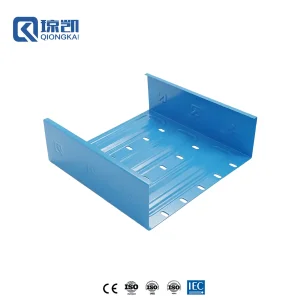
Wholesale Powder Coated Carbon Steel Cost Saving Heavy Duty Reinforced Molded Pre Galvanized Cable Tray with less perforation - RAL5015 Blue 300*100 Suppliers, Factories
View Technical Specs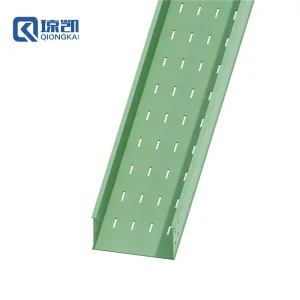
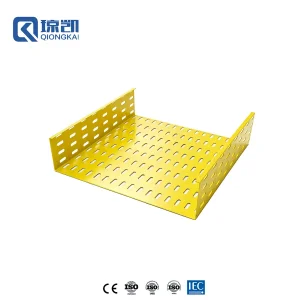
Wholesale Powder Coated Carbon Steel Pre Galvanized Hot Dip Galvanized PG HDG Cable Tray with Reinforce Ribs - RAL1080 Yellow 400*100 Manufacturers, Factory
View Technical Specs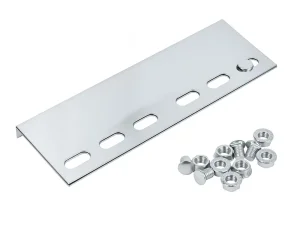
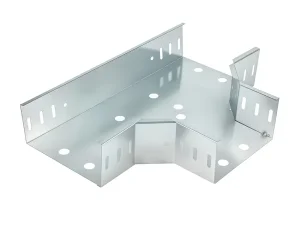
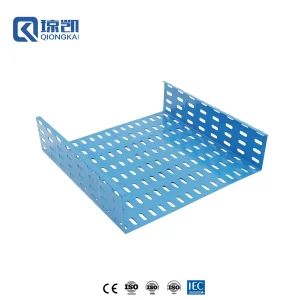
Buy Powder Coated Carbon Steel Pre Galvanized Hot Dip Galvanized PG HDG Cable Tray with Reinforce Ribs - RAL5015 Blue 400*100 Manufacturer, Price
View Technical Specs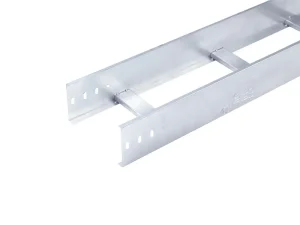
Questions Engineers & Buyers Ask First
Direct answers addressing technical standards, pricing mechanics, load deflection safety limits, and export logistics.