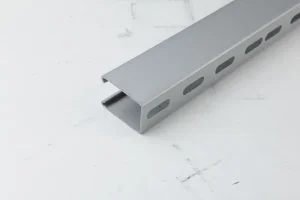
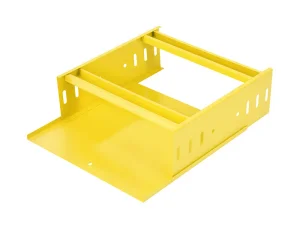
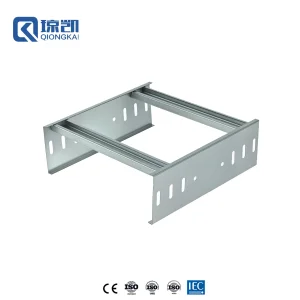
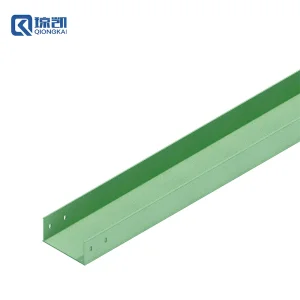
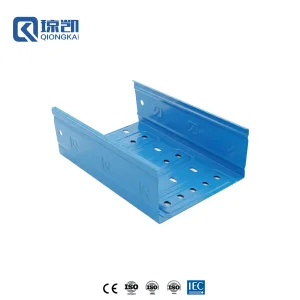
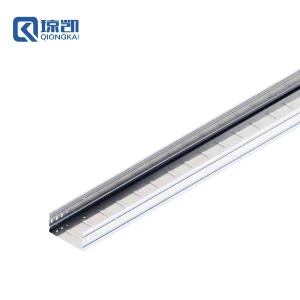
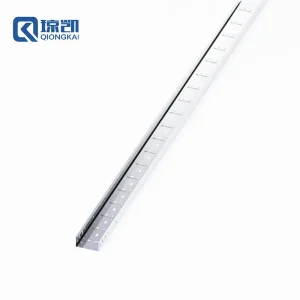
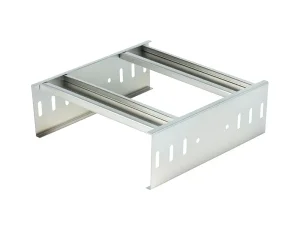
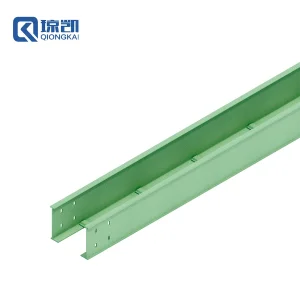
Featured Industrial Galvanised Trunking Systems
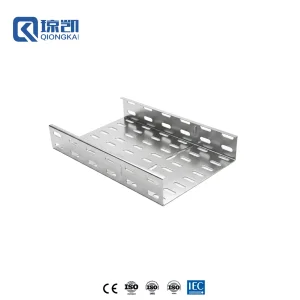
Engineered cold-formed steel channels, reinforced continuous bottom troughs, and molded pre-galvanized profiles fabricated under strict ISO 1461 and BS EN 50085 benchmarks.
Global Commercial Status & Industrial Macro-Trends
The modern containment ecosystem is shifting from unstandardized sheet metal bending toward continuous high-speed roll-formed modular trunking systems engineered for extreme structural stability and zero lifecycle downtime.
The Macro Shift to Continuous Zinc Protection
Global demand for Galvanised Steel Trunking is expanding rapidly across tier-3 data campuses, hyperscale cloud facilities, and clean energy battery plants. As international logistics and labor rates inflate, EPC enterprises prioritize factory pre-punched, precision-slotted trunking that reduces on-site cutting by up to 60%.
The supply chain has shifted significantly away from small manual metal workshops to Tier-1 automated facilities capable of handling bulk coils, precision slitting, multi-stage stamping, and seamless in-line zinc coating application.
Tier-1 Manufacturing vs. Trading Intermediaries
Engineering buyers face chronic issues with middleman sourcing: inconsistent steel gauges, brittle zinc flaking at cold-worked corners, and non-traceable metallurgy. Sourcing directly from high-volume manufacturers ensures raw carbon steel coils adhere strictly to Q235B, DX51D, and ASTM A653 chemistries.
Shanghai Qiongkai Industry utilizes 60+ heavy-duty pneumatic presses and custom roll-forming stations in Songjiang, guaranteeing mill test certificates (MTC), traceable batch numbers, and exact dimensional tolerance control within ±0.3mm.
Standardization: BS EN 50085 & IEC 61537
Global procurement requires seamless interoperability. True structural cable trunking must conform to BS 4678 Part 1 for steel enclosures, BS EN 50085 for electrical installations, and IEC 61537 for cable containment systems. These certifications govern continuity, impact resistance, and electromagnetic shielding effectiveness.
Continuous steel containment provides an uninterrupted Faraday cage, attenuating EMI/RFI noise by up to 80dB across critical high-density fiber and power distribution paths.
Metallurgy, Coating Technologies & Environmental Resilience
Selecting the precise galvanization method dictates the entire lifecycle ROI of a commercial cable network. Review this empirical metallurgical engineering breakdown before locking project BOQs.
Pre-Galvanized Steel (PG / Mill Galv)
Formed from continuously hot-dipped zinc steel coil (conforming to EN 10346, Z180–Z275). PG trunking exhibits an exceptionally uniform, smooth spangle finish optimal for dry, climate-controlled commercial buildings, false ceiling drops, and modular office partitions.
While edges exposed during shearing benefit from zinc's natural cathodic protection (sacrificial anode behavior), PG is intended specifically for indoor C1 and C2 environmental categories.
Hot-Dip Galvanized After Fabrication (HDG)
Fabricated steel channels are chemically cleaned, fluxed, and immersed into molten zinc at 450°C. This creates metallurgical zinc-iron alloy layers (Gamma, Delta, Zeta) topped by pure Eta zinc, resulting in minimum coating thicknesses from 55µm to 85µm (400–610 g/m²) in compliance with ISO 1461 / ASTM A123.
HDG trunking is impervious to heavy humidity, industrial chemical vapors, petrochemical plants, and harsh exterior solar farming environments.
Reinforced Ribbed Molding Mechanics
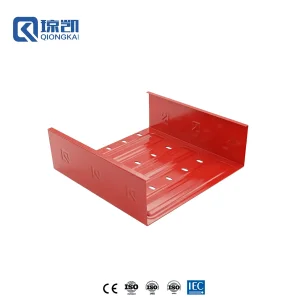
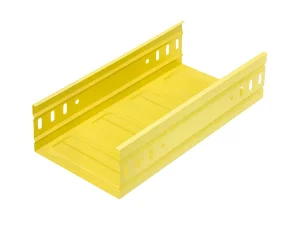
Traditional plain sheet trunking frequently buckles under continuous dynamic cable pulls unless steel thickness is increased to 2.0mm or 2.5mm, creating unnecessary shipping deadweight. Modern molded trunking channels integrate longitudinal reinforcing ribs cold-rolled into the sidewalls and bottom web.
This corrugated structural geometry increases the sectional moment of inertia (Ix) by 32%, allowing a 1.2mm or 1.5mm wall profile to match or exceed the flexural load capacity of conventional 2.0mm flat steel trunking.
| Containment Material / Coating | Coating Standard | Average Thickness | ISO 12944 Corrosivity Class | Salt Spray Resistance (ASTM B117) | Recommended Industrial Scope |
|---|---|---|---|---|---|
| Pre-Galvanized Carbon Steel (PG) | EN 10346 / ASTM A653 | 15 – 22 µm (Z275) | C1 (Very Low) / C2 (Low) | 120 – 180 Hours | Office Buildings, False Ceilings, Dry IT Spaces |
| Hot-Dip Galvanized Steel (HDG) | ISO 1461 / ASTM A123 | 55 – 85 µm | C3 (Medium) / C4 (High) | 720 – 1200+ Hours | Chemical Plants, Refineries, Heavy Industrial Infrastructure |
| PG + Polyester Powder Coated (RAL) | GB/T 18593 / ISO 12944 | 60 – 100 µm (Paint) | C2 – C3 Functional | 350 – 500 Hours | Hyperscale Data Center Cable Segregation & Color Routing |
| Stainless Steel (SS304 / SS316L) | ASTM A240 / EN 10088 | Self-Passivating Film | C5-M (Marine / Offshore) | 2000+ Hours (Grade 316) | Food & Beverage, Clean Rooms, Coastal LNG Terminals |
| Fiberglass Reinforced Polymer (FRP) | ASTM D3917 / UL 94-V0 | Solid Composite Matrix | Extreme Acid / Alkali | Immune to Galvanic Rust | Battery Pickling Halls, Marine Jetty Racks, Desalination |
Localized Application Engineering Scenarios
Real-world containment design requires specialized structural responses to regional environmental factors—from high-humidity tropical zones to extreme seismic fault lines.
Hyperscale Cloud Data Facilities
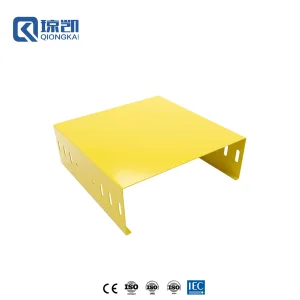
Modern data center campuses demand rigid cable trunking overhead and under raised access floors to carry heavy copper Ethernet, Cat6A bundles, and MPO trunk fiber without cross-talk or sagging. Powder-coated pre-galvanized troughs (such as RAL 1080 Yellow for optical fiber and RAL 5015 Blue for low-voltage power) simplify maintenance tracing.
Reinforced trough channels prevent cable strain injury and eliminate micro-bends in fragile single-mode optical lines.
High-Humidity Coastal & Offshore Projects
Marine atmospheric salt spray rapidly destroys standard sheet zinc. Projects such as offshore LNG extraction terminals in the Middle East and Southeast Asian coastal petrochemical processing complexes mandate heavy hot-dip galvanized trunking with minimum 80µm zinc mass, or composite FRP-lined carbon steel profiles.
Our custom-engineered solutions include high-neck slip-resistant covers and neoprone gaskets that seal the containment run against driven rain, sandstorms, and airborne chlorides.
Seismic Bracing & Mass Transit Tunnels
Underground metro networks, rail tunnels, and commercial buildings in active seismic belts require containment assemblies engineered against lateral and longitudinal acceleration forces. Plain trunking hung via simple threaded rods is prone to dynamic failure during tremors.
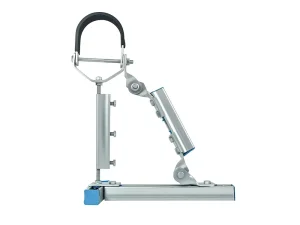
We provide integrated 41x41 and 41x82 back-to-back strut channels paired with serrated channel nuts and heavy-duty seismic bracing kits, certified under rigid GB 50981 and NFPA 13 building codes.
Technological Roadmap & Advanced Future Containment
The cable support sector is actively evolving from basic metal forming toward AI-integrated BIM modeling, continuous laser perforation, and automated life-cycle condition monitoring.
BIM Level 3 & Parametric Families
Contractors no longer order arbitrary linear meters of trunking. We deliver comprehensive Revit and IFC 3D parametric models with pre-calculated self-weight, bend radiuses, and junction impedance data, accelerating spatial collision detection in complex MEP riser shafts.
Molded Rib Geometry & Zero-Weld Joints
By engineering multi-stage progressive cold-forming tooling, our factory produces trunking segments up to 6 meters in length without a single welding bead. This eliminates thermal heat-affected zones (HAZ) where zinc coating typically deteriorates first, extending field life by 40%.
Circular Steel & Eco-Galvanizing
Modern sustainability requirements demand audited EPD (Environmental Product Declaration) certificates. We are transitioning raw feedstocks toward low-carbon scrap-based Electric Arc Furnace (EAF) carbon steel, powered by industrial closed-loop zinc recovery baths that cut carbon output by 28%.
Integrated Sensor Harnesses
Next-generation industrial trunking installations will incorporate distributed fiber optic temperature sensors (DTS) and load cells directly inside the trunking flange. This provides control rooms with real-time early warnings for localized thermal cable runaways and physical deflection overloads.
Macro Industry Solutions for Global EPC Contractors
A comprehensive procurement strategy requires total lifecycle coordination: from nested maritime container packing to factory acceptance testing (FAT) and rapid on-site assembly.
Nested Packaging & Ocean Freight Optimization
International freight costs can represent up to 25% of total procurement capital if shipping hollow profiles inefficiently. We design modular trunking channel heights and matching covers with precise step-tapered profiles, allowing 100x50, 200x100, and 300x100 sizes to be perfectly nested inside one another.
This increases 40ft HQ container cubic utilization from 45% to over 88%, drastically slashing landed unit freight overhead for overseas distributors.
Rigid Quality Control & FAT Protocols
Every export consignment undergoes strict metallurgical testing before release: electromagnetic coating thickness verification, copper sulphate immersion testing (Preece Test for zinc uniformity), and cross-hatch adhesion testing for powder-coated layers.
We supply international third-party test reports (SGS / BV / TÜV) verifying load deflection ratios against NEMA VE 1 / CSA C22.2 No. 126.1, giving site consultants total technical confidence.
Turnkey Component Integration
Procuring trunking from one factory, brackets from another, and splice connectors from a third vendor leads to on-site assembly misalignment and project delays. Qiongkai supplies fully unified containment ecosystems.
From continuous earth bonding links, internal cable separation dividers, slip-on reducers, and tee branches to seismic channel brackets, every accessory is matched to accurate mechanical tolerances.
Frequently Asked Engineering & Procurement Questions
Expert answers addressing the practical technical, commercial, and structural inquiries raised by electrical consultants, project estimators, and site supervisors.
What is the key functional difference between Cable Trunking and Cable Tray?
Cable Trunking (trough type) is an enclosed, solid-bottom continuous containment profile with a removable cover designed to offer complete mechanical, dust, and EMI shielding for delicate cables. Cable Trays (perforated or ladder type) feature open structures promoting superior airflow and ventilation, which helps prevent thermal heat buildup in heavy power transmission lines.
How does pre-galvanized (PG) steel protect exposed shearing edges from corrosion?
Through galvanic cathodic action. Because zinc has a lower electrochemical potential than iron, ambient moisture forms a micro-galvanic cell across cut edges where zinc dissolves sacrificially. The zinc ions combine with atmospheric carbon dioxide to form an insoluble zinc hydroxycarbonate patina, sealing the exposed steel edge against progressive red oxidation.
Why is reinforced molded rib trunking considered more cost-effective?
Molded trunking features roll-formed longitudinal stiffener ribs along the channel sidewalls and bottom. These cold-rolled ridges substantially boost the sectional moment of inertia without adding raw steel mass. This allows project engineers to specify a lighter 1.2mm or 1.5mm gauge that matches the structural stiffness of 2.0mm plain flat sheet, lowering raw material and freight costs by 20% to 30%.
When should an engineer specify Hot-Dip Galvanizing (HDG) over Pre-Galvanizing?
HDG is required in humid, outdoor, coastal, or industrial environments classified under ISO 12944 as C3, C4, or C5. Pre-galvanized coatings (averaging 15–20µm) will rapidly break down under exterior rain, marine salts, or industrial airborne acid pollutants. HDG delivers an alloyed zinc-iron barrier averaging 55–85µm that provides multi-decade maintenance-free service.
What is the standard maximum allowable deflection for steel trunking runs?
Under international standards including NEMA VE 1 and IEC 61537, the typical maximum deflection for continuous structural containment spans under fully loaded conditions must not exceed L/200 to L/360 of the clear span distance between support brackets. This ensures joint splices do not buckle, lids fit tightly, and structural sag remains imperceptible.
How are electrical grounding continuity and earth bonding maintained across trunking joints?
All painted, powder-coated, or galvanized trunking sections must be bonded across every joint via tin-plated copper earth bonding jumpers or serrated star lock washers that bite through non-conductive surface films into the base steel. This guarantees earth continuity with total loop impedance strictly compliant with BS 7671 electrical wiring standards.
Can Qiongkai supply custom non-standard dimensions and tailored punch patterns?
Yes. With 12 automated production lines, 60+ heavy-duty press units, and an in-house tooling division in Shanghai, we regularly manufacture customized channel widths from 50mm up to 1000mm, sidewall heights from 25mm to 300mm, and customer-specific mounting slot configurations designed for specialized industrial installations.
What export documentation and compliance certifications accompany wholesale shipments?
Every overseas export order is dispatched complete with EN 10204 3.1 Mill Test Certificates (MTC), independent third-party laboratory coating thickness and tensile test reports (SGS / BV / TÜV), Certificates of Origin (CO / Form E / Form F), and detailed container packing lists designed for prompt customs clearance.
Complete Heavy-Duty Cable Support Systems & Accessories
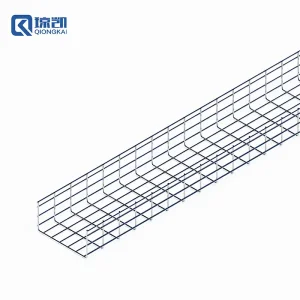
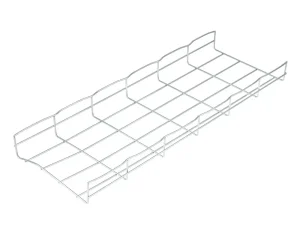
Complementary containment solutions including slotted framing channels, wire mesh basket systems, seismic brackets, and multi-color coated ladder trays engineered for end-to-end site installations.