
High-Precision Cable Trays & Structural Profiles
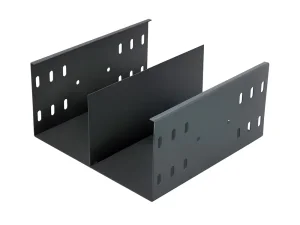
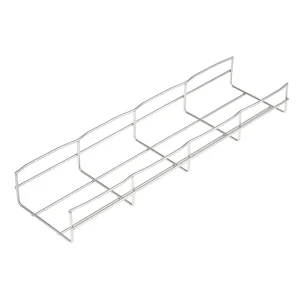
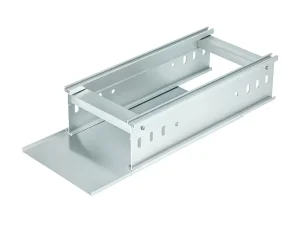
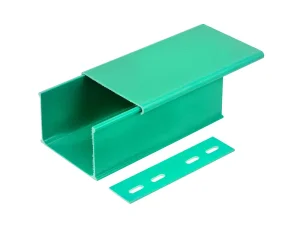
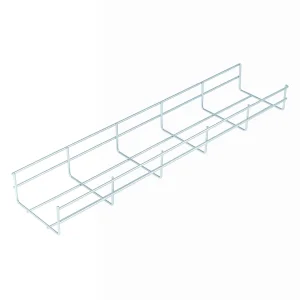
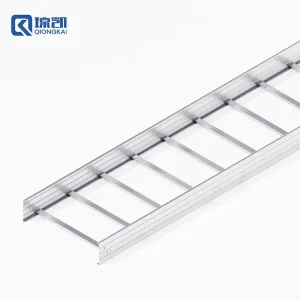
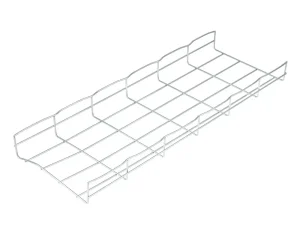
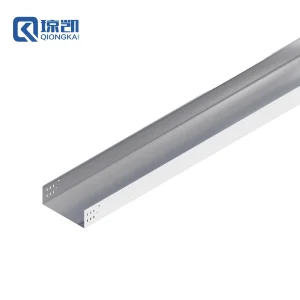
Manufactured through automated high-speed roll forming and deep metallurgical zinc coatings. Explore our core wholesale production configurations below:
The Metallurgy of Modern Cable Routing: Pre-Galvanized vs. Hot-Dip Batch Galvanizing
Specifying cable tray assemblies for major industrial and civil capital expenditures demands a rigorous understanding of metallurgical bonding, protective sacrificial zinc layers, and structural load distributions under varied seismic, thermal, and atmospheric stresses.
Pre-Galvanized (GI) Continuous Coil
Formed from carbon steel coils continuously dipped into molten zinc at mill facilities (conforming to ASTM A653 / EN 10346). Features uniform zinc thicknesses typically ranging between 120 g/m² and 275 g/m² (Z120 to Z275). Excellent for interior commercial distribution, high-volume indoor commercial risers, and controlled-climate HVAC plenums.
Batch Hot-Dip Galvanized (HDG)
Fabricated components (welded ladders, punched channels, and trunking bodies) are entirely submerged into an active 450°C molten zinc bath per ASTM A123 / ISO 1461. This yields intermetallic zinc-iron alloy phases (Gamma, Delta, Zeta) topped with an exterior ductile pure Eta layer, delivering a 65–85+ micron protective armor for outdoor petrochemical and coastal sites.
Dual-Barrier & Polymeric Hybrid
Combining galvanized zinc substrates with an electrostatic thermoset polyester or epoxy powder coating (ranging 60 to 120 microns). This dual-barrier architecture eliminates pinhole degradation, offers distinct RAL color identification for critical network segregation (data vs. high voltage), and halts micro-galvanic cell corrosion in acidic humid airflow environments.
Information Gain: Sacrificial Anodic Protection Mechanics
In environments exposing bare steel cuts or punched perforation rims, the lower electrochemical potential of zinc (-0.76V vs. Fe -0.44V) forces it to act as a sacrificial anode. The zinc preferentially oxidizes into insoluble zinc hydroxycarbonate, effectively self-healing cut cross-sections up to 2.0mm thick without inducing lateral under-film rust creep.
Why Global EPC Leaders Partner Directly with Chinese Factories
China’s advanced industrial manufacturing clusters provide unprecedented throughput, structural efficiency, and metallurgical raw material integration. By bypassing multiple broker layers, Tier-1 EPC contractors and global wholesalers access specialized production lines configured for fast turnaround times.
Upstream Mill Linkage
Direct partnership with premier steel mills (Baosteel, Shougang) eliminates spot-market volatility. We hedge raw coil pricing and secure consistent yield strengths (Q235B, Q355B, S280GD, S350GD) with fully traceable 3.1 Mill Test Certificates.
High-Speed CNC Punching
Automated multi-station punch presses produce continuous, burr-free ventilation and fastener patterns at linear speeds up to 25 meters per minute, guaranteeing dimensional consistency and precise on-site bolt alignment.
Deep-Water Port Consolidation
Positioned strategically near Shanghai (Yangshan & Waigaoqiao Ports). Pre-assembled channel modular packs and telescoping nested tray bundles lower cubic meter (CBM) container shipping overhead by up to 38%.
Rapid Tooling & Customization
In-house tooling centers allow non-standard profile engineering (side heights up to 250mm, widths up to 1200mm, stepped returns, custom flange lips, and reinforced anti-sag longitudinal ribs) engineered within 72 hours.
International Regulatory Standards: Engineering for Project Acceptance
Supplying global capital infrastructure requires absolute conformance to jurisdictional electrical, mechanical, and life-safety codes. Our cable tray assemblies undergo extensive destructive load verification, electrical resistance benchmarking, and structural deflection monitoring.
| Regulatory Standard | Governing Region | Critical Scope / Test Methodology | Performance Benchmark Verified | Factory Conformance Level |
|---|---|---|---|---|
| IEC 61537 | International / Europe / MEA | Cable management — Cable tray systems & cable ladder systems load testing | Safe Working Load (SWL), electrical continuity (<50 mΩ), impact resistance Type II | Fully Certified |
| NEMA VE 1 / CSA C22.2 | North America / US / Canada | Metal Cable Tray Systems — structural load classes (e.g., 12C, 20A, 20C) | Multi-span destructive deflection limits (L/200, L/300) with 1.5x structural safety factor | Fully Certified |
| UL 568 / NEC Art. 392 | United States / Global UL | Equipment Grounding Conductor (EGC) and electrical bonding paths | Certified ground continuity cross-sections without secondary bonding jumpers | Listed Components |
| ISO 1461 / ASTM A123 | Global Metallurgical | Hot dip galvanized coatings on fabricated iron and steel articles | Minimum average coating thickness: 65 μm (<5mm steel) / 85 μm (>6mm steel) | Batch Inspected |
| DIN 4102-12 / EN 50200 | Europe / Industrial Power | Functional circuit integrity during severe building fire events (E30, E60, E90) | Sustained cable support integrity under 1000°C furnace exposure up to 90 minutes | Project Specific |
Seismic Bracing & Structural Vibration
Engineered in compliance with ASCE 7-16 and IBC Chapter 13. We calculate lateral and longitudinal dynamic acceleration thresholds ($S_s, S_1$), supplying engineered strut seismic brackets, heavy-duty back-to-back channels, and rigid hinge connectors that keep mission-critical cables intact during seismic shockwaves.
Electrical Bonding & Earth Continuity
Poor earthing across tray splice joints creates severe stray current and electromagnetic hazard loops. Our precision-punched fish plates, zinc-cutting grounding bolts, and copper braided earth jumpers establish system impedance values well under the 50 mΩ ceiling dictated by IEC 61537 Section 11.
ISO 12944 Environmental Classification vs. Cable Tray Selection
Selecting the correct metallurgical coating prevents catastrophic structural failure and multimillion-dollar replacement schedules. This matrix maps zinc thickness to expected service life:
| Corrosivity Category | Atmospheric Risk Profile | Typical Industrial Environment | Recommended Cable Tray Finish | Estimated Life to First Maintenance |
|---|---|---|---|---|
| C1 (Very Low) | Heated spaces, dry atmosphere, clean air | Air-conditioned commercial offices, schools, hotels | Pre-Galvanized (GI) Z120–Z180 (15–20 μm) | 30+ Years |
| C2 (Low) | Unheated buildings with periodic condensation | Industrial warehouses, retail sports halls, parking lots | Pre-Galvanized (GI) Z275 (20–25 μm) | 15–25 Years |
| C3 (Medium) | Moderate SO2 pollution, humid manufacturing | Food processing, breweries, urban industrial zones | Batch Hot-Dip Galvanized (HDG) / Powder Coated GI | 20–35 Years |
| C4 (High) | Chemical manufacturing, coastal temperate zones | Coastal infrastructure, water treatment, chemical works | Heavy Batch HDG (>65 μm) or Dual-Coat Epoxy HDG | 15–25 Years |
| C5 (Very High) | Extreme humidity, aggressive industrial air | Offshore platforms, shipyards, heavy smelting facilities | Hot-Dip Galvanized (>85 μm), SS316, or Pultruded FRP | 10–20+ Years |
Global Corporate Sourcing: Mitigating Risk in Large-Scale Procurement
When procurement directors and supply chain VPs source 50+ metric tons of containment across multiple oceanic shipping lines, factory risk mitigation protocols separate premier manufacturing facilities from volatile regional processors.
Pre-Shipment Trial Assemblies
To prevent on-site delays, random production samples undergo complete modular pre-fit setups in our QA inspection bay. Technicians test radius elbows, tees, reducers, splice connections, and bolt clearances before pallet strapping.
Electromagnetic Coating Gauging
Using multi-point digital eddy current and magnetic induction gauges (conforming to ISO 2178 / ASTM B499), QA engineers map thickness data points across profiles, sides, and welding joints to guarantee spec compliance.
Export-Grade Marine Packaging
Containment components are bound with high-tensile steel banding, wrapped in UV-inhibited waterproof VCI (Vapor Corrosion Inhibitor) plastic film, and set on fumigated solid timber skids with reinforced edge corner protectors.
Specialized Deployment Across Mission-Critical Facilities
From sub-zero Arctic gas pipelines to high-temperature tropical facilities, real-world field conditions require specific cable tray adaptations:
Hyperscale Cloud Data Halls
Primary Demand: Elimination of "zinc whisker" phenomena (which can cause micro-short circuits in enterprise server racks) and maximum convective thermal cooling.
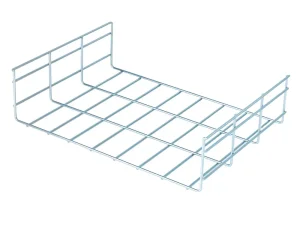
Factory Solution: Pre-Galvanized continuous wire mesh baskets with electro-polished or post-coat powder finishes, equipped with fast snap-in toolless joiners and smooth rounded border wires to prevent fiber-optic jacket abrasion.
International Aviation Hubs
Primary Demand: Electromagnetic shielding against radar/RF signal interference and extended, maintenance-free fire life safety.
Factory Solution: Heavy-gauge galvanized solid-bottom cable trunking equipped with tightly overlapping, continuous spring-clip covers and integrated conductive earth braid studs, installed at Shanghai Hongqiao International Airport.
Offshore LNG & Petrochemical
Primary Demand: Extreme resistance to coastal chloride fog (C5-M environment), high winds, and heavy vibratory motor loads.
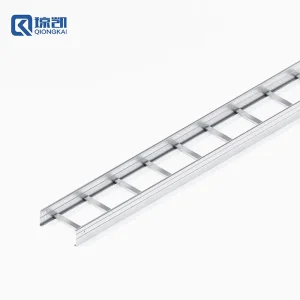
Factory Solution: Deep batch hot-dip galvanized cable ladders (minimum 85 μm thickness) utilizing custom channel side rails and double-rung welded crossbars, successfully deployed for offshore LNG project work in Qatar.
Next-Generation Trends Shaping Cable Containment Systems
Driven by digitalization, prefabrication speed, and global carbon reduction goals, cable containment systems are evolving rapidly:
BIM (Revit LOD 400) Integration
Modern contractors demand exact digital-twin parameters before physical production starts. We supply native Autodesk Revit LOD 400 BIM parametric families, ensuring automated clash detection and exact bill of materials (BOM) nesting.
Low-Carbon "Green" Zinc Coatings
Decarbonization standards require reduced embodied carbon. Our modern facilities utilize scrap-recycled EAF steel substrates and closed-loop, emission-controlled natural-gas heated zinc kettles with continuous flux recycling.
Cold-Formed Reinforcement Ribs
Advanced FEA simulation allows longitudinal continuous stiffening ribs on both tray sidewalls and base beds. This engineering increases load capacity by 28% without increasing steel gauge thickness, saving substantial raw material and freight costs.
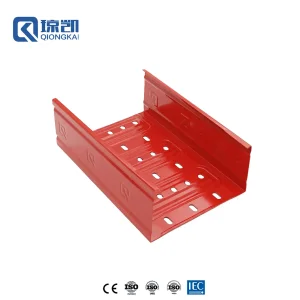
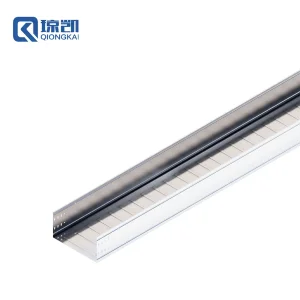
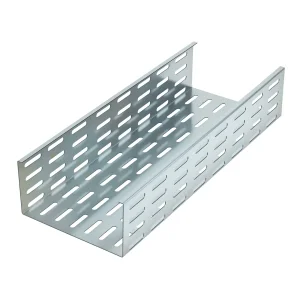
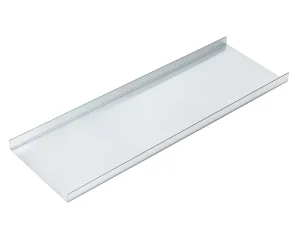
Heavy-Duty Cable Ladders, Troughs & Modular Trunking
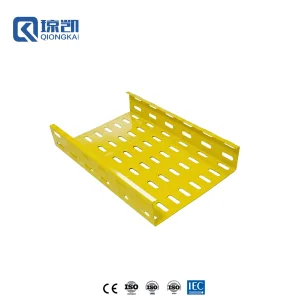
Engineered for extended spans, excessive cable weight loads, and mechanical protection. Review our heavy-duty industrial series configurations:
Frequently Asked Engineering & Sourcing Questions
Straightforward technical answers for electrical consultants, procurement estimators, and structural project managers.
What distinguishes Continuous Pre-Galvanized (GI) from Batch Hot-Dip Galvanized (HDG) cable tray?
The primary differences lie in the coating timing and resulting metallurgical thickness. Pre-Galvanized (GI) trays are cold-roll formed from mill-galvanized sheet coils (ASTM A653) with a typical coating thickness of 15–20 microns (Z180–Z275). It produces a bright, smooth finish ideal for indoor air-conditioned spaces. In contrast, Batch Hot-Dip Galvanized (HDG) trays are first fully punched, bent, and welded from raw black steel, then completely immersed into a 450°C molten zinc bath (ASTM A123 / ISO 1461). This process forms a metallurgical alloy bond over all surfaces and cut edges, providing 65 to 85+ microns of barrier protection suited for outdoor, industrial, and coastal applications.
How do you resolve "zinc whisker" risks in mission-critical hyperscale data centers?
Zinc whiskers are microscopic conductive filaments that can spontaneously detach from electro-galvanized surfaces under internal compressive stress, potentially causing electrical shorts in server equipment. To eliminate this risk, we specify Continuous Pre-Galvanized Mill Steel (which is thermally bonded rather than electroplated), proprietary Stainless Steel (AISI 304/316), or post-fabrication Thermoset Epoxy Powder Coatings applied over a shot-blasted substrate.
Can the factory produce custom non-standard dimensions and side-rail return heights?
Yes. With 12 automated roll-forming lines and in-house tooling CNC machine shops, our production facilities manufacture custom widths (from 50mm up to 1200mm), side heights (50mm, 75mm, 100mm, 150mm, and 200mm), and plate thicknesses (1.0mm to 3.0mm). Custom rungs, stepped return flanges, and tailor-made ventilation perforations can be engineered and sampled within 72 hours of drawing sign-off.
How are expansion joints engineered for long-run outdoor cable tray installations?
Outdoor thermal cycling causes longitudinal steel expansion and contraction based on the thermal expansion coefficient ($\alpha \approx 12 \times 10^{-6}/\text{K}$). Per NEMA VE 2 installation recommendations, expansion splice plates with slotted bolt holes and designated gap settings are installed at determined intervals (typically every 30 to 45 meters for a 40°C temperature differential). A flexible bonding jumper is bridged across the expansion gap to ensure unbroken electrical grounding continuity.
What documentation and metallurgical verification are supplied with each export shipment?
Every production lot includes a comprehensive QA/QC documentation dossier containing:
1. EN 10204 3.1 Mill Test Certificates (MTC) verifying raw coil chemical composition and mechanical tensile/yield properties.
2. Zinc Coating Thickness Reports documenting multi-point digital gauge readings across side rails, rungs, and splice fittings.
3. Electrical Continuity & Load Deflection Test Data conforming to IEC 61537 / NEMA VE 1.
4. Certified Ocean Export Packing Lists with exact CBM, gross weight, and container nest layout diagrams.
What are the typical lead times and minimum order quantities (MOQ) for full container loads?
Standard Pre-Galvanized profiles typically require 10–15 production days per 40-foot high-cube container (40HC). Batch Hot-Dip Galvanized orders require 15–22 days to accommodate post-weld immersion, acid pickling, passivation, and QA inspection. Our factory minimum order quantity is flexible: standard modular sizes start at 500 meters, while mixed project container consolidations (combining trays, covers, strut channels, and hardware accessories) are readily accommodated.