
High-Performance Structural Cable Containment Systems
Explore our wholesale factory-direct heavy-duty routing assemblies, engineered with metallurgical batch-dip galvanizing, marine-grade stainless steel alloys, and pultruded composites.
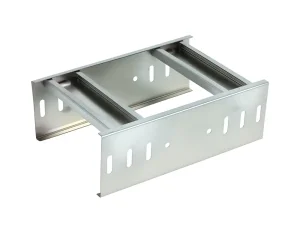
Wholesale 304 and 316 Stainless Cable ladder Factory, Factories
Configure Specs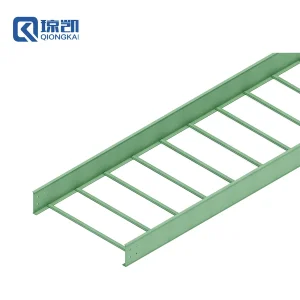
Wholesale FRP Ladder Type Cable Tray 1000*200 Manufacturer, Price
Configure Specs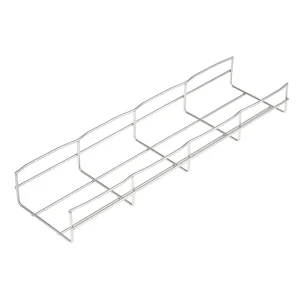
Wholesale Stainless Steel Grid wire mesh cable tray Manufacturers, Suppliers
Configure Specs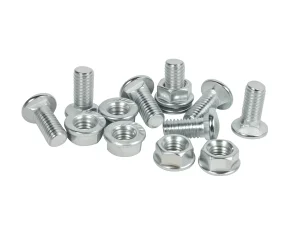
Buy Bridge frame screws Supplier, Factories
Configure Specs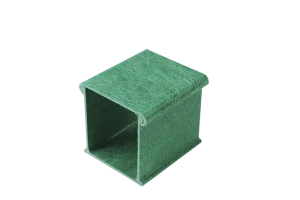
Wholesale FRP Through cable tray 50mm Supplier, Suppliers
Configure Specs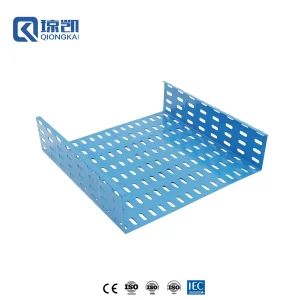
Buy Powder Coated Carbon Steel Pre Galvanized Hot Dip Galvanized PG HDG Cable Tray with Reinforce Ribs - RAL5015 Blue 400*100
Configure Specs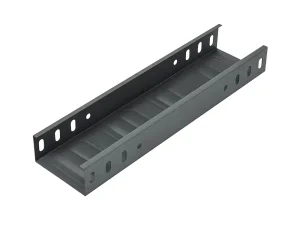
Wholesale Grey Pre Galvanized Powder coated molded cable tray Factory, Price
Configure Specs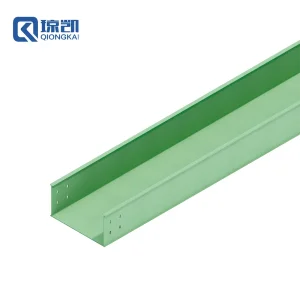
Buy FRP Cable Trunking Trough Type Channel 200*100 Manufacturer, Manufacturers
Configure SpecsThe Science of Batch Hot-Dip Galvanization in Extreme Environments
Achieving a 50+ year maintenance-free design life in industrial electrical containment requires understanding the chemical diffusion and phase formation between molten zinc and structural carbon steel.
Diffusion Chemistry & Phase Alloy Layers
Unlike electro-galvanizing or continuous pre-galvanized sheet (PG), our structural batch hot-dip galvanizing process fully immerses fabricated steel components into high-purity molten zinc baths maintained at 445°C to 455°C (833°F–851°F). This initiates an exothermic metallurgical iron-zinc diffusion reaction creating distinct alloy phases:
- Gamma ($\Gamma$) Phase: 75% Zn / 25% Fe (diamond-hard interfacial base layer, ~280 DPH).
- Delta ($\delta$) Phase: 90% Zn / 10% Fe (dense columnar crystal structure offering extreme impact absorption).
- Zeta ($\zeta$) Phase: 94% Zn / 6% Fe (tough intermetallic monoclinic crystal array).
- Eta ($\eta$) Layer: 100% pure outer zinc layer (highly ductile shock absorber, ~70 DPH).
Cathodic Sacrificial & Barrier Dual-Shielding
Batch HDG provides comprehensive protection through dual mechanisms. Firstly, the impermeable zinc-iron alloy barrier completely isolates carbon steel from airborne atmospheric moisture, sulfur dioxides, and chlorides.
Secondly, if physical damage or job-site cut-edge modifications occur, zinc acts as a sacrificial anode. Due to zinc's standard reduction potential (-0.76 V vs SHE) being more negative than iron (-0.44 V vs SHE), zinc galvanic current flows to exposed steel edges, preventing creep rust, edge undermining, or catastrophic structural delamination.
International Harmonized Standards Compliance
Engineered systems supplied by Shanghai Qiongkai Industry Co., Ltd. are certified and strictly manufactured in concordance with international quality and testing baselines:
- ASTM A123 / A123M: Standard Specification for Zinc Coatings on Structural Iron and Steel Products.
- ISO 1461: Hot dip galvanized coatings on fabricated iron and steel articles.
- IEC 61537 / BS EN 61537: Cable management — Cable tray systems and cable ladder systems.
- NEMA VE 1 / CSA C22.2 No. 126.1: Metal Cable Tray Systems load rating benchmarks.
| Containment Material / Coating | Avg Coating Thickness | Bonding Strength | ISO 12944 Exposure Class | Ideal Application Environment |
|---|---|---|---|---|
| Hot Dip Galvanized (HDG) Post-Fab | 65 – 100 μm (500-700 g/m²) | Metallurgical Alloying (3600+ psi) | C3, C4, C5-M (Industrial / Marine) | Refineries, power plants, offshore, chemical facilities |
| Pre-Galvanized Mill Coated (PG) | 15 – 20 μm (180-275 g/m²) | Mechanical Bond (Subject to edge rust) | C1, C2 (Indoor Controlled) | Commercial ceiling voids, dry IT plenums, HVAC spaces |
| Electro-Galvanized (EG) Wire Basket | 8 – 12 μm (50-90 g/m²) | Electrostatic Deposition | C1 (Low Humidity Indoor) | Enterprise data halls, server farm underfloor channels |
| Stainless Steel 316 / 316L | N/A (Solid 16-18% Cr / 10-14% Ni / 2-3% Mo) | Homogeneous Austenitic Alloy | CX (Extreme Corrosive / Coastal) | Desalination plants, offshore topsides, marine docks |
| Pultruded FRP / GRP Composite | N/A (Isophthalic Polyester / Vinyl Ester) | Thermoset Polymer Matrix | Chemical Acid Exposure | Wastewater treatment, chlorine vapor, battery plants |
Macro Dynamics Driving Modern Cable Management Infrastructure
The convergence of generative AI computing architectures, gigawatt-scale renewable generation, and heavy process manufacturing has fundamentally altered load, thermal, and corrosion requirements for global containment suppliers.
Hyperscale AI Data Centers & High-Density Thermal Dynamics
Modern AI GPU clusters (operating at 40kW to 100kW per cabinet rack) require massive power feed cabling alongside high-density multi-fiber optical trunks. Traditional light-gauge containment suffers from thermal sagging under heavy bundle weight.
Our heavy-duty hot-dip galvanized and powder-coated hybrid ladder systems provide high heat-dissipation ventilation, eliminating localized heat-island buildup within cable bundles. They strictly support NEMA 12B/12C dynamic load profiles over 3-to-6 meter unbraced ceiling spans, accommodating future live-load retrofits without structural re-engineering.
Offshore Wind, LNG Terminals & Subsea Interconnect Substations
Offshore energy transmission demands zero-failure electrical containment exposed to persistent saline sea-spray, salt fog, high winds, and mechanical vibration. High-profile international installations, such as our custom profiled section solution engineered for an offshore LNG facility in Qatar, prove the necessity of resilient metallurgy.
Heavy hot-dip galvanized assemblies coated to 85μm–100μm thickness, supplemented with 316 stainless hardware or dual-lined composite channels, successfully withstand C5-M and CX marine environments where standard galvanized products fail within 36 months.
Utility-Scale Solar PV & Harsh Desert Climatic Envelopes
In arid desert solar fields across the MENA region, Australia, and the US Southwest, cable trays face extreme diurnal temperature swings ranging from -5°C to +55°C, high ultraviolet irradiation, and abrasive airborne quartz sand scouring.
Our heavy-duty HDG perforated trough and ladder systems feature high-hardness Delta ($\delta$) and Zeta ($\zeta$) intermetallic layers that resist mechanical abrasion far better than conventional organic paint coatings, ensuring uninterrupted generation and zero grounding degradation across 30-year PPA contracts.
Heavy Chemical, Petrochemical & Fertilizer Processing Plants
Refining and fertilizer synthesis release airborne sulfur dioxide ($SO_2$), hydrogen sulfide ($H_2S$), and high ammonia vapors. These acidic gases rapidly corrode lightweight electrical trunking, risking short-circuit electrical fires or catastrophic shutdowns.
Qiongkai provides engineered containment systems combining heavy batch HDG, chemically bonded PVC/powder overlays, and fireproof composite profiles. These systems ensure uninterrupted power delivery to critical safety sensors, automated shutoff valves, and high-voltage drive motors.
Localized Climate, Building Codes & Installation Scenarios
A single universal cable tray specification cannot meet the demands of global installations. We tailor alloy selections, perforation patterns, and structural thicknesses to match regional climate classifications and structural codes.
Middle East & Gulf Cooperation Council (GCC)
Environmental Challenge: High coastal salinity combined with intense ambient thermal saturation ($>50^\circ\text{C}$), high UV degradation, and dust-laden winds.
Engineering Solution: Customized batch hot-dip galvanizing with minimum certified coating thickness of $\ge 85\,\mu\text{m}$ (610 g/m²), paired with specialized chromate-free surface passivation to prevent "white storage stain" during high-humidity transit. As proven in Qatar energy megaprojects, our profiles feature custom ventilation geometry that prevents sand accumulation inside the raceway while ensuring maximum heat dissipation.
Southeast Asia Monsoonal & Tropical Corridors
Environmental Challenge: Continuous relative humidity exceeding 90%, persistent rainfall, cyclic condensation, and microbial mold proliferation across Thailand, Vietnam, and Indonesia.
Engineering Solution: Implementation of dual-protection hybrid designs, such as our high-load FRP-lined hot-dip galvanized steel hybrid systems deployed for heavy industrial projects in Thailand. Where full composites are required, vinyl-ester pultruded FRP ladders with UV inhibitors resist moisture penetration and maintain structural modulus over decades of exposure.
Europe & North America (EN / NEMA Standardized)
Environmental Challenge: Strict harmonized regulatory frameworks (CE, EN 61537, NEMA VE-1, UL), seismic hazard building codes, and low-temperature brittle fracture risks in sub-zero winter zones.
Engineering Solution: Production with high-ductility structural carbon steels (Q235B and Q355B with verified Charpy V-notch impact toughness). Tested according to BS EN 61537 deflection criteria (Span/200 limit) and fully compatible with our UL-certified back-to-back strut systems and anti-seismic bracing brackets, fulfilling European industrial safety and Italian export requirements.
Intensive Agricultural & Bio-Gas Containment
Environmental Challenge: Highly concentrated corrosive ammonia ($NH_3$), methane vapors, moisture, and biological washdowns common to mega-scale livestock confinement facilities.
Engineering Solution: Validated by our high-load, budget-optimized cable tray delivery for a large commercial agricultural and pig farm installation in Paraguay. By optimizing structural stiffening ribs on pre-galvanized and HDG channels, we achieved 30% higher mechanical flexural strength without unnecessary steel weight, significantly lowering total project material and shipping costs.
Civil Transportation & Aviation Hubs
Environmental Challenge: High mechanical vibration, dynamic air currents, strict emergency fire-smoke toxicity protocols, and 24/7 reliability requirements for airport transit systems.
Engineering Solution: Successfully proven in our supply of corrosion-resistant CT series cable trunking for Shanghai Hongqiao International Airport. Features precision electro-magnetic interference (EMI) screening, seamless cover latching, and zero-halogen fire retardant powder coatings that prevent toxic smoke emissions during fire emergencies.
Why Tier-1 Global EPCs Partner Directly with Shanghai Qiongkai
Operating continuously since 2005 from our advanced Songjiang, Shanghai manufacturing hub, we provide international clients with distinct supply chain resilience, transparent quality control, and rapid deep-water maritime logistics.
Upstream Raw Material Strategic Integration
Our factories maintain long-term direct supply agreements with premier Chinese steel manufacturers (including Baosteel and HBIS). We procure certified prime carbon steel coils (Q235B, Q355B, SPCC) with uniform chemical compositions and strictly controlled silicon and phosphorus contents (Sandelin curve management).
Controlling base metal metallurgy prevents overly reactive growth of brittle Zeta ($\zeta$) phases during galvanization, guaranteeing ductile, uniform zinc alloy coatings with zero peeling or micro-flaking during field installations.
Automated Multi-Line Production Firepower
Across our 3 specialized manufacturing factories spanning over 30,000 square meters of modern industrial workshops, Qiongkai operates 12 fully automated continuous cold roll-forming lines, accompanied by over 60 heavy-duty punch presses, robotic fiber laser cutters, and high-precision CNC bending brakes.
This integrated industrial capacity enables rapid, high-volume production of standard straight runs, customized radii, non-standard sidewall depths (up to 200mm), and complex heavy-duty bracket profiles with zero reliance on outsourced subcontractors.
Port-Centric Logistics & Export Advantage
Located in Shanghai Songjiang Port Science and Technology City, our primary distribution hub sits less than 60 minutes from both Shanghai Waigaoqiao Port and Yangshan Deep-Water Port—the world's busiest container terminal complex.
This strategic location eliminates costly domestic drayage delays, reduces trucking emissions, and provides direct weekly container shipping routes to major international ports across Europe, the Americas, the Middle East, and Asia-Pacific.
Advanced Metallurgy, BIM Digital Twins & ESG Manufacturing
Cable management engineering is rapidly evolving beyond passive steel channels. We are pioneering automated digital design integration, next-generation self-healing ternary alloys, and low-carbon manufacturing processes.
Phase 1: Zinc-Aluminum-Magnesium (Zn-Al-Mg / ZAM) Commercial Adoption
While conventional batch HDG remains the benchmark for heavy structural weldments, next-generation Zn-Al-Mg (ZAM) continuous alloy coatings are transforming perforated tray design. Containing 1.5%–3.0% Magnesium and 1.5%–5.0% Aluminum, ZAM forms a chemically stable protective layer of simonkolleite and basic magnesium salts.
When exposed to field cut-edges or drilling, dissolved magnesium ions precipitate across exposed iron surfaces, delivering true "self-healing" cut-edge performance up to 5 to 10 times more corrosion-resistant than standard zinc coatings of identical thickness.
Phase 2: Digital Twin, LOD 400 BIM Libraries & Modular Prefabrication
Modern EPC construction demands clash-free digital modeling before physical components arrive on site. Qiongkai supports global engineering teams with parametric BIM families (Autodesk Revit, Bentley OpenBuildings, STEP, DWG) developed at Level of Development (LOD) 400.
These digital models include exact sidewall profiles, dynamic deflection curves, fastener spacing tolerances, and thermal expansion joint limits. This eliminates job-site tray cutting, preserves protective coatings, and slashes installation labor by up to 35%.
Phase 3: Seismic Bracing & Dynamic Mechanical Optimization
Critical utility installations in seismic zones (IBC, ASCE 7, Eurocode 8) require certified dynamic load resistance. We provide fully integrated seismic restraint systems that connect directly to our 41x41, 41x62, and 41x82 back-to-back strut channels.
Our patented anti-seismic channel flange teeth bite securely into hardened channel nuts, preventing longitudinal slip under severe earthquake acceleration or wind-induced vortex shedding.
Phase 4: Decarbonization, Green Steel & Zero-Discharge Galvanizing
Aligned with global ESG mandates, our manufacturing roadmap actively integrates Electric Arc Furnace (EAF) low-embodied-carbon steel coils. In our galvanizing process, we use automated natural gas-fired ceramic immersion burners, enclosed acid vapor scrubbers, and regenerative flux recycling systems.
This achieves zero wastewater discharge and minimal fugitive zinc emissions, providing EPC contractors with certified Environmental Product Declarations (EPDs) that earn LEED v4 and BREEAM sustainability credits.
End-to-End Inspection Protocols & Global Compliance Guarantees
From chemical analysis of raw steel heats to non-destructive coating thickness testing and destructive mechanical load deflection trials, our strict multi-stage inspection regime guarantees zero-defect site delivery.
Magnetic Eddy Current Testing
In accordance with ASTM B499 and ISO 2178, coating thickness is verified using calibrated magnetic induction and eddy current gauges across all critical tray surfaces: side rails, bottom rungs, punched flanges, and welded corners.
Neutral Salt Spray Testing (NSS)
Batch production coupons undergo continuous accelerated salt spray testing (ASTM B117 / ISO 9227) in calibrated fog chambers ($5\%\,\text{NaCl}$, $35^\circ\text{C}$). Our hot-dip galvanized samples consistently exceed 1,000+ hours with zero appearance of red base-metal corrosion.
Beam Load & Deflection Testing
Conforming with NEMA VE-1 and IEC 61537 Section 10, tray spans are loaded to maximum allowable working loads using iron ingots. Deflection measurements confirm structural deflection remains well within the strict $Span/200$ limit with a 1.5x safety safety factor.
Electrical Continuity & Bonding
Grounding safety is critical. In compliance with IEC 61537 Section 11, our structural splices and jumper-free connections are tested to verify joint electrical impedance remains below $0.05\,\Omega$ per meter, preventing dangerous electrostatic or ground fault potential buildup.
Structural Conduits, Perforated Trays & Seismic Bracing Networks
Complete your cable installation with our heavy-gauge electrical conduits, reinforced pre-galvanized channels, and seismic support brackets designed for rapid mechanical coupling.
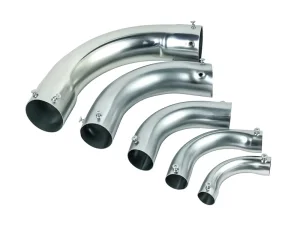
Wholesale All radius Pre galvanized cable conduit Manufacturer, Suppliers
Configure Specs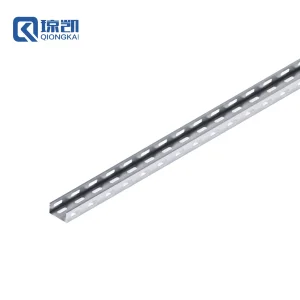
Wholesale PG HDG Perforated Cable Tray 50*25 Supplier, Price
Configure Specs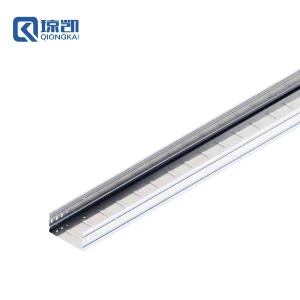
Wholesale Heavy Duty Cost Saving Reinforced Molded Pre Galvanized Cable Trunking Trough Type Channel 200*100
Configure Specs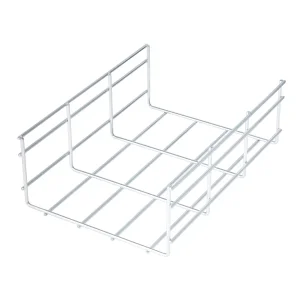
Wholesale Pre Galvanized grid Cable tray 200mm Manufacturer, Manufacturers
Configure Specs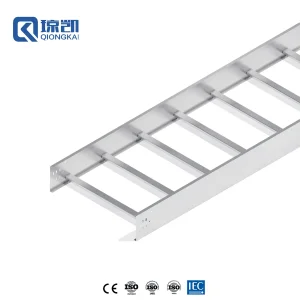
Buy PG Pre-galvanized Ladder Tray 800*200 Manufacturer, Factory
Configure Specs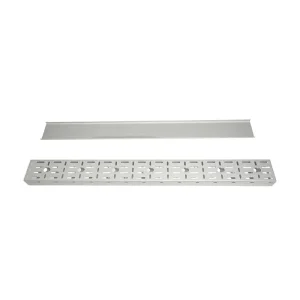
Buy SS Stainless Steel 316*316L Cable Trays Maxiumn Perforated Cable Trays Manufacturer, Supplier
Configure Specs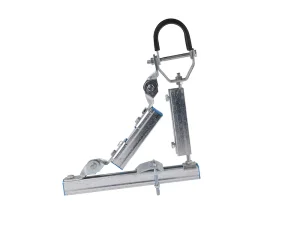
Buy Reliable heavy duty seismic resistant bracket Factories, Price
Configure Specs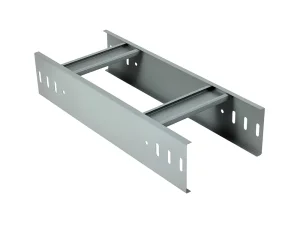
Buy Fireproof powder coated Pre galvanized ladder type cable tray Manufacturer, Manufacturers
Configure SpecsFrequently Asked Questions: Technical & Procurement Specifications
Direct, authoritative engineering guidance addressing load-span calculations, metallurgy, corrosion standards, and supply chain logistics for project specifiers.
What is the key metallurgical distinction between Pre-Galvanized (PG) and Hot-Dip Galvanized (HDG) cable trays?
In contrast, Hot-Dip Galvanized Post-Fabrication (HDG in accordance with ASTM A123 or ISO 1461) involves cutting, punching, forming, and welding the complete cable tray assembly first. The entire fabricated steel unit is chemically pickled, fluxed, and fully submerged into molten zinc at 450°C. This forms a true metallurgical zinc-iron diffusion alloy across 100% of the product, achieving coating thicknesses of 65–100+ μm (500–720 g/m²). This post-fabrication immersion seals every corner, hole, and weld seam, ensuring durable performance in harsh outdoor and industrial C3–C5 environments.
How are NEMA VE-1 load ratings and support span distances calculated for heavy industrial projects?
Working load capacity represents the total weight of cables the tray can safely support without exceeding structural deflection limits (typically Span / 200). Testing includes a 1.5x safety factor against ultimate structural collapse. Our engineering department provides load-deflection calculation packages and FEA reports to verify that cable weight, wind load, ice load, and maintenance personnel walking loads remain within specified engineering margins.
What causes "white rust" (wet storage stain) on HDG cable trays, and how is it prevented during sea freight?
To prevent white rust during oceanic shipping, Shanghai Qiongkai applies three strict packaging and passivation measures: First, trays receive an inorganic or synthetic passivating chemical rinse following galvanizing. Second, wooden dun-nage spacers separate all stacked bundles within export containers, promoting air circulation. Third, bundles are wrapped in breathable, moisture-resistant packaging with high-absorption desiccants to handle temperature-humidity cycling through tropical shipping lanes.
Can Qiongkai manufacture customized sidewall heights, widths, and proprietary section profiles?
For example, on an offshore LNG project in Qatar, our engineers developed a custom profiled section support solution engineered specifically to fit compact structural steel beams under high mechanical vibration and thermal cycling.
How do hot-dip galvanized cable trays ensure electrical earth continuity without dedicated jumper cables?
To ensure complete electrical bonding across joints without requiring external copper bonding jumpers, Qiongkai manufactures engineered splice plates fitted with serrated lock washers and flanged carriage bolts. These hardware teeth penetrate through the outer non-conductive zinc oxide layer directly into the underlying conductive zinc-iron alloy, guaranteeing electrical joint resistance well below the maximum $0.05\,\Omega$ code threshold.
What specific factory testing documentation and mill certificates accompany export consignments?
- EN 10204 3.1 Mill Test Certificates: Detailing raw heat chemical composition (C, Mn, Si, P, S) and mechanical yield/tensile strength.
- Galvanizing Thickness Reports: Measuring magnetic eddy current coating thickness (μm and g/m²) across side rails, rungs, and splice plates.
- Dimensional & Perforation Inspection Sheets: Verifying flange squareness, rung spacing, hole alignment, and bend radii tolerances.
- Salt Spray & Adhesion Records: Confirming compliance with ASTM B117 salt fog endurance and ASTM A153 hammer/prying adhesion tests.
How does direct factory procurement from Shanghai Qiongkai compare with sourcing from regional distributors?
Furthermore, our high-volume production capacity and close proximity to Shanghai's deep-water ports ensure faster factory lead times, scheduled containerized vessel departures, and complete supply chain transparency from raw steel coil to on-site delivery.