
Engineered Heavy-Duty Cable Support Assemblies
Continuous automated roll-forming and high-rigidity modular rung designs. Explore our primary production run for tier-1 EPC contractors, electrical distributors, and infrastructure integrators.
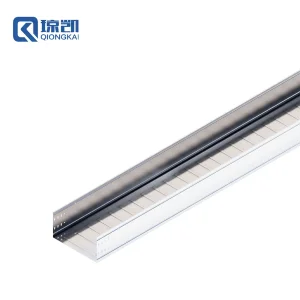
Wholesale Heavy Duty Cost Saving Reinforced Molded Pre Galvanized Cable Trunking Trough Type Channel 400*200 Manufacturers, Supplier
View Technical Specs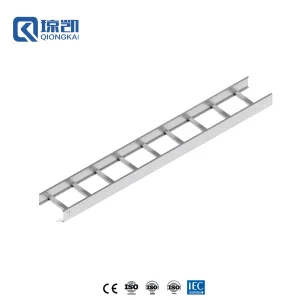
Buy Pre Galvanized Ladder Type Cable Tray 300*100 Factory, Factories
View Technical Specs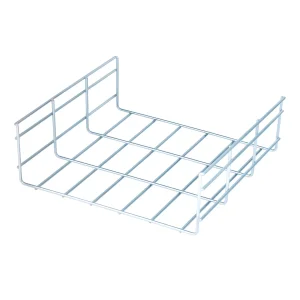
Buy Pre galvanized grid cable tray 300mm Manufacturers, Factory
View Technical Specs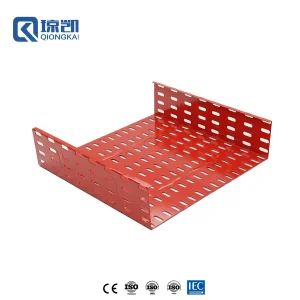
Buy Powder Coated Carbon Steel Pre Galvanized PG Cable Tray with Reinforce Ribs - RAL3020 Red 400*100 Manufacturer, Factory
View Technical Specs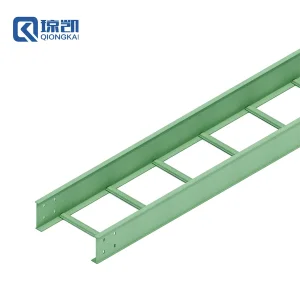
Buy FRP Ladder Type Cable Tray 400*150 Supplier, Factory
View Technical Specs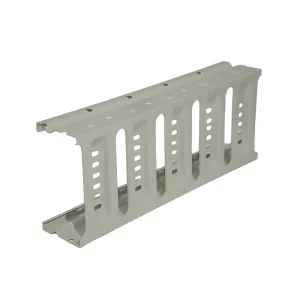
Buy Powder Coated Customizable Ladder Perforated Cable Tray Manufacturer, Factory
View Technical Specs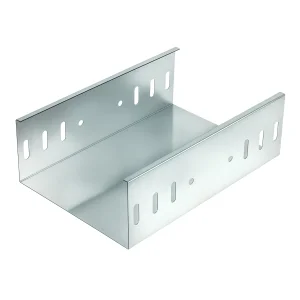
Buy Custom Size Pre Galvanized Cable Trunking Manufacturer, Factories
View Technical Specs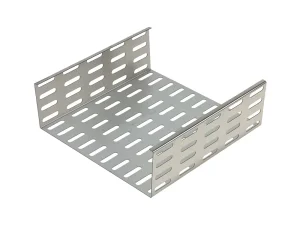
Wholesale Stainless Perforated Cable Tray 300mm - SS304 Suppliers, Factory
View Technical SpecsCommercial & Industrial Macro Landscape of Cable Ladders
As global electrification accelerates through renewable integration, multi-gigawatt AI data clusters, and extreme-environment energy processing, ladder-type cable trays have shifted from passive building commodities to safety-critical structural assets.
Hyperscale AI Data Center Clustering
Modern data hall architectures demand power cable containment capable of supporting high current densities without heat trapping. Open ladder configurations provide 100% free-air circulation, preventing ampacity derating under NEC Article 392 and reducing cooling loads by up to 18% compared to enclosed trunking.
Gigawatt Solar & Offshore Wind Arrays
Utility-scale green energy farms transmit medium to high voltage power across vast physical footprints. Ladder type systems deliver unparalleled structural spans (up to 6 to 9 meters without intermediate support struts), dramatically cutting structural steel bracket expenditures across substation routes.
Heavy Industrial & Chemical Processing
Refineries, LNG facilities, and fertilizer operations demand extreme resistance against chemical vapors, sulfurous emissions, and salt mist. Factory-engineered Hot-Dip Galvanizing (HDG) to ISO 1461 and Pultruded Fiberglass Reinforced Plastics (FRP) eliminate galvanic degradation and hazardous structural failure.
Transit & Aviation Modernization
From modern terminal expansions like Shanghai Hongqiao International Airport to urban subways, ladder cable trays must guarantee fire integrity (E30 to E90 standard testing), zero halogen hazard during structural thermal events, and rapid modular installation within tight tunnel cross-sections.
Technical Roadmap: Design Criteria & Load Mechanics
Ladder type trays are engineered beam systems governed by international structural norms including NEMA VE 1, CSA C22.2 No. 126.1, and IEC 61537. Understanding side-rail profiling, rung attachment metallurgy, and deflection tolerances is paramount to structural longevity.
Side-Rail Geometry & Moment of Inertia (Ix)
The structural load carrying capacity of a ladder cable tray is primarily determined by the section modulus ($Z$) and moment of inertia ($I$) of its side rails. Rather than utilizing standard flat metal, Shanghai Qiongkai roll-forms heavy-gauge side rails with outward returns or hollow structural box flanges. This mechanical geometry suppresses lateral-torsional buckling under extreme conductor dead loads and dynamic seismic excitation.
Rungs are mechanically locked into side rails utilizing cold-swaged mechanical clinching or automated continuous robotic welding. Swaged connections prevent thermal stress concentration zones in aluminum alloys (6063-T6), whereas fully penetrating robotic welds ensure unified electrical earthing paths and short-circuit fault current carrying capacity across carbon steel and stainless assemblies.
Key Structural Sizing Calculations
1. Working Load (w): $w = (w_{cable} + w_{environmental}) \times 1.5$ (Safety Factor)
2. Maximum Bending Moment ($M_{max}$): $M_{max} = \frac{w \cdot L^2}{8}$ (Simple Span Beam Model)
3. Elastic Deflection ($\delta$): $\delta = \frac{5 \cdot w \cdot L^4}{384 \cdot E \cdot I_x} \le \frac{L}{200}$ (Aesthetic & Cable Strain Limit)
4. Thermal Movement ($\Delta L$): $\Delta L = L \cdot \alpha \cdot \Delta T$ (Determines Expansion Splice Plate spacing)
| Material Specification | Yield Strength (MPa) | Corrosion Class (ISO 12944) | Thermal Expansion Coeff. | Primary Industrial Sector | Lifecycle Estimate |
|---|---|---|---|---|---|
| Pre-Galvanized Steel (GI / PG) | 250 – 350 | C1 – C2 (Indoor Controlled) | $12.0 \times 10^{-6} / K$ | Commercial Towers, Data Hall Plenums | 15–20 Years |
| Hot-Dip Galvanized (HDG ISO 1461) | 235 – 355 | C3 – C4 (Industrial Outdoor) | $12.0 \times 10^{-6} / K$ | Substations, Mining, Solar Farms | 30–50+ Years |
| Marine Aluminum Alloy (6063-T6) | 215 | C4 – C5 (Marine Coastal) | $23.0 \times 10^{-6} / K$ | LNG Terminals, Refineries, Tunnels | 40+ Years |
| Stainless Steel (SS304 / SS316L) | 205 – 240 | C5 – CX (Extreme Chemical / Offshore) | $16.0 \times 10^{-6} / K$ | Pharma, Offshore Drilling, Desalination | 50+ Years |
| Pultruded FRP / GRP (Vinyl Ester) | > 280 (Tensile) | Immune to Electrochemical Rust | $10.0 \times 10^{-6} / K$ | Battery Chemical, Acid Wash, Coastal | 35+ Years |
Macro Solutions & Field-Tested Applications
Direct OEM/ODM production configurations calibrated for localized environmental constraints, wind shear loads, short-circuit magnetic clamping, and rigorous international installation codes.
Middle East Desert & LNG Industrial Corridor
High ambient heat (up to 55°C), intensive UV degradation, and fine abrasive silica sand require tailored mechanical protection.
- Material Solution: Thick-film HDG (≥85μm) or Heavy-Duty Isophthalic/Vinyl Ester FRP ladder trays.
- Thermal Strategy: Slotted expansion splice plates installed every 24 meters to absorb wide diurnal temperature differentials.
- Project Reference: Custom profiled section support solution engineered for an offshore LNG project in Qatar.
Tropical Monsoonal & High-Humidity Zones
Pervasive relative humidity, persistent condensation, and bio-growth across Southeast Asian industrial parks.
- Material Solution: Hot-dip galvanized steel coated with antimicrobial electrostatic epoxy polyester or FRP-lined assemblies.
- Drainage Dynamics: Open ladder rung architecture prevents moisture accumulation and standing water pockets.
- Project Reference: Heavy-duty FRP-lined steel cable tray system delivered for outdoor industrial infrastructure in Thailand.
Mission-Critical Hyperscale Data Halls
Massive concentrations of high-gauge copper and aluminum power feeder cables requiring rapid routing and strict fire safety.
- Material Solution: Pre-galvanized high-yield steel with custom RAL powder coating for power channel segregation.
- Airflow Economics: Eliminates hot spot heat dams; ensures total free-air conductor ampacity rating per NEC tables.
- Installation Benefit: Integrated snap-in rung dividers allowing multi-circuit voltage separation within a single 600mm or 900mm tray.
State-of-the-Art Factory Supply & Inspection Protocol
Operating 3 massive facilities near Shanghai's primary deepwater ports, Shanghai Qiongkai delivers uncompromised traceability from raw steel coils to ISO 1461 hot-dip galvanizing baths and precision packing.
Continuous Automated Roll-Forming
Our 12 high-capacity automated production lines roll side rails up to 200mm depth with zero residual internal metal fatigue, ensuring razor-straight tray alignment across 3-meter and 6-meter standardized lengths.
In-House Galvanizing & Surface Quality
Equipped with computerized zinc-bath temperature regulation, guaranteeing uniform zinc crystal growth, thickness exceeding 85 microns, zero zinc slag spikes, and adhesion verified by cross-hatch testing.
100% Full-System Accessory Matching
We supply every horizontal bend, vertical outside/inside riser, tee, cross, reducer, and seismic strut support bracket as an engineered system, guaranteeing hassle-free on-site assembly without torch cutting or re-welding.
Export-Grade Sea Container Packing
Direct proximity to Yangshan and Waigaoqiao shipping terminals in Shanghai. Trays are nested, protected with corrosion-inhibiting interleaving film, and steel-banded on heavy timber skids for zero transit deformation.
Frequently Asked Questions: Engineering & Procurement
In-depth technical answers addressing load calculations, standard compliance, metallurgic specifications, and turnkey procurement for global projects.
Ladder cable trays provide unmatched benefits for heavy power transmission: (1) 100% free-air ventilation maximizes current carrying capacity without thermal derating penalties; (2) Open rungs prevent dirt, dust, and moisture accumulation that could cause cable degradation; (3) Cables can exit or enter easily through the top or bottom at any location along the run; (4) Significantly lower total structural weight reduces building support dead loads while facilitating rapid field installation.
NEMA VE 1 designates cable tray load classes based on working load capacity (lbs/ft) across specific support spans (e.g., 8A, 12B, 16C, 20C). For example, Class 20C signifies a tray rated for 100 lbs/linear foot over a 20-foot support span with an integrated safety factor of 1.5. In metric projects governed by IEC 61537, load is quantified via Safe Working Load (SWL) curves expressing uniform load in kN/m against continuous span lengths in meters.
Standard center-to-center rung spacings are 6 inches (150mm), 9 inches (225mm), and 12 inches (300mm). For small-diameter multiconductor control cables, 6-inch or 9-inch spacing is recommended to prevent cable sag between rungs. For large-diameter power conductors (e.g., 400mm² or 500kcmil single-core cables), 9-inch or 12-inch spacing is optimal. In vertical drops, slotted rungs are mandatory to facilitate cable cleat clamping against electromagnetic fault repulsion.
Pre-galvanized (PG) steel (typically mill-coated with ~15–20 microns of zinc) is suitable exclusively for dry, climate-controlled indoor environments (ISO 12944 C1/C2). Hot-Dip Galvanizing after fabrication (HDG to ISO 1461 / ASTM A123) immerses the fully fabricated steel tray into molten zinc at 450°C, forming metallurgical zinc-iron alloy layers with a minimum coating thickness of 65–85+ microns. HDG is non-negotiable for outdoor exposure, industrial plants, open air tunnels, and high-humidity facilities (C3 to C5).
Long straight runs require thermal expansion splice plates to prevent thermal buckling or anchor shearing. The spacing depends on the thermal expansion coefficient ($\alpha$) of the tray material and the maximum seasonal temperature differential ($\Delta T$). For steel ($\alpha \approx 12 \times 10^{-6}/^\circ\text{C}$) experiencing a 50°C swing, expansion joints are placed every 30 to 40 meters. For aluminum ($\alpha \approx 23 \times 10^{-6}/^\circ\text{C}$), expansion plates are installed every 20 to 24 meters, utilizing slotted bolt holes and specific torque-limiting shoulder bolts.
Yes, under NEC Article 392.60 and CSA C22.2, certified metallic cable tray systems may serve as an Equipment Grounding Conductor provided they have been tested for structural cross-sectional area and marked with the UL/CSA classification. Splice connections must maintain electrical continuity via UL-listed bonding jumpers or serrated high-tensile hardware that bites through surface coatings to ensure low impedance path during ground faults.
Pultruded FRP/GRP ladder trays manufactured with premium vinyl ester resins offer total electrochemical immunity to corrosive acids, salts, caustic chlorine vapors, and hydrogen sulfide where even SS316 will suffer pitting or crevice corrosion. Additionally, FRP is non-conductive (preventing induced eddy currents), non-magnetic, flame-retardant (ASTM E84 Class 1), and approximately 40% lighter than structural steel, drastically reducing installation labor in coastal and offshore environments.
We engineer complete seismic bracing support systems compliant with ASCE 7-22 and IBC Chapter 16. Using rigid 41-series strut channels, back-to-back reinforced channels (41x82), and 4-way diagonal seismic cable/rigid bracing kits, we calculate lateral and longitudinal earthquake forces ($F_p$) based on building acceleration parameters, ensuring zero catastrophic mechanical collapse during severe ground accelerations.
Comprehensive Factory Catalog & Channels
Complete your cable management infrastructure with heavy galvanized ladder systems, unistrut support profiles, and specialized powder-coated modular containment systems.
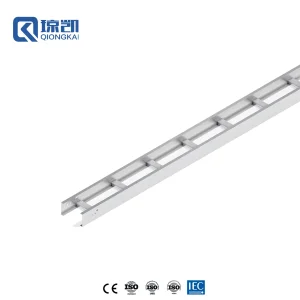
Buy GI Galvanized Cable Ladder 200*100 Supplier, Suppliers
View Technical Specs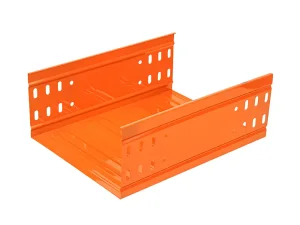
Wholesale Fireproof Pre Galvanized Powder coated molded cable tray Supplier, Suppliers
View Technical Specs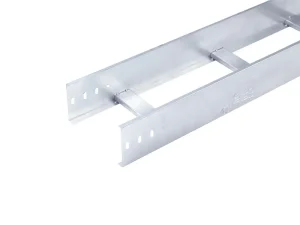
Wholesale Pre Galvanized Ladder Cable Tray Factory, Factories
View Technical Specs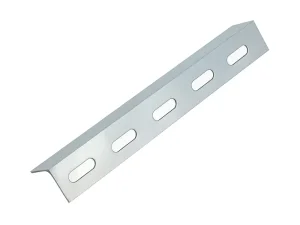
Wholesale Pre Galvanized Slotted Channel - Angle Iron Suppliers, Price
View Technical Specs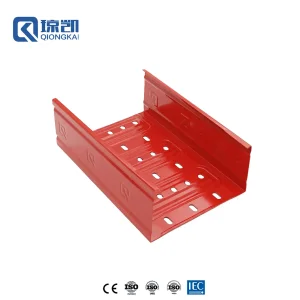
Buy Powder Coated Carbon Steel Cost Saving Heavy Duty Reinforced Molded Pre Galvanized Cable Tray - RAL3020 Red 200*100 Supplier, Factory
View Technical Specs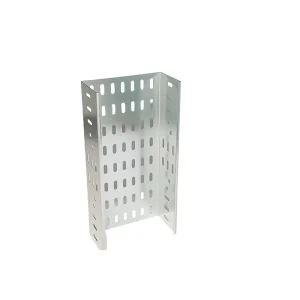
Wholesale Slotting Pattern Customizable Pre Galvanized Cable Trays Manufacturer, Factory
View Technical Specs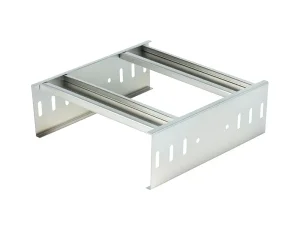
Buy Stainless Cable ladder Factories, Price
View Technical Specs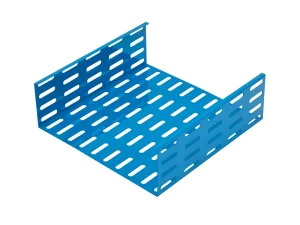
Buy Pre Galvanized Perforated Cable Tray Series With Powder Coating Suppliers, Factories
View Technical SpecsTurnkey Factory Collaboration & Global BOQ Quoting
Accelerate your project schedule with direct engineering support. Upload your Single Line Diagrams (SLD), Bill of Quantities (BOQ), and environmental specs for an exhaustive engineering assessment within 24 hours.
1. Technical Specification & Span Audit
Our senior mechanical and electrical engineers review your cable weight tables, fill ratios, and environmental exposure ratings (ISO 12944) to recommend optimized tray depths and material grades.
2. Complete System Harmonization
Prevent jobsite mismatches. We calculate and supply matched quantities of heavy-duty splice plates, 90-degree elbows, tees, risers, dropouts, hold-down clamps, and strut framing hardware.
3. Mill-Direct Wholesale Pricing
Bypass import trading layers and markups. Gain direct factory pricing with transparent alloy index hedging and structured commercial financing options for multi-phase utility deliveries.