
High-Capacity Cable Containment Systems
Engineered for high current densities, industrial loads, and extreme thermal conditions. Direct container-load wholesale from our automated Chinese manufacturing facilities.
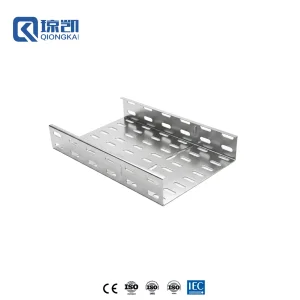
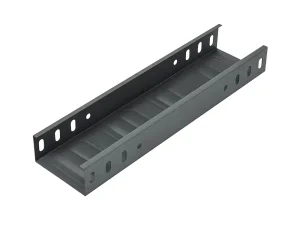
Structural Cable Containment & Custom Fabrication Matrix
In modern industrial facilities, hyperscale data halls, and petrochemical refineries, the structural integrity of electrical cable support systems directly governs operational safety and long-term asset availability.
Advanced Finite Element Analysis (FEA)
Every cable ladder side rail and perforated trough bottom undergoes computational FEA modeling to verify safe working loads (SWL) under maximum continuous cable packing densities. Our ribbed cold-formed profiles reduce deadweight by up to 22% while providing enhanced longitudinal bending resistance that exceeds NEMA VE 1 Class 20C load deflection thresholds (safe spans exceeding 6.0 meters without exceeding the allowable L/200 deflection ceiling).
Atmospheric Metallurgy & Zinc Density
Corrosion failure remains the leading cause of MEP support collapse in aggressive environments. We formulate our hot-dip galvanized (HDG) coating lines under strict ISO 1461 and ASTM A123 bath controls, yielding metallurgical zinc-iron alloy layers with minimum mean thicknesses of 65 µm to 85 µm. For high-saline coastal and marine LNG projects, our pultruded FRP composite matrices and pickled/passivated SS316L alloys ensure complete immunity to pitting and stress corrosion cracking.
Electrical Continuity & Fault Mitigation
Under international standards IEC 61537 and BS EN 61537, metallic cable tray runs must demonstrate low electrical impedance across all coupled joints to facilitate safe fault-current path dissipation. Our factory-punched splice plates with integrated serrated earthing bolts guarantee structural continuity with path impedance ratings lower than 50 mΩ across splice interfaces, eliminating dangerous sparks during sudden single-phase-to-earth industrial short circuits.
Mak Cable Trays Technical Roadmap & Future Outlook
As smart manufacturing, mega-scale automation, and carbon-neutral building design reshape the global MEP landscape, cable tray fabrication is evolving from conventional sheet metal bending into an intelligent, digitized engineering discipline.
Digital Twin & BIM Integration
Modern EPC procurement demands millimeter-accurate digital pre-assembly. We are deploying automated Revit, Tekla, and IFC-compliant parametric BIM models featuring exact weight properties, bend radiuses, and dynamic routing clash detection. This allows mechanical contractors to coordinate complex multi-tier tray routes in virtual 3D space prior to factory coil slitting.
Next-Gen Zinc-Alu-Mag Coatings
Transitioning beyond legacy zinc galvanizing, our technical roadmap features continuous lines for Zinc-Aluminum-Magnesium (ZAM / ZM) flat steel sheet. Delivering auto-healing galvanic edge protection through secondary zinc hydroxide carbonate precipitates, ZAM-coated trays provide up to four times the atmospheric service life of traditional pre-galvanized steels.
Smart Sensory Cable Runways
Collaborating with tier-one sensor manufacturers, future revisions of our heavy-duty industrial series incorporate snap-in distributed fiber optic strain and thermal sensors. This enables real-time monitoring of cable sheath hotspots, circuit thermal overloading, and localized seismic structural deflection directly via facility SCADA systems.
Boltless Snap-Fit Fasteners
Jobsite labor represents up to 60% of total electrical installation expenditures. Our engineering labs have developed patented quick-coupling toolless splice plates and auto-clamping cover latches that cut field assembly times by 45%, eliminating loose nuts, washers, and specialized pneumatic tools on suspended scaffolding.
Macro Industry Solutions & Engineered Applications
Cable tray specifications must adapt to distinct atmospheric classifications, thermal loads, and environmental hazards. Below is our engineering blueprint for mission-critical infrastructure verticals.
Hyperscale AI & Cloud Data Centers
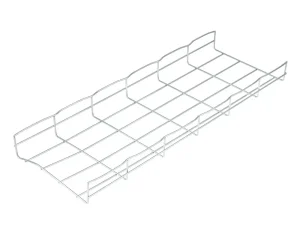
High-density computing servers demand massive overhead structured fiber and copper cabling routing. We engineer electro-galvanized (EG) and powder-coated wire mesh basket trays and overhead cable runways featuring zero-zinc whisker electroplating chemistry to safeguard sensitive motherboards against micro-particulate short circuits. Our radiused drop-out fittings protect high-speed CAT6A and MPO fiber lines from exceeding critical bend radiuses under tension.
Offshore Oil, Gas & Marine LNG Terminals
Exposed to severe marine chloride aerosols (ISO 12944 Category CX), conventional steels rapidly fail. We supply offshore oil platforms and coastal regasification complexes with pickled and passivated stainless steel 316L (UNS S31603) and pultruded isophthalic polyester / vinylester FRP cable trays. These non-magnetic, fire-retardant (ASTM E84 Class 1) structural matrices resist chemical hydrocarbons and severe UV degradation.
Metro Rail, Underground Tunnels & Airports
Underground public transit requires zero-halogen, non-toxic fire-safe containment systems. Having supplied heavy-duty CT series cable trunking to Shanghai Hongqiao International Airport and municipal metro tunnels, our closed-trough systems provide physical impact armoring, electromagnetic shielding (EMI attenuation up to 35 dB), and prolonged structural integrity under standard E90 electrical circuit functional survival test protocols.
Cleanroom Pharma & Food Processing Facilities
Demanding stringent cGMP sanitary standards and regular high-pressure chemical wash-downs, our SS304/SS316 basket trays and fully enclosed slotted trunking feature smooth, bead-free TIG welds and electro-polished surfaces (Ra < 0.4 µm). This eliminates microscopic crevices where bacteria, dust, or organic residues might accumulate.
Heavy Commercial & Agricultural Complexes
For large-scale agricultural projects—such as our specialized cost-optimized heavy-duty cable tray deployment for a high-volume pig farming facility in Paraguay—containment lines must withstand high ambient ammonia concentrations, heavy organic waste gases, and regular disinfecting washes without blowing out project capital expenditures.
China Factory 4.0: Supply Chain Resilience & Direct Factory Economics
Eliminating broker layers through direct OEM/ODM industrial manufacturing. Our production ecosystem in Songjiang, Shanghai integrates continuous cold-roll forming, automated robotic stamping, and hot-dip zinc metallurgy.
| Manufacturing Dimension | Traditional Regional Fabricators | Shanghai Qiongkai Smart Factory 4.0 Advantage |
|---|---|---|
| Raw Material Sourcing & Traceability | Secondary market spot coils, inconsistent carbon tensile strengths, fragmented batch records. | Direct contract slitting with top-tier steel mills (Baosteel). Full Mill Test Certificates (MTC EN 10204 3.1) guaranteeing chemical composition and tensile limits. |
| Roll-Forming Tolerance & Straightness | Manual brake press bending; variable side-rail camber (±3.0 mm/m); field coupling alignment friction. | 12 fully automated continuous roll-forming lines with computer-controlled servo cutting. Tolerances maintained within ±0.3 mm; zero edge-flare on straight sections. |
| Surface Metallurgy & Galvanizing | Outsourced third-party dipping baths with erratic zinc temperature, excessive dross, and variable thickness. | Integrated in-line pickling, fluxing, and automated temperature-controlled zinc kettles with inline XRF thickness spectroscopic verification up to 100 µm+. |
| Lead Times & Phased Consolidation | Limited capacity prone to bottlenecking on multi-container international project orders. | Three regional plants encompassing 30,000 m² with capacity exceeding 2,500 metric tons monthly. Proximity to Shanghai Yangshan Deepwater Port enables fast shipping dispatch. |
| Custom Engineering & Tooling | Rigid standard tooling catalogs; exorbitant die change costs for non-standard profiles. | In-house CNC mold and tooling fabrication center. Rapid prototyping of custom sidewall heights, slotting pitches, and non-standard profile widths within 7 to 10 days. |
Global Compliance Assurance & Localized Engineering Support
We bridge Chinese manufacturing cost efficiencies with rigorous Western engineering verification, providing EPC consulting engineers with complete documentation packages for effortless approval by project authorities.
International Testing Certification
All Qiongkai cable management profiles undergo rigorous physical load testing in accordance with NEMA VE 1 / CSA C22.2 No. 126.1 and IEC 61537 / BS EN 61537. Certified testing covers destruction load safety factors (minimum 1.5x structural factor of safety), deflection monitoring at span centers, electrical bonding resistance, and salt spray fog testing (ASTM B117) exceeding 1,000 hours without red rust initiation.
Dedicated 1-on-1 Project Engineer
Unlike transactional trading suppliers, every international account is paired directly with a designated structural MEP application engineer. Our team reviews customer Bills of Quantities (BOQ), examines single-line layouts, validates cable fill ratios according to NEC Article 392, and produces tailored installation schematics to ensure smooth on-site handover without surprises.
Seismic Bracing & Hazard Mitigations
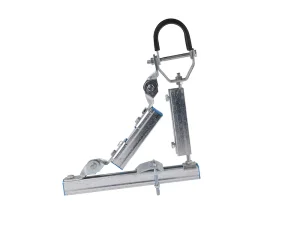
Modern building codes (such as ASCE 7-22 and IBC Chapter 13) mandate certified seismic sway bracing for heavy overhead MEP runs. We manufacture comprehensive seismic strut assemblies, 41-series back-to-back channels, and rigid rod stiffeners engineered to withstand lateral and longitudinal seismic acceleration forces in high-hazard seismic zones across the globe.
Enterprise Procurement Framework: Total Cost of Ownership (TCO)
A strategic guide for global procurement heads, commercial directors, and MEP project estimators evaluating cable containment lifecycle expenditures.
Beyond Initial Purchase Price
Steel unit price per meter represents only a fraction of containment costs. Sub-standard gauge thickness leads to excessive deflection under load, demanding additional hanger supports and costly structural retrofits. Our reinforced rib profiles maximize moment of inertia, enabling contractors to expand support hanger spans from 1.5m to 2.5m or 3.0m, cutting total site drop-rod, strut, and labor costs by up to 35%.
Export Packaging & Freight Optimization
International sea logistics often inflate procurement expenses if cargo nesting is poorly calculated. We utilize modular tapered nesting and specialized bundle spacers wrapped in moisture-barrier VCI corrosion films and reinforced steel strapping. This prevents surface abrasion during transit and maximizes 40-foot High-Cube container volume utilization up to 98% capacity.
Rigorous Pre-Shipment Inspection (PSI)
Prior to container seal application at our Shanghai facilities, full QA dossiers are finalized: optical emission spectrometry for base metal carbon/alloy grading, Elcometer magnetic dry-film thickness measurements, weld penetration dye checks, and complete dimension verifications against approved shop drawings.
Proven Jobsite Track Record Across Demanding Climates
From extreme tropical desert heat to corrosive industrial wash-downs, our engineered cable tray systems support high-profile infrastructure worldwide.
Shanghai Hongqiao International Airport
Supplied high-volume corrosion-resistant CT series cable trunking with full electromagnetic interference (EMI) attenuation, securing mission-critical avionics power cabling and emergency backup routing across major passenger terminals.
Offshore LNG Terminal, Qatar
Engineered and manufactured bespoke profiled section support channels and heavy-duty FRP cable ladders designed to withstand high solar UV exposure, ambient temperatures exceeding 50°C, and severe coastal saline moisture.
Thailand Industrial Petrochemical Project
Fabricated heavy-duty FRP-lined steel composite cable trays engineered for continuous exterior exposure, bridging chemical resistance with rigid structural span capacities across pipe rack bridges.
Infrastructure Shipments to Italy
Continuous export shipments of certified hot-dip galvanized (HDG) perforated cable trays, modular splices, and support brackets fulfilling stringent European CE directives and Italian infrastructure safety standards.
Large-Scale Agricultural Complex, Paraguay
Delivered an ultra-durable, cost-optimized heavy-duty cable tray support system engineered to endure high-ammonia atmospheric exposure and severe sanitary wash-down protocols.
Mission-Critical Data Halls
Engineered overhead wire mesh basket systems and powder-coated cable runway ladder grids with zero-whisker plating chemistry, enabling high-density airflow circulation in mega-watt server halls.
Heavy-Duty Strut Channels, Ladders & Non-Metallic Systems
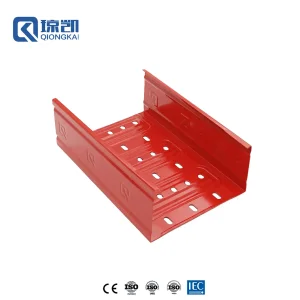
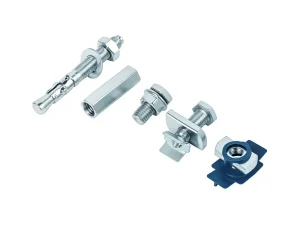
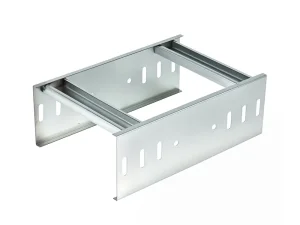
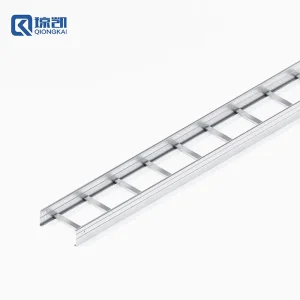
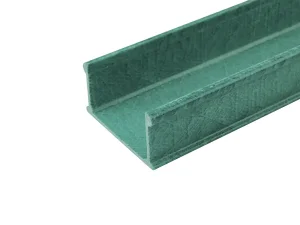
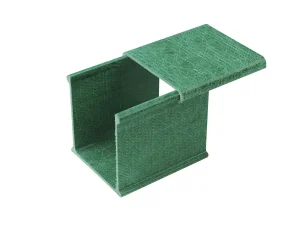
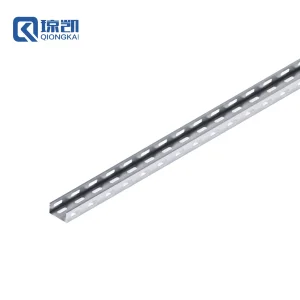
Explore our heavy-duty series, anti-seismic brackets, ladder channels, and composite fiberglass (FRP) solutions. Built for demanding mechanical, electrical, and plumbing assemblies.
Frequently Asked Questions by EPCs & Procurement Directors
In-depth engineering answers addressing compliance, loading calculations, zinc-whisker prevention, and global logistics execution.
How do NEMA VE 1 and IEC 61537 deflection standards differ in safe working load (SWL) certification?
Under NEMA VE 1, cable tray load classes (e.g., 8C, 12C, 20C) specify the working load capacity in pounds per linear foot over spans of 8, 12, or 20 feet, with a required safety factor of 1.5 based on simple-beam destruction load testing. In contrast, IEC 61537 evaluates load classes under metric parameters (SWL in N/m over specified support distances like 1.5m, 2.0m, or 3.0m), measuring longitudinal deflection up to an allowable threshold of L/100, while transverse deflection must not exceed L/20. Qiongkai designs its tooling to satisfy both benchmarks simultaneously.
What prevents "zinc whiskers" on cable management systems inside data centers?
Zinc whiskers are conductive zinc micro-filaments that can grow from electro-galvanized coatings under compressive mechanical stress, eventually detaching and floating into server intakes to short-circuit microchips. For mission-critical hyperscale data halls, we recommend either pre-galvanized steel (mill galvanized per EN 10346) where the zinc layer is thermally bonded and stress-free, or specialized post-fabrication powder coatings (RAL 9005 / RAL 7035) applied over passivated steel substrates.
When should an engineer specify FRP / GRP cable trays over Hot-Dip Galvanized (HDG) steel?
While HDG steel offers excellent strength and durability in C3 and C4 atmospheric environments, it remains vulnerable to acidic chemical vapors, hydrochloric aerosols, and prolonged direct hydrogen sulfide exposure found in chemical plants and wastewater facilities. Pultruded fiberglass reinforced plastic (FRP/GRP) using premium vinylester or isophthalic resin is completely non-conductive, self-extinguishing, and chemically inert, making it ideal for offshore LNG, acid pickling lines, and battery manufacturing rooms.
Can Qiongkai manufacture customized hole patterns, slotting, and non-standard side-rail heights?
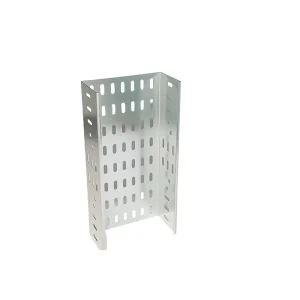
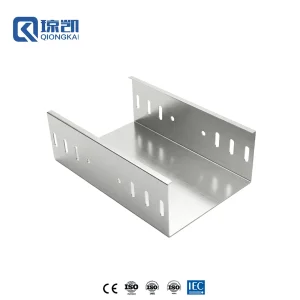
Yes. Supported by 12 automated roll-forming lines, 60+ CNC punching presses, and an in-house tooling shop, we produce bespoke slotting patterns tailored to specific air-convection requirements or specialized zip-tie/banding hole orientations. We can manufacture custom sidewall heights (from 25mm to 200mm) and custom tray widths (from 50mm up to 1200mm) with minimal die setup lead time.
How does Qiongkai ensure electrical grounding continuity across cable tray joints?
In compliance with IEC 61537 clause 11.1, our metallic containment systems undergo joint-resistance testing. We provide high-conductivity copper bonding jumpers with tin-plated lugs or pre-punched connector plates engineered with mechanical locking serrations. These break through surface oxide films, consistently maintaining electrical bonding impedance below 0.05 ohms across every coupled straight section.
What are standard export production lead times and container loading capacities?
Standard production times for full-container loads (FCL 20GP or 40HQ) average 14 to 21 calendar days from final shop drawing sign-off. Due to our proximity to the Port of Shanghai (Yangshan Deepwater Port and Waigaoqiao), container drayage takes less than 24 hours. Our automated nesting arrangements allow a 40HQ container to transport up to 26 to 28 metric tons of steel tray depending on destination port road weight limits.
How do your strut channel profiles withstand seismic forces and heavy pipe/duct suspension?
Our 41-series strut channels (41×21, 41×41, 41×62, and back-to-back 41×82) feature precision inward-curved lips with serrated grooves that bite into spring nut teeth. This creates a slip-resistant mechanical lock capable of withstanding lateral shear loads in excess of 13 kN per connection, tested and certified to seismic bracing requirements under IBC Chapter 16 and ASCE 7-22.
What quality assurance records accompany international wholesale shipments?
Every export shipment is backed by an inspection dossier comprising: Mill Test Certificates (MTC EN 10204 3.1) stating ladle chemical analysis and mechanical tensile/yield properties; zinc coating thickness measurement logs verified across multiple points; visual and dimensional inspection protocols; and formal Certificates of Origin (CO / Form E / Form F) for destination customs tariff optimizations.
Request an Engineering Consultation & Wholesale Project Quotation
Submit your electrical bill of materials, engineering drawings, or tender specifications. Our technical sales engineers in Songjiang, Shanghai will deliver a detailed system proposal, load deflection analysis, and wholesale price schedule within 24 business hours.