
Primary Engineered Power Containment Systems
Precision-manufactured cable support solutions engineered to withstand extreme static and dynamic loads across utility grids, processing infrastructure, and institutional power networks.
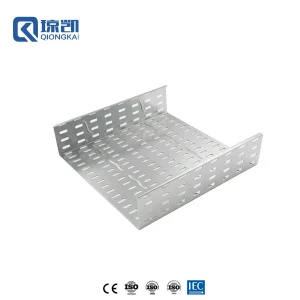
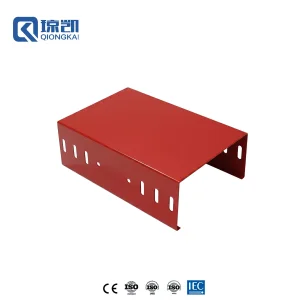
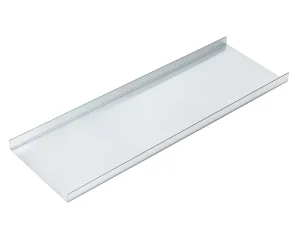
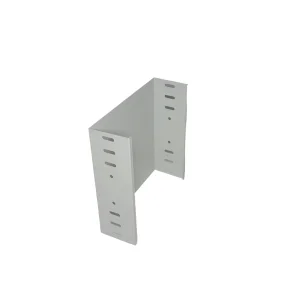
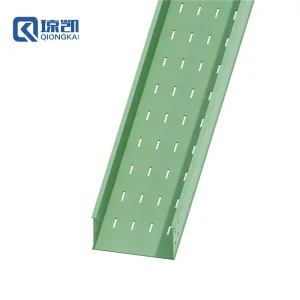
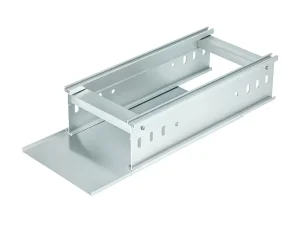
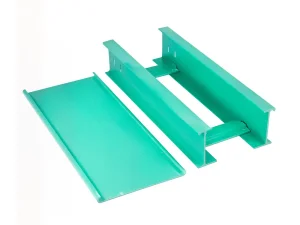
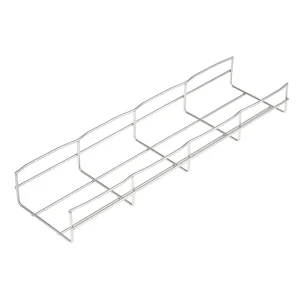
The Critical Role of Cable Routing Architecture in Modern Power Systems
As global industrial electrical loads escalate with the rapid expansion of multi-megawatt hyperscale data centers, hydrogen electrolyzers, and gigawatt-scale solar installations, traditional electrical containment methodologies are obsolete.
Short-Circuit Electromagnetic Containment
During phase-to-phase and phase-to-ground short circuit anomalies, electromagnetic repulsive forces between heavy-gauge cables can surge beyond 10 kN/m within milliseconds. Structural cable management systems must demonstrate calculated mechanical resistance and rung weld integrity compliant with IEC 61914 cleat anchoring protocols.
Thermodynamic Ampacity Optimization
High-density cable grouping induces substantial thermal dissipation penalties (Joule heating). Perforated containment, wire mesh grids, and ladder configurations engineered with maximized open-area ratios preserve conductor ampacity derating factors up to 0.88, avoiding conductor overheating and cumulative dielectric breakdown.
Seismic & Vibrational Structural Damping
Substation yards, power generation plants, and seismic zone deployments demand dynamic structural damping. Our engineered back-to-back 41-series strut assemblies, coupled with 3-dimensional seismic bracing arrays, mitigate harmonic resonance frequencies up to 2.5g acceleration without plastic deformation.
Macro-Industry Solutions & Deployment Architecture
Turnkey containment engineering formulated around operational exposure matrices: from chemical corrosive atmospheres to sterile hygienic cleanrooms and mission-critical compute farms.
Hyperscale AI Data Centers & Telecommunication Hubs
Modern AI clusters utilize ultra-dense cabling backbones running 400G/800G optical trunks alongside 48V/415V busway drops. We supply electro-galvanized and custom RAL-powder-coated wire basket tray systems designed with patented safety-edge wire roundness. This eliminates micro-abrasions to fiber jackets, supports laminar under-floor airflow, and accommodates overhead cable cascades with dedicated radius drops.
Utility-Scale Photovoltaic & Wind Balance of System (BOS)
Desert and high-UV installations subject cable supports to severe diurnal thermal cycling (-20°C to +75°C) and abrasive airborne particulates. Our hot-dip galvanized (HDG minimum 85µm coating) and magnesium-aluminum-zinc coated steel cable trunking prevent premature embrittlement, provide UV-shielded raceways for direct burial transitions, and resist galvanic corrosion under continuous outdoor exposure.
Petrochemical, Offshore LNG & Hydrogen Refineries
Sulfide stress cracking, coastal salt fog (ISO 12944 CX environments), and chemical washdowns necessitate extreme material inertness. We engineer pultruded Fiber-Reinforced Polymer (FRP/GRP) using premium vinyl ester resin matrices and pickled AISI 316L stainless steel ladder systems that remain entirely immune to hydrogen embrittlement, acidic fumes, and galvanic pitting.
Urban Rail Transit & Tunnel Infrastructure
Tunnel deployments demand rigorous life-safety standards: low-smoke zero-halogen (LSZH) performance, non-combustibility, and resistance to dynamic piston-wind shockwaves caused by high-speed trains. Our reinforced pre-galvanized and powder-coated trunking systems guarantee structural load retention and electrical circuit integrity (E30 to E90 fire ratings) during emergency egress conditions.
China Smart Factory 4.0: Resilience, Scale & Metallurgy
Operating from the industrial manufacturing corridor in Shanghai, Qiongkai combines automated roll-forming robotics, automated laser punching arrays, and complete lifecycle metallurgy validation.
12 Automated Lines
High-speed continuous cold-roll forming lines with real-time laser dimension sensors ensuring millimeter tolerances across custom tray widths from 50mm to 1200mm.
60+ Heavy Presses
High-tonnage hydraulic CNC stamping arrays stamping reinforcing side ribs, uniform ventilation patterns, and standardized splice-connection bolt holes effortlessly.
Cost Engineering
Integrated supply agreements with Tier-1 domestic steel mills allow bulk coil purchase hedging, delivering a 15–28% procurement cost advantage to global contractors.
Port Proximity
Strategically situated within 60km of Shanghai Yangshan Deepwater Terminal and Waigaoqiao Port, ensuring seamless FCL/LCL staging, containerization, and fast sailings.
Founded in Shanghai
Total Factory Workshop Floor
Dedicated Production Facilities
Annual Peak Export Capacity
Engineering Verification: Finish Selection & Standards
Selecting the appropriate structural finish and metallurgy is the primary determinant of system lifecycle reliability. All Qiongkai fabrications comply strictly with international structural testing regimes.
| Material / Treatment | Specification Reference | Zinc / Protective Thickness | Corrosivity Category (ISO 12944) | Salt Spray Resistance (ASTM B117) | Project Application Suitability |
|---|---|---|---|---|---|
| Pre-Galvanized Steel (PG) | EN 10346 / JIS G3302 | 12–20 µm (Z120–Z275) | C1 to C2 (Indoor Controlled) | 96 to 120 Hours | Commercial HVAC & Ceilings |
| Electro-Galvanized (EG) | ASTM B633 / BS 7371 | 8–15 µm | C1 (Low Humidity Indoor) | 72 to 96 Hours | Wire Basket Server Rooms |
| Hot-Dip Galvanized (HDG) | ISO 1461 / ASTM A123 | 65–85+ µm | C3 to C4 (Industrial & Coastal) | 720 to 1,500 Hours | Substations & Petrochemical |
| Epoxy / Polyester Powder Coat | ISO 12944 / Qualicoat | 60–100 µm Polymeric Layer | C2 to C3 (Internal Color ID) | 240 to 480 Hours | Data Center Color Codification |
| Stainless Steel (SS304/SS316L) | ASTM A240 / EN 10088 | Self-Healing Passive Oxide | C5 to CX (Marine Offshore) | 3,000+ Hours | Offshore Platforms & Marine LNG |
| FRP / GRP Composite | ASTM D3917 / UL 94 V-0 | Non-Metallic Solid Matrix | CX (Extreme Corrosive/Acid) | 5,000+ Hours (Immune) | Chemical Plants & Heavy Acid Tanks |
Technology Roadmap: The Future of Smart Containment
Anticipating the demands of autonomous infrastructure, Qiongkai's R&D center is leading advancements in digital modeling, structural sensor integration, and decarbonized green metallurgy.
IoT-Enabled Smart Trays & Distributed Strain Sensing
Development of smart containment channels integrated with optical fiber Bragg grating (FBG) lines. This enables continuous, real-time distributed temperature sensing (DTS) and load-deflection detection across critical high-voltage transmission pathways, preventing structural failure before sag limits are reached.
Low-Carbon Recycled Steel & Eco-Resin Composites
Aligning with Scope 3 corporate ESG mandates, Qiongkai is introducing electric arc furnace (EAF) low-embodied-carbon structural steel with verified Environmental Product Declarations (EPD). Furthermore, our new-generation FRP lines incorporate 30% bio-derived resins without compromising UL 94 V-0 flame ratings.
BIM Level 3 Native Parametric Libraries
Direct integration into Autodesk Revit, Bentley OpenBuildings, and Aveva PDMS. Our precision 3D CAD/BIM parametric assemblies allow consulting engineers to run automated clash detection, structural deflection modeling (L/200 & L/300), and automated bill-of-materials generation directly within project digital twins.
Global Enterprise Procurement: The Engineering Audit Checklist
Enterprise supply directors and EPC chief engineers require rigorous due-diligence verifications before finalizing international manufacturer supplier framework contracts.
1. Structural Loading Verification
Demand certified NEMA VE-1 / IEC 61537 Destructive Loading Test reports. Confirm whether Safe Working Load (SWL) capacity incorporates the required 1.5 safety factor across the designated support span (e.g., 2.0m, 3.0m, or 6.0m continuous runs) with mid-span deflection capped at L/200.
2. Certified Mill Metallurgical Traceability
Verify EN 10204 Type 3.1 Mill Test Certificates (MTC) matching raw material heat numbers. Confirm tensile yield strengths (e.g., Q235B ≥ 235 MPa, Q355B ≥ 355 MPa) and ensure total silicon and phosphorus levels match galvanizing immersion reactivity thresholds (Sandelin curve).
3. Protective Packaging & Ocean Staging
Cross-continental containerized freight exposes steel components to extreme humidity and condensation corrosion (white rust). Ensure your supplier mandates interleaved vapor-corrosion-inhibitor (VCI) plastic wrapping, solid fumigated timber dunnage, and heavy-duty steel strapping.
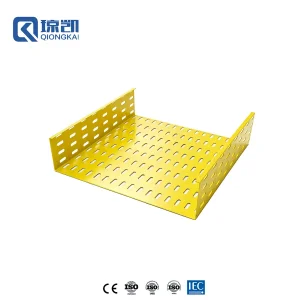
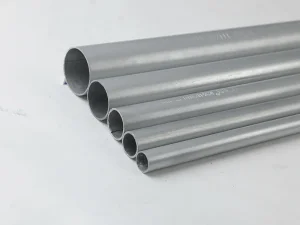
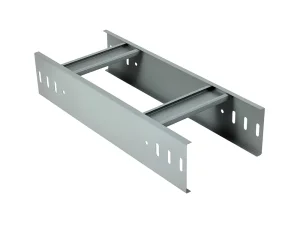
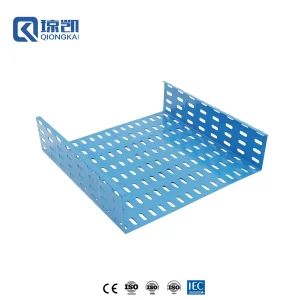
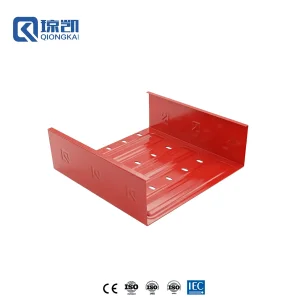
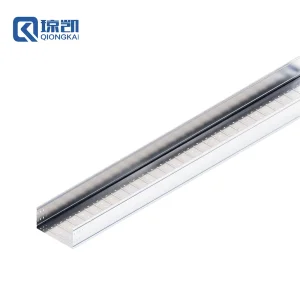
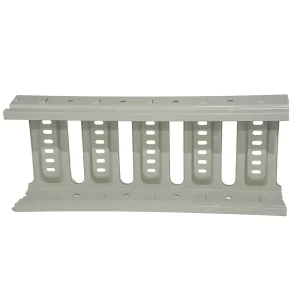
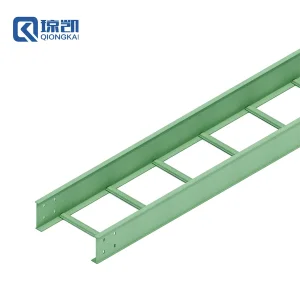
Heavy-Duty & Specialized Power Raceway Solutions
Explore our reinforced molded channels, fire-rated ladder trays, and precision metallic conduit lines engineered for severe-duty industrial and infrastructure deployments.
Frequently Asked Questions by Project Engineers
In-depth answers addressing structural design margins, corrosion chemistry, international compliance, and custom fabrication parameters.