
Featured Cable Trays, Fittings & Trunking Systems
Precision-formed vertical elbows, perforated channels, wire mesh grids, and heavy-duty cable containment produced across our 3 automated factories and 12 continuous assembly lines.
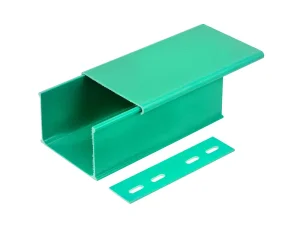
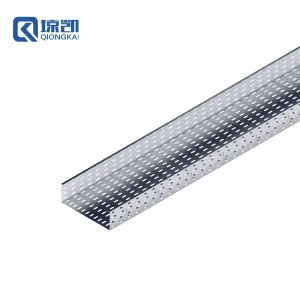
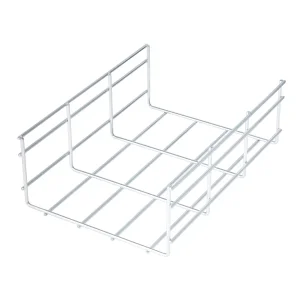
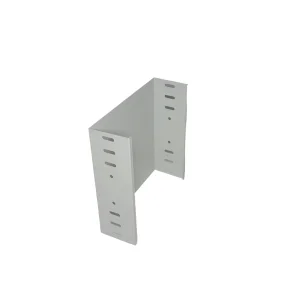
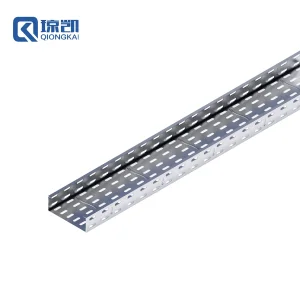
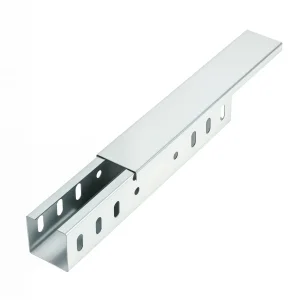
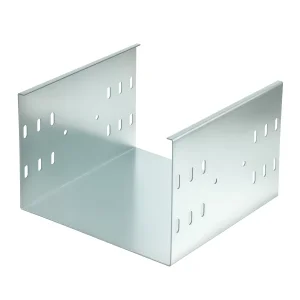
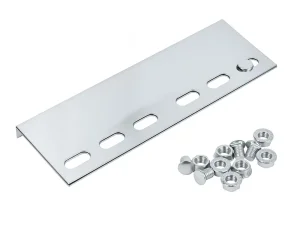
Engineering Dynamics of Vertical Elbow Transitions in Industrial Architecture
A vertical elbow cable tray fitting is not merely a directional connector; it is a critical structural junction that bears concentrated mechanical stresses, dynamic bend-radius limitations, and electrical continuity demands.
In contemporary industrial facilities, offshore petrochemical rigs, and mega-watt data centers, the vertical routing of medium and high-voltage power lines presents intricate structural challenges. Unlike horizontal runs where dead load is distributed evenly across horizontal structural strut channels, vertical transitions introduce gravitational vector pull, mechanical tension, and point loads at the point of curvature. As wholesale vertical elbow cable tray manufacturers, our role extends far beyond stamping sheet metal: we engineer the exact geometric transitions that safeguard cable sheathing integrity, prevent mechanical crush damage, and ensure strict electromagnetic shielding across multiple plant elevations.
According to international standards such as NEMA VE 1 / VE 2 and IEC 61537, a vertical elbow must accommodate the specified Minimum Bending Radius (MBR) of high-caliber conductors (often 8× to 12× the outer cable diameter). When high-current cables bend through an improper vertical radius, localized dielectric breakdown occurs due to excessive side-wall bearing pressure. This white paper outlines the metallurgical requirements, automated factory tolerances, and procurement criteria essential for EPC engineers sourcing vertical elbow assemblies globally.
Gravitational Load & Clamping
Vertical drops exert axial tensile force along the cable run. Our vertical outside elbows (droppers) feature reinforced side flanges and pre-punched rung geometries compatible with heavy-duty cable cleats conforming to IEC 61914, eliminating longitudinal slippage.
Radius Curvature Integrity
Factory-stamped internal and external bends are engineered with calibrated radiuses (300mm, 450mm, 600mm, up to 900mm). This geometric uniformity prevents the cable sheath from bearing against sharp tangent intersections during high ambient thermal cycles.
Electrochemical Continuity
Vertical runs require continuous equipotential bonding. All factory vertical elbow fittings incorporate integrated splice connection tabs that guarantee low bonding resistance (<0.33 mΩ), mitigating arcing during earth-fault and short-circuit conditions.
The Chinese Manufacturing Advantage: Scale, Speed & Precision Logistics
Shanghai Qiongkai Industry Co., Ltd. demonstrates how concentrated supply chains, localized metallurgical infrastructure, and deep maritime connectivity reduce procurement cycles by up to 45% compared to Western counterparts.
Global EPC firms require reliable delivery timelines, absolute batch consistency, and stringent mill certifications. Located in the Songjiang Port Science and Technology City of Shanghai, Qiongkai utilizes immediate access to major steel foundries and the world's most active maritime terminals: Yangshan Deep-Water Port and Waigaoqiao Terminal. This localized manufacturing proximity completely bypasses interior transit delays, ensuring rapid container packing and direct vessel loading.
Our automated facilities integrate 60+ heavy-duty hydraulic press benders, automated CNC punch systems, and robotic seam welders capable of forming vertical inside and outside elbows with structural tolerances within ±0.5mm. By combining automated roll-forming with continuous in-house electro-galvanizing, hot-dip galvanizing, and electrostatic powder coating, we eliminate multi-tier subcontractor markups, passing significant unit-cost savings directly to international procurement consortia.
Engineering Track Record: From providing high-specification corrosion-resistant cable trunking for the Shanghai Hongqiao International Airport to custom offshore LNG profiled supports in Qatar and extreme tropical condition FRP cable systems in Thailand, Qiongkai's manufacturing capacity has been independently validated in critical infrastructure worldwide.
Structural Classifications of Vertical Elbow Cable Trays
Selecting the appropriate vertical fitting architecture is vital for heat dissipation, bending strain, and physical cable protection.
| Fitting Configuration | Direction of Rise/Drop | Available Radii (mm) | Recommended Cable Types | Key Mechanical Advantage |
|---|---|---|---|---|
| Vertical Inside Elbow (Riser) | Changes direction upward from horizontal | 150, 300, 450, 600, 900 | HV/MV Power, Large Armor Feeder | Retains cables naturally against the bottom rung bed via gravity |
| Vertical Outside Elbow (Dropper) | Changes direction downward from horizontal | 150, 300, 450, 600, 900 | Control, Instrumentation, Multi-core | Requires slotted rungs for clamp attachments to prevent sagging |
| Adjustable Hinged Vertical Elbow | Variable: 0° to 90° infinite step adjustment | Segmented Arc Pivot | Data, Telecom, Low-voltage Control | Solves non-standard site elevation clashes and architectural slopes |
| Perforated Trough Vertical Elbow | Upward / Downward continuous bottom | 300, 450, 600 | Shielded Signal & Sensitive Instrument | Superior EMI shielding attenuation combined with ventilation slots |
| FRP / GRP Composite Elbow | Non-metallic upward / downward | 300, 450, 600 | Chemical Corrosive & Offshore Marine | 100% dielectric isolation, zero eddy-current loss, impervious to salt spray |
Inside Elbow Mechanics
When cable trays transition from a horizontal rack to an upward vertical shaft, a Vertical Inside Elbow is deployed. The side rails flare inward, and the cable load naturally settles into the interior curvature. Factory engineers must verify that the inner radius rungs have rounded edges to prevent cable notch stress during pulling operations.
Outside Elbow Structural Forces
A Vertical Outside Elbow directs cables down from a ceiling runway or bridge. Here, gravitational vectors attempt to pull the conductors away from the tray bed. Our outside elbows feature high-moment-of-inertia side stringers and welded or double-riveted unistrut rungs capable of handling mechanical cable cleats and vertical strap tensions under short-circuit impulse loads.
Metallurgical Specifications and Corrosion Resistance Lifespans
Matching the substrate and chemical treatment of vertical elbow fittings to specific ISO 12944 atmospheric corrosivity categories (C1 through CX) is essential to avoid premature structural failure.
| Material / Treatment | Governing Specification | Coating Thickness / Density | Corrosivity Category | Expected Design Life |
|---|---|---|---|---|
| Pre-Galvanized Steel (PG) | ASTM A653 / EN 10346 | Z120 – Z275 (12–20 µm) | C1 – C2 (Dry Indoor) | 15 – 25 Years (Indoor commercial, HVAC) |
| Hot-Dip Galvanized (HDG) | ASTM A123 / ISO 1461 | 65 – 85 µm (≥ 500 g/m²) | C3 – C4 (Heavy Industrial, Coastal) | 30 – 50 Years (Petrochemical, Outdoor bridge) |
| Stainless Steel 304 / 304L | ASTM A240 / EN 10088 | Natural Passivation Oxide Film | C3 – C4 (Food, Washdown, Cleanrooms) | 50+ Years (Hygienic processing environments) |
| Stainless Steel 316 / 316L | ASTM A240 (2-3% Molybdenum) | Electropolished / Acid Pickled | C5 – CX (Offshore Marine, LNG) | 60+ Years (Desalination, Marine splash zones) |
| Fiberglass Reinforced Polymer (FRP) | ASTM D3917 / UL 94 V-0 | Thermoset Isophthalic / Vinyl Ester | Severe Chemical / Acidic Wet | 40+ Years (Wastewater, Acid pickling halls) |
| Powder Coated over Pre-Galv | Electrostatic Polyester / Epoxy | 60 – 100 µm Dry Film Thickness | Architectural & Color Coded | 20 – 30 Years (Data centers, Tier classification) |
Hot-dip galvanizing completed after all cutting, punching, and bending ensures that every edge, slot, and weld bead of the vertical elbow receives continuous sacrificial zinc protection. For marine applications requiring high resistance against pitting corrosion by chlorides, Qiongkai utilizes low-carbon AISI 316L stainless steel or heavy-duty pultruded FRP composite profiles. Our FRP vertical elbows are molded with UV inhibitors and flame-retardant vinyl ester matrices, meeting Class 1 Flame Spread index ratings per ASTM E84.
Localized Application Scenarios: Demands of Global Infrastructure
How vertical elbow cable tray assemblies function across varied climates, architectural paradigms, and heavy industrial settings.
Hyperscale Cloud Data Halls
Modern AI data centers demand deep-trough ladder and wire basket vertical drops dropping from overhead busway tiers into server racks. With power consumption exceeding 40 kW per cabinet, vertical outside elbows must feature 300mm+ smooth sweep radii to prevent cable bundle crushing, thermal heat trapping, and harmonic crosstalk.
Offshore LNG & Petrochemical Plants
In coastal facilities like Qatar LNG installations, heavy-wall hot-dip galvanized and stainless steel 316 vertical risers climb fractionation towers. The fittings must withstand high gusting wind loads, saline atmospheric exposure, and severe vibration from industrial compression equipment.
International Airport Terminals
Supplying the landmark Shanghai Hongqiao International Airport required thousands of meters of specialized cable trunking and vertical transitions. In high-traffic public infrastructure, systems must deliver low-smoke zero-halogen (LSZH) performance and certified acoustic dampening to avoid mechanical rattle.
Biopharma Cleanrooms & Food Processing
Hygienic processing corridors require electropolished SS304/SS316 vertical elbows designed without internal ledges or deep crevices where dust, washdown sanitizers, or bacterial agents can pool. Fully welded rungs with continuous robotic beads guarantee washdown compliance.
Intensive Agricultural Mega-Complexes
Supplying heavy-duty cable tray solutions for large livestock farming facilities in Paraguay demonstrated the need for high-durability, cost-optimized containment systems resistant to biogenic sulfuric acid, ammonia vapor, and frequent high-pressure pressure washing.
Global Procurement Trends: Modular Systems, Seismic Compliance & BIM
How technological evolution and rigorous digital modeling are fundamentally transforming the engineering, procurement, and construction (EPC) workflow for vertical cable containment.
The global cable tray fittings market is rapidly shifting away from field-cut, manually modified elbows toward precision factory-manufactured modular assemblies. On-site cutting of galvanized cable trays destroys the protective zinc patina, creating localized anodic corrosion cells that trigger rapid oxidation. International engineering guidelines strictly discourage on-site modifications for heavy-duty trays. Instead, EPC contractors specify pre-engineered inside and outside elbows with calibrated bolt patterns that integrate seamlessly with strut channel grids and seismic bracing brackets.
Furthermore, seismic regulations (such as ASCE 7 and international building codes) require vertical cable tray drops to withstand lateral spectral acceleration forces during seismic events. This requires vertical elbows to possess high section modulus ($Z$) ratings along the weak axis. To facilitate clash detection, our engineering office provides detailed 3D BIM models (Revit and IFC formats at LOD 400), ensuring that vertical tray sweep dimensions, support bracket clearance envelopes, and bend tangents are validated digitally prior to factory fabrication.
Modular Click-Lock Fastening
Eliminating traditional hex-head bolts and nut assemblies through integrated snap-fit splice plates and tool-less locking pins reduces job-site mechanical installation labor by up to 60%, yielding dramatic savings on multi-story risers.
Seismic Sway Bracing
Vertical elbow fittings are integrated directly into 4-way rigid sway brace assemblies. Utilizing back-to-back reinforced 41×82 strut channels and hardened bracketry ensures full mechanical containment during high-vibration seismic events.
Digital LOD 400 BIM Assets
Full parametric intelligence embedded into BIM families allows structural and MEP engineers to verify cable bend clearance, determine pull-box requirements, and extract accurate bills of materials (BOM) without physical site measuring.
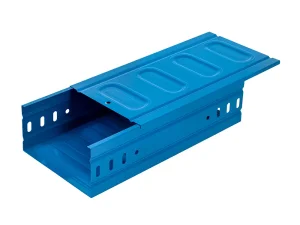
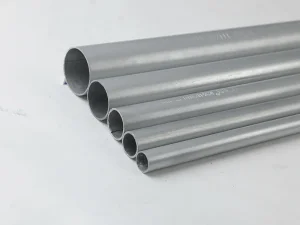
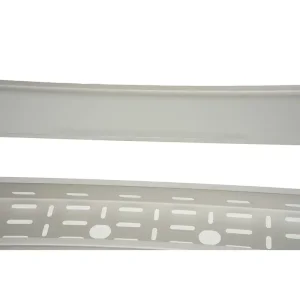
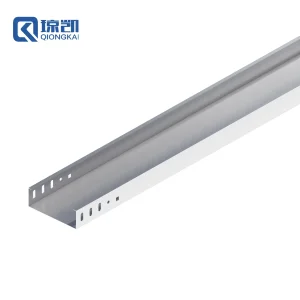
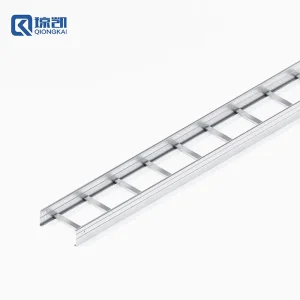
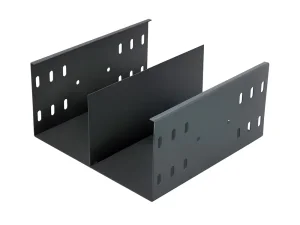
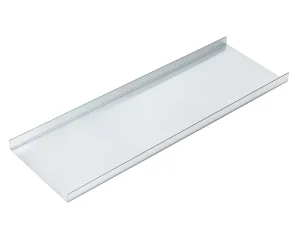
Industrial Conduit, Ladder Trays, Covers & Custom Channels
Explore complementary containment infrastructure, including heavy-duty cable ladders, stainless channels, and protective covers manufactured to global export standards.
Frequently Asked Technical & Procurement Questions
Detailed technical insights regarding vertical elbow cable tray design, loading calculations, cleat spacing, and factory manufacturing parameters.
How do engineers calculate the correct bend radius for vertical elbow fittings?
What is the structural difference between a vertical inside elbow and a vertical outside elbow?
What support spacing is required adjacent to vertical elbow transitions?
How does Qiongkai prevent galvanic corrosion at splice plate connections?
Can factory automated tooling accommodate non-standard custom angle and radius requirements?
What quality documentation and mill certifications are supplied with export shipments?
Direct Engineering Support & Project Take-Off Service
Send your project cable schedules, architectural single-line drawings, or BOQs to our Shanghai application engineering department. We deliver complete support-span calculations, fill-ratio validations, thermal expansion gap calculations, and fully itemized commercial proposals within 24 hours.