
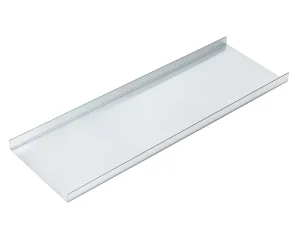
Seattle Core Components
Precision Pre-Galvanized Cable Tray Accessories
Pre-engineered accessories designed to minimize on-site field modifications, accelerate electrical installation timelines, and ensure zero-downtime structural containment for high-density hyperscale deployments.
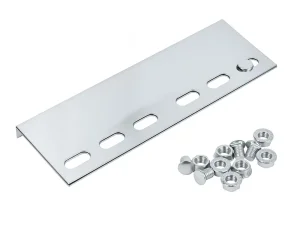
Pacific Northwest Wholesale Pre-Galvanized Cable Tray Splice Connections
Configure & Inquire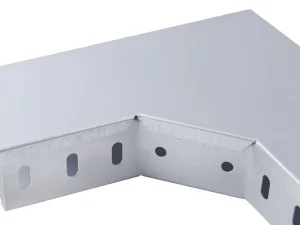
Modular Pre-Galvanized Horizontal Elbow, Tee & Cross Fittings with Cover
Configure & Inquire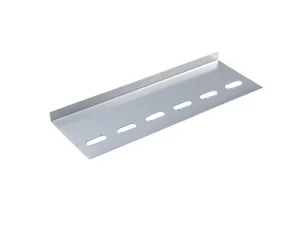
Industrial Grade Pre-Galvanized Couplers & Hardware Connection Spares
Configure & Inquire
Regional Landscape
Commercial & Industrial Infrastructure Dynamics in Seattle
The Puget Sound region hosts a dense concentration of cloud hyperscalers, aerospace assembly hubs, and maritime industrial centers, driving stringent specifications for containment hardware.
High-Density Cloud & AI Infrastructure
The Seattle-Bellevue-Redmond tech crescent demands cable routing systems engineered for massive linear copper and high-fiber counts. Trays and accessories must handle significant weight loads while optimizing airflow paths around containment canopies to reduce server cooling expenditures.
Aerospace & Precision Manufacturing
Facilities surrounding Renton and Everett operate under cleanroom and aerospace assembly guidelines. Containment systems require electrostatic powder coatings, zinc whisker-free metallic treatments, and rigorous vibration resistance for overhead utility drops.
Maritime & Saline Atmosphere Exposure
Port operations along Elliott Bay and the Duwamish Waterway demand superior corrosion protection. Standard galvanized treatments fail rapidly under persistent maritime moisture; projects require Hot-Dip Galvanized (HDG), Marine-Grade 316L Stainless Steel, or non-conductive FRP solutions.
Commercial Benchmarks
Procurement Cost Breakdown & Material Trade-offs
Market pricing indicators for cable tray accessories within the Pacific Northwest, balancing capital expenditure (CapEx) against environmental lifecycle costs.
| Accessory Classification | Material / Treatment | Estimated Base Price (USD) | Corrosion Resistance | Target Seattle Environment |
|---|---|---|---|---|
| Straight Splice Plates & Hardware | Pre-Galvanized (PG) Carbon Steel | $4.50 – $12.00 / pair | Moderate (Indoor Clean) | Climate-controlled data centers, commercial ceilings |
| Horizontal 90° Elbows (300mm-600mm) | Hot-Dip Galvanized (HDG) ASTM A123 | $45.00 – $115.00 / unit | High (Industrial Moisture) | Manufacturing floors, transit hubs, rooftop runs |
| Expansion & Reducer Connectors | Electro-Galvanized (EG) / Powder Coat | $14.00 – $38.00 / unit | Controlled / Aesthetic | Substation telemetry, retail telecom architecture |
| Structural L-Brackets & Strut Clamps | Structural Steel Q235B / HDG | $8.00 – $24.00 / unit | Severe Load Mechanical | Seismic bracing, heavy industrial cable racking |
| Heavy-Duty FRP TEE & Cross Fittings | Fiberglass Reinforced Polymer | $75.00 – $190.00 / unit | Maximum (Chemical / Salt Mist) | Port logistics facilities, wastewater processing |
Technical Compliance
Pacific Northwest Building Codes & Standards
Procuring accessories for Washington State requires adherence to rigid federal, state, and regional specifications to guarantee life safety and continuous electrical service.
NEC 392 & NFPA 70 Grounding Integrity
Under NEC Article 392, cable tray systems can be deployed as Equipment Grounding Conductors (EGC) when certified bonding splice plates and jumpers are correctly specified. Our pre-galvanized and stainless connection assemblies undergo rigorous electrical resistance testing to ensure low-impedance metallic pathways across all joints without requiring redundant external ground wires.
IBC Seismic Risk Categories D, E & F
Western Washington sits along the Cascadia Subduction Zone, mandating stringent compliance with Seattle Building Code (SBC) and ASCE 7 seismic parameters. Accessory brackets, channel hinges, and trapeze hangars must carry certified shear and uplift capacities, verified by dynamic load calculations, to prevent structural detachment during a major seismic event.
System Engineering
Macro-Level Cable Support Architecture & Roadmap
Modernization of industrial power distribution requires integrated hardware solutions designed for long-term scalability, low carbon footprint, and rapid assembly.
Toolless Fast-Lock Accessories
Labor rates in the Pacific Northwest rank among the highest in North America. Integrating spring-loaded, boltless splice plates and drop-in cover clamps accelerates assembly rates by up to 40%, significantly reducing field labor costs during electrical fit-outs.
High-Fill Thermal Dissipation
High-voltage power distribution in dense data center environments produces significant heat buildup. Perforated accessories and engineered ventilation offsets prevent hot-spot aggregation, prolonging cable insulation longevity and mitigating derating factors.
BIM & Digital Twin Integration
All fittings, reducers, and transitions are engineered with 1:1 parametric accuracy, offering full Revit / BIM libraries. This eliminates spatial clashes with HVAC ducts and structural steel framing before fabrication begins.
Engineered Catalog
Structural Fittings, Profiles & Containment Spares
Complete your layout with high-tolerance components engineered for seamless alignment with ladder, solid trough, and perforated tray profiles.
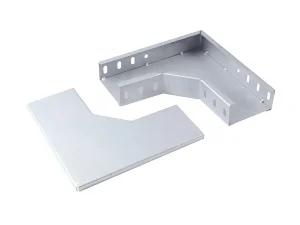
Seattle Specification Pre-Galvanized 90-Degree Horizontal Elbow
Configure & Inquire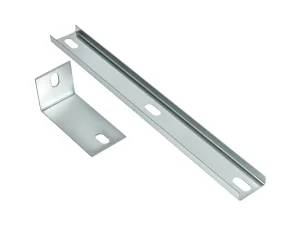
Pre-Galvanized Heavy-Duty L-Shaped Support Bracket for Wall Drops
Configure & Inquire
Industrial Pre-Galvanized Equal Horizontal TEE Tray Intersection Fitting
Configure & Inquire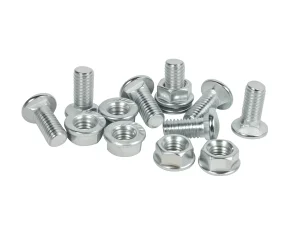
High-Tensile Vibration-Resistant Bridge Frame Screws & Fasteners
Configure & Inquire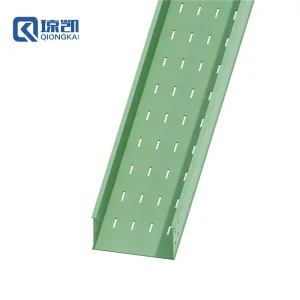
Port Facility FRP Perforated Cable Tray 400×200 Corrosive-Proof
Configure & Inquire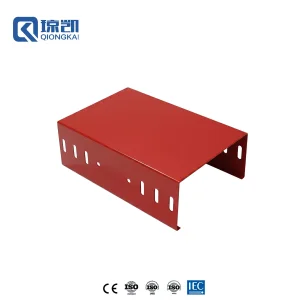
Powder-Coated PG Cable Trunking Trough Channel - RAL3020 Red 200×100
Configure & Inquire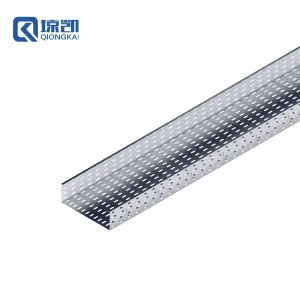
Reinforced Medium-Duty PG / HDG Perforated Cable Tray 300×100
Configure & Inquire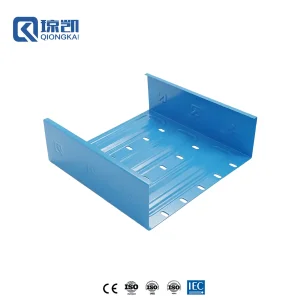
Heavy Duty Molded PG Cable Tray - RAL5015 Tech Blue 300×100
Configure & Inquire
Technical Support
Frequently Asked Questions for Seattle Projects
Expert engineering answers concerning logistics, compliance, and material specifications for Washington State commercial builds.
What finish is best suited for outdoor installations in the Puget Sound area?
Due to the coastal marine climate and persistent atmospheric moisture in Western Washington, Hot-Dip Galvanized (HDG) conforming to ASTM A123 with a minimum coating thickness of 65–85 μm is recommended for standard outdoor use. For direct dockside installations or exposure to salt spray along the sound, Marine-Grade Stainless Steel 316L or Fiberglass Reinforced Plastic (FRP) is required to prevent pitting corrosion.
How do your cable tray accessories comply with local Seattle seismic codes?
Our heavy-duty accessories and support brackets are engineered to meet IBC Seismic Design Categories D through F. We provide engineering documentation, including moment-resisting splice calculations, maximum horizontal load values, and anchor bolt embedment specifications to facilitate swift approval by local building inspectors.
Can pre-galvanized fittings be utilized in high-density data centers?
Yes, Pre-Galvanized (mill-galvanized) fittings are standard inside climate-controlled data halls. Because the coating is applied during rolling rather than electro-plating, our pre-galvanized systems present zero risk of zinc whisker growth—a primary cause of micro-short circuits in sensitive computing servers.
What is the standard lead time for volume orders shipped to the Pacific Northwest?
Standard components have rapid turnaround times. Direct manufacturing shipments to the Port of Seattle or Port of Tacoma typically require 14–21 days maritime transit, supplemented by standard production cycles. Critical path accessories can also be air-freighted via Sea-Tac International Airport for immediate field requirements.
Architecting an Electrical Containment System in Seattle?
Submit your single-line diagram, layout prints, or Bill of Quantities (BOQ). Our engineering desk provides full loading calculations, seismic compliance verification, and factory-direct pricing within 24 hours.
Send Inquiry Now