
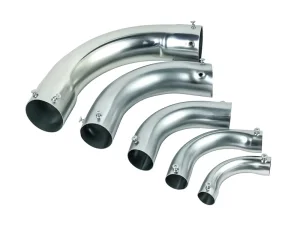
Core Conduit Product Systems
High-Integrity Electrical Conduits for Paris Infrastructure
Engineered cold-rolled carbon steel raceways with continuous hot-dip and electro-galvanized zinc coatings, manufactured to EN 61386-21 and UL 797 mechanical stress parameters.
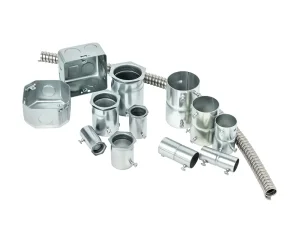
Heavy-Duty Malleable Iron Junction Boxes & Liquid-Tight Couplers
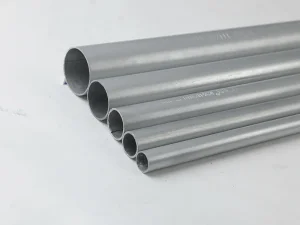
Metric DN20 & DN25 Cold-Drawn Electrical Steel Conduits
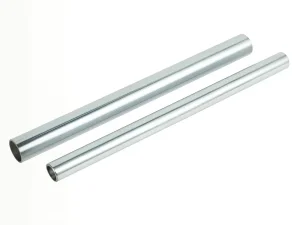
Direct-Mill Pre-Galvanized Rigid Steel Conduits (Contractor Bulk Pack)
Market White Paper & Regional Analysis
The Electrification Landscape Across Greater Paris (Île-de-France)
Strategic deployment of rigid and flexible metallic conduit systems across high-density commercial, deep underground transit, and European Tier-IV data centers.
Mass Transit Upgrades: Grand Paris Express & RATP Infrastructure
The Paris metropolitan area is undergoing the most monumental public transit expansion in Western Europe. The Grand Paris Express (GPE) entails the construction of 200 kilometers of new automated metro lines (Lines 15, 16, 17, and 18) and 68 interconnected stations. Beneath the subsoil of Paris and surrounding departments such as Seine-Saint-Denis, Val-de-Marne, and Hauts-de-Seine, electrical raceways must endure intense operational stress.
Tunnels and underground passenger hubs operated under RATP and SNCF standards mandate strict compliance with NF C 15-100, limiting plastic cable covers due to fire risks. Conduits must feature zero halogen emissions, zero toxic fumes, and outstanding electromagnetic shielding (EMC) against traction-current harmonic interference. Our precision pre-galvanized and hot-dip galvanized carbon steel conduits satisfy these demands by delivering Class 4 corrosion resistance, continuous ground path continuity, and certified non-combustibility.
Technical Insight: Grand Paris tunneling stations require conduits with a minimum mechanical compression resistance of 4,000 N / 5cm, ensuring zero deformation during concrete casting within precast tunnel wall segments.
Paris Infrastructure Demand Indices
Grand Paris Express Tunnel Electrical Runs
96% Growth
Data Center Hubs (Saint-Denis & Lisses)
88% Growth
Commercial Retrofit (La Défense High Rises)
74% Steady Demand
All metrics reflect direct consumption patterns in Île-de-France for heavy-gauge raceway tubes compliant with Euroclass CPR A1 non-combustible criteria.
Hyperscale Data Center Corridors: The "FLAP-D" Expansion in Île-de-France
Paris constitutes one of Europe's premier data center markets—anchoring the crucial "FLAP" quadrangle (Frankfurt, London, Amsterdam, Paris). The concentration of enterprise server farms throughout La Courneuve, Aubervilliers, Pantin, and Magny-les-Hameaux demands extraordinary raceway structural reliability. Data center operators run high-density power distribution architectures from modular UPS backups to hot/cold aisle containment systems.
Within these hyperscale computing facilities, steel conduit systems protect critical MV/LV power runs from stray electromagnetic fields that could corrupt high-speed fiber channels. Furthermore, French fire safety codes for commercial computing hubs require conduits capable of maintaining electrical circuit integrity under thermal loads exceeding 850°C. Our rigid metal conduits (RMC) and intermediate metal conduits (IMC) offer the required high-mass wall thickness, preventing magnetic coupling while guaranteeing a pristine interior seam for rapid wire pulling without insulation abrasion.
Electromagnetic Shielding (EMC)
Steel attenuation performance vs PVC/Aluminum
Comparative laboratory testing demonstrates that cold-rolled carbon steel conduit reduces radiated power line interference (50 Hz - 100 kHz) by over 95% (-32 dB) compared to non-metallic conduits, safeguarding sensitive network infrastructure in dense Paris computing centers.
Attenuation Factor: RMC Steel > IMC Steel >> EMT >>> PVC (0 dB)
Regulatory Assurance & Certification
Engineering Compliance for the French Construction Ecosystem
Cross-standard alignment bridging European Norms (EN), French national electrical codes (NF C), and global UL industrial benchmarks.
| Regulatory Framework | Applicable Code / Norm | Technical Requirement in Paris | Qiongkai Factory Compliance Metric |
|---|---|---|---|
| French Low-Voltage Standard | NF C 15-100 (ERP & IGH) | Mandatory mechanical defense in Public Access Buildings (ERP) and High-Rise Towers (IGH) across La Défense. | Certified Class 4/5 High impact resistance (>20.0 Joules at -45°C). |
| European Conduit System Norm | EN 61386-1 / EN 61386-21 | Specifies classification code for compression, impact, temperature range, and electrical continuity. | Full EN 61386 Classification Code: 445611404010 (Heavy/Very Heavy mechanical durability). |
| Construction Products Regulation | EU Regulation 305/2011 (CPR) | Euroclass fire reaction rating: strict zero flaming droplets and non-combustibility rules in transit corridors. | Class A1 Fire Rating Steel is completely non-combustible; zero toxic smoke or halogen release. |
| Corrosion Resistance Standards | ISO 1461 / EN 10346 | Protection against moisture in underground metro sections, parking basements, and riverside Seine installations. | 275g/m² to 550g/m² Pre-galv to Hot-Dip Galvanizing (HDG) coating options with salt spray testing >1,000h. |
| Environmental & Sustainability | RE2020 (Réglementation Environnementale) | Life Cycle Assessment (LCA) and FDES documentation (Fiche de Déclaration Environnementale et Sanitaire). | 100% Recyclable Low carbon steel scrap recycling integration, optimized shipping nesting ratios. |
Direct Tier-1 Supply Chain Synergy
High-Capacity Chinese Manufacturing with Precision Multimodal Delivery to Paris
Combining world-scale steel processing power with automated rolling tolerances and streamlined maritime logistics entering Le Havre direct to Gennevilliers.
Prime Raw Steel Metallurgy
We source ultra-clean hot-rolled and cold-rolled carbon steel coils directly from Tier-1 mills (such as Baosteel). Tight chemical composition control ensures low carbon, silicon, and sulfur content, delivering exceptional ductility for on-site hydraulic or manual 90° pipe bending without tube flattening or seam rupture.
In-Line High-Frequency Induction Welding
Our continuous ERW tube lines utilize automated inside-bead scarfing. By trimming the interior weld flash flush to under 0.25mm, electricians running THHN/THWN conductors avoid insulation tears during fast pulling through long sweeps—vital for dense data center pathways.
Streamlined Logistics via Le Havre & Seine Barges
Consolidated 40ft High Cube containers depart directly from Shanghai/Ningbo ports to Port du Havre (France). From Le Havre, multimodal inland river barges deliver steel shipments directly into the Port de Gennevilliers on the Seine River, bypassing road congestion for immediate site dispatch.
Localized Implementation
Engineering Deployments Across Iconic Paris Application Environments
How our heavy-duty conduits and cable trays integrate into heritage restoration, subterranean transit, commercial headquarters, and industrial facilities.
1. Heritage Architectural Restorations & Museum Retrofits
In historic Paris districts (such as the 1st, 4th, and 8th arrondissements), upgrading wiring infrastructure inside 19th-century Haussmannian masonry and classified cultural monuments presents distinct hurdles. Chasing deep channels into historic plaster and limestone is strictly prohibited by French heritage architects (Architectes des Bâtiments de France - ABF).
Our surface-mounted, architectural powder-coated electrical steel conduits (available in tailored RAL historic patinas, matte blacks, and bronzes) blend unobtrusively into exposed historical masonry, vaulted cellars, and heritage museum exhibits. They provide complete physical rodent and moisture protection while respecting the architectural legacy of the capital.
Historic Conservation Fit-Out Criteria:
- Zero structural masonry destruction via surface saddle clamp mounting.
- Low-profile DN16, DN20, and DN25 metric outer diameters for discreet routing.
- RAL 9005 (Jet Black) & RAL 7016 (Anthracite Grey) electrostatic finishes.
- Class A1 non-combustible barrier protecting centuries-old timber frames.
2. La Défense Corporate Skyscrapers & High-Rise Complexes (IGH)
As the primary business district of Europe, Paris La Défense contains dozens of Immeubles de Grande Hauteur (IGH). The French Fire Safety Regulations for IGH impose stringent life-safety demands: emergency generator feeds, fire pump raceways, smoke extraction circuits, and evacuation lighting must function uncompromised under structural fires.
Our heavy-wall rigid galvanized conduits provide continuous mechanical and thermal containment. In vertical riser shafts spanning 40 to 60 stories, our precisely engineered threaded conduits and coupling sleeves resist elongation and building vibration, ensuring critical life-safety power remains unbroken during emergency operations.
IGH High-Rise Shaft Specifications:
- Full vertical load transfer through heavy-duty slotted strut brackets.
- Zinc electroplate & hot-dip finishes minimizing riser shaft corrosion.
- Integral mechanical bonding across joints ensuring static discharge safety.
- Compatibility with fire-stop intumescent penetration collars.
Future Trends & Green Construction
Aligning with French RE2020 Carbon Budgets & Digital BIM Workflows
Modern electrical raceways must offer more than just mechanical strength—they must satisfy circular economy targets and seamless 3D Revit modeling.
Embodied Carbon Optimization
France's RE2020 regulation imposes progressive caps on embodied carbon (kg CO2eq/m²) in commercial buildings. Steel conduits boast an infinitely recyclable circular lifecycle, outclassing short-lived petroleum-based plastics. We utilize recycled scrap steel in electric arc furnace (EAF) production lines to curb upstream carbon intensity.
BIM Level 2/3 Digital Library
French engineering bureaus (BET) require native Autodesk Revit families for clash detection across dense ceiling plenums. We supply native .RFA files with precise bending radius formulas, standard fitting couplings, and weight parameters to prevent costly spatial collisions before material arrives on site.
Low Smoke Zero Halogen (LSZH)
Underground metro networks and public venues forbid plastic conduit that releases lethal hydrogen chloride gas when exposed to fire. Our steel raceway solutions are inherently non-toxic, preserving evacuee visibility and preventing acid gas etching of sensitive digital electronics.
Coordinated Support Systems & Heavy-Duty Trays
Integrated Cable Management Solutions for Paris Installations
Complete raceway configurations: from reinforced ladder systems to fire-alarm coated trunking channels matching international specifications.
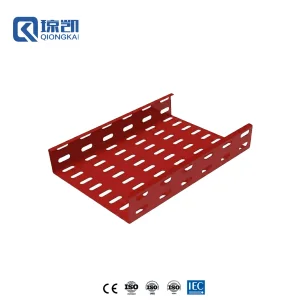
Powder-Coated PG Cable Tray with Reinforcing Ribs (RAL 3020 Red, 200×50)
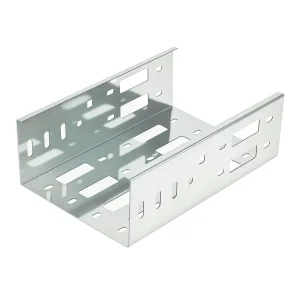
Custom-Dimension Pre-Galvanized Perforated Cable Tray for Data Hubs
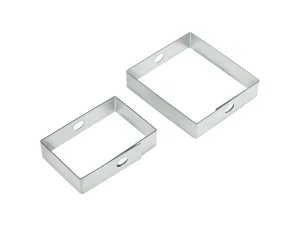
Precision Pre-Galvanized Square Metal Formwork Modules (Paris Line)
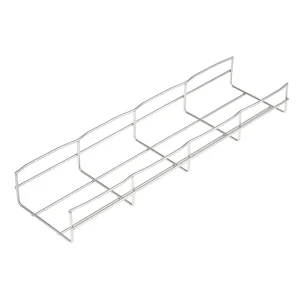
Stainless Steel 316L Cable Tray (50mm Flange Height) for Tunnel Waterways
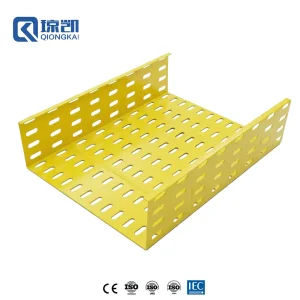
Powder-Coated Dual HDG Cable Tray with Ribs (RAL 1080 Yellow, 300×100)
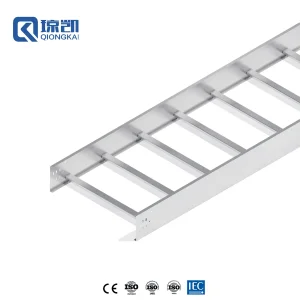
Heavy-Duty PG Ladder Tray (800×200 Extra-Wide Industrial Spans)
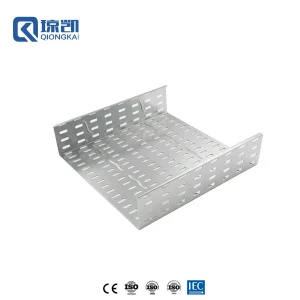
Carbon Steel PG & HDG Cable Tray with Ribs (400×100 Commercial Backbone)
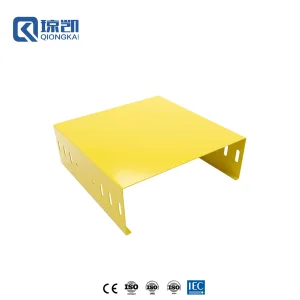
Powder-Coated Solid Trough Cable Trunking (RAL 1080 Yellow, 300×100)
Technical FAQs
Frequently Asked Questions by Paris Contractors & Engineers
Authoritative technical guidance covering French electrical certifications, delivery lead times, site bending, and environmental compliances.
How do steel conduits comply with NF C 15-100 standards in Paris ERP buildings?
Under NF C 15-100, installations in Public Access Buildings (Établissements Recevant du Public - ERP) must prioritize human safety against fire flashover and toxic combustion emissions. Metallic steel conduits are classified as Euroclass A1 non-combustible products under European standard EN 13501-1. Unlike PVC conduits, steel produces zero toxic halogen emissions (zero HCl acid gases) and does not contribute thermal energy to a fire, making it the preferred specification for French safety control inspection bodies (such as Socotec, Apave, and Veritas).
What is the delivery timeline for sea-freight containers shipping from Shanghai to Paris?
Typical port-to-port maritime transit from Shanghai or Ningbo to Port du Havre (France) is 28 to 35 days. Customs clearance via our bonded logistics partners is executed electronically before berthing. From Le Havre, goods are transferred onto inland river barges or flatbed rail directly into the Port de Gennevilliers or directly to regional project consolidation yards within Île-de-France within 48 to 72 hours of discharge.
Can your steel conduits be bent on site without crimping or seam cracking?
Yes. We engineer our conduits utilizing low-carbon carbon steel with high elongation properties (>25% elongation index). Furthermore, our high-frequency longitudinal seam welding incorporates full in-line annealing and internal scarfing. Electricians can execute tight 90-degree stub-ups, offsets, and back-to-back bends using standard mechanical or electric pipe benders without flattening or seam rupture.
How do you accommodate European metric sizing vs Imperial EMT/RMC profiles?
While international industrial projects frequently specify Imperial trade sizes (1/2" through 4"), many European and French municipal transit projects mandate strict metric sizing (DN16, DN20, DN25, DN32, DN40, DN50, DN63). Our manufacturing tooling accommodates both metric EN 61386-21 outer diameters with ISO metric thread pitches (M16x1.5 through M63x1.5) as well as ANSI C80.1/UL 797 specifications with NPT threading.
What documentation is provided to satisfy French construction insurance (Décennale)?
We provide comprehensive inspection dossier packages with each shipment. This includes EN 10204 Type 3.1 Mill Test Certificates (MTC) showing exact chemical melt analysis and mechanical tensile testing, CE Declaration of Performance (DoP), coating thickness verification reports, and salt-spray test certifications compliant with ISO 9227 to satisfy both European electrical contractors and decennial insurance auditors.
How does galvanized steel conduit help prevent EMI in Paris data centers?
Carbon steel has high magnetic permeability relative to aluminum or plastic raceways. When medium-voltage distribution cables or high-amperage bus feeds are enclosed in our rigid steel conduits, electromagnetic fields (EMF) are absorbed and channeled away through continuous bonded earthing. This provides superior attenuation of radio frequency interference (RFI) and electromagnetic interference (EMI), protecting critical hyperscale data servers.
Equip Your Paris Infrastructure Project with Certified Steel Raceway Systems
Send your project Bill of Quantities (BOQ), electrical single-line drawings, or required EN 61386 conduit dimensions. Our technical engineering division delivers complete cost analyses and custom fabrication proposals within 24 hours.
Send Inquiry Now