Industry Whitepaper & Market Intelligence

Heavy Duty Series Factories & Price in the Seoul Market

A technical evaluation of high-load cable support architectures, structural compliance across South Korea’s semiconductor and hyperscale corridors, and comparative cost engineering from Shanghai factory hubs.

Featured Heavy-Duty Profiles

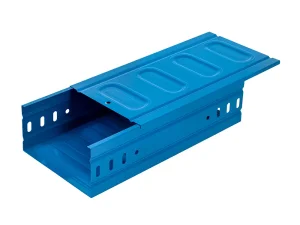
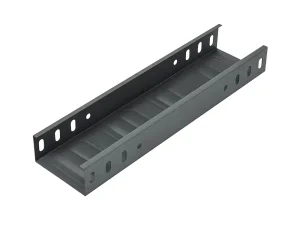
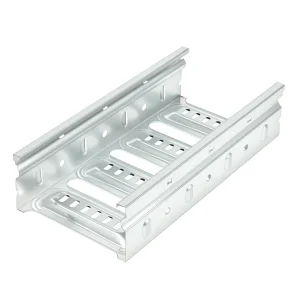
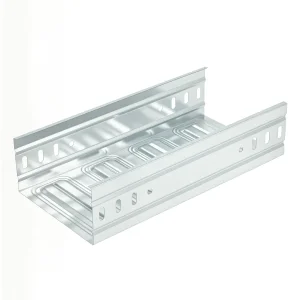
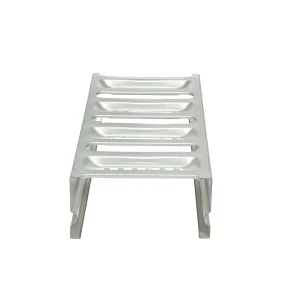
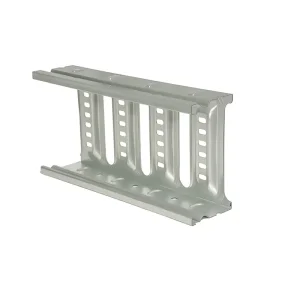
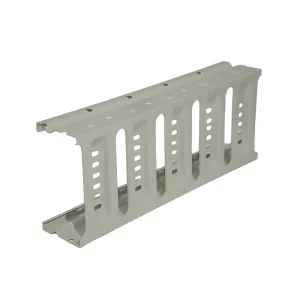
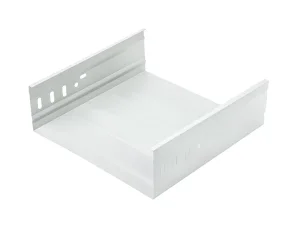
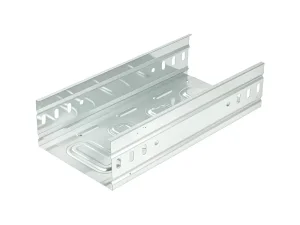
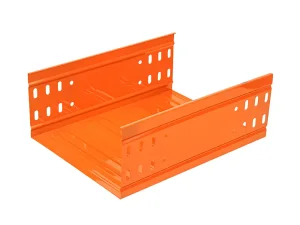
Engineered Heavy Duty Trays for High-Density Infrastructure

Precision-formed cable trays engineered to carry high-voltage power lines and dense fiber backbones. Designed to satisfy seismic, thermal, and weight criteria in the Greater Seoul Metropolitan Area (GSMA).
Market Reality & Local Ecosystem

The Seoul Industrial Landscape: Megaproject Demand Drivers

South Korea's National Capital Area—encompassing Seoul, Incheon, and Gyeonggi Province—represents one of the densest industrial power hubs on earth. Cable management systems are no longer treated as secondary architectural consumables; they have become mission-critical infrastructure components.

$470B+
Yongin Mega Semiconductor Hub
1.2GW
Seoul Metro Hyperscale DC Pipeline
0.20g
KEC Zone Seismic Acceleration
48Hrs
Shanghai to Incheon Port Transit

Semiconductor Clusters (Yongin & Pyeongtaek)

The southern edge of the Seoul Metropolitan Area is home to the world's most aggressive semiconductor fabrication investments. These sub-fab utility chases house tens of thousands of medium-voltage copper feeders, chemical supply lines, and automated cleanroom conveyors.

  • Zero Zinc Whisker Tolerance: Requires post-treated powder coating or SS316 electropolished trays to protect wafer fabrication zones.
  • Continuous Heavy Loading: Cable weights often reach 250 kg/m with zero deflection tolerances exceeding L/240.
  • Rapid Expansion Demands: Modular click-in bracket systems that minimize cleanroom assembly turnaround.

Hyperscale AI Data Centers (Gasan, Sangam & Pangyo)

Driven by national cloud acceleration and generative AI compute clusters, hyperscale colocation facilities around Sangam DMC, Pangyo Techno Valley, and Gasan Digital Complex are densifying power racks from 10 kW/cabinet to over 45 kW/cabinet.

  • Overhead Busway and Tray Cascades: Double-tier and triple-tier heavy-duty ladder racks to carry massive high-amperage feeder bundles.
  • Thermal Dissipation Dynamics: Perforated bottoms and ladder rung configurations calculated to maintain safe ambient conductor temperatures.
  • Segregated Pathway Routing: Rigid color-coded molded systems to clearly isolate fiber, primary power, and generator failover channels.

Subterranean Civil Infrastructure & KEPCO Grids

Seoul’s municipal master plan mandates the undergrounding of overhead utilities and expressways (such as the Gukhoe-daero and Dongbu Expressway projects), requiring robust containment infrastructure for Korea Electric Power Corp (KEPCO) grids.

  • Severe Humidity & Condensation: Hot-dip galvanizing must meet or exceed KS D 8308 / ISO 1461 standards, with minimum coating weights of 600 g/m² (85µm).
  • Dynamic Ground Movement: Heavy-duty channels braced to resist seismic shear forces without structural warping.
  • Tunnel Fire Protection: Toxic-free, zero-halogen powder coatings certified for public transit safety.
Procurement Cost Dynamics

Seoul Cable Tray Pricing Intelligence: Factory-Direct vs. Local Stockist

Contractors and project developers in the Seoul market balance local supply-chain reliability against high regional markups. Because domestic manufacturing capacity in South Korea is concentrated among a few heavy industrial conglomerates, project procurement managers often encounter 30% to 50% price premiums when sourcing locally.

Profile Specification Material & Coating Standard Seoul Local Stockist (KRW/m) China Factory Direct (CIF Incheon) Landed Price Advantage Lead-Time (Production + Freight)
Heavy Duty Ladder 200×100 (t=2.0mm) Pre-Galvanized (Z275 / KS D 3506) ₩38,000 – ₩45,000 $14.50 – $17.80 (₩19,500 – ₩24,000) Save 46% - 49% 7 – 10 Days Door-to-Site
High-Load Perforated Tray 400×100 (t=2.0mm) Hot-Dip Galvanized (ISO 1461 >80µm) ₩62,000 – ₩74,000 $24.00 – $28.50 (₩32,400 – ₩38,500) Save 48% - 51% 10 – 14 Days Door-to-Site
Molded Rib Heavy Duty 300×100 (t=1.8mm) Powder-Coated over Pre-Galvanized ₩54,000 – ₩65,000 $19.20 – $22.60 (₩25,900 – ₩30,500) Save 52% - 55% 10 – 12 Days Door-to-Site
Marine Grade Aluminum Tray 300×100 Extruded Aluminum 6063-T6 (Anodized) ₩78,000 – ₩92,000 $31.00 – $36.50 (₩41,800 – ₩49,200) Save 46% - 47% 12 – 15 Days Door-to-Site
Cleanroom SS316L Tray 200×50 (t=1.5mm) Stainless Steel 316L Electropolished ₩145,000 – ₩175,000 $62.00 – $73.00 (₩83,700 – ₩98,500) Save 42% - 44% 14 – 18 Days Door-to-Site

The Mechanics Behind Seoul Local Price Premiums

Domestic Korean cable tray fabrication relies heavily on domestic POSCO or Hyundai Steel raw material coils, which face domestic distribution markups, high industrial electrical tariffs, and rising unionized labor wages. Furthermore, the local distributor network adds tiered margin markups:

  • Tiered Middleman Layers: Raw Mill → Primary Processor → Tray Fabricator → Regional Distributor → Subcontractor. Each adds 8% to 15%.
  • Local Warehousing Overhead: Maintaining inventory in logistics parks like Gimpo, Icheon, or Hwaseong entails substantial industrial land leasing costs.
  • Galvanizing Bath Premiums: South Korea’s rigorous environmental regulations have increased domestic hot-dip galvanizing charges significantly over the last three years.

The China-Korea Cross-Border Shipping Advantage

Geographic proximity makes direct factory procurement an effective supply chain hedge. Shipping from Shanghai or Ningbo to Incheon Port operates on regular daily departures with an ocean transit time of just 42 to 48 hours:

  • RCEP & China-Korea FTA: Qualifies for preferential import duties (down to 0% with valid Certificate of Origin).
  • Consolidated Container Nesting: Shanghai Qiongkai optimizes dimensional packaging by nesting tray sections, lowering landed freight to less than 3% to 5% of total project cost.
  • Direct Engineering Collaboration: Drawings, structural load calculations, and BOM cut-lists are coordinated directly with our in-house engineering team.
Factory Direct Capability

Why Global EPCs Partner with Shanghai Qiongkai

Founded in 2005, Shanghai Qiongkai Industry Co., Ltd. operates 3 specialized factories in Shanghai’s Songjiang District. We run 12 high-speed continuous roll-forming lines and maintain over 60 heavy-duty manufacturing machines, providing steady volume production for megaprojects across East Asia and worldwide.

Rigorous Metallurgical Quality Control

Every batch of cold-rolled and pre-galvanized coil originates from certified primary steelmakers (Baosteel, Shougang). Raw coils are tracked with heat-number traceability, thickness verification via ultrasonic testing, and chemical composition analysis.

  • Uniform tensile strength across the yield line (>350 MPa).
  • Accurate zinc coating weight compliance (Z180 to Z275).
  • In-house salt spray testing up to 1,500 hours for HDG and specialty finishes.

Automated Continuous Molded Forming

Unlike standard sheet metal benders that weld pieces by hand, our automated stamping lines roll continuous side rails with integrated reinforcing ribs. This patented molded construction delivers notable engineering advantages:

  • 35% Higher Load Bearing: Enhanced deflection resistance without adding heavy wall thickness.
  • Burr-Free Safe Cable Routing: Smooth punched perforations prevent sheath damage during fast line pulling.
  • Precision Splice Holes: CNC hole arrays ensure easy onsite bolting without field drilling.

Dedicated Export Support for Korea

We work directly with Korean EPCs (Hyundai E&C, Samsung C&T, GS E&C) and electrical contractors. Our team supplies complete documentation packages matching local administrative requirements:

  • Full Korean Electrotechnical Code (KEC) engineering submittals.
  • Seismic safety calculations certified to KDS 41 17 00 standards.
  • Fast customs paperwork processing (RCEP origin certificates, Korean packing lists).
Engineering Deep-Dive

Localized Application Scenarios Across South Korea

Specifying cable support runs in Greater Seoul demands strict adherence to local environmental regulations, facility requirements, and structural engineering codes.

Scenario A: Tier IV Data Center Basements

Hyperscale facilities in Paju and Hanam deal with large heat-dissipation challenges in basement power distribution galleries where primary MV feeders connect to indoor substations.

Recommended System: Heavy-Duty Molded Cable Tray (W: 600mm, H: 150mm, t=2.0mm) hot-dip galvanized to ISO 1461, coupled with back-to-back 41×82 anti-seismic strut channel trapeze hangers.

Why: The open ladder profile promotes active convection cooling, preventing conductor derating under continuous 2,500A transformer operational loads.

Scenario B: Semiconductor Sub-Fab Utility Racks

In clean manufacturing corridors throughout Yongin and Cheonan, airborne particulate counts are strictly monitored to ISO 14644-1 Class 1 levels.

Recommended System: Thermoset Polyester Powder-Coated Tray applied over Pre-Galvanized steel, or Anodized Aluminum 6063-T6.

Why: Completely prevents zinc whisker formation—microscopic conductive zinc filaments that can shed from standard electro-galvanized surfaces and trigger short circuits in sensitive electronic cleanrooms.

Scenario C: Coastal Chemical & Energy Plants

The industrial coastal band stretching from Incheon's Songdo international district down to Daesan Petrochemical Complex faces salty sea air and harsh chemical fumes.

Recommended System: Marine-grade Stainless Steel SS316L Tray with electropolished passivated welds, or Heavy-Duty FRP (Fiber-Reinforced Plastic) composites.

Why: Provides long-term resistance to chloride-induced pitting and sulfuric/acidic chemical atmospheres, maintaining a 30+ year design life without recoating.

Supply Chain Architecture

Strategic Sourcing: Optimizing Total Cost of Ownership (TCO)

For international EPC contractors bidding on major infrastructure across APAC and the Middle East, cable tray procurement requires balancing factory unit costs with logistics footprint, field assembly speed, and regulatory compliance.

1. Container Space Optimization via Nestable Trays

Standard ladder cable trays consume large shipping volumes because welded perpendicular rungs leave empty space inside the container. Shanghai Qiongkai solves this with nestable molded tray designs and bolt-together knock-down systems:

  • 40-Foot HC Container Utilization: Pack up to 4,200 linear meters of molded tray, compared to only 1,800 meters of traditional rigid welded ladder trays.
  • Freight Cost Reduction: Lowers the landed ocean freight to less than $0.65 per meter between Shanghai and Incheon or Busan.
  • Minimized Job-Site Staging Footprint: Nested crates take up half the laydown yard space in tight urban downtown Seoul jobsites.

2. Engineering Support & Structural Calculations

Avoid field rework and regulatory inspection failures. Our engineering team assists procurement and project management from the initial drafting stage:

  • Load & Deflection Modeling: Finite element analysis (FEA) validating compliance with NEMA VE-1 and IEC 61537 standards under cable loads up to 300 kg/m.
  • Seismic Bracing Packages: Complete engineering layouts including 41×41 and 41×82 strut channel rigid braces that meet KDS 41 seismic guidelines.
  • Prefabricated Fittings: Factory-formed horizontal bends, tees, crosses, and reducers that cut field cutting and welding time by up to 70%.
Technical FAQs

Frequently Asked Questions: Sourcing Heavy Duty Trays for Korea

Clear answers covering regulatory compliance, delivery timelines, coating choices, and installation details for project developers and procurement teams.

Are Qiongkai cable trays compliant with the Korean Electrotechnical Code (KEC)?
Yes. Our heavy-duty cable tray systems meet the criteria of the Korean Electrotechnical Code (KEC Article 241), as well as international performance standards KS C 8464 and IEC 61537. We verify safe electrical continuity, load ratings, deflection margins under load, and edge smoothness to protect conductor jackets. Third-party mill test certificates (MTC 3.1) and testing reports are supplied with every shipment.
How do you resolve the "zinc whisker" issue for cleanrooms and data halls?
Zinc whiskers are small microscopic conductive crystals that can grow spontaneously on electro-galvanized steel surfaces. In data centers and semiconductor cleanrooms, these whiskers can break off, enter air handlers, and bridge circuitry on server motherboards or wafer racks. To prevent this, we offer epoxy/polyester powder-coated finishes over pre-galvanized steel (which isolates the zinc layer completely), anodized aluminum 6063-T6 trays, or passivated SS304/SS316 stainless steel profiles.
What are the total shipping transit times from your Shanghai factories to Incheon Port?
Because our production plants are located in Songjiang, Shanghai, we enjoy direct access to both Yangshan Deep-Water Port and Waigaoqiao Port. High-frequency container feeder vessels sail daily between Shanghai and Incheon or Busan. Pure ocean transit requires only 42 to 48 hours. Typical door-to-door transit—including export declaration, vessel crossing, and clearance at Incheon—takes between 5 and 7 business days, making it comparable to domestic overland trucking schedules.
Can we import tariff-free under the RCEP or China-Korea Free Trade Agreement?
Yes. Cable trays and associated steel/aluminum structural support channels fall under specific HS Code headings (such as HS 7308.90 for steel structures and HS 7610.90 for aluminum). Under the Regional Comprehensive Economic Partnership (RCEP) and the bilateral China-Korea Free Trade Agreement (CKFTA), our documentation department issues official Certificates of Origin (Form E or RCEP CO), allowing your customs clearance agent to claim 0% to preferential low import tariffs.
How do your molded cable trays differ from traditional welded ladder trays?
Traditional ladder trays feature two separate side rails with cross rungs welded by hand or robot. Welds can create heat-affected zones where protective galvanizing burns away, creating points of early rust. Our continuous molded trays are formed using progressive CNC stamping dies that press reinforcing stiffener ribs directly into the profile bed. This cold-worked profile improves section modulus, enhances load capacity by 35% without added weight, and eliminates sharp weld points that might snag insulation during cable pulls.
Can you provide customized dimensions, depths, and punch patterns?
Yes. We operate complete in-house tooling and die-making workshops. We regularly produce non-standard widths (from 50mm up to 1200mm), variable side rail heights (50mm, 75mm, 100mm, 150mm, and 200mm), and thicknesses up to 3.0mm. We can also adjust hole patterns, slot sizes, and side flange returns to accommodate customer-specific cable ties, Kwik-wire systems, and regional seismic mounting clamps.
How do you verify seismic support compliance for South Korea projects?
South Korea updated building codes following seismic events in Gyeongju and Pohang, mandating that MEP and electrical containment systems resist specified design ground accelerations (KDS 41 17 00). We supply paired seismic trapeze support systems using 41-series back-to-back strut channels with serrated internal flanges, paired with 45-degree lateral and longitudinal sway bracing kits tested to withstand static and dynamic seismic loads.
What is your minimum order quantity (MOQ) and production capacity?
For standard profiles (Pre-Galvanized and Powder Coated), our MOQ is typically 500 meters or 1 full consolidated container (which can mix trays, covers, strut channels, and fittings). With 12 automated lines across 3 facilities, our average monthly production exceeds 150,000 meters, allowing us to manage rolling phased shipments for multi-stage megaprojects on tight delivery windows.
Complete Heavy Duty System Catalog

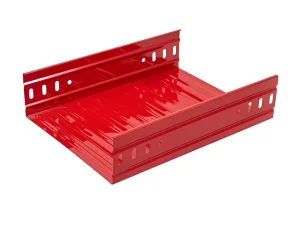
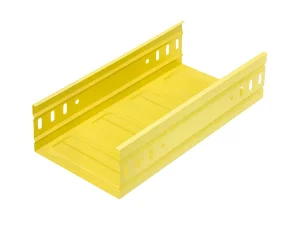
Specialized Heavy Duty Series Profiles & Cable Pathways

Explore our expanded heavy-duty lineup, including high-load ladders, protective fire-rated coatings, and color-coded pathways engineered for industrial plants, municipal tunnels, and commercial data facilities.
Optimize Your Project’s Cable Support Budget Today

Send us your project Bill of Quantities (BOQ), CAD drawings, or engineering specifications. Our Shanghai engineering desk will deliver a comprehensive, cost-optimized proposal with structural calculations and landed CIF Incheon/Busan shipping pricing within 24 hours.

Send Inquiry Now