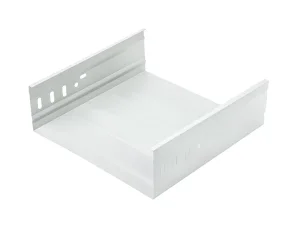
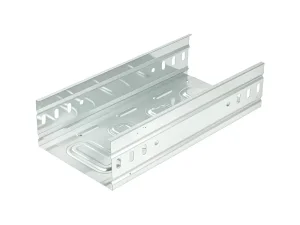
Industrial Grade Containment • ASEAN • Indonesia Market
Heavy Duty Series Factory & Factories in the Indonesia Market
Advanced Structural Engineering, High-Tensile Molded Cable Trays, and Extreme Corrosive Protection Engineered for Indonesia's Nickel Smelting, Petrochemical, Offshore Energy, and Data Hall Expansions.
Primary Heavy Duty Series for Industrial Infrastructures
Engineered for high mechanical loads, dynamic cable bundling, and extreme equatorial tropical climates across Jakarta, Surabaya, Morowali, and Balikpapan.
Industry Whitepaper • Comprehensive Engineering Report
Heavy Duty Cable Containment Architecture in Indonesia
A Macro-Industrial Analysis of Downstream Mineral Smelting, Tropical Atmospheric Degradation, and Seismic Resiliency in Southeast Asia's Largest Economy.
1. Indonesia’s Industrial Landscape: The Downstream Boom & Infrastructure Demands
Indonesia is undergoing the most rapid heavy-industry transformation in Southeast Asia, propelled by the national downstream economic policy (Hilirisasi). The unprecedented scale of High-Pressure Acid Leaching (HPAL) and Rotary Kiln-Electric Furnace (RKEF) nickel processing complexes across Central Sulawesi (Morowali), South Sulawesi (Sorowako), and North Maluku (Weda Bay) has created an unprecedented demand for heavy duty cable routing systems. These industrial gigaprojects require massive clusters of multi-conductor extra-high-voltage (EHV) power distribution cables, high-density variable frequency drive (VFD) circuits, and critical instrumentation arrays running across open spans exceeding 4 to 8 meters between structural trestles.
Simultaneously, state infrastructure initiatives—most notably the new national capital city IKN Nusantara in East Kalimantan, Pertamina's refinery master development programs (RDMP) in Balikpapan and Cilacap, and the hyper-concentration of Tier III and Tier IV hyperscale data centers in the Cikarang-Karawang corridor—have raised the engineering baseline for cable tray loading capacities. Unlike standard light-commercial trunking, industrial cable containment systems in Indonesia must endure combined dead loads of over 250 kg/m, dynamic wind shearing from monsoon cyclonic gusts, seismic ring-of-fire ground acceleration, and high operating temperatures exceeding 50°C in unventilated pipeline corridors.
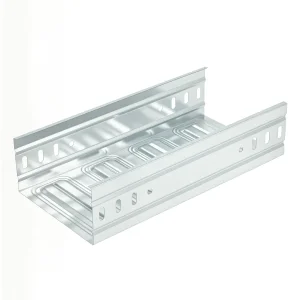
Key Technical Distinction: A standard light-duty cable tray will experience progressive structural sagging when subjected to ambient tropical heat coupled with the heat generated by full-load electrical cabling. Our heavy duty molded series integrates continuous cold-formed longitudinal reinforcement beads and patented deep-ribbed side rail profiles, providing up to a 340% increase in Section Modulus (Z) and Moment of Inertia (I) without proportionally increasing raw steel weight.
The Indonesian archipelago's geographical position astride the equator creates one of the planet's most aggressive corrosivity profiles for metallic structures, according to ISO 9223 classification. The combination of ambient relative humidity regularly hovering above 85%–95%, mean annual temperatures of 28°C–34°C, intense ultraviolet (UV) degradation, and high airborne chloride deposits from thousands of kilometers of coastline creates severe C4 to C5-M (Marine Atmospheric) corrosion hazards.
In industrial mineral smelters and geothermal facilities (such as Kamojang, Dieng, and Sarulla), the atmospheric challenges are compounded by airborne sulfur dioxide (SO₂), hydrogen sulfide (H₂S), and acid aerosol mists. Under these conditions, conventional zinc coatings with thin electro-galvanization (<12μm) succumb to galvanic sacrificial exhaustion within 12 to 18 months, precipitating catastrophic structural collapse of heavy power cable runs. To mitigate these risks, factories engineering heavy duty cable trays for Indonesia must implement hot-dip galvanizing per ASTM A123 / ISO 1461 with minimum thickness thresholds of 85μm to 100μm, or deploy marine-grade high-silicon aluminum alloys (6063-T6) and dual-coated intumescent intumescing epoxy finishes.
Continuous Deep-Rib Stamping
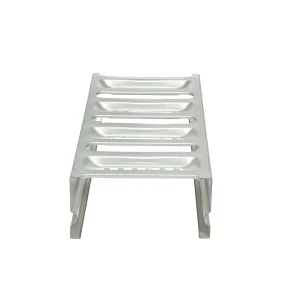
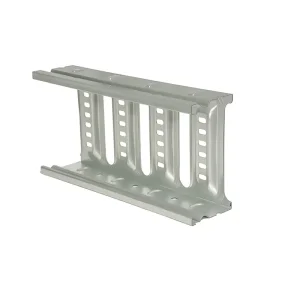
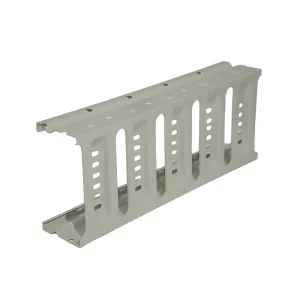
Multi-stage cold-formed side rail profiles and longitudinal transverse stiffeners prevent lateral deflection under extreme heavy feeder and busway cable bundles.
ISO 12944 C5-M Certified HDG
Zinc bath formulated with nickel and bismuth micro-additions ensuring cohesive iron-zinc alloy layers (Gamma, Delta, Zeta) with an outer pure Eta layer exceeding 100μm thickness.
Zone 4 Seismic Bracing Compliance
Engineered anti-sway strut bracket systems tested against high spectral acceleration (Ss > 1.5g) to ensure containment continuity during Indonesian Ring of Fire seismic events.
Technical Benchmarking Matrix
Engineering Specifications: International vs. Indonesian Site Environments
A rigorous engineering comparison between baseline international norms and the enhanced performance required on Indonesian EPC project sites.
Performance Parameter
Standard International Norm (IEC / NEMA)
Indonesian EPC Project Requirement
Qiongkai Heavy Duty Series Spec
Environmental Classification
Galvanizing Thickness
ASTM A123 / IEC 61537 (45 - 65 μm)
PLN & Petrochemical RDMP (85 - 100 μm)
Custom automated centrifugal HDG (85 - 120 μm)
ISO C5-M Coastal
Maximum Working Load
NEMA VE 1 Class 12C (150 kg/m at 3.0m)
Heavy Multi-Core Mining Feeders (>220 kg/m)
Continuous Molded Flange (>280 kg/m at 3.5m)
Heavy Industrial
Deflection Ratio Limit
L/100 to L/150 allowable sag
Rigid Industrial Specification ≤ L/200
High Moment of Inertia Design ≤ L/240
Structural Strict
Operating Temperature
-20°C to +60°C nominal
Solar absorption + cable dissipation up to 85°C
Thermal rated up to 120°C continuous
Tropical Smelter
Fire Integrity Rating
UL 568 / BS 476 standard
Critical Safety E90 / 120 minutes
DIN 4102-12 (E90) Certified Intumescent Powder
Emergency Systems
Seismic Acceleration Proof
IBC Seismic Design Category B/C
SNI 1726:2019 Zone 4 (Ring of Fire)
Integrated 41x82 back-to-back strut seismic kits
High Seismic Risk
3. Localized Indonesian Application Scenarios & Case Studies
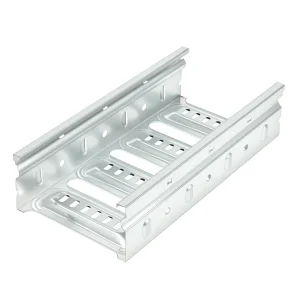
Nickel & Cobalt Hydrometallurgical Facilities (Sulawesi & North Maluku): In HPAL autoclave zones where concentrated sulfuric acid is used to extract nickel and cobalt, airborne sulfur trioxide and acid fumes rapidly deteriorate ordinary pre-galvanized tray coatings. In these facilities, our heavy duty series is deployed utilizing hot-dip galvanizing with an additional epoxy/polyester fluorocarbon duplex overcoat, or manufactured directly from cold-worked AISI 316L stainless steel. This ensures zero galvanic pitting across the support system's 25-year structural service design life.
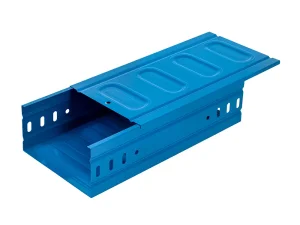
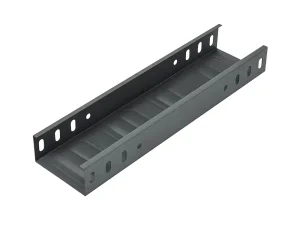
Hyperscale Data Center Corridors (Cikarang, Karawang, Batam): Driven by international cloud enterprise investments across West Java and the digital cross-bridge zone of Batam Island, modern Tier III/IV data campuses require high-density structural cable runways. Our blue and grey powder-coated molded series provide aesthetic overhead compartmentalization, smooth cable pull radiuses that prevent shearing of delicate OM4/OM5 fiber optic jackets, and high electromagnetic shielding against industrial interference.
Offshore Gas Production & LNG Liquefaction (Bontang, Tangguh, Masela): In topside modules and LNG processing trains, space is constrained while cable weights are immense. Marine-grade lightweight aluminum molded trays (6063-T6) reduce structural superstructure deadweight by over 50% compared to mild steel, substantially lowering the total center of gravity on offshore floating production units (FPSO) while delivering total immunity to salt fog spray.
Technological pathways driving lower Total Cost of Ownership (TCO), digitized BIM engineering, and green-steel compliance in ASEAN industrial operations.
BIM Level 3 Parametric Integration
Complete 3D Revit, Tekla, and Navisworks parametric models featuring collision-detection intelligence, automated hanger spacing calculations, and exact bill-of-materials (BOQ) generation for Indonesian EPC contractors.
Smart IoT Thermal Sensor Routing
Integrated clip-on sensor troughs designed to route fiber-optic Distributed Temperature Sensing (DTS) cables, enabling automated early fire warnings and micro-overheating localization within dense cable bundles.
Low-Carbon Recycled Steel Substrates
Committed to reducing embodied carbon across Indonesian infrastructure projects through electric arc furnace (EAF) steel sourcing, optimizing sustainability benchmarks for foreign direct investment (FDI) projects.
Total Lifecycle Cost Optimization: In tropical mining and smelting setups, initial procurement represents merely 20% of containment lifecycle expenses. The remaining 80% is absorbed by on-site field maintenance, unplanned shutdown shutdowns caused by tray structural failures, and early replacement work. By selecting pre-engineered, factory-molded high-moment cable trays, EPC operators eliminate high-risk hot welding on-site while guaranteeing 20+ years of maintenance-free performance.
Complete Heavy Duty Range
Heavy Duty Series Specifications & Factory Inventory for Indonesia
A comprehensive series of high-load, powder-coated, perforated, and industrial ladder containment profiles engineered for rapid logistics supply across the Indonesian archipelago.
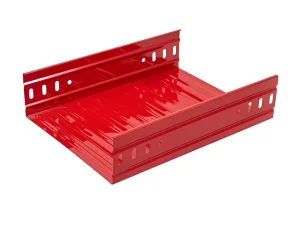
Fire Emergency Red
Fire Protection • Critical Systems
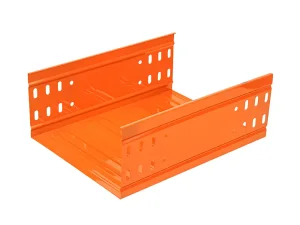
Fireproof Red Pre-Galvanized Powder Coated Cable Tray
Authoritative insights addressing critical specification queries from EPC project managers, electrical consultants, and procurement directors.
Why is a molded heavy duty cable tray superior to traditional fabricated trays in tropical smelters?
Traditional welded cable trays rely on localized spot welds or tack welds to join side rails and bottom rungs. In harsh Indonesian tropical climates—especially around nickel smelters (Morowali, Pomalaa) with airborne sulfurous and saline moisture—the Heat Affected Zones (HAZ) of welded joints suffer accelerated galvanic crevice corrosion. Our cold-molded process forms the tray from a single homogeneous continuous steel sheet with deep stamped reinforcement ribs. This eliminates weld failures, enhances structural stiffness, and provides continuous, smooth surfaces that do not snag high-voltage cable sheathing during installation.
How does hot-dip galvanizing (HDG) perform under Indonesia's coastal C5-M atmospheric rating?
Standard hot-dip galvanizing with 45μm to 65μm of zinc often degrades within 5 to 7 years in C5-M marine environments such as Natuna, Balikpapan, or North Maluku. We engineer our export heavy duty trays with automated, temperature-controlled galvanizing baths adhering to ASTM A123 / ISO 1461 specifications, achieving coating thicknesses between 85μm and 120μm. The metallurgical alloy layers (Gamma, Delta, Zeta) are naturally harder than base steel, protecting containment runs from saltwater spray, abrasion during installation, and aggressive tropical UV degradation.
What seismic bracing calculations are applied for the Indonesian "Ring of Fire" zone?
In accordance with Indonesian national building standard SNI 1726:2019 and ASCE 7-16, non-structural mechanical and electrical components must resist lateral and longitudinal earthquake forces. We supply heavy-duty 41×41 and 41×82 back-to-back slotted strut seismic bracing kits with dynamic serrated channel nuts and 45-degree brace fittings. Our engineering department provides turnkey structural calculations, ensuring the cable containment can withstand spectral response accelerations (Ss) exceeding 1.5g without structural failure or detachment from overhead concrete girders.
Can you provide custom RAL color-coding for emergency, MV, and instrumentation circuits?
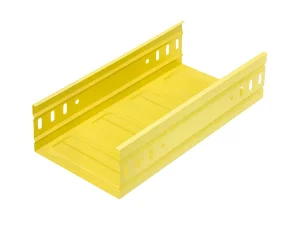
Yes. Modern industrial complexes in Indonesia enforce strict color-coded circuit compartmentalization to enhance maintenance safety and emergency identification. We operate automated electrostatic powder coating lines providing architectural TGIC polyester and intumescent epoxy finishes: RAL 3000 Red (Fire Emergency & Life Safety), RAL 1021 Yellow (Medium & High Voltage Feeder Cables), RAL 5015 Blue (Data, Telecom, & Fiber Optic Lines), and RAL 7035 Grey (General Plant Auxiliary Power). Every run undergoes cross-hatch adhesion and salt spray testing before export.
What are the sea-freight logistics and delivery timelines from factory to Indonesian ports?
Our three advanced manufacturing facilities are strategically situated within Shanghai's manufacturing corridor, minutes from Yangshan and Waigaoqiao deep-water container ports. We maintain direct shipping corridors to major Indonesian entry hubs, including Tanjung Priok (Jakarta), Tanjung Perak (Surabaya), Belawan (Medan), and direct breakbulk/container charters to industrial project jetties in Morowali and Weda Bay. Typical maritime transit times range from 10 to 16 days, supported by complete Form E ASEAN-China Free Trade Certificate of Origin documentation for preferential import duty exemptions.
What quality certifications and Mill Test Reports (MTR) accompany export shipments?
All shipments leave our factories with full EN 10204 Type 3.1 Mill Test Certificates detailing base steel chemical heat analysis, yield/tensile strength, elongation, and coating thickness measurements. Our production complies with ISO 9001:2015, ISO 14001:2015, and ISO 45001:2018 management systems, and third-party pre-shipment inspections by independent authorities (such as SGS, Bureau Veritas, or TÜV Rheinland) are routinely welcomed and supported.
Direct Factory Engineering Support
Accelerate Your Indonesian Industrial Project with Heavy Duty Containment
Connect with our lead structural engineers for span-deflection calculations, customized BOQ proposals, seismic bracing layouts, and competitive factory-direct quotations tailored to the Indonesian market.