
Featured Heavy-Duty Series for Serbian Industrial Facilities
Specially rated for severe mechanical payloads, structural seismic resistance, and harsh atmospheric environments matching ISO 9223 / EN 61537 parameters.
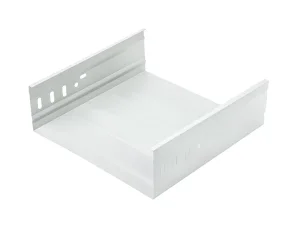
Wholesale Lightweight Tenacity Aluminium Molded Cable Tray (Belgrade Metro & Rail Spec)
- 6063-T6 High-Strength Aluminum Alloy
- Natural Passive Oxide Corrosion Layer
- Lightweight 4.5m Long-Span Capability
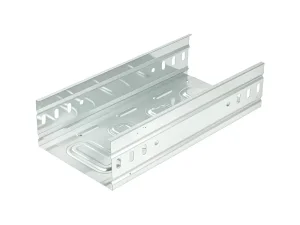
Buy Customizable Pre-Galvanized Molded Cable Tray GI or HDG (Serbian Industrial Plants)
- EN ISO 1461 Hot-Dip Thick Zinc Layer
- Integral Continuous Stiffener Ribs
- High Bending Moment Resistance
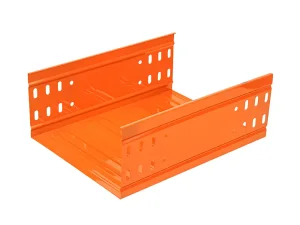
Wholesale Fireproof Pre-Galvanized Powder Coated Molded Cable Tray (DIN 4102-12 E90)
- Intumescent Thermal Barrier Coating
- 90-Minute Circuit Integrity Tested
- Safe for Public Infrastructures & Tunnels
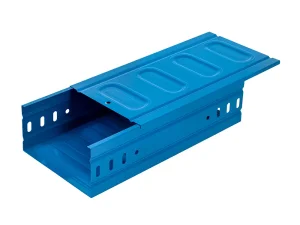
Wholesale Blue Pre-Galvanized Powder Coated Molded Cable Tray (Serbian Data Centers)
- RAL 5015 Electrostatically Applied Epoxy
- Structured Circuit Routing Identification
- Burr-Free Edge Prevents Sheath Abrasion
The Serbian Industrial Renaissance: Strategic Infrastructure & Cable Routing Dynamics
Serbia is rapidly transforming into the primary manufacturing and logistics nexus of Southeast Europe. Driven by substantial Foreign Direct Investment (FDI), comprehensive re-industrialization initiatives, and extensive modernization along the Pan-European Corridors X and XI, the Republic of Serbia has emerged as a high-density zone for complex electromechanical installations. The demand for Heavy Duty Cable Tray Series is undergoing unprecedented growth across metropolitan manufacturing zones such as Belgrade, Novi Sad, Niš, and the metallurgical hubs of Eastern Serbia.
From the intensive expansion of the Belgrade-Budapest high-speed railway corridor to major automotive manufacturing expansions in Kragujevac and tier-1 supplier facilities in Subotica and Zrenjanin, modern electrical design teams encounter rigorous project challenges. Heavy-duty cable support systems are no longer treated as peripheral commodity hardware; they are critical structural members required to maintain power continuity, resist dynamic vibrational stresses, and guarantee fire survivability in mission-critical environments.
Eastern Serbia Mining Clusters
Extensive open-pit and underground mining operations in the Bor and Majdanpek copper-gold basins require heavy-duty ladder and molded trays that withstand sulfur dioxide fumes, acidic drainage vapors, and continuous mechanical shock loads.
Automotive & EV Battery Facilities
The re-tooling of automotive clusters in Kragujevac and new gigafactories in Central Serbia necessitate structured, high-volume cable pathways capable of carrying high-amperage robotic busways and automated line power drops without deflection.
Pan-European Rail & Energy Grids
Corridor X modernization, combined with the Kostolac B3 power plant developments and renewable wind/solar installations in the Banat region, demands outdoor cable tray systems that guarantee 30+ years of maintenance-free service life under EN ISO 1461 standards.
European Harmonization & Local Construction Standards in Serbia
As Serbia harmonizes its regulatory frameworks with European Union acquis through the Institute for Standardization of Serbia (ISS), project specifications increasingly mandate strict adherence to EN 61537 (Cable Management Systems), EN 60721-3 (Classification of Environmental Conditions), and DIN 4102-12 (Functional Endurance of Electric Cable Systems under Fire Conditions, Class E30 to E90). EPC contractors executing projects within Serbian borders must satisfy dual benchmarks: global technical compliance and local Serbian technical audit requirements (Pravilnik o tehničkim normativima za električne instalacije niskog napona).
Global Enterprise Procurement: Overcoming Structural & Environmental Pitfalls
Electrical engineers and MEP procurement directors navigating Serbian megaprojects frequently face complex trade-offs between mechanical strength, atmospheric longevity, and total installed cost.
1. Dynamic Mechanical Deflection & Long-Span Stability
In massive industrial sheds and heavy processing plants, support columns are frequently spaced between 3.0 to 6.0 meters apart. Standard commercial cable trays experience catastrophic sagging under heavy bundles of multi-core armored medium-voltage (MV) copper cables. Under EN 61537 Section 10.3, the permissible deflection ratio is strictly limited to L/200 (15 mm maximum over a 3000 mm span). Our Heavy Duty Series incorporates proprietary cold-rolled longitudinal continuous corrugation and return-flange geometries, raising the section modulus (Wz) and second moment of area (Iz) by up to 34% compared to generic flat-sided trays. This structural optimization prevents deflection failure without necessitating additional structural steel bracket spans.
2. Microclimatic Atmospheric Corrosivity (ISO 9223 Classes C1 to C5-I)
Serbia’s continental climate experiences severe seasonal swings—ranging from freezing winters with heavy de-icing chemical exposure to blistering summer heatwaves exceeding 40°C. In heavy chemical and metallurgical hubs like Pančevo (petrochemicals) and Bor (smelting), atmospheric environments frequently meet ISO 9223 Category C4 (High) or C5-I (Very High Industrial). Utilizing standard pre-galvanized coils (Z100-Z140 with a thin 10-15 µm zinc layer) in these zones leads to rapid zinc depletion and catastrophic red rust within 18 to 24 months. For these environments, high-specification Hot-Dip Galvanizing (HDG) after fabrication in accordance with EN ISO 1461—delivering a minimum mean coating thickness of 85 µm to 120 µm—is mandatory to secure a design lifecycle exceeding 30 years.
3. Functional Circuit Integrity Under Thermal Stress (E30 / E60 / E90)
For high-occupancy transit projects such as the Belgrade Railway Junction, under-river tunnels, and underground parking complexes, electrical containment systems must hold their structural integrity during a severe flash fire. The German Standard DIN 4102-12 mandates that emergency systems (fire fighting smoke fans, emergency lighting, and pressurization pumps) retain operational capacity at temperatures over 1000°C for up to 90 minutes. Our fireproof molded and powder-coated cable tray series combines structural cold-rolled steel with specialized thermosetting intumescent coatings, maintaining mechanical retention and prevent cable collapse during structural evacuation windows.
China Manufacturing 4.0: Unmatched Supply Chain Resilience & Precision for Serbia
Bridging high-volume robotic manufacturing with dedicated European EPC project delivery timelines through streamlined maritime and rail supply networks.
Heavy Automated Forming Presses & Robotic Weld Stations
Continuous High-Speed Production Assembly Lines
Modern Workshop Floor Area across 3 Strategic Facilities
Total Landed Cost Efficiency vs. Western European Stockists
Automated Cold Roll-Forming & Precision In-Line Punching
Our Shanghai manufacturing facilities leverage advanced Industry 4.0 automation. Multi-station continuous roll-forming lines operate synchronously with CNC mechanical servo presses, stamping precise slotted perforation patterns with zero burr formation. Unlike manual brake-press operations that induce micro-fissures along plate bend radii, our progressive roll-forming preserves the metallurgical grain structure of high-tensile steel (Q235B and Q355B grades). The result is uncompromised structural stability across complex 3D tray geometries.
Integrated laser cutting systems allow seamless customization of non-standard fittings, including variable-angle horizontal elbows, vertical outside/inside risers, tee cross-junctions, and eccentric reducers tailored precisely to site clash-detection BIM models used by Serbian MEP contractors.
Logistical Synergy: Piraeus Maritime Hub & China-Europe Express to Belgrade
One of the primary historical risks for Serbian engineering procurement has been logistical transit friction. By locating our export processing hubs adjacent to Shanghai’s Yangshan Port, containerized consignments transit via the direct Maritime Silk Road into the Port of Piraeus (Greece)—Europe’s premier southern gateway. From Piraeus, block trains transfer consolidated freight directly into the customs terminals of Belgrade (Terminal Batajnica / Dobanovci) in under 72 hours, circumventing Mediterranean port congestions.
Additionally, for rapid site-critical deliveries, direct overland China-Europe Railway Express (Yiwu/Wuhan to Belgrade) provides reliable 16-to-18-day factory-to-site supply capabilities. All products are nested, strapped with heavy steel bands, wrapped in waterproof poly-membranes, and palletized on heat-treated ISPM-15 wooden skids to ensure zero dimensional distortion during maritime and intermodal transit.
Engineering Solutions for Serbia’s Core Industrial Verticals
Purpose-built cable management solutions calibrated for specific micro-environments across Serbia's primary economic zones.
Bor & Majdanpek Copper Operations (Zijin Mining Basin)
Underground haulage routes and flotation concentrators generate continuous vibrational shocks and humid, sulfurous atmospheric conditions. Traditional light-gauge cable containment collapses under combined slurry piping leaks and heavy armored feeder drops.
Kragujevac & Vojvodina Advanced Automotive Clusters
Fast-cycle automated welding shops and EV battery assembly facilities require rapid re-cabling capabilities, high electromagnetic compatibility (EMC), and clean, powder-coated aesthetic integration above robotic assembly cells.
Kragujevac State Data Center & Belgrade Tech Parks
Serbia's premier tier-3 and tier-4 data facilities house hyper-converged enterprise server racks requiring segregated fiber-optic runs, zero outgassing, and absolute protection against zinc whiskers (a common failure mode with electroplated trays).
Belgrade-Budapest High-Speed Railway Corridor X
Open-air rail bridges, traction substations, and trackside signaling networks face high wind buffeting, freeze-thaw cycles, and vibrations caused by 200 km/h train passages.
Comprehensive Material & Protective Finish Matrix
Cross-referencing metallurgical substrates, environmental corrosion classifications, and mechanical compliance parameters.
| Material / Finish Grade | Protective Coating Thickness | Corrosion Class (ISO 9223) | Recommended Serbian Deployment | Yield Strength (Re) / Fire Class |
|---|---|---|---|---|
| Pre-Galvanized Steel (PG / GI) Continuous Mill Hot-Dip (EN 10346) |
15 – 20 µm (Z180 – Z275) | C1 – C2 (Indoor) | Commercial office fit-outs, clean warehouses, dry substations | ≥ 235 N/mm² · Non-Combustible (A1) |
| Hot-Dip Galvanized (HDG) Batch Dip After Fabrication (EN ISO 1461) |
85 – 120 µm (Batch Alloyed) | C3 – C4 / C5-I | Mining outdoor yards (Bor), Kostolac power plants, railway substations | ≥ 235 – 355 N/mm² · DIN 4102-12 E90 |
| Powder Coated over Pre-Galv Thermosetting Epoxy-Polyester Resin |
60 – 100 µm Dry Film (DFT) | C2 – C3 (Indoor/Protected) | Automotive paint shops, Kragujevac State Data Center, clean tech | High Chemical Resistance · Color Coded |
| Aluminum Alloy (6063-T6) Extruded & Cold-Molded Profile |
Self-Healing Natural Al₂O₃ | C3 – C4 (Atmospheric) | Coastal/riverway bridges (Danube & Sava crossings), metro transit | ≥ 210 N/mm² · Lightweight / Non-Magnetic |
| Austenitic Stainless (SS304 / SS316L) Pickled & Passivated Surface |
Native Chromium Oxide Passive Film | C5-I / C5-M (Extreme) | Pančevo petrochemical refineries, acid leaching circuits, food processing | ≥ 240 N/mm² · Extreme Thermal Retention |
Extended Heavy Duty Series: Engineered for Project Demands
Specialized configurations engineered for diverse industrial requirements across the Balkan region.
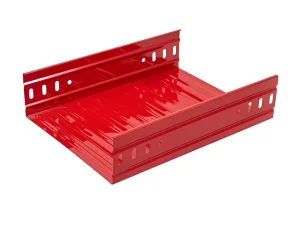
Buy Fireproof Red Pre-Galvanized Powder Coated Molded Cable Tray (Emergency HV System)
- RAL 3000 Fire System Red
- Rapid Visual Circuit Auditing
- Flame Retardant Surface Layer
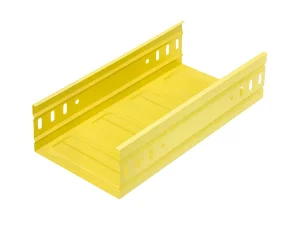
Wholesale Fireproof Yellow Pre-Galvanized Powder Coated Molded Cable Tray (Caution Line)
- High-Visibility RAL 1023 Safety Yellow
- Hazardous Gas & Chemical Zone Routing
- Dual-Layer Galvanized & Epoxy Protection
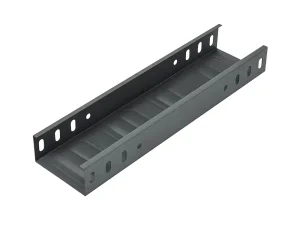
Wholesale Grey Pre-Galvanized Powder Coated Molded Cable Tray (Substation Standard)
- Architectural Finish RAL 7035 / 7038
- Excellent UV & Weather Degradation Resistance
- Optimized Hole Pattern for Cable Ties
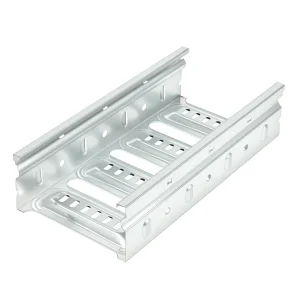
Buy Pre-Galvanized High Load Capacity Cable Tray (Serbian Heavy Metallurgy)
- Deep W-Profile Side Rail Geometry
- Rated for 280 kg/m Load Across 3m Span
- Eliminates Intermediate Hanger Overhead
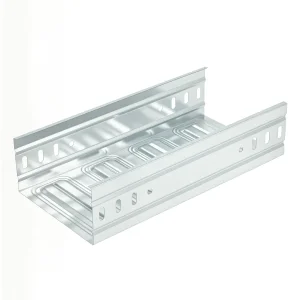
Buy Pre-Galvanized Molded Cable Tray 200mm Width (Commercial & Substation)
- Precision Cold-Stamped Stiffeners
- 200mm Width x 50/100mm Depth
- Quick-Splice Plate Alignment
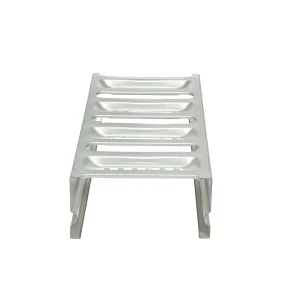
Buy Pre-Galvanized 200*100 Heavy Duty / Cost Saving Cable Tray (EPC Preferred)
- High Modulus Optimized Steel Profile
- 20% Weight Reduction Without Loss of SWL
- Ideal for Industrial Feeder Conduits
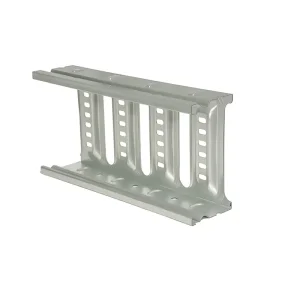
Wholesale Pre-Galvanized Customizable Ladder Heavy Duty Cable Tray (Power Plants)
- Rung Spacing 200mm / 250mm / 300mm
- Maximum Heat Dissipation for High-Voltage Lines
- Custom Thickness up to 2.5mm Gauge
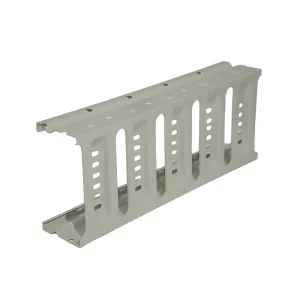
Buy Powder Coated Customizable Ladder Perforated Cable Tray (Automotive Assembly)
- Hybrid Ladder Strength + Perforated Ventilation
- Electrostatic Micro-Textured Finish
- Full Array of Matching Fittings Available
Frequently Asked Questions: Serbia Project Supply & Engineering Standards
Essential technical, customs, and standards-compliance answers for electrical contractors and procurement engineers in Serbia.
What specific certifications do your heavy-duty cable trays hold for Serbian and EU regulatory compliance?
Our heavy-duty cable tray series are fully certified in compliance with EN 61537:2007 (Cable management - Cable tray systems and cable ladder systems), bearing the CE marking required for European Union and Western Balkan regional projects. Furthermore, our products have undergone stringent fire testing under DIN 4102-12 achieving class E30, E60, and E90 functional integrity certifications. We supply comprehensive material test reports (MTR) according to EN 10204 Type 3.1, including chemical composition, yield strength, tensile limits, and salt spray test certifications (ASTM B117 / ISO 9227) with every batch shipped to Serbia.
How does the Free Trade Agreement (FTA) between Serbia and China affect import duties on cable trays?
Under the landmark Free Trade Agreement between the Government of the Republic of Serbia and the Government of the People's Republic of China (effective mid-2024), customs tariffs on numerous industrial steel and aluminum containment products (HS Code Chapters 7308 and 7610) are subject to phased reductions leading to zero tariffs. This bilateral agreement substantially reduces the landed tariff burden for Serbian EPC contractors compared to procuring from non-FTA third-party countries, delivering direct cost savings of 8% to 15% on bill-of-materials (BOM) values.
What is the standard delivery lead time from Shanghai factories to job sites in Belgrade or Niš?
Standard manufacturing cycle time for volume orders (2 to 5 full container loads) is 15 to 20 calendar days. Ocean freight from Shanghai to the Port of Piraeus (Greece) takes approximately 24 to 28 days. Express rail freight transfer from Piraeus directly to Belgrade Customs Terminal (Batajnica / Dobanovci) requires an additional 2 to 3 days. Consequently, the total door-to-project lead time is typically 42 to 50 days. For high-priority site emergencies, containerized overland transit via the direct China-Europe Railway Express reaches Serbian rail freight hubs in just 16 to 18 days.
How does your factory prevent white rust (wet storage stain) during marine transit to Europe?
White rust occurs when tightly stacked galvanized surfaces are exposed to trapped moisture in low-oxygen environments during ocean voyages. We eliminate this failure mode through a multi-stage preservation protocol: (1) All galvanized profiles undergo hexavalent-chromium-free chemical passivation or organic polymer sealing; (2) Trays are nested using hydrophobic plastic timber spacers to ensure adequate air circulation; (3) Bundles are wrapped in multi-layer VCI (Vapor Corrosion Inhibitor) stretch films; and (4) Heavy-duty desiccants are placed throughout every shipping container to regulate maritime humidity variations.
Can you manufacture custom dimensions and non-standard gauge thicknesses for specialized Serbian EPC projects?
Yes. With over 60 heavy-duty forming presses, multi-axis laser cut centers, and modular roll-forming tooling across 3 production facilities, we regularly produce custom widths (from 50mm up to 1200mm), non-standard side-rail heights (50mm, 75mm, 100mm, 150mm, and 200mm), and heavy sheet gauges (1.2mm, 1.5mm, 2.0mm, 2.5mm, and 3.0mm). Custom rungs for ladder trays can be engineered for unistrut-clamp compatibility or specialized vibration-proof cleats required by mining heavy equipment.
What calculation methodology do you offer to verify safe working loads (SWL) and deflection limits?
We provide full structural engineering calculation sheets based on finite element analysis (FEA) and physical laboratory load testing in strict compliance with EN 61537 Type I and Type II testing methods. Safe Working Load (SWL) curves detail maximum uniformly distributed loads (UDL in kg/m or kN/m) across varying support spans (1.5m, 2.0m, 3.0m, 4.0m, and 6.0m), guaranteeing that elastic mid-span deflection never exceeds the European standard L/200 threshold under full design load plus safety margins.
Accelerate Your Serbian Industrial Project Today
Partner directly with China’s premier cable tray engineering manufacturer. Submit your Bill of Quantities (BOQ), CAD schematics, or tender specifications for a complete technical quotation and compliance dossier within 24 hours.
Send Inquiry Now