
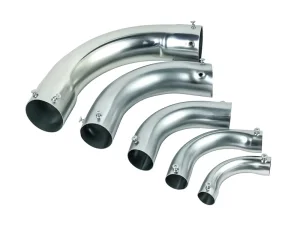
Priority Doha Inventory
Essential Conduit Systems for Doha Contracting & Commercial MEP
Direct factory-manufactured electrical metallic tubing, rigid conduit systems, and cast malleable fittings tailored to Kahramaa specifications and high-salinity Arabian Gulf operations.
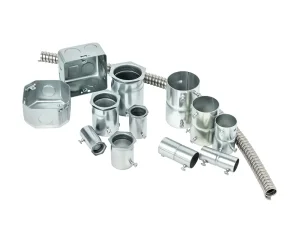
Doha Spec: Malleable Iron Junction Boxes & Box Connectors
View Box Accessories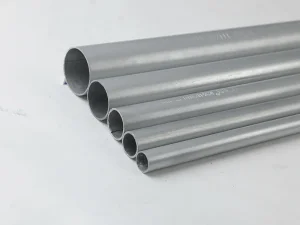
Metric Standard: DN20 & DN25 Rigid GI Steel Conduits
View DN20/DN25 Data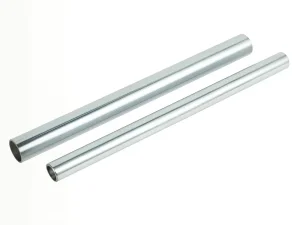
Class 4 Corrosion Protected Pre-Galvanized Conduits
Check GI Pipe SpecsMarket Intelligence White Paper
The Doha Infrastructure Matrix: Demands for High-Spec Conduit Systems
As Qatar accelerates its post-World Cup economic diversification under the Qatar National Vision 2030 (QNV 2030), industrial, utility, and real estate megaprojects are demanding unprecedented electrical raceway durability and metallurgical integrity.
Smart Urban Centers: Lusail & Msheireb
The construction of sustainable smart cities in Lusail, West Bay, and Msheireb Downtown Doha dictates zero-downtime electrical safety. Electrical raceways inside high-rise commercial structures require BS EN 61386 Class 4 rigid conduit and Low-Smoke Zero-Halogen (LSZH) trunking capable of suppressing toxic fumes during thermal incidents while shielding power grids against electromagnetic interference (EMI).
Ashghal Expressway & Drainage Tunnels
The Public Works Authority (Ashghal) mandates stringent mechanical crush resistance for subterranean service ducts, highway intelligent transportation systems (ITS), and pumping stations. Conduits buried in saline backfill or exposed along flyovers must withstand mechanical shock loading up to 4000N and resist chloride-induced pitting corrosion over a 30-year lifecycle.
Kahramaa Substation Expansion
Qatar General Electricity and Water Corporation (Kahramaa) enforces rigorous standards for primary and secondary 11kV/33kV substations. Cable containment must bridge heavy power feeds using deep hot-dip galvanized (HDG) cable ladders and heavy-gauge galvanized steel conduit capable of dissipating inductive thermal build-up generated under peak ambient loads exceeding 50°C.
Localized Engineering Applications
Engineered for Extremes: Solving Doha’s Geotechnical & Climatic Challenges
The Arabian Gulf exhibits one of the world's most severe atmospheric corrosion categories (ISO 9223 C5-M Marine/Industrial). Standard conduits fail prematurely when exposed to extreme humidity, blowing sabkha dust, and cyclic thermal shocks.
Coastal Saline Aerosols & Marine Atmosphere
Projects positioned along Doha Bay, Old Doha Port, and the coastal zones of Ras Abu Fontas experience non-stop sodium chloride deposition combined with relative humidity hovering between 80% to 95% during summer. Ordinary electro-galvanized pipes develop white rust in months and rust-through within two years.
The Qiongkai Solution: We provide BS EN ISO 1461 compliant Hot-Dip Galvanized Conduits with minimum zinc coatings of 550 g/m² (75µm thickness) and high-tier Stainless Steel 316L conduits. Our passivated surfaces prevent micro-fissuring and provide an impenetrable barrier against chloride-ion penetration.
Ras Laffan & Mesaieed Industrial Harsh Environments
Qatar’s hydrocarbon strongholds—including the North Field Expansion at Ras Laffan and petrochem complexes at Mesaieed—expose containment lines to sulfur dioxide, sour gas traces (H₂S), abrasive dust abrasion, and hazardous Class I Division 1 zone designations.
The Qiongkai Solution: Our heavy-duty rigid steel conduit (RMC) with precision NPT/Metric threads meets ANSI C80.1 and BS 4568 Class 4. Coupled with cast malleable flameproof junction boxes and sealing fittings, our assemblies prevent the transmission of explosive gases through the electrical conduit run.
Hyperscale Tier III/IV Data Centers & Cloud Regions
With global tech giants establishing regional hyperscale data hubs in Doha and the Qatar Science & Technology Park (QSTP), high-density fiber and power distribution require containment solutions that eliminate zinc whiskers and offer rapid installation.
The Qiongkai Solution: We supply electro-galvanized and stainless steel wire mesh cable trays paired with smooth-bore EMT conduits. These prevent mechanical abrasion to fiber sheaths, optimize airflow around high-heat server clusters, and guarantee high EMI attenuation.
Engineering Matrix
Electrical Metallic Conduit Specification & Selection Matrix for Qatar
Consulting engineers, MEP quantity surveyors, and Ashghal/Kahramaa inspectors can verify selection standards across varied environmental exposures across Doha projects.
| Conduit Type | Standard Reference | Corrosion Protection / Coating | Tensile / Crush Strength | Optimal Doha Application Scenarios |
|---|---|---|---|---|
| Rigid Steel Conduit (BS Class 4) | BS EN 61386-21 / BS 4568 | Hot-Dip Galvanized (≥550 g/m²) Inside & Outside | Very Heavy (>4000 N Crush) | Ashghal expressways, external substations, Doha port, marine docks. |
| Pre-Galvanized Steel Conduit (Class 3) | BS 4568: Part 1 / QCS Part 21 | Pre-Galvanized Sheet (Z275 Coating) | Medium to Heavy (>1250 N Crush) | Commercial office fit-outs, suspended drywall ceilings, indoor dry ducts. |
| Electrical Metallic Tubing (EMT) | ANSI C80.3 / UL 797 | Zinc Electroplate + Clear Organic Polymer | Light to Medium (>750 N) | Hyperscale data centers, internal false floors, branch lighting wiring. |
| Intermediate Metal Conduit (IMC) | ANSI C80.6 / UL 1242 | Hot-Dip Galvanized / Corrosion Resistant Lacquer | Heavy Duty (>2000 N) | Commercial parking podiums, utility risers, Msheireb district corridors. |
| Rigid Stainless Steel Conduit | ASTM A312 / AISI 316L | Self-Passivating Austenitic Alloy | Extreme Tensile (>5500 N) | Ras Laffan LNG trains, coastal desalination plants, offshore platforms. |
Need a Complete Project BOQ Review for Doha?
Our engineering division cross-checks your conduit schedules, load spans, and finish requirements against the latest QCS electrical specifications with complete mill test certification.
Global Manufacturing Infrastructure
Chinese Manufacturing Resilience: Shanghai Qiongkai Supply Advantage
For Tier-1 contractors operating in Qatar, supply chain volatility, long factory lead times, and sub-standard metallurgy are fatal to milestone delivery. Shanghai Qiongkai provides direct mill integration from Shanghai port to Hamad Port.
Triple Production Facilities & 12 Automated Lines
Operating across 30,000 square meters of specialized workshop space with over 60 heavy-duty cold roll-forming units, tube-welding mills, and continuous hot-dip galvanizing lines. We control every stage of production from raw slitting coil to finished bundling without intermediate subcontractors.
Direct Shanghai Port Deep-Sea Logistic Corridor
Located in the Songjiang Port Science & Technology district of Shanghai, our facilities offer frictionless transit to Yangshan and Waigaoqiao maritime container terminals. Direct container vessel lines connect Shanghai directly to Hamad Port (Doha) in 18 to 22 transit days with guaranteed container packing optimization.
Rigid Quality Inspection & Mill Certification
Every shipment is backed by EN 10204 Type 3.1 Mill Test Certificates. We perform automated eddy current flaw detection, chemical composition spectrometer analysis, zinc adhesion mandrel testing, and salt-spray chamber endurance testing exceeding 1000 hours without red rust.
Contractor & Engineering Q&A
Frequently Asked Questions: Conduit Sourcing & Compliance for Doha
Critical technical clarifications covering Qatar Construction Specifications, Kahramaa approvals, thread compatibility, and container packaging.
What are the mandatory conduit requirements under Qatar Construction Specifications (QCS)?
Under QCS 2014 / 2024 (Section 21: Electrical Services), all surface-mounted or embedded metal conduits in wet, external, or saline environments must be heavy-gauge steel, hot-dip galvanized inside and outside to BS 4568 Class 4 or BS EN 61386 Class 4. Pre-galvanized (Class 3) tubing is restricted strictly to dry, air-conditioned interior ceiling voids and partition walls. The zinc coating on Class 4 conduits must withstand copper sulfate immersion tests (Preece Test) to verify coating thickness uniformity without bare steel exposure.
How does Qiongkai prevent thermal expansion and internal condensation in Doha's 50°C climate?
Doha experiences substantial diurnal temperature fluctuations, shifting from 50°C daytime ambient to high relative humidity nights. This causes conduit "breathing," pulling moisture into closed raceways which condenses into pooling water. Qiongkai supplies precision conduit expansion joints rated for ±50mm movement per 30-meter run, paired with integrated breather and drain glands positioned at lowest elevation points, protecting power cables from prolonged immersion.
What threading standards are provided for Doha industrial and substations projects?
We supply conduits with standard Metric ISO threads (M20, M25, M32 to BS 3643) for British/European standard fittings common in Ashghal/Kahramaa projects, as well as ANSI/ASME B1.20.1 NPT tapered threads for industrial, oil & gas, and American-spec facilities (Ras Laffan, Mesaieed). Both ends are chamfered, deburred to prevent wire snagging, hot-dip galvanized over the threads, and capped with color-coded protective plastic caps.
Can Qiongkai assist with material submittal packages for Qatar consultant approval?
Yes. We provide complete MEP material submittal packages consisting of: Factory ISO 9001/14001/45001 certificates, Compliance statement against QCS Section 21, Third-party test reports (SGS/TÜV for tensile, galvanizing weight, and bending tests), 3.1 Mill Test Certificates, and dimensioned CAD shop drawings for all conduits, fittings, and junction boxes.
What is the lead time and container packing method for shipment to Hamad Port?
Standard production lead time for full container loads (FCL) of conduits is 12 to 18 days. Ocean transit from Shanghai to Hamad Port takes approximately 18 to 22 days. Conduits are bundled in hexagonal packs secured with heavy-gauge steel straps and wrapped in waterproof woven plastic sheeting to prevent saltwater aerosol exposure during maritime transport. Nested packing (e.g., DN20 placed inside DN32) is available on request to significantly reduce freight costs per linear meter.
Complete Containment Systems
Heavy-Duty Cable Trays, Wire Baskets & Containment for Qatar Mega-Projects
Integrate your conduit runs with factory-manufactured reinforced cable trunking, hot-dip galvanized wire mesh, industrial cable ladders, and FRP chemical containment systems.
Doha High-Rise DN20 & DN25 Steel Conduits
View Pipe Details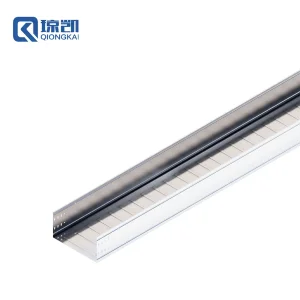
Reinforced Cable Trunking Trough 400×200 Channel
View Trunking 400×200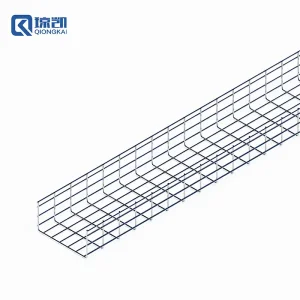
Data Center GI Wire Mesh Cable Tray 300×150
View Wire Mesh 300×150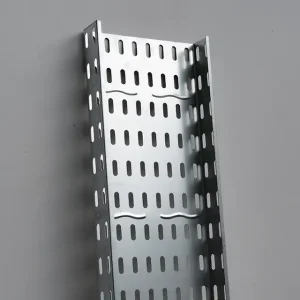
High-Span Reinforced Cable Tray 200×50
View Tray 200×50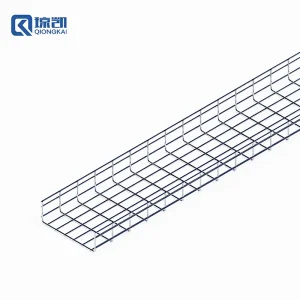
Pre-Galvanized Basket Tray 300×100 for Doha IT
View Basket 300×100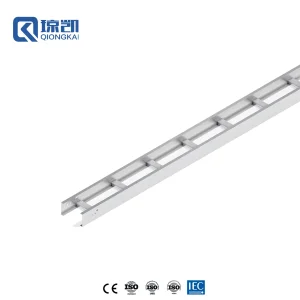
Substation GI Cable Ladder 200×100 System
View Ladder 200×100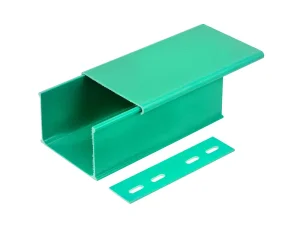
Corrosion-Proof FRP Fiberglass Cable Tray 100mm
View FRP 100mm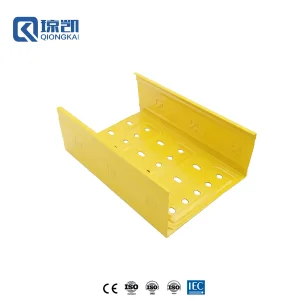
Heavy-Duty RAL1080 Yellow Cable Tray 200×100
View Molded 200×100Equip Your Doha Project with Certified Factory Support
Direct mill pricing, certified galvanizing warranties, and dedicated MEP export logistics. Contact our engineering team for immediate technical consultation.
Send Inquiry Now