
Featured 200×50 & Related Cable Tray Systems
Explore primary specifications from our 12 automated roll-forming lines. Every unit is engineered to tight dimensional tolerances, certified for IEC 61537 and NEMA VE-1 load compliance.
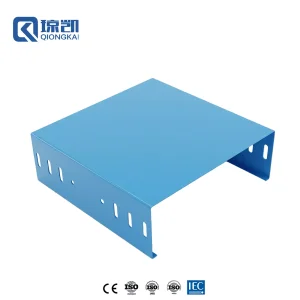
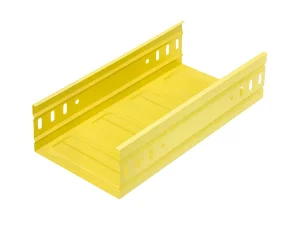
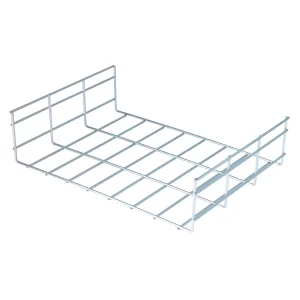
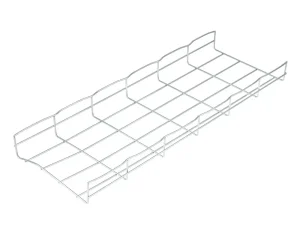
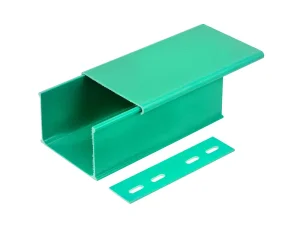
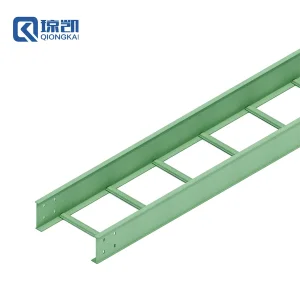
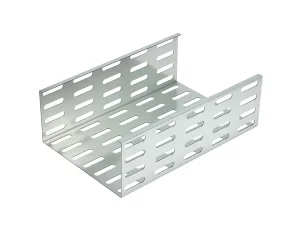
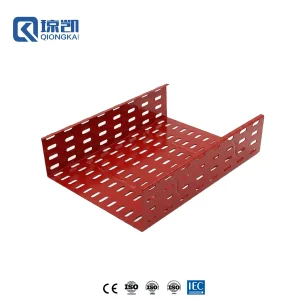
The Strategic Engineering Role of the 200×50 mm Cable Tray
In electrical raceway and cable management architecture, the 200x50 mm profile (nominal width 200 mm, flange height 50 mm) serves as the international backbone for secondary distribution networks, control automation loops, low-voltage power distribution, and structured data center cabling. Providing a cross-sectional containment area of approximately 10,000 mm², this dimensional standard optimizes the crucial equilibrium between volumetric cable load capacity and ceiling plenum spatial clearance.
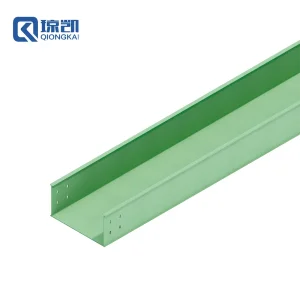
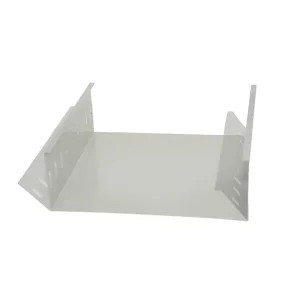
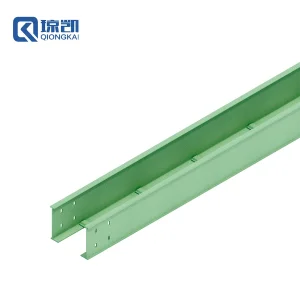
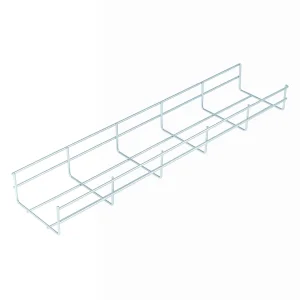
Shanghai Qiongkai Industry Co., Ltd. (operating from Songjiang, Shanghai near Yangshan and Waigaoqiao deepwater ports) manufactures this format across multiple structural profiles: continuous perforated sheet steel, ventilated trough channels, high-load ladder profiles, and welded wire mesh baskets. Backed by twenty years of continuous metallurgical refinement, our manufacturing processes guarantee cold-formed dimensional precision, zero sharp burrs to safeguard cable jackets, and verified load ratings under both IEC 61537 and NEMA VE-1 certifications.
Key Dimensional Parameters (200×50 mm)
- Usable Inside Width: 200 mm (±0.5 mm tolerance)
- Side Flange (Height): 50 mm (Straight or Return Flange)
- Standard Sheet Thickness: 1.0 mm, 1.2 mm, 1.5 mm, 2.0 mm (Q235B / SS)
- Gross Internal Cross-Section: 10,000 mm² (100 cm²)
- Permissible NEC 392 Fill (40-50%): 4,000 mm² – 5,000 mm²
- Standard Modular Lengths: 2,000 mm / 3,000 mm / 6,000 mm
Worldwide Commercial & Industrial Application Landscape
The global market for electrical cable containment has shifted rapidly away from rigid conduit toward open-architecture, ventilated cable tray channels. The 200x50 profile represents an estimated 24% of all secondary raceway procurement globally.
North America (NEMA & NEC Domain)
Widely deployed in tier-3 and tier-4 data center white space, commercial MEP risers, and utility rooms. Contractors require compliance with NEMA VE-1 for metal cable tray systems and NFPA 70 (NEC Article 392) for fill ratios. Wire mesh and pre-galvanized perforated 200x50 channels dominate IT infrastructure for routing Cat6A, optical fiber bundles, and low-voltage PoE devices.
European Union & UK (IEC / EN 61537)
European engineering specifications enforce strict conformity with EN 61537 and localized fire performance testing (such as DIN 4102-12 functional integrity E30 to E90). The 200x50 mm return-flange profile is the standard specification across automotive assembly plants in Germany, battery manufacturing hubs in Scandinavia, and commercial infrastructure across the UK.
Middle East & Marine (Harsh Environments)
In GCC countries (UAE, Qatar, Saudi Arabia), ambient coastal humidity combined with saline atmospheres and hydrogen sulfide emissions requires ultra-corrosion-resistant metallurgy. Our hot-dip galvanized (HDG, minimum 85 microns zinc) and FRP pultruded 200x50 trays are engineered for desalination plants, LNG export terminals, and offshore drilling platforms.
Structural Load Dynamics & Finish Matrix
Selecting the exact steel gauge and surface passivation treatment prevents premature structural deflection and galvanic degradation over a 30+ year facility service life.
| Material / Treatment Specification | Applicable Standards | Coating Thickness / Metallurgy | Atmospheric Corrosivity Category (ISO 12944) | Ideal Application Scenario |
|---|---|---|---|---|
| Pre-Galvanized (PG / GI) Carbon Steel | EN 10346 / ASTM A653 CS Type B | 15 – 20 μm (Z180 – Z275) | C1 – C2 (Low Dry Indoor) | Commercial office plenums, false ceilings, dry IT server rooms |
| Hot-Dip Galvanized After Fabrication (HDG) | BS EN ISO 1461 / ASTM A123 | 65 – 90 μm (≥500 – 650 g/m²) | C3 – C4 (Industrial & Outdoor) | Petrochemical facilities, outdoor solar plants, coastal sub-stations |
| Austenitic Stainless Steel (SS304 / SS316L) | AISI / ASTM A240 / EN 10088 | Full Alloy Passivated Pickling | C5-M / C5-I / CX (Extreme Marine) | Offshore oil rigs, chemical processing, pharma cleanrooms, food manufacturing |
| Fiberglass Reinforced Polymer (FRP / GRP) | ASTM D3917 / UL 94 V-0 | Isophthalic / Vinyl Ester Resin Matrix | Severe Acidic / Chemical Immersion | Wastewater treatment plants, pickling baths, coastal battery plants |
| Thermoset Electrostatic Powder Coating | Qualicoat / ISO 12944-6 | 60 – 100 μm Polyester / Epoxy | C2 – C3 (Architectural / Functional) | Circuits color identification (Red: Fire, Blue: Data, Yellow: Security) |
Beam Deflection Verification (L/200 Criteria)
According to IEC 61537 Type II structural testing, continuous 200x50 mm cable trays with a standard 1.5 mm sheet thickness undergoing uniformly distributed loads (UDL) up to 120 kg/m over a 2.0 m support span exhibit a maximum central deflection below L/200 (10 mm). Incorporating Qiongkai's engineered continuous 7 mm return flange enhances moment of inertia ($I_x$) by 34%, eliminating longitudinal sag under full cable occupancy.
Thermal Dissipation & Ampacity Derating
Power conductor ampacity diminishes under constrained airflow due to Joule heating ($I^2R$). Perforated 200x50 mm trays provide a minimum open bottom ventilation ratio of 32% ± 2%. This configuration matches IEEE 835 thermal modeling standards, mitigating conductor temperature rise and reducing forced derating factors compared to completely solid-bottom raceways.
Comprehensive Macro Industry Solutions
Proven integration frameworks where 200x50 cable trays are specified alongside our 41-series strut channels, seismic bracing brackets, and custom fittings.
Hyperscale Data Centers
High-density server halls demand strict separation of power and high-speed optical fiber. Qiongkai's 200x50 mm electro-galvanized wire mesh baskets and RAL5015 powder-coated trough channels mount overhead via trapezoidal 41x41 mm strut trapeze hangers. Toolless splice plates expedite installation by 45%, with zero wire-edge abrasions that could breach delicate network cabling.
LNG & Petrochemical Complexes
Operating in environments saturated with H₂S and saline ocean spray, our custom hot-dip galvanized and pultruded FRP 200x50 ladder and trunking systems deliver unmatched structural reliability. Engineered to support heavy instrumentation cables, with proven field deployments at major offshore LNG facilities in Qatar and chemical processing sites across Southeast Asia.
Gigafactories & Automated Plants
Modern EV battery plants and cleanrooms require zero zinc-whiskering and dust accumulation. Qiongkai supplies 304/316L stainless steel and cleanroom-grade powder-coated 200x50 perforated channels featuring snap-on sloping rain/dust covers and custom firestop penetration sleeves for compartmental isolation.
Next-Generation Engineering: 2026–2030 Roadmap
How digitalization, metallurgical chemistry, and prefabricated construction are transforming industrial cable raceways.
BIM Level 3 & Digital Twin Native
All Qiongkai 200x50 cable trays, reducers, tees, and 90° flat elbows are cataloged in parametric 3D Autodesk Revit & IFC formats. MEP engineering teams can perform automated collision detection and static weight calculations directly in digital twin environments, eliminating on-site cutting and welding waste.
Zinc-Aluminum-Magnesium (ZAM) Alloys
Phasing into next-generation Zn-Al-Mg continuous hot-dip alloy coatings. ZAM delivers up to 4× the atmospheric corrosion resistance of traditional pre-galvanized sheet steel, featuring self-healing edge passivation where zinc hydroxide precipitates seal raw cut edges on-site without manual spray repair.
Smart Structural Health Telemetry
R&D pilot projects integrating fiber Bragg grating (FBG) optical strain and distributed thermal sensor conduits along the return flanges of high-voltage 200x50 channels, notifying maintenance controllers of overheating circuits or excessive mechanical sagging in real-time.
Cable Sizing & Fill Ratio Verification Methodology
Under NEC Article 392.22 and IEC 61537 Section 9, cable trays must not be overloaded. Excessive physical stacking creates trapped heat pockets, degrades PVC/XLPE insulation, and introduces inductive interference.
A_tray = Width (200 mm) × Height (50 mm) = 10,000 mm²
Applying the mandated 40% fill limit for power conductors > 1 kV or 50% for control/multiconductor cables:
Max Permissible Cable Area: 4,000 mm² to 5,000 mm²
When calculating total conductor footprint, aggregate each cable's outside diameter squared: $\sum (D_{o,i})^2$. For Cat6A data networks ($D_o \approx 7.2\text{ mm}$, cross-section $\approx 41\text{ mm}^2$), a single 200x50 mm tray accommodates up to 95 to 110 cables while maintaining natural air convection and complying with maximum bending radii at horizontal transitions.
Support Span Load Schedule (200×50 mm)
Load capacity based on cold-formed continuous beam theory using Q235B steel (Yield Strength $\ge 235\text{ MPa}$), safety factor 1.5.
*Values assume trapeze hanging using Qiongkai 41x41 mm strut channels and M10 threaded rods with standard splice plates bolted at 1/4 span locations.
Frequently Asked Questions by Project Engineers
Answers to key structural, metallurgical, and commercial questions raised by international EPC contractors and MEP consultants.
Q What differentiates perforated cable tray 200x50 from solid trunking?
Perforated trays feature precision CNC-punched ventilation patterns in the base sheet. This allows continuous natural convection airflow to dissipate heat generated by power cables, preventing ampacity derating. Solid trunking provides 100% enclosed EMI/RFI shielding and physical protection against water spray, sparks, or chemical spills, making it the preferred choice for petrochemical wash-down bays and airport security systems.
Q What sheet thickness should I specify for a 200x50 cable tray?
For standard commercial false ceilings with light data or control wiring, 1.0 mm to 1.2 mm cold-rolled steel provides ample strength with minimal dead load. For industrial facilities, outdoor solar plants, or heavy power feeds spanning 2.0 m to 2.5 m between supports, we strongly recommend 1.5 mm or 2.0 mm heavy-duty gauge steel to keep deflection well within the L/200 limit.
Q Which finish is appropriate for coastal or offshore installations?
For severe marine environments (ISO 12944 Category C5-M or CX), standard pre-galvanized steel is inadequate. We recommend either Hot-Dip Galvanizing after fabrication (HDG to BS EN ISO 1461 with minimum 85 microns coating thickness), Grade 316L Stainless Steel with acid passivation, or Fiberglass Reinforced Polymer (FRP/GRP) which is chemically inert to chloride and salt-fog corrosion.
Q Can Shanghai Qiongkai supply custom non-standard fittings and angles?
Yes. Alongside standard factory stock lengths (2.0 m, 3.0 m, and 6.0 m), our 60+ heavy-duty press brakes and automated cutting centers fabricate matching 200x50 horizontal 90° elbows, internal/external vertical risers, horizontal tees, crosses, and left/right eccentric reducers tailored to your project's exact routing drawings.
Q How does your factory handle quality control and export packaging?
Every production batch undergoes strict dimensional verification, zinc coating thickness testing (magnetic induction / eddy current gauges), and mechanical load deflection audits. Trays are packed on export-grade solid steel-banded wooden pallets with waterproof corner protectors and stretch film wrapping to ensure zero transit damage during sea freight from Yangshan Port.
Extended Cable Containment & Modular Channels
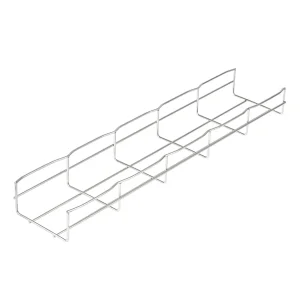
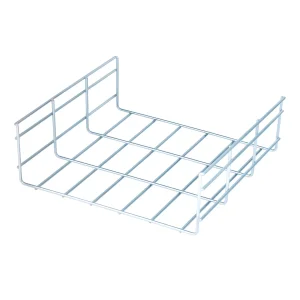
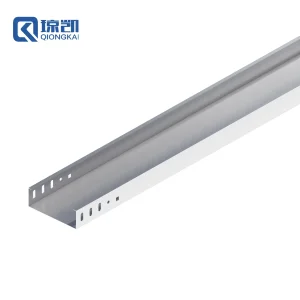
Explore the second series of our high-performance raceways, wire basket grids, UPVC conduits, and stainless steel trays manufactured to global standards.
Precision Manufacturing at Shanghai Qiongkai
Headquartered in Songjiang Port Science and Technology City, Shanghai, Qiongkai operates three specialized manufacturing facilities spanning over 30,000 square meters. Our automated manufacturing floor integrates high-speed CNC uncoiling, multi-station hydraulic punching, continuous roll-forming lines, and robotic resistance welding centers.
This vertical integration allows complete quality control over incoming raw steel coils (certified Q235B / Q355B / SS316L) straight through to final surface passivation and export crating. With an annual fabrication capacity exceeding $50M USD, we maintain steady supply chains for major global infrastructure initiatives.
Verified Global Project Track Record
-
Shanghai Hongqiao International Airport:
Corrosion-resistant CT series trunking and seismic bracing.
-
Offshore LNG Processing (Qatar):
Heavy-duty 316L and FRP profiled support systems in harsh marine zones.
-
Industrial Outdoor Complex (Thailand):
High-load FRP-lined steel hybrid cable trays under extreme tropical heat.
-
Infrastructure Shipments to Italy & EU:
Continuous export batches of Hot-Dip Galvanized trays complying with EN 61537.
Request Factory-Direct Pricing & Engineering Submittals
Planning an upcoming electrical raceway, data center expansion, or industrial MEP route? Contact our technical sales engineering team in Shanghai for comprehensive BOQ take-offs, load calculations, BIM families, and factory direct quotations.