
Custom Spec
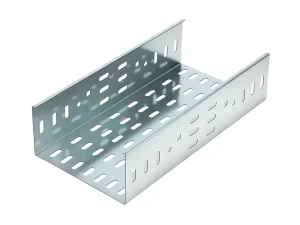
Explore our precision-formed pre-galvanized, powder-coated, perforated, and ladder containment systems. All systems are engineered with full compatibility for heavy-gauge power feeds, industrial trunking, and seismic support attachments.
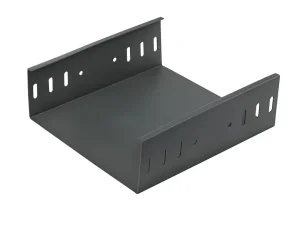
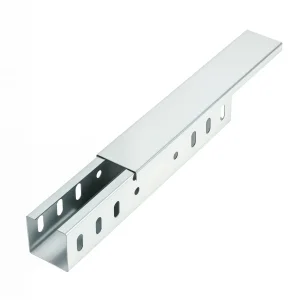
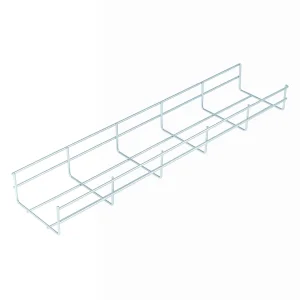
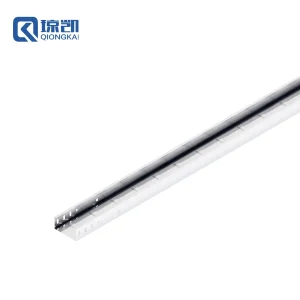
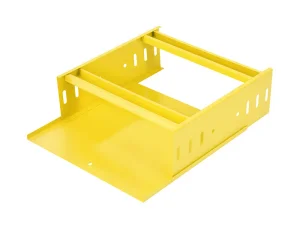
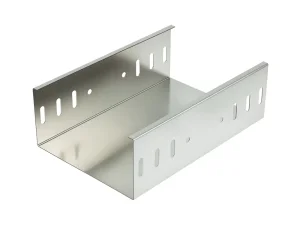
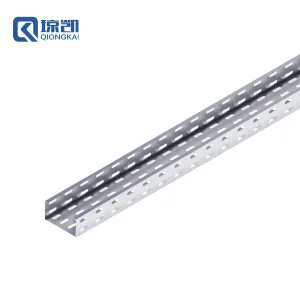
In modern industrial facilities and commercial infrastructure, the Cable Tray 600 X 100 (600 mm inside usable width by 100 mm usable side rail depth) represents the optimal compromise between continuous linear load capacity, deflection control, and cable ampacity derating. Unlike narrower trays that force high cable stacking, a 600 mm width allows heavy low-voltage and medium-voltage power runs to be installed in a single-layer or spaced-trefoil arrangement, maximizing natural convective heat rejection.
The 100 mm side rail height serves as a high section modulus beam ($Z_x$), conferring exponential structural stiffness against vertical gravitational deflection. According to standard Euler-Bernoulli beam equations under uniformly distributed loads ($w$), deflection ($\delta$) scales inversely with the area moment of inertia ($I_x$):
$$\delta_{\max} = \frac{5 \, w \, L^4}{384 \, E \, I_x}$$
By engineering cold-rolled continuous returns on both the top and bottom flanges of the 100 mm side rails, Shanghai Qiongkai delivers trays with significantly higher moment of inertia compared to standard slotted channels, ensuring that mid-span deflection stays strictly below the L/200 deflection limit under maximum cable loading up to a 3.0-meter support distance.
Across the international electrical engineering landscape, the 600×100 format has emerged as the primary highway for power distribution cables. From grid-tied renewable substations to hyperscale AI server farms, here is how our engineered systems deploy across high-stakes industrial sectors.
Modern data halls demand high cable density for central busway taps, UPS battery strings, and primary 415V/480V distributions. High-capacity 600×100 perforated and basket trays prevent thermal air damming above white space racks.
Utility-scale solar farms and onshore wind collection hubs require heavy, UV-resistant, and corrosion-proof cable containment to channel DC strings into central combiner boxes and inverter skids over wide open terrain.
Harsh offshore marine atmospheres combine constant saltwater mist, H₂S gas fumes, and wind vibration. Our 600×100 marine ladder trays in SS316L and pultruded FRP withstand relentless C5-M marine exposure.
Selecting the correct substrate and corrosion barrier is the single most critical factor determining the life-cycle cost (LCC) of cable routing systems. Review our standard metallurgical specifications based on ISO 12944 atmospheric corrosivity categories.
| Material / Treatment | Reference Standards | Average Coating Thickness | Corrosivity Category | Expected Life in Field | Ideal Industrial Setting |
|---|---|---|---|---|---|
| Pre-Galvanized (PG / Mill Galv) | EN 10346 / ASTM A653 |
15 – 20 µm (Z275 coating) | C1 – C2 (Indoor dry) | 25+ Years | Commercial office basements, clean electrical rooms |
| Hot-Dip Galvanized (HDG) | ISO 1461 / ASTM A123 |
65 – 85 µm (up to 100 µm) | C3 – C4 (Industrial outdoor) | 30 – 50 Years | Substations, open petrochemical pipe racks, solar parks |
| Stainless Steel 304 (1.4301) | ASTM A240 / EN 10088 |
Self-passivating oxide film | C3 – C4 (Washdown / Food) | 50+ Years | Breweries, dairies, pharmaceutical clean manufacturing |
| Stainless Steel 316L (1.4404) | ASTM A240 / EN 10088 |
Mo-enhanced passive film (2-3% Mo) | C5-I / C5-M / CX (Offshore) | 60+ Years | Desalination plants, marine platforms, coastal chemical |
| Fiberglass Reinforced Polymer (FRP) | ASTM D3917 / UL 94 V-0 |
Pultruded Isophthalic/Vinylester | CX / Acidic chemical zones | 50+ Years | Battery manufacturing, sulfuric acid plants, coastal piers |
| Thermo-Setting Powder Coating | Qualicoat / ISO 2178 |
60 – 100 µm over PG/Carbon Steel | C2 – C3 (Architectural/Indoor) | 20+ Years | Data center server halls, architectural exposed ceiling |
Procuring heavy-duty cable trays for international infrastructure requires more than basic price lists. Our engineering department supplies complete statutory compliance documentation, structural finite element calculations, and project-specific localized design proposals.
Every cable tray profile manufactured by Shanghai Qiongkai undergoes rigorous mechanical testing per IEC 61537 (Cable management — Cable tray systems and cable ladder systems) and American NEMA VE 1 / VE 2 load classification rules.
To eliminate site clash issues in crowded MEP risers and ceiling corridors, we provide parametric Revit BIM families at Level of Development (LOD) 400, including accurate dimensions, bend radii, splice joints, and channel hangers.
For projects in seismic zones or coastal industrial corridors, we engineer complete seismic bracing assemblies compliant with SMACNA and ASCE 7, utilizing our heavy-duty 41-series strut channel and rigid gusset brackets.
Founded in 2005 in the Songjiang Port Science and Technology City of Shanghai, Qiongkai operates as an original equipment manufacturer (OEM) and direct factory exporter for premier EPC contractors worldwide. With seamless logistics connectivity through Shanghai Yangshan and Waigaoqiao deepwater ports, we ship complete, pre-bundled containerized containment systems to job sites on six continents without intermediary trading markups.
Review real-world project deployments where Qiongkai cable trays, trunking, and support framing satisfied the most stringent consultant inspections and climatic challenges.
Engineered and supplied large-scale corrosion-resistant CT series cable trunking systems to route primary radar, terminal lighting, and ground substation cables under high air-movement and vibration parameters.
Delivered custom high-load profiled section support systems and FRP cable trays engineered to withstand extreme Persian Gulf ambient heat (>50°C), hyper-saline humidity, and aggressive sulfur gas exposure.
Designed a cost-optimized, heavy-duty pre-galvanized and powder-coated cable tray system for a sprawling agricultural processing facility, maximizing load-bearing capacity while strictly complying with budget caps.
Cable containment is evolving beyond passive structural steel. Driven by modular construction schedules, decarbonization requirements, and smart building sensors, Shanghai Qiongkai is actively innovating across four critical technical axes.
Onsite labor accounts for over 45% of cable installation costs. Our upcoming Gen-3 600×100 modular tray systems incorporate integral spring-lock and push-fit locking joints, reducing the required bolt count per splice by 60% while preserving strict grounding continuity and full shear-moment transfer across tray joints.
International infrastructure projects increasingly stipulate embodied carbon thresholds. Qiongkai is partnering with leading metallurgical mills to supply EAF (Electric Arc Furnace) recycled low-carbon steel, accompanied by third-party verified Environmental Product Declarations (EPD) to support LEED and BREEAM certifications.
Direct, unedited technical guidance for lead electrical engineers, project consultants, and global procurement departments evaluating our Cable Tray 600 X 100 systems.
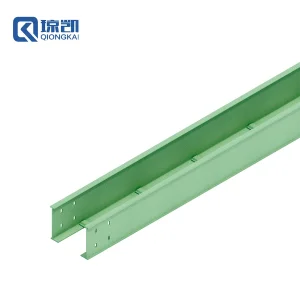
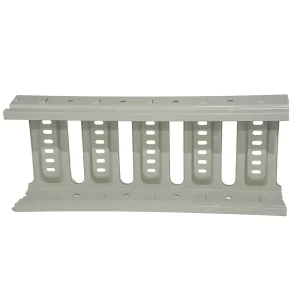
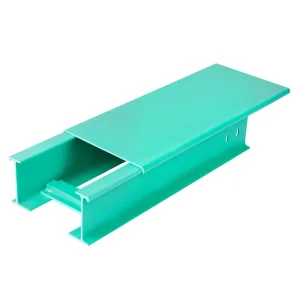
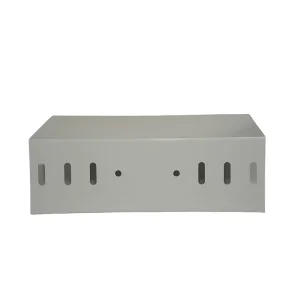
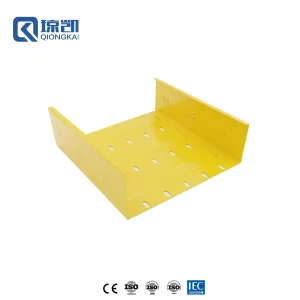
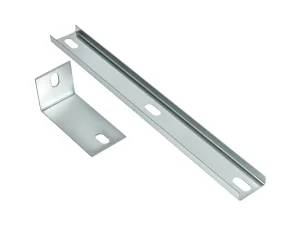
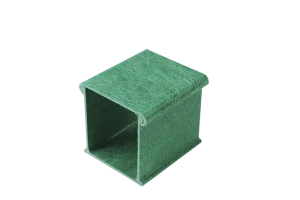
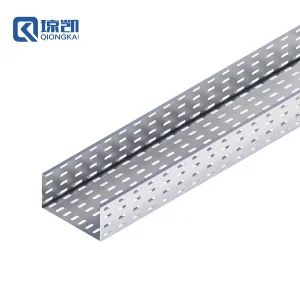
Explore specialized non-metallic fiberglass trays, yellow safety ladder racks, custom slotted support brackets, and powder-coated steel trunking designed to interface seamlessly with our 600×100 backbone systems.
Send your project Bill of Quantities (BOQ), single-line diagrams, or route drawings to our application engineers. Receive an optimized quotation, mechanical load calculations, and BIM CAD submittal packages within 24 hours.