
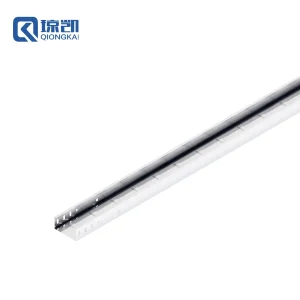
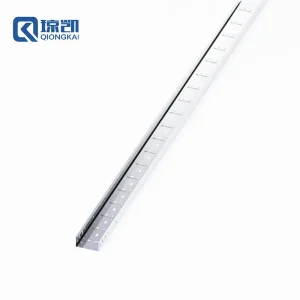
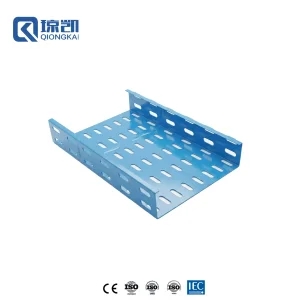
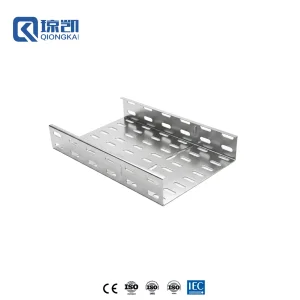
Heavy Duty • 400x200
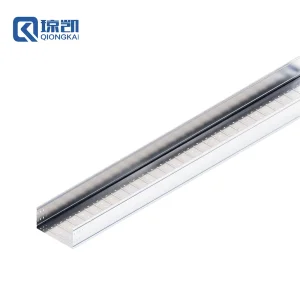
When electrical trunking and cable support systems traverse fire-rated wall, floor, and bulkhead partitions, they present critical risk pathways for thermal flame propagation, toxic gas convection, and structural collapse. As an integrated manufacturer with three dedicated facilities and 20 years of precision production, Shanghai Qiongkai Industry Co., Ltd. delivers tested cable tray containment and passive fire protection systems designed to satisfy stringent international building codes.
Years Manufacturing Experience (Est. 2005)
Total Heavy-Duty Factory Floor Area
Automated Cold-Roll & Stamping Lines
Peak Annual Global Supply Capacity
High-capacity cable management systems designed for seamless integration with intumescent fire seals, transit frames, and structural partition collars.
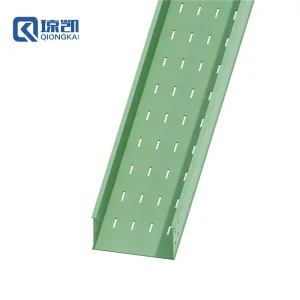
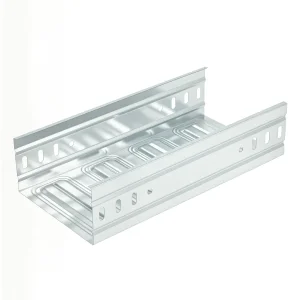
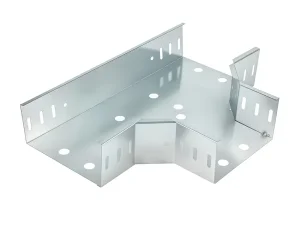
Cable containment fire safety is advancing from reactive physical insulation to proactive, data-integrated, and nano-engineered fire containment ecosystems.
Next-generation intumescent coatings and elastomeric blocks utilize expandable graphite and micro-encapsulated ceramic binders. Upon reaching 180°C (356°F), these composites expand up to 40 times their initial dry volume, forming an insulating carbonaceous char with high mechanical resistance that resists extreme fire jet pressures and prevents thermal burn-through.
Our engineering division collaborates with global sensor developers to embed micro-fiber optic temperature arrays and impedance monitors into penetration sleeves. These modules integrate with Building Management Systems (BMS) to detect localized ohmic heating within heavy-current cable bundles long before thermal runaway triggers ignition.
Modern enclosed environments, such as underground transit tunnels and nuclear containment halls, mandate zero-halogen formulation. Our latest silicone-based mastic formulations and ablative mineral wool fire barriers emit zero toxic fluorinated or chlorinated gases during combustion, guaranteeing vital air visibility and life protection during evacuation protocols.
From hyper-scale cloud server facilities to offshore floating LNG processing plants, fire stopping specifications must accommodate vibration, thermal cycling, moisture, and chemical exposure.
Modern data halls feature immense power densities, high-count fiber trunking, and high airflow plenums. Penetration seals must prevent hot-aisle air bypass while maintaining an airtight, smoke-tight barrier. We engineer reusable modular intumescent cable blocks and powder-coated cable runway systems that permit seamless cable retrofits and additions without compromising cleanroom seal integrity or re-violating fire compartmentalization.
Offshore processing platforms face harsh environmental challenges: saline atmosphere, heavy vibration, structural deflection, and high-intensity hydrocarbon jet fires (H-Class and J-Class ratings). Qiongkai provides 316L stainless steel and structural pultruded FRP cable support assemblies paired with elastomeric transit frames that deliver certified blast resistance and long-term water-tightness (IP67/68 rating).
Cleanroom environments demand non-shedding, non-outgassing fire barrier penetrations resistant to rigorous vaporized hydrogen peroxide (VHP) decontamination cycles. Our SS304/SS316 electro-polished cable trays and antimicrobial silicone sealants eliminate dust traps, inhibit microbial proliferation, and safeguard ISO Class 4 cleanliness thresholds.
Major infrastructure projects require exceptional mechanical rigidity and non-toxic smoke indices. With proven references including Shanghai Hongqiao International Airport, our high-load continuous pre-galvanized and hot-dip galvanized trunking systems withstand dynamic air pulsations while maintaining up to 240 minutes of structural fire integrity across terminal compartmental walls.
Achieving passive fire compliance requires navigating distinct testing standards between North American, European, and Asia-Pacific regulatory bodies. Below is our engineering selection benchmark.
| Containment Profile & Finish | Applicable Fire Test Standards | Certified Fire Rating (F/T/E) | Optimal Penetration Sealing System | Recommended Industrial Context |
|---|---|---|---|---|
| Hot-Dip Galvanized (HDG) Steel Zinc coating ≥ 65–85 μm |
ASTM E814, UL 1479, EN 1366-3, BS 476-20 | F-Rating: Up to 180 min T-Rating: 60–120 min |
High-density ablative mineral batts (140 kg/m³) + intumescent mastic coating | Heavy industrial manufacturing, power sub-stations, external rooftop routings |
| Pre-Galvanized (PG) Carbon Steel Continuous mill galvanizing Z275 |
UL 1479, EN 1366-3, AS 1530.4 | F-Rating: Up to 120 min T-Rating: 30–60 min |
Intumescent firestop pillows, elastomeric composite sheets, acrylic sealants | Commercial office towers, dry indoor utility risers, retail distributions |
| Stainless Steel 316 / 316L Marine Grade Austenitic Steel |
UL 1479, ISO 834, IMO FTP Code, EN 1366-3 | F-Rating: Up to 240 min T-Rating: 90–180 min |
Mechanical elastomeric transit frames with compression wedge & SS316 inserts | Offshore oil rigs, chemical processing plants, coastal desalination facilities |
| Fiberglass Reinforced Polymer (FRP) Isophthalic / Vinyl Ester Resin |
ASTM E84 (Class 1), UL 94 V-0, EN 13501-1 | Self-extinguishing Structural integrity 60–120 min |
Intumescent wrap strips with steel restriction collars and intumescent graphite collars | Acidic battery rooms, wastewater treatment tanks, harsh marine decks |
| Powder-Coated Electro-Galvanized Epoxy-polyester hybrid film 60–80 μm |
UL 1479, ASTM E814, NFPA 70/101 | F-Rating: Up to 120 min T-Rating: 45–60 min |
Modular reusable fire blocks, silicone firestop foam, elastomeric sealants | Tier III/IV data halls, telecommunication switches, cleanroom plenum zones |
*All penetration assemblies must be installed in strict adherence to manufacturer UL Listed system designs (e.g., C-AJ, W-L, or F-C series). Consult Qiongkai engineers for specific system drawings.
Headquartered in Songjiang Port Science and Technology City, Shanghai, Shanghai Qiongkai Industry Co., Ltd. operates an integrated 30,000 m² production complex. We utilize Industry 4.0 manufacturing processes, combining automated continuous cold-roll forming, robotic automated fiber laser cutting, and multi-station CNC punching to maintain tight dimensional tolerances (±0.3 mm) across our cable tray, strut, and framing lines.
With more than 60 heavy-duty production machines and 12 fully coordinated assembly lines, we bypass middle-tier trading markups to pass substantial capital expenditure savings directly to international EPC contractors. Located in close proximity to both Yangshan Deep-Water Port and Waigaoqiao Port, our supply chain guarantees rapid container consolidation, seaworthy export packing, and swift ocean transit schedules.
Our in-house die design center manufactures proprietary side-rail reinforcement ribs and unique flange geometries, enabling trays to deliver superior load performance with lighter structural weight.
Automated continuous zinc coating thickness monitors and zero-discharge closed-loop pickling baths ensure our hot-dip galvanizing exceeds ISO 1461 standards without environmental contamination.
All cable support, strut channels, and penetration sleeves are modeled in standard Revit/IFC formats, enabling zero-clash prefabrication for faster on-site assembly.
Experienced procurement directors recognize that initial product purchase prices account for less than 35% of cumulative electrical containment lifecycle costs.
Complex firestop installations involving field-cut boards, multiple mastic layers, and curing delays can account for over 60% of total installed penetration costs. Utilizing pre-formed modular firestop sleeves and pre-punched reinforced cable tray channels eliminates on-site measuring errors, slashing installation labor hours by up to 45%.
Traditional mortar or wet plaster firestop methods require destructive demolition and recertification whenever new circuits are pulled through partitions. Specifying reusable elastomeric block penetration frames or intumescent pathway units ensures recurring maintenance labor remains near zero over decades of facility operation.
Non-compliant or makeshift firestopping can lead to rejected inspections, certificate of occupancy (CO) delays, or devastating losses during an electrical fire. Standardizing on factory-certified cable tray systems backed by comprehensive third-party testing directly satisfies commercial underwriters and reduces risk premiums.
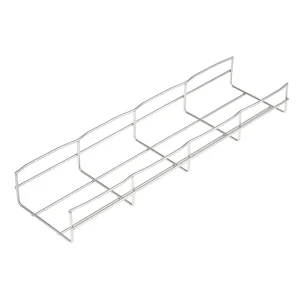
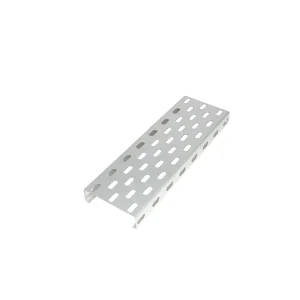
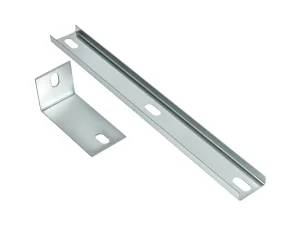
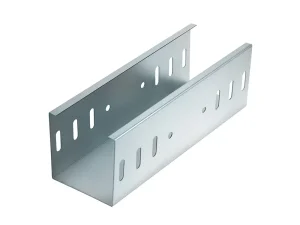
Precision engineered cable trunking, stainless steel basket systems, and high-strength brackets ready for containerized export.
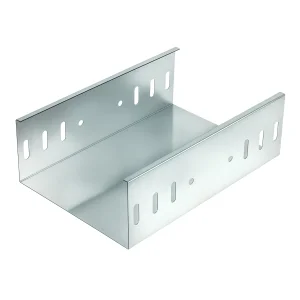
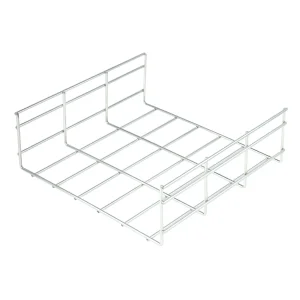
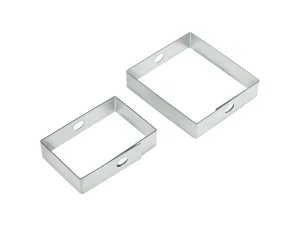
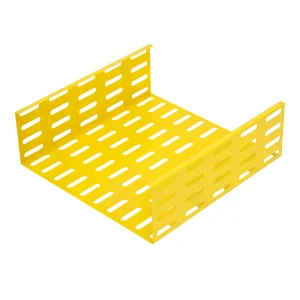
Detailed technical answers to common queries regarding penetration sizing, installation best practices, and international code compliance.
Under ASTM E814 and UL 1479 test standards, the F-Rating (Flame) indicates the duration (expressed in hours) that the firestop assembly prevents flame passage through the penetration opening while sustaining high-pressure water hose stream tests. The T-Rating (Temperature) measures the time it takes for the unexposed surface of the penetration assembly (or cables) to rise 181°C (325°F) above ambient temperature, preventing flash ignition of combustibles on the non-fire side.
The L-Rating (Air Leakage) quantifies smoke and toxic gas migration rates through the penetration at ambient and elevated temperatures (typically 204°C / 400°F). For enclosed facilities like hospitals, subways, and data centers, low L-ratings (< 5.0 cfm/sq ft) are mandatory to protect life safety.
Cable fill ratio (the cross-sectional percentage of the cable tray filled with insulated copper/aluminum conductors) directly affects thermal conduction and intumescent reaction dynamics. Certified UL/EN systems are tested at specific fill ranges—typically 0% (blank penetration), 25%, 45%, or 100% visual fill.
A higher cable fill increases heat transfer through copper cores across the partition wall, requiring thicker intumescent coatings or higher-density mineral wool backings. If cables are bundled too tightly without annular spacing, intumescent seals cannot expand between individual jackets, allowing flame bypass. Qiongkai engineers provide bundle separation drawings to maintain compliance.
Under most certified UL and EN designs, continuous cable trays (solid bottom, ladder, perforated, or wire mesh) are permitted to pass directly through wall and floor apertures, provided an adequate annular space (typically 25 mm to 100 mm) is maintained between the tray rail and wall perimeter. This annular clearance is then sealed with certified firestop mastic, intumescent wrap strips, or coated high-density stone wool batts.
However, continuous steel trays conduct thermal energy along their rails. To pass rigorous T-rating requirements, thermal insulation or intumescent wraps must often be extended along the tray 300 mm to 600 mm outward from both faces of the partition.
For aggressive marine conditions involving high humidity, salt spray, and chemical vapors (such as Qatar or Southeast Asian offshore projects), standard pre-galvanized coatings will quickly fail. Qiongkai recommends either Stainless Steel 316L with passivation or structural Pultruded FRP (Fiberglass Reinforced Polymer).
SS316L contains 2-3% molybdenum, providing superior resistance to pitting and crevice corrosion in chloride-rich environments. For high-temperature, acid-prone offshore operations, our fire-retardant vinyl ester FRP cable trays deliver superior non-conductive, self-extinguishing performance with zero corrosion.
Every export shipment from Shanghai Qiongkai Industry Co., Ltd. includes a comprehensive Quality Assurance Dossier: Mill Test Certificates (MTC) certifying chemical composition and yield strength, Hot-Dip Galvanizing Thickness Test Reports (conforming to ISO 1461 / ASTM A123), Coating Adhesion and Salt Spray Test Reports, Dimensional Inspection Certificates (±0.3 mm tolerance), and Certificate of Origin (CO/Form E/Form F depending on jurisdiction).
Send us your project Bill of Quantities (BOQ), single-line diagrams, or penetration clearance specifications. Our engineering team will deliver a comprehensive, cost-optimized proposal with certified loading calculations within 24 hours.