
Featured Cable Support & Structural Solutions
Direct-from-factory procurement for EPC contractors, electrical distributors, and industrial plants. Certified tolerances, load-bearing reliability, and advanced anti-corrosion metallurgy.
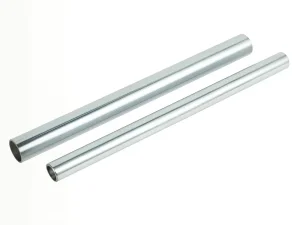
Wholesale Pre Galvanized Conduit Supplier, Suppliers
View Specifications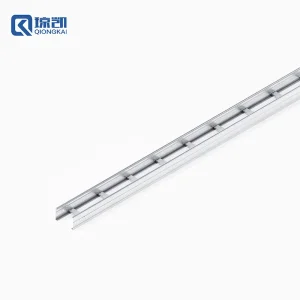
Buy Reinforced Pre Galvanized / HDG Ladder Cable Tray 200*100
View Specifications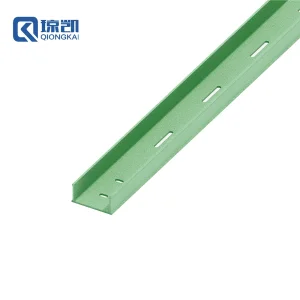
Buy FRP Perforated Cable Tray 100*50 Manufacturers, Factory
View Specifications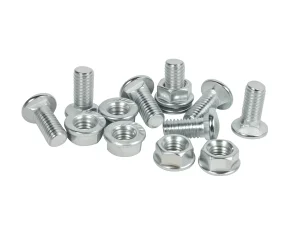
Buy Bridge Frame Screws Supplier, Factories
View Specifications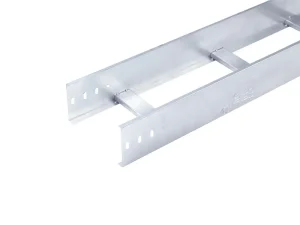
Wholesale Pre Galvanized Ladder Cable Tray Factory
View Specifications
Wholesale UPVC Cable Trunking Insulated & Anti-Corrosion
View Specifications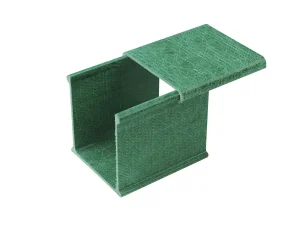
Buy Fiberglass Reinforced Plastic (FRP) Cable Tray Manufacturers
View Specifications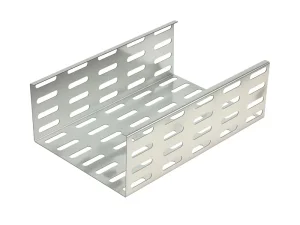
Buy Stainless Steel Perforated Cable Tray 200mm Width
View SpecificationsGlobal Cable Tray Manufacturing: Commercial & Industrial Status
How mega-infrastructure, clean energy transition, hyperscale data center clusters, and high-voltage transmission projects are reshaping worldwide cable management procurement requirements.
Electrification & Grid Modernization
As global capital expenditures pour into renewable energy microgrids, utility-scale solar farms, offshore wind interconnects, and high-voltage battery energy storage systems (BESS), the demand for robust cable pathways has outgrown traditional conduits. Engineers demand structural pathways capable of handling tremendous thermal heat dissipation, heavy physical cable mass, and continuous dynamic outdoor exposure without structural sag or electrical short risks.
Hyperscale Cloud & AI Infrastructure
The explosive surge in Artificial Intelligence (AI) data centers has driven rack power densities from 8 kW to over 40-100 kW per cabinet. This exponential load requires hundreds of high-ampacity power feeds and massive bundles of fragile high-density optical fiber. Modern data hall designers specify specialized basket wire mesh trays and lightweight aluminum/powder-coated ladder racks with zero zinc-whisker formation to ensure zero data corruption and optimal under-floor airflow dynamics.
Transition from Conduit to Cable Tray
Historically, commercial facilities relied heavily on rigid metallic conduit (RMC). In modern industrial construction, however, comprehensive Life Cycle Cost (LCC) calculations favor modular cable tray systems. Cable trays allow fast initial drop-in cable laying, 60% lower labor installation costs, effortless future additions (retrofitting), and dramatically superior open-air heat dissipation that significantly lowers cable sizing and overall conductor copper expenditure.
Strategic Engineering Insight: NEMA VE 2 & IEC 61537 Harmonization
International EPC mega-projects require multi-standard design versatility. Cable tray structures sourced from cutting-edge manufacturing facilities must bridge North American NEMA standards (such as NEMA VE 1 / VE 2 class designations) and European / International Electrotechnical Commission standards (IEC 61537:2006). This guarantees verified structural safe working loads (SWL), consistent deflection ratios under maximum thermal ranges, and verified electrical bonding continuity across all system splice connections.
Chinese Factory Efficiency: The Shanghai Industrial Scale
How vertical supply chain integration, automated multi-station roll-forming lines, and deepwater maritime proximity deliver unmatched cost-performance for global infrastructure buyers.
Direct Mill Integration & Raw Material Security
Tier-1 Chinese manufacturers like Shanghai Qiongkai Industry Co., Ltd. operate direct strategic procurement partnerships with domestic primary steel giants (such as Baosteel and Ansteel). By securing massive master coils of high-tensile structural steel (Q235B, Q355B) and premium stainless alloys (AISI 304, 316, 316L), production facilities maintain consistent yield strength, minimal gauge variance, and total immunity against global raw metal price spikes.
Continuous Automated CNC Roll-Forming Lines
Manual hydraulic press brakes are replaced by high-speed CNC progressive roll-forming systems. A single uncoiler, CNC hydraulic punch press, multi-pass roller bank, and flying shear cut cable tray side rails and perforated trough profiles in continuous cycles with precision dimensional tolerances below ±0.3mm. Robotic continuous projection and resistance welding ensure consistent rung attachment without degrading metal crystal structures.
Global Logistics & Port Proximity
Located in the Songjiang Port Science and Technology City of Shanghai, our facilities sit within immediate highway proximity to the Port of Shanghai—the world’s busiest container terminal—and deepwater access at Yangshan and Waigaoqiao. This geographical advantage slashes domestic transit time, enables rapid consolidation of massive multi-container orders, eliminates inland freight bottlenecks, and facilitates seamless global maritime dispatch to North America, Europe, the Middle East, and APAC.
Cable Tray Metallurgy & Anti-Corrosion Selection Matrix
Over 70% of premature cable tray structural failures stem from selecting inappropriate finishes for the target operating environment. Compare chemical, thermal, and corrosion dynamics below.
| Material / Treatment | Applicable Standards | Corrosion Tier (ISO 12944) | Typical Coating Weight / Spec | Recommended Industrial Environment |
|---|---|---|---|---|
| Pre-Galvanized (PG / Mill Galv) | ASTM A653 / EN 10346 | C1 - C2 Indoor / Dry | Z120 - Z275 (12 - 20 μm) | Commercial office complexes, plenum spaces, dry indoor clean basements, residential risers. |
| Electro-Galvanized (EG) | ASTM B633 / BS 7371 | C1 - C2 Indoor Low-Hum | 5 - 12 μm electroplated zinc | Data halls, cleanroom telecom racks, wire mesh basket routing where zero airborne particles are required. |
| Hot-Dip Galvanized (HDG) | ISO 1461 / ASTM A123 | C3 - C4 / Industrial | 65 - 85 μm (>500 - 610 g/m²) | Outdoor industrial substations, oil refineries, rooftop solar, wastewater plants, heavy manufacturing plants. |
| Stainless Steel 304 (SS304) | ASTM A240 / AISI 304 | High Chemical/Hygiene | Austenitic 18/8 Base Metal | Food and beverage processing, dairy plants, commercial bakeries, cleanrooms, high-temperature furnace perimeters. |
| Stainless Steel 316 / 316L | ASTM A240 / AISI 316L | C5-M Marine / Coastal | 2.5% Molybdenum Enhanced | Offshore oil & gas platforms, coastal desalination facilities, marine shipping vessels, heavy chlorine chemical handling. |
| Fiberglass Reinforced Plastic (FRP/GRP) | ASTM D3917 / UL 94-V0 | Extreme Chemical / CX | Isophthalic / Vinyl Ester Resin | Battery manufacturing plants, electroplating baths, offshore drilling rigs, harsh tropical environments with acidic rain. |
| Powder Coated (Epoxy / Polyester) | GB/T 18593 / Qualicoat | C2 - C3 Indoor/Aesthetic | 60 - 100 μm thermoset polymer | Data center cable circuit identification (RAL 3020 Red for Fire, Blue for Data, Yellow for High Voltage), retail display ceilings. |
Localized Application Scenarios & Verified Case Engineering
From international airports to desert LNG liquefaction facilities, examine how Shanghai Qiongkai systems deliver absolute structural integrity under extreme site stressors.
Aviation Hub: Shanghai Hongqiao International Airport
System: Corrosion-Resistant CT-Series Cable Trunking.
Project Challenge: Thousands of meters of mission-critical flight radar, perimeter lighting, and terminal power lines required zero interference, fire-rated compartmentalization, and high structural load capacities over long continuous spans.
Engineering Delivery: Supplied custom heavy-gauge galvanized and coated trunking systems with rapid interlocking splice couplers, ensuring zero terminal maintenance disruption.
Offshore LNG Complex: Qatar Energy Infrastructure
System: Heavy-Duty Pultruded FRP & 316L Channel Strut Systems.
Project Challenge: Extreme desert heat peaking above 50°C combined with heavy Persian Gulf maritime salt spray and volatile airborne hydrocarbon vapors.
Engineering Delivery: Designed specialized flame-retardant vinyl ester composite cable ladders and custom 316L profiled sections resistant to thermal expansion creep and salt crystallization attack.
Severe Outdoor Monsoon: Thailand Industrial Park
System: High-Load FRP-Lined Steel Composite Cable Trays.
Project Challenge: Torrential tropical monsoons, ultra-high relative humidity (95%+), and aggressive industrial runoff causing severe premature rust on traditional galvanized ladders.
Engineering Delivery: Formulated an engineered hybrid system uniting steel load-bearing structural members with continuous insulating composite polymer barriers to eliminate electrochemical corrosion.
Severe Biological Ammonia: Agro-Industrial, Paraguay
System: Budget-Optimized Heavy-Duty Galvanized Ribbed Trays.
Project Challenge: High airborne concentrations of corrosive animal waste gases (ammonia, hydrogen sulfide) combined with tight capital budget constraints for a massive livestock facility.
Engineering Delivery: Tailored reinforced pre-galvanized ribbed profiles with strategic high-build epoxy perimeter seals, lowering initial project expenditures by 38% compared to stainless alternatives.
European Infrastructure: Direct Export to Italy
System: ISO 1461 Hot-Dip Galvanized Cable Trays & 41-Series Channels.
Project Challenge: Rigid European Union CE conformity, stringent EN 61537 deflection load verification, and zero tolerance for zinc drip burrs that could scrape delicate control wiring.
Engineering Delivery: Full batch-tested galvanizing process with automated centrifugal de-burring, delivered containerized with comprehensive Mill Test 3.1 certificates directly to Italian port yards.
Clean Food & Beverage: Automated Dairy Bottling
System: Electro-Polished Stainless Steel AISI 304 Wire Mesh Trays.
Project Challenge: Daily high-pressure caustic soda (CIP) washdowns requiring zero moisture retention, zero bacterial harbor niches, and self-draining structural open architecture.
Engineering Delivery: Precision T-welded smooth wire mesh profiles with rounded wire ends to ensure absolute food safety hygiene and instantaneous visual cable inspection.
Cable Tray Industry Trends & Next-Gen Technologies
Explore how seismic resilience regulations, zinc-aluminum-magnesium coatings, and modular prefabricated BIM integration are revolutionizing global pathway projects.
Integrated Seismic & Dynamic Sway Bracing
Seismic building codes worldwide (such as IBC in the US and GB 50981 in Asia) now strictly mandate non-structural MEP components to withstand severe seismic accelerations. Cable trays can no longer rely on simple unbraced threaded rod hangers. Modern solutions integrate engineered 41×41 and 41×82 back-to-back strut channels with serrated flange lock teeth, rigid 45° lateral/longitudinal bracing arms, and seismic hinge brackets that lock pathways in place during seismic events.
Super-Coatings: Zinc-Aluminum-Magnesium (ZAM)
A major technological leap forward is the rapid adoption of Zinc-Aluminum-Magnesium (typically Zn-3% Al-2.5% Mg) alloy coated steel coils. ZAM provides 5 to 10 times higher atmospheric corrosion resistance than standard hot-dip galvanizing, with a unique self-healing property: magnesium ions wash into cut sheet edges and drill holes to precipitate a dense simonkolleite protective film, eliminating edge corrosion without post-fabrication dipping.
BIM Level 3 Modeling & Modular Jobsite Spooling
Contractors increasingly reject on-site manual hacksawing and drilling due to high labor rates and contamination risks. Leading factories provide native Autodesk Revit and BIM parametric family files. Cable tray runs, elbows, reducers, tees, and seismic trapeze supports are pre-engineered in software and prefabricated into numbered spools at the factory. Site teams simply bolt pre-assembled assemblies together, reducing installation schedules by up to 50%.
Global Enterprise Sourcing & Total Cost of Ownership (TCO)
Smart EPC procurement requires analyzing total lifetime expenditures—from raw material certificates and structural deflection to container cubing efficiency—rather than simple per-meter FOB rates.
First-Cost vs Lifecycle Replacement Cost
Opting for lower-cost pre-galvanized finishes in semi-outdoor coastal environments to shave 15% off upfront procurement is a classic procurement error. Corrosion failure within 3 to 5 years forces complete pathway replacement inside live electrical plants, resulting in shutdown costs that can exceed initial tray purchases by fifty-fold. A technical TCO audit evaluates 25-year design lifecycles to balance HDG, 316L, or FRP composites correctly.
Essential Mill QA & Testing Protocols
Tier-1 procurement specifications mandate full third-party validation prior to factory dispatch. Shanghai Qiongkai supplies comprehensive EN 10204 3.1 Mill Inspection Certificates, destructive load vs deflection testing graphs (verifying L/200 deflection compliance under rated cable mass), magnetic eddy-current coating thickness verification, and ASTM B117 neutral salt spray test validation for all batch lots.
Container Nesting & Shipping Optimization
Cable trays are inherently voluminous. Transporting empty internal air across maritime routes inflates landed freight costs. Our engineering team designs tapered nested tray geometries and stepped channel packaging plans that allow smaller width trays (e.g., 100mm, 200mm) to nest completely inside larger width sections (300mm, 600mm). This maximizes shipping container cubic utilization up to 94%, significantly lowering ocean freight per linear meter.
Heavy Duty, Powder Coated & Specialized Systems
Explore heavy-duty ladder racks, composite FRP architectures, and high-visibility powder-coated trunking engineered to endure high loads and hostile operational conditions.
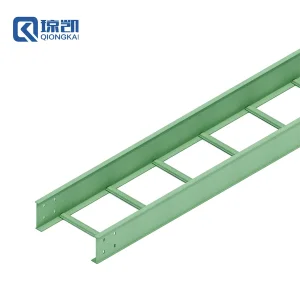
Buy FRP Ladder Type Cable Tray 400*150 Supplier, Factory
View Specifications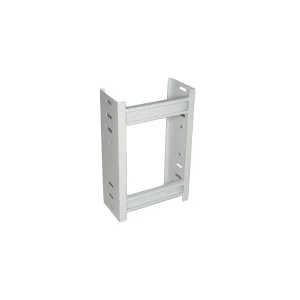
Wholesale Powder Coated Ladder Tray Factory, Price
View Specifications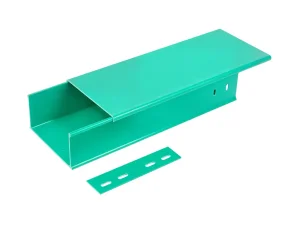
Wholesale High Strength FRP Cable Tray Suppliers, Price
View Specifications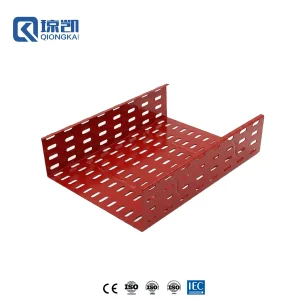
Buy Powder Coated Carbon Steel PG Tray - RAL3020 Red 300*100
View Specifications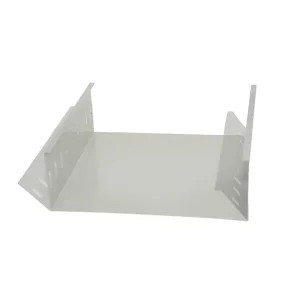
Wholesale Non-Perforated Powder Coated Cable Tray
View Specifications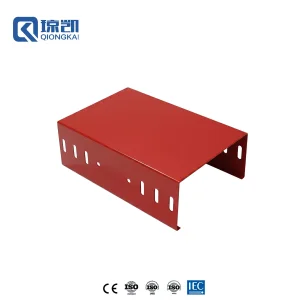
Wholesale Powder Coated PG Cable Trunking RAL3020 Red 200*100
View Specifications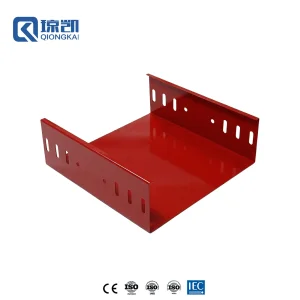
Wholesale Powder Coated PG Cable Trunking RAL3020 Red 300*100
View Specifications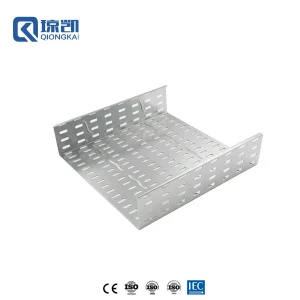
Wholesale Carbon Steel PG / HDG Cable Tray with Ribs 400*100
View SpecificationsAuthoritative Cable Management & Sourcing FAQ
Direct technical answers to the most rigorous questions posed by project engineers, procurement officers, and EPC consultants prior to placing manufacturing orders.