
Factory Inventory
Featured Cable Routing & Management Systems
Precision engineered cable support units ready for global project deployment, offering optimized mechanical loading, high yield strength, and certified galvanic protection.
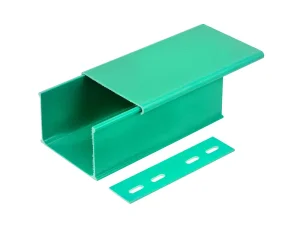
Wholesale FRP Cable Tray 100mm Corrosion Resistant
Review Specs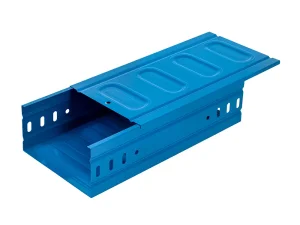
Blue Pre-Galvanized Powder Coated Molded Cable Tray
Review Specs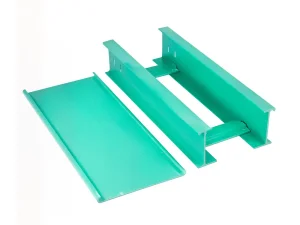
Industrial FRP Ladder Type Heavy Duty Cable Tray
Review Specs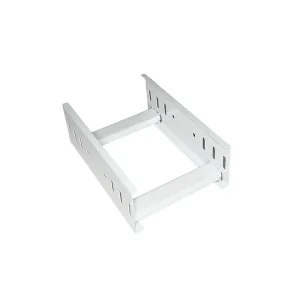
Engineered Powder Coated Modular Cable Ladder
Review Specs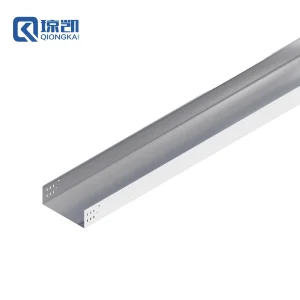
Carbon Steel PG / HDG / SS Cable Trunking Channel 400*150
Review Specs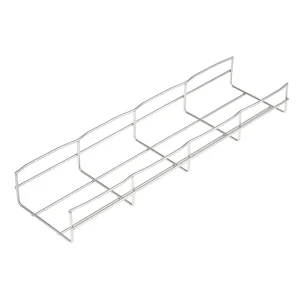
Stainless Steel Grid Wire Mesh Cable Basket Tray
Review Specs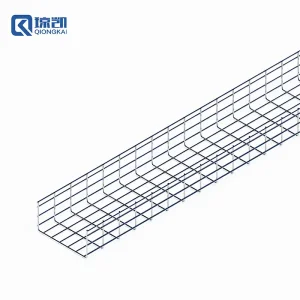
GI Galvanized Heavy Duty Wire Mesh Tray 300*150
Review SpecsMetallurgical Whitepaper
Engineering the Cable Tray Material List: Standards & Metallurgy
A comprehensive technical examination into material substrate integrity, atmospheric corrosivity tiers (ISO 12944), and galvanic interaction dynamics for multi-decade installation life.
When international engineering procurement teams compile an exhaustive cable tray material list, the objective reaches far beyond selecting basic geometric profiles. Electrical containment systems function as mechanical safety barriers operating across harsh mechanical stresses, aggressive chemical exposures, and severe seismic fluctuations. A single deviation in zinc coating thickness or base steel tensile modulus can compromise entire industrial infrastructure systems, causing premature pitting, destructive galvanic bridging, or catastrophic catenary sagging.
At Shanghai Qiongkai Industry Co., Ltd., our engineering methodology builds on two decades of automated roll-forming and metal surface treatment. Understanding the structural properties of structural carbon steel (Q235B / ASTM A1011), austenitic stainless steels (AISI 304, 316, 316L), lightweight marine-grade structural aluminum alloys (6063-T6), and thermosetting pultruded Fiber-Reinforced Plastics (FRP) ensures our global clients balance structural safety margins with strict cost considerations.
| Material Classification | Applicable Norms | Surface Treatment / Gauge | Atmospheric Corrosivity (ISO 12944) | Typical Project Deployment |
|---|---|---|---|---|
| Pre-Galvanized Steel (PG) | EN 10346, ASTM A653 | Continuous Zinc Bath (Z120–Z275, 12–20 µm) | C1 – C2 (Dry / Low Humidity) | Commercial Office Buildings, False Ceilings, Dry Data Halls |
| Hot-Dip Galvanized (HDG) | BS EN ISO 1461, ASTM A123 | Batch Immersion post-fabrication (≥65–85 µm) | C3 – C4 (Industrial, Rooftop, Marine-Coastal) | Petrochemical Refineries, Substation Yards, Mining, Energy Plants |
| Austenitic Stainless (SS304/SS316L) | AISI / ASTM A240, EN 10088 | Passivated / Pickled / Electro-Polished | C5-M / CX (Extreme Saline, Acidic, Offshore) | Offshore Drilling Rigs, Desalination Plants, Bio-Pharma, Cleanrooms |
| Pultruded FRP / GRP Composites | ASTM D3917, UL 94 V-0 | Isophthalic Polyester / Vinyl Ester Resins | Severe Chemical / Dielectric Zero-Conductance | Wastewater Treatment, Fertilizer Terminals, High-Voltage Sub-Bays |
| Electrostatic Powder Coated (PC) | Qualicoat / ASTM D3451 | Thermoset Polyester / Epoxy Resin (60–100 µm) | C2 – C3 + Custom Architectural RAL Coding | Tier III/IV Hyperscale Data Centers, Color-Separated Voltage Bays |
Scale & Manufacturing Depth
Why Global EPCs Procure from Our Chinese Manufacturing Base
Seamlessly converting raw steel coils into mill-certified containment infrastructures via automated cold-roll forming, robotic wire mesh welding, and ISO-controlled surface coating lines.
Clustered Industrial Supply Chains
Located in Shanghai Songjiang with immediate proximity to premium raw steel suppliers (Baosteel), automated coil slitters, and specialized hot-dip zinc melting hubs, reducing lead times for massive metric ton runs.
Optimized Unit Economics
Eliminating intermediate trading brokers through our direct multi-facility operation ensures tiered volume pricing. Capital efficiency enables higher steel gauges and thicker galvanic layers within strict project budgets.
Custom Tooling & Rapid CNC Profiling
Equipped with over 60 heavy-duty stampers and automated profile roll-formers. We can quickly fabricate custom width runs (up to 1200mm), enhanced flange heights (up to 200mm), and anti-seismic slot matrices.
Rigorous QA & Deflection Testing
Full NEMA VE 1 / IEC 61537 in-house load testing stations. We verify deflection margins under full cable weight distributions, paired with eddy-current coating thickness sensors and spectrometer heat verification.
Future Outlook
Macro Industry Evolutions in Cable Management
Discover how accelerated AI deployment, renewable energy plants, and stringent green building standards are redefining cable tray specifications globally.
Hyperscale AI Data Center Demands
High-density fiber optic and high-amperage copper busbars require open-mesh basket trays with high thermal dissipation to reduce heat pockets, paired with zinc-whisker-free finishes to safeguard sensitive server microchips.
Utility-Scale Solar & Renewable Farms
Photovoltaic cable runs need UV-resistant, hot-dip galvanized or specialized zinc-aluminum-magnesium (ZAM) coated perforated channels capable of surviving 30 years of direct weather without maintenance downtime.
Dynamic Seismic & Resilient Engineering
Urban building regulations increasingly mandate integrated seismic channel bracing (41x41, 41x82 back-to-back strut channels) engineered directly into cable containment to survive high-magnitude lateral shockwaves.
Field Proven Deployments
Localized Application Scenarios & Engineering Case Realities
From multi-terminal airports to offshore LNG projects in extreme climates, explore how Qiongkai meets strict site requirements.
Commercial Aviation Hubs
Shanghai Hongqiao International Airport: Delivered custom enclosed trunking channels with Class-1 fire-retardant powder finishes, protecting critical telemetry and passenger concourse power lines against moisture and particulate buildup.
Extreme Heat & Marine LNG Plants
Qatar Coastal Gas Processing Facility: Supplied customized pultruded FRP composite ladder channels, avoiding electrochemical corrosion and high thermal expansion in temperatures exceeding 50°C and severe marine air.
Chemical-Intensive Agro-Industrial
Paraguay Modern Livestock Facilities: Provided hybrid FRP-lined reinforced hot-dip galvanized trunking capable of resisting severe ammonia vapor and acidic washdowns, balancing budget limits with extended lifespans.
Full Spectrum Assemblies
Complete Modular Support Hardware & Profiles
Round out your bill of materials with reinforced framing channels, stamped ventilation covers, and structural brackets for complete load reliability.
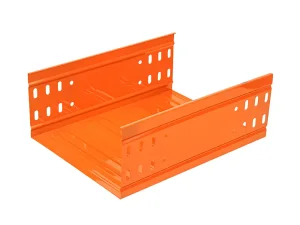
Fireproof Pre-Galvanized Powder Coated Molded Cable Tray
Review Specs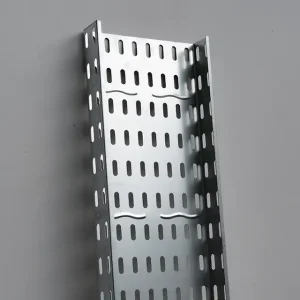
Pre-Galvanized Reinforced Cable Tray 200*50 Rib Profile
Review Specs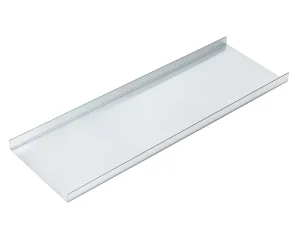
Pre-Galvanized Cable Tray Snap-On Protective Cover
Review Specs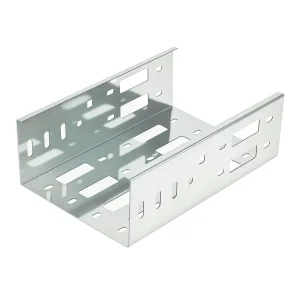
Custom Size Pre-Galvanized Perforated Cable Tray
Review Specs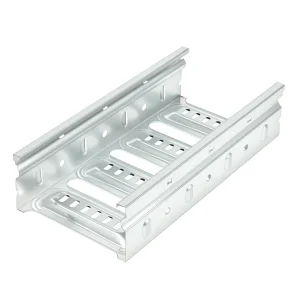
Pre-Galvanized High Load Capacity Perforated Channel Tray
Review Specs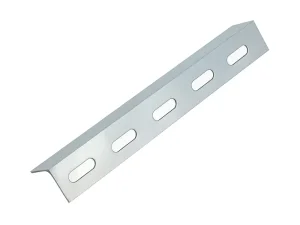
Pre-Galvanized Slotted Support Channel & Angle Iron
Review Specs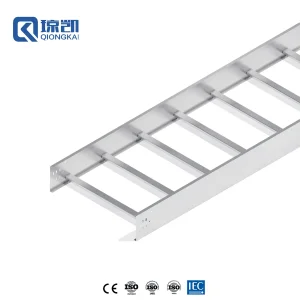
PG Pre-Galvanized Heavy Duty Ladder Tray 800*200
Review Specs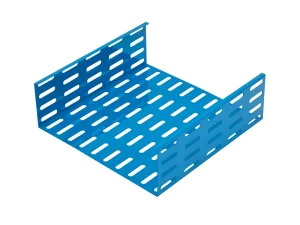
Pre-Galvanized Perforated Tray Series with Powder Coating
Review SpecsContractor Solutions
Fulfilling Global EPC Procurement Demands
Addressing the procurement, logistical, and technical compliance needs that influence modern project engineering decisions.
Single-Vendor Coordinated Systems
Procuring structural trays, custom connection couplers, snap-fit covers, strut supports, and cantilever brackets from a single factory source prevents site fit issues and simplifies BOQ auditing.
Export Packaging & Ocean Nesting
Factory-engineered nested bundling maximizes shipping container space, reducing ocean freight costs per linear meter while providing steel banding and protective wrapping against salt fog.
Certified Mill Test Tracking
Every shipment includes complete EN 10204 Type 3.1 Mill Test Certificates verifying base metal chemistry, yield strengths, elongation percentages, and measured zinc bath adhesion.
Technical Help
Frequently Asked Engineering Questions
Detailed answers to common questions about metallurgy, site standards, deflection tolerances, and manufacturing lead times.
How do you verify the deflection criteria under NEMA VE 1 standards?
Our facilities follow NEMA VE 1 / IEC 61537 procedures. We place sample tray lengths across designated span supports (such as 1.5m, 2.0m, or 3.0m) and apply uniform distributed loads using calibrated weights. Deflection at mid-span cannot exceed specified limits (commonly 1/200th of span length) to avoid stressing cable sheathing.
When is Pre-Galvanized (PG) steel suitable versus Hot-Dip Galvanizing (HDG)?
Pre-galvanized coils (12–20 µm zinc) are designed for dry indoor commercial spaces (ISO 12944 C1/C2). Hot-dip galvanizing immerses fabricated trays into a 450°C molten zinc bath to create a thick metallurgical zinc-iron alloy layer (65–85+ µm), protecting all exposed punched edges and cuts in humid or outdoor industrial sites (C3–C4).
Why use Pultruded FRP composite trays instead of 316L Stainless Steel?
While 316L stainless steel offers excellent mechanical strength in saline coastal areas, it can experience stress corrosion cracking when exposed to hot acidic chemicals or chlorinated vapors. FRP trays provide chemical inertness, high dielectric strength to prevent spark hazards, and 40% less weight, simplifying overhead installations in chemical and offshore operations.
Can Qiongkai manufacture custom profiles and non-standard punched slots?
Yes. With 12 automated roll-forming lines and in-house stamping tooling, we regularly supply non-standard widths (50mm–1200mm), special channel depths (up to 200mm), and project-specific perforation patterns designed for airflow or specific cable tie locations.