
20+
Years Direct Manufacturing (Est. 2005)
30,000m²
3 Advanced Plants in Shanghai Hub
12 Lines
Continuous Roll-Forming & Slotted CNC
US$50M+
Annual EPC Global Supply Capacity
Direct Sourcing Catalog
Precision Structural Channels & Cable Support Systems
Engineered for immediate load compliance across industrial data centers, transit hubs, and heavy structural assemblies.
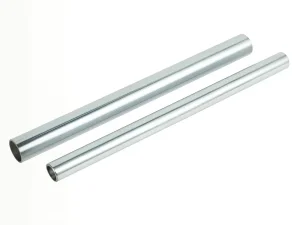
Conduit Systems
Pre-Galvanized Electrical Steel Conduit
Wholesale Pre Galvanized conduit Supplier, Suppliers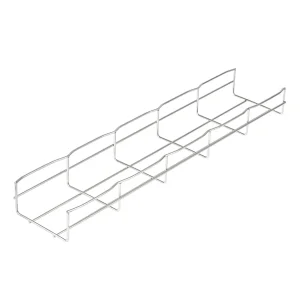
Stainless Wire Mesh
Stainless Steel Grid Cable Tray 100mm
Buy Stainless grid cable tray100mm Manufacturer, Factories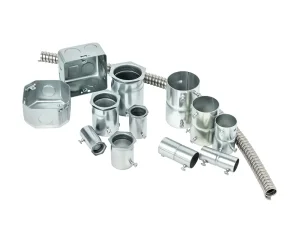
Fittings & Boxes
Conduit Accessories & Junction Connectors
Buy Conduit Accessories & Junction Box & Box Connector Suppliers, Factory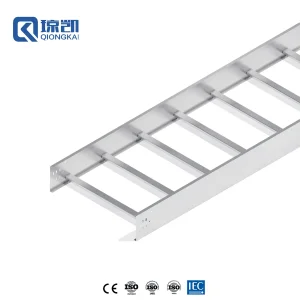
Heavy-Duty Ladder
PG Pre-Galvanized Ladder Tray 800×200
Buy PG Pre-galvanized Ladder Tray 800*200 Manufacturer, Factory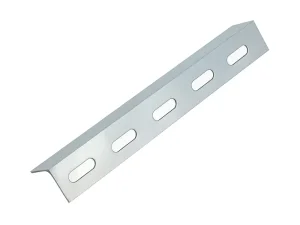
Slotted Profiles
Pre-Galvanized Slotted Channel & Angle Iron
Wholesale Pre Galvanized Slotted Channel - Angle Iron Suppliers, Price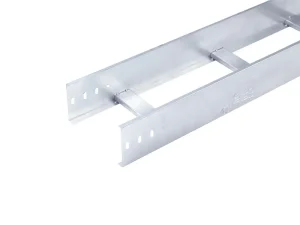
Cable Ladder Series
High-Span Pre-Galvanized Ladder Cable Tray
Wholesale Pre Galvanized Ladder Cable Tray Factory, Factories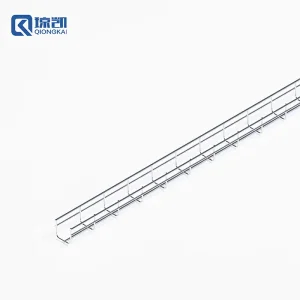
Wire Basket Tray
GI Galvanized Wire Mesh Cable Tray 50×50
Buy GI Galvanized Wire Mesh Cable Tray 50*50 Manufacturer, Factories
Industry Engineering Analysis
Technological Evolution of Construction Channels & Framing
From non-standard hot-rolled angle bars to high-precision roll-formed cold-rolled strut channels: understanding modern structural MEP engineering.
High-Yield Cold-Forming Roll Precision
Early building framing relied heavily on welded structural steel, which suffered from thermal stress deformation and intensive on-site hot work. Modern automated multi-station roll-forming lines bend high-strength low-alloy (HSLA) steel sheets cold, inducing work-hardening at inner radii to substantially increase yield strength without adding dead weight.
Anti-Seismic & Flange Serration Mechanics
Dynamic lateral forces during seismic events or mechanical pulsation require high frictional grip. Modern construction strut channels feature continuous inward-curled lips with micro-serrated teeth. These mechanical indentations interlock directly with channel spring nut grooves, preventing longitudinal slippage up to 13.5 kN slip load per anchor point.
Modular Fast-Fix Engineering (Zero On-Site Hot Work)
Global labor scarcity and stringent construction safety protocols have rendered on-site welding obsolete in mechanical, electrical, and plumbing (MEP) execution. Pre-punched elongated slotted channels (standard 14×28mm or 11×25mm) allow infinite adjustability, cantilever bracket additions, and multi-tier trapeze stacking using standard torque-controlled bolts.
Key Information Gain for Global Specifiers
Channel in construction is no longer a generic commodity: structural performance hinges directly upon the steel sheet's chemical composition (carbon equivalents below 0.45% for fracture resistance), bend corner geometry (avoiding micro-cracking during cold forming), and zinc mass per square meter (meeting ISO 1461 HDG standards with >55μm thickness for 30+ year lifespan in aggressive industrial atmospheres).
Procurement Intelligence
Global Enterprise Procurement Demand & Supply Challenges
How tier-1 EPC contractors, international project owners, and distributors qualify channel suppliers to eliminate delivery bottlenecks and on-site non-conformities.
Dimensional Uniformity & Gauge Thickness
Sub-tier suppliers often supply "negative tolerance" steel channels, stripping up to 15% of nominal wall thickness (e.g., delivering 2.1mm instead of specified 2.5mm / 12-gauge). This leads to catastrophic beam deflection under heavy cable ladder loads. Qiongkai guarantees strict thickness tolerances within ±0.05mm.
Full Traceability & EN 10204 3.1 MTRs
Critical infrastructure in the EU, Middle East, and North America demands complete material test reports (MTR) linking raw coil heat numbers to finished profile batches. We provide certified chemical analyses (C, Si, Mn, P, S) and mechanical yield, tensile, and elongation verification for every production run.
Container Cubing & Export Packaging
Channels and cable trays are bulky, low-density cargo vulnerable to sea-transit moisture corrosion (white rust). We pack channels in tight wooden-batten steel strapped bundles with VCI anti-corrosion film, optimized specifically for maximum container weight distribution without bent lip defects.
Project Milestone Phasing
Mega-projects cannot accept bulk drops that clutter job sites months before mechanical rooms are ready. With 3 Shanghai-based factories, Qiongkai synchronizes rolling schedules with maritime departure schedules, delivering exact site-coded channel lengths (3m, 6m, 10ft, 20ft) per erection phase.
Macro-Engineering Solutions
Custom Support Profiles Across Demanding Sectors
Field-proven mechanical support configurations engineered to withstand high vibration, chemical immersion, seismic sway, and extreme weather cycles.
Hyperscale Data Halls & Colocation Centers
Heavy overhead fiber pathways and power busbars demand ultra-rigid trapeze support systems. We provide pre-galvanized and electrostatic powder-coated 41×41mm and back-to-back 41×82mm strut profiles with custom RAL color coding (blue, yellow, orange) that eliminate zinc whiskers and facilitate instant circuit routing identification.
Offshore LNG, Marine & Desalination Plants
Chloride-rich marine air rapidly degrades standard galvanized zinc coatings. For our offshore energy clients (including custom profiled section solutions deployed in Qatar and Thailand), we engineer marine-grade SS316L slotted channels and pultruded non-conductive FRP/GRP channels immune to sulfurous and saline pitting.
Transit Hubs, Airports & Underground Tunnels
High passenger safety mandates fire-rated cable containment and dynamic aerodynamic pressure resistance from high-speed trains. Our heavy-duty CT series corrosion-resistant trunking and seismic bracing systems were specified for Shanghai Hongqiao International Airport to guarantee zero structural fatigue.
| Profile Material / Finish | Standards Reference | Corrosion Category (ISO 12944) | Optimal Project Environment | Typical Design Life |
|---|---|---|---|---|
| Pre-Galvanized (PG / GI) | EN 10346 / ASTM A653 (Z275) | C1 - C2 Indoor Clean | Commercial ceilings, dry IT server rooms, indoor walls | 25+ Years |
| Hot-Dip Galvanized (HDG) | ISO 1461 / ASTM A123 (≥55-85μm) | C3 - C4 High Industrial | Solar farms, chemical processing plants, rooftop MEP | 35-50 Years |
| Stainless Steel (SS304) | ASTM A240 / EN 10088 | C3 - C4 Sanitary / Washdown | Breweries, food manufacturing, pharmaceutical clean rooms | 50+ Years |
| Stainless Steel (SS316 / 316L) | ASTM A240 (2-3% Molybdenum) | C5 - CX Marine / Offshore | Coastal oil platforms, splash zones, chemical refineries | 60+ Years |
| FRP / GRP Pultruded | ASTM D3917 / UL 94 V-0 | Severe Chemical / Non-Conductive | Water treatment, pickling lines, high-voltage battery rooms | 40+ Years |
Technical Compliance
Structural Verification, Building Codes & Quality Assurance
Direct factory engineering validation ensures all channel profiles withstand bending moments, deflection limits, and seismic accelerations.
Deflection Mechanics & Span Tables
In accordance with BS 6946 and MFMA-4 (Metal Framing Manufacturers Association) standards, structural strut channels are engineered with strict section modulus (Sx) and moment of inertia (Ix) metrics. We calibrate safe uniformly distributed load (UDL) tables based on L/200 and L/360 deflection criteria, preventing excessive sag under dead and dynamic cabling loads.
Seismic ASCE 7 / IBC Bracing Code
Modern building codes (including IBC Chapter 16 and ASCE 7-22) classify electrical cable trays and pipe conduits as non-structural components requiring lateral and longitudinal sway bracing. Our seismic brackets and rigid 45° back-to-back strut braces resist horizontal earthquake ground motion, preventing catastrophic MEP collapse during life-safety events.
In-House Laboratory Batch Testing
Prior to container sealing at our Shanghai facility, channel batches undergo destructive pull-out testing for channel nut friction slip, hydraulic transverse bend load tests, magnetic coating thickness gauges (μm verification), and continuous neutral salt spray testing (NSS per ASTM B117) exceeding 720 hours for hot-dip galvanized profiles.
Future Innovations
Technical Roadmap: Modular MEP & Green Metallurgy
How Shanghai Qiongkai Industry is advancing channel design for pre-engineered construction (DfMA) and circular industrial lifecycles.
Phase I • BIM LOD 400 Digital Twins
Parametric 3D Library Integration
Contractors can now directly download Revit and Tekla parametric families for our 41-series strut channels and ladder trays. Exact weight centerpoints, bolt puncture coordinates, and structural connection nodes eliminate clash detection in 3D MEP modeling before physical manufacturing starts.
Phase II • Prefab Off-Site Trapeze Modules
DfMA Off-Site Corridor Racks
Rather than cutting channels stick-by-stick on building sites, our factory provides pre-assembled, tagged multi-tier utility modules. Delivered directly to the construction site with factory-calibrated torque nuts, this off-site method reduces MEP installation schedules by up to 45%.
Phase III • Low-Carbon Green Steel Alloys
Decarbonized Metallurgy & EPDs
To satisfy LEED and BREEAM corporate carbon targets, Qiongkai is transitioning to electric arc furnace (EAF) recycled scrap steel and high-efficiency closed-loop zinc recovery systems. Verified Environmental Product Declarations (EPD) provide cradle-to-gate embodied carbon metrics for green building procurement.
Engineered Support Systems
Specialized Channels & Heavy-Duty Cable Trays
Complete factory-made support components compatible with international channel framing profiles and high-capacity tray installations.
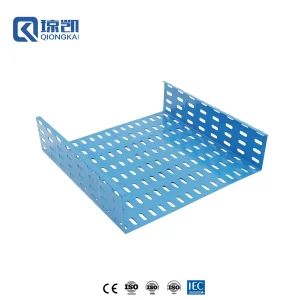
Ribbed Power Tray
Blue Powder-Coated Ribbed Tray 400×100
Buy Powder Coated Carbon Steel Pre Galvanized Hot Dip Galvanized PG HDG Cable Tray with Reinforce Ribs - RAL5015 Blue 400*100 Manufacturer, Price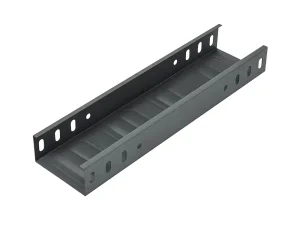
Molded Tray
Grey Powder-Coated Molded Cable Tray
Wholesale Grey Pre Galvanized Powder coated molded cable tray Factory, Price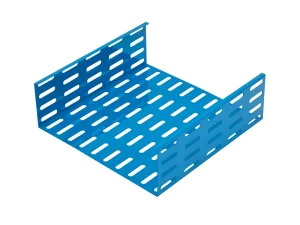
Perforated Series
Pre-Galvanized Perforated Tray Series
Buy Pre Galvanized Perforated Cable Tray Series With Powder Coating Suppliers, Factories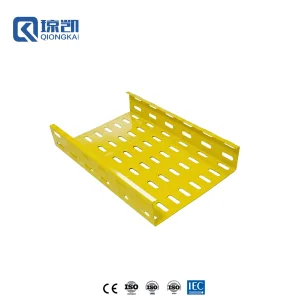
Data Route Tray
Yellow Powder-Coated Ribbed Tray 200×50
Wholesale Powder Coated Carbon Steel Pre Galvanized Hot Dip Galvanized PG HDG Cable Tray with Reinforce Ribs - RAL1080 Yellow 200*50 Manufacturer, Factories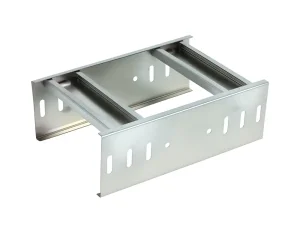
Stainless Marine
AISI 304 & 316 Stainless Cable Ladder
Wholesale 304 and 316 Stainless Cable ladder Factory, Factories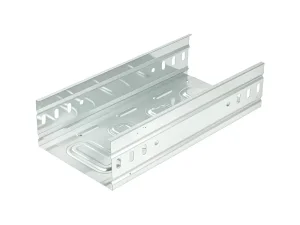
Customizable GI
Pre-Galvanized Molded Cable Tray (GI/HDG)
Buy Customizable Pre galvanized molded cable tray Gi or HDG Supplier, Factories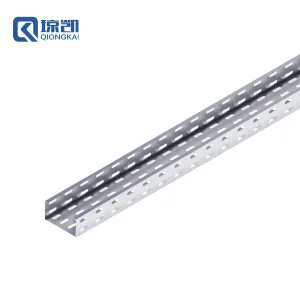
Perforated Trunking
HDG Perforated Cable Tray 100×50
Wholesale Pre-galvanized Hot-dip-galvanized Perforated Cable Tray 100*50 Factory, Factories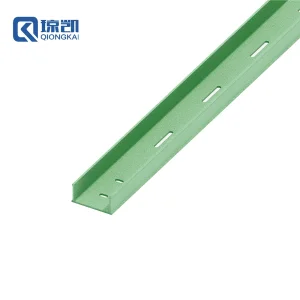
Non-Metallic FRP
Fiberglass (FRP) Perforated Tray 100×50
Buy FRP Perforated Cable Tray 100*50 Manufacturers, Factory
Technical FAQ
Frequently Asked Questions by Project Engineers & Buyers
Direct technical answers addressing structural calculations, alloy chemistry, international certifications, and minimum order requirements.
What are the structural differences between standard strut channel gauges (12-Ga vs 14-Ga vs 16-Ga)?
Standard strut channel thickness in construction determines the cross-sectional moment of inertia and safe beam load capacity:
- 12-Gauge (approx. 2.5mm / 2.6mm): Heavy-duty industrial standard. Mandatory for multi-tier trapeze pipe hangers, primary cable ladder suspension across 2.0m to 3.0m spans, and seismic bracing attachments.
- 14-Gauge (approx. 1.9mm / 2.0mm): Standard commercial grade. Suitable for wire mesh basket trays, single conduit runs, and ceiling grid frameworks with support spans up to 1.5m.
- 16-Gauge (approx. 1.5mm / 1.6mm): Light-duty architectural framing. Typically used for drywall metal studs, lightweight fixtures, and secondary non-structural partitioning.
How do you calculate the pull-out and slip resistance of strut channel spring nuts?
Channel connection safety depends on both the pull-out force (perpendicular tension pulling the nut through the lips) and longitudinal slip resistance (sliding parallel along the channel length). Our 41×41mm channels with serrated inward lips paired with case-hardened steel spring nuts achieve:
- Tensile Pull-Out Strength: Up to 8.9 kN (approx. 2,000 lbs) for 2.5mm channels using grade 8.8 M12 bolts torqued to 68 Nm.
- Slip Resistance: Up to 6.2 kN (approx. 1,400 lbs) with grooved teeth biting into channel lips, preventing bracket slip even under sustained mechanical vibrations.
When is Hot-Dip Galvanizing (HDG) required over Pre-Galvanized (PG) coatings?
Pre-Galvanized steel is continuously coated at the steel mill with approx. 15–20 microns (Z180 to Z275) of zinc prior to punching and cold rolling. When sheared or slotted, the cut edges rely on cathodic sacrificial protection. PG is optimal for climate-controlled indoor buildings (ISO 12944 Category C1/C2).
In contrast, Hot-Dip Galvanizing (HDG) is executed batch-wise after all punching, cutting, and fabrication is complete. The components are submerged in 450°C molten zinc, producing an iron-zinc alloy metallurgical bond exceeding 55 to 85 microns thickness (ISO 1461). HDG is compulsory for outdoor, high-humidity, marine fringe, and industrial processing zones (Category C3/C4).
Are Qiongkai channels and accessories interchangeable with standard international strut systems?
Yes. Our standard profiles strictly conform to the 41mm international standard width system (including 41×21mm, 41×41mm, 41×62mm, and back-to-back 41×82mm profiles with 22mm opening gap and 11mm lip depth). All brackets, spring nuts, beam clamps, and pipe straps are 100% physically and dimensionally interchangeable with systems from Unistrut, B-Line, and other global brands, allowing seamless integration into existing construction sites.
What custom manufacturing options exist for special project environments (e.g. LNG or chemical)?
With 60 heavy-duty fabrication machines and dedicated roll-forming toolings across 3 Shanghai production bases, we support custom slot hole configurations (round, elongated, cross-shaped), custom profile side returns, variable material thicknesses up to 3.0mm, and specialty alloys including AISI 316L, 904L, and vinyl ester pultruded fiberglass (FRP). For extreme projects like an offshore LNG facility in Qatar and coastal plants in Thailand, we engineered custom profiled section supports with heightened lateral stiffness.
How do you prevent galvanic corrosion when mounting dissimilar metals to steel channels?
Direct electrical contact between dissimilar metals in the presence of an electrolyte causes accelerated galvanic corrosion (e.g., copper pipes or aluminum cable clamps mounted directly on carbon steel channels). We provide specialized isolation accessories: thermoplastic nylon isolators, EPDM rubber cushioned pipe clamps, powder-coated dielectric barrier channels, and matching stainless steel hardware assemblies to eliminate the galvanic couple.