
Precision-Engineered Cable Tray Systems
Explore heavy-duty pre-galvanized, hot-dip galvanized, and stainless steel support frameworks tested to ISO, IEC 61537, and NEMA standards for industrial installations.
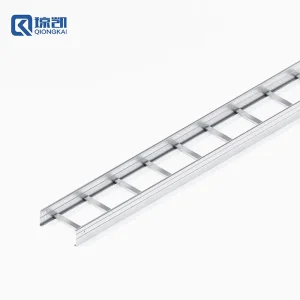
Heavy Duty Pre Galvanized / HDG Cable Ladder 400*150
Procure Specification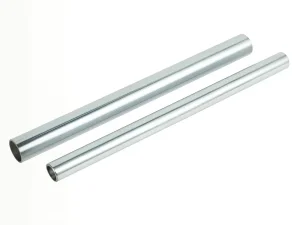
Wholesale Precision Pre-Galvanized Electrical Conduit
Procure Specification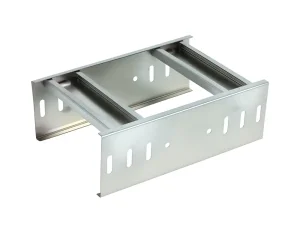
Wholesale SS304 & SS316 Marine Cable Ladder Systems
Procure Specification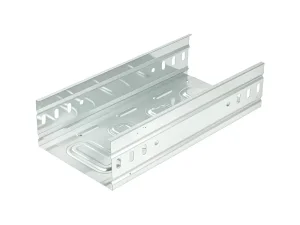
Customizable Pre-Galvanized Molded Cable Tray (GI/HDG)
Procure Specification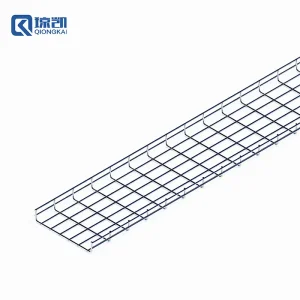
Wholesale Pre-Galvanized Grid Wire Mesh Tray 300*50
Procure Specification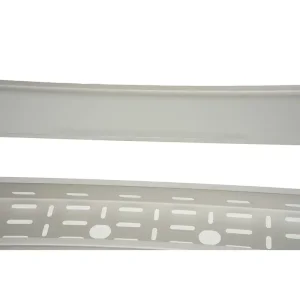
Custom Stainless Steel Cable Tray with Surface Passivation
Procure Specification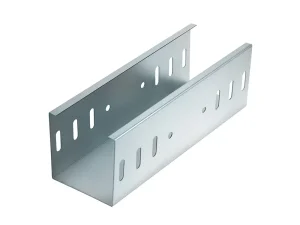
Wholesale Pre-Galvanized Enclosed Cable Trunking Channel
Procure Specification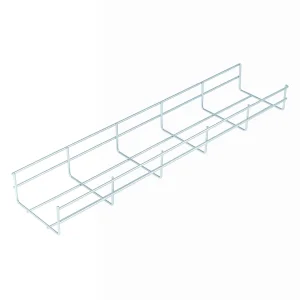
Pre-Galvanized Wire Grid Cable Basket Tray 100mm*50mm
Procure SpecificationThe Global Electrical Cable Tray Market: Critical Infrastructure Demands
Accelerated worldwide electrification, data center hyper-scaling, and heavy process industries are transforming cable containment from a passive hardware commodity into a mission-critical structural engineering discipline.
In modern industrial engineering, electrical cable tray systems serve as the structural backbone of power transmission, low-voltage control circuits, and fiber optic data highways. Valued at over USD $4.8 billion globally and projecting a sustained CAGR exceeding 7.2%, the cable containment sector is being fundamentally reshaped by global mega-trends. Traditional rigid conduit raceways are increasingly obsolete in large installations due to excessive thermal build-up, restrictive cable pull limitations, and staggering labor costs. Today, EPC contractors and enterprise procurement teams prioritize modular, open-architecture cable ladders, perforated trays, and wire mesh baskets that provide superior natural convective cooling, swift retrofitting capabilities, and verifiable seismic and electromagnetic load integrity.
Stringent compliance frameworks—most notably IEC 61537 across Europe, the Middle East, and Asia-Pacific, along with NEMA VE 1 / NFPA 70 (NEC) throughout the Americas—govern structural safety, safe working load (SWL) verification, and electrical bonding continuity. As utility grids integrate multi-gigawatt renewable solar and wind complexes, and hyperscalers construct gigawatt-scale AI computing campuses, the mechanical demand placed on cable containment has shifted. Procurement executives must now navigate complex trade-offs between yield strengths, anti-corrosive coating longevity across harsh microclimates (from ISO 12944 C1 indoor environments to brutal C5-M offshore atmospheres), and global factory lead times.
Electrical Cable Tray Price Engineering & Cost Analysis
A transparent deconstruction of bill-of-materials pricing, metallurgical grades, galvanization depth metrics, and Chinese manufacturing supply chain efficiencies.
When procurement officers issue Requests for Quotation (RFQs) to "buy electrical cable trays", price variations from 20% to over 300% are frequently encountered. Understanding this variance requires a thorough grasp of the five primary cost drivers: substrate raw material indexing, surface finishing thickness, mechanical gauge (sheet thickness), manufacturing automation levels, and freight logistics packing ratios. Base raw material accounts for 58% to 68% of the final unit cost per linear meter. In periods of high volatility for hot-rolled steel coil (HRC), aluminum 6063-T6, and nickel alloys (governing SS304/SS316 premiums), transparent indexing tied to the Shanghai Futures Exchange (SHFE) or London Metal Exchange (LME) gives buyers pricing predictability.
Surface treatment represents the second largest cost variable. Pre-galvanized sheet (mill galvanized) offers the lowest entry price point, suitable exclusively for dry indoor HVAC spaces. Conversely, true Hot-Dip Galvanizing after Fabrication (HDG) per ASTM A123 / ISO 1461 requires complete chemical degreasing, pickling, fluxing, and molten zinc immersion at 450°C, producing a metallurgically bonded zinc-iron alloy layer (65–85 μm minimum thickness). While HDG carries a 25–40% price premium over pre-galvanized steel, it delivers up to 50 years of maintenance-free service life in aggressive outdoor environments, driving lifecycle Total Cost of Ownership (TCO) down dramatically.
Automated Continuous Roll-Forming
Our Tier-1 factory in Songjiang, Shanghai operates 12 continuous cold roll-forming lines with in-line computerized punching. This eliminates manual brake-press labor, guarantees dimensional tolerances within ±0.3 mm, and achieves daily throughputs surpassing 15,000 linear meters.
Upstream Steel & Zinc Supply Integration
Proximity to Baosteel and localized chemical finishing hubs allows Chinese manufacturers to source prime Q235B steel coils and high-purity SHG zinc ingots at competitive baselines, completely removing distributor markups and shielding buyers from speculative third-party pricing.
Strategic Deep-Water Port Logistics
Located under 60 minutes from Shanghai Waigaoqiao and Yangshan Deep-Water Ports, factory orders bypass inland freight bottlenecks. High-density telescopic nesting packing engineering maximizes 40HQ container cube utilization by up to 34%, slashing per-unit sea freight.
| Material / Treatment Type | Standard Coating Thickness | Corrosion Category (ISO 12944) | Typical FOB Price Range (USD/m)* | Target Engineering Application |
|---|---|---|---|---|
| Pre-Galvanized Steel (GI) | 12 – 18 μm (Z120–Z180) | C1 - C2 Clean Indoor | $3.80 – $14.50 | Commercial office fit-outs, ceiling voids, low-humidity telecom rooms. |
| Hot-Dip Galvanized (HDG) | 65 – 85+ μm (ASTM A123) | C3 - C4 Industrial / Outdoor | $6.50 – $28.00 | Petrochemical refineries, solar racking power plants, exterior infrastructure. |
| Stainless Steel 304 (SS304) | Self-passivating Cr₂O₃ oxide | C3 - C4 Washdown Clean | $14.00 – $48.00 | Food and beverage processing, dairy plants, cleanroom pharmaceutical lines. |
| Stainless Steel 316L (SS316L) | 2.0-3.0% Molybdenum enriched | C5-M Marine / Offshore | $22.00 – $75.00 | Offshore oil & gas rigs, coastal desalination plants, marine vessel builds. |
| Epoxy Powder Coated (Fireproof) | 60 – 120 μm Thermo-hardened | C2 - C3 Color Codified | $5.20 – $22.00 | Underground rail transport hubs, airport terminals, data center hall partitioning. |
*Indicative benchmark pricing for widths 100mm to 600mm, 1.2mm–2.0mm gauge. Subject to live steel index and project volume tiers.
Engineered Deployments Across Global Macro Sectors
Proven reliability across extreme thermal environments, highly corrosive offshore saline breezes, and vibration-sensitive mission-critical facilities.
Hyperscale AI Data Centers
Electro-galvanized and powder-coated wire mesh cable baskets installed overhead inside white-space halls. Delivers zero-impedance thermal airflow, prevents zinc whisker shedding, and simplifies high-density Category 6A and multi-fiber trunk deployments.
Offshore LNG & Desalination
Molybdenum-stabilized AISI SS316L cable ladders and pultruded FRP composite structures engineered for Qatar LNG and Southeast Asian terminals. Provides impervious barrier performance against pitting and crevice corrosion under constant seawater immersion spray.
Utility-Scale Solar Racking
Hot-dip galvanized (HDG 85μm) perforated trough cable trays supporting heavy medium-voltage direct current (MVDC) cabling across arid solar fields in the Middle East and Australia, resisting ultraviolet degradation and continuous wind-induced cyclic vibrations.
Aviation & Rail Terminals
Reference deployment at Shanghai Hongqiao International Airport utilizing heavy-gauge, fireproof-coated CT-series cable trunking. Engineered to meet strict halogen-free toxic smoke suppression regulations while retaining circuit integrity during thermal distress.
Engineering Pro-Tip: Safe Working Load (SWL) Span Calculations
When engineering cable ladder support brackets, always design according to NEMA VE 1 / IEC 61537 deflection formulas: maximum mid-span deflection must not exceed L/200 of the support span (e.g., maximum 15 mm deflection across a 3.0-meter span under total cable weight plus a 90 kg concentrated emergency load). Failure to observe deflection limits causes joint distortion and localized strain failure on cable insulation jackets.
The International Buyer's Technical Checklist
How senior procurement officers eliminate cross-border risk, ensure project certification approvals, and calculate accurate landed costs.
Purchasing cable trays for major international capital expenditure (CAPEX) infrastructure projects requires avoiding generic commercial descriptions. Ambiguous terms such as "galvanized tray" or "standard thickness" leave projects vulnerable to sub-gauge delivery, delayed consultant sign-offs, and catastrophic structural rejections on job sites. Below is the strict four-step engineering evaluation protocol applied by international EPC contractors:
1. Structural Profile and Ventilation Optimization: Solid-bottom trough trunking provides exceptional EMI/RFI electromagnetic shielding and drop-through protection for sensitive instrumentation cables, but necessitates a 15–20% cable ampacity de-rating factor due to heat trapping. Conversely, open cable ladders and wire mesh baskets offer 100% natural convective heat dissipation, enabling high-voltage cables to operate at their full thermodynamic capacity without conductor overheating.
2. Mill Test Certificates (MTC) & Galvanizing Verification: Every dispatch must be supported by certified EN 10204 Type 3.1 Mill Test Certificates validating chemical composition (carbon, manganese, phosphorus, sulfur, and molybdenum content). On-site quality audits should mandate magnetic thickness gauge testing (Elcometer) across ten distinct points per tray length to prove compliance with ASTM A123 zinc mass requirements (minimum 610 g/m² for steel ≥ 6.0 mm, 500 g/m² for thinner sections).
3. Support System & Strut Channel Harmonization: Cable trays must never be treated as isolated components. The structural unistrut channels (41×21, 41×41, 41×62, 41×82), cantilever brackets, hold-down clamps, threaded rods, and anti-seismic sway braces must possess matching metallurgical life expectancies. Pairing a hot-dip galvanized tray with electro-galvanized carbon steel screws causes rapid galvanic bimetallic corrosion, compromising containment integrity in less than two years.
Electrical Grounding & Bonding
Under IEC 61537 Class A & B, cable tray runs must demonstrate continuous electrical earthing. Integrated serrated splice plates and copper bonding jumpers ensure electrical impedance remains below 0.05 ohms across all joints, safely grounding short-circuit fault currents.
Seismic Bracing Integration
For installations in active seismic zones, rigid back-to-back 41×82 strut channel assemblies paired with longitudinal and transverse cable sway brackets absorb harmonic earth vibrations, preventing catastrophic collapse in mission-critical facilities.
BIM 3D Model Integration
Modern EPC procurement demands complete parametric Building Information Modeling (BIM) data. Leading manufacturers provide native Revit families (.rfa) and STEP files for clash detection before single-unit manufacturing commences, eliminating on-site re-routing waste.
Technical & Procurement FAQ
Direct, mathematically verified answers to the structural, corrosive, and commercial questions raised by project engineers and supply chain executives.
What are the key technical differences between Pre-Galvanized (GI) and Hot-Dip Galvanized (HDG) cable trays?
How do I calculate the correct cable tray size and fill ratio according to standard codes?
When should Stainless Steel 316 be specified instead of Hot-Dip Galvanized steel?
How does container nesting and freight engineering affect the landed price per meter?
Can cable trays serve as an Equipment Grounding Conductor (EGC)?
What documentation is required to pass international third-party engineering inspections?
Heavy-Duty, Fireproof & Architectural Product Series
Engineered for demanding industrial sites, architectural ceiling runs, and long-span utility installations.
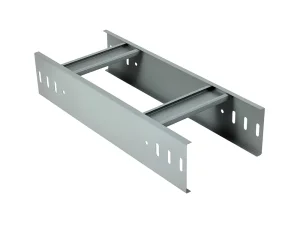
Fireproof Powder-Coated Pre-Galvanized Ladder Cable Tray
Procure Specification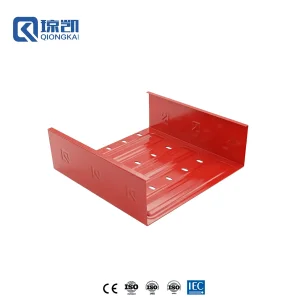
Reinforced Molded Cable Tray (RAL3020 Red) 300*100
Procure Specification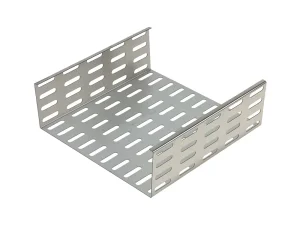
Perforated Industrial Cable Tray 300mm - SS304 Stainless
Procure Specification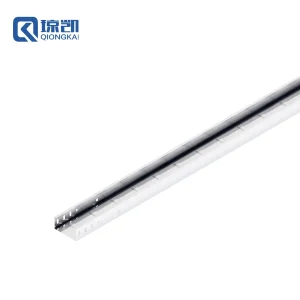
Heavy Duty Reinforced Cable Trunking Channel 100*50
Procure Specification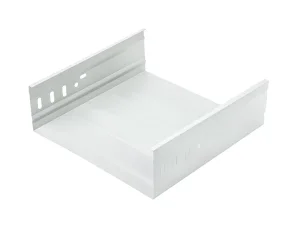
High-Tenacity Lightweight Aluminum Molded Cable Tray
Procure Specification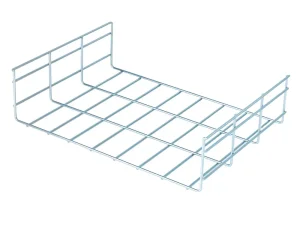
Pre-Galvanized Heavy Grid Wire Mesh Basket Tray 400mm
Procure Specification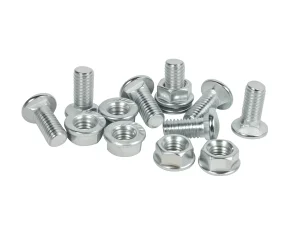
Precision High-Tensile Bridge Frame Splice Screws
Procure Specification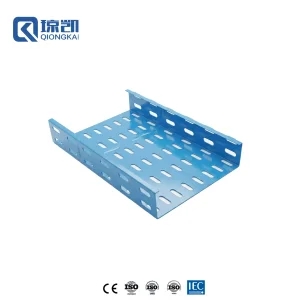
Ribbed Molded Cable Tray (RAL5015 Signal Blue) 200*50
Procure SpecificationInitiate Your Project Bill-of-Materials (BOQ) Audit
Submit your cable schedules, CAD route plans, or technical specifications. Our structural engineers provide comprehensive Safe Working Load calculations, container packing optimizations, and certified factory-direct quotation within 24 hours.