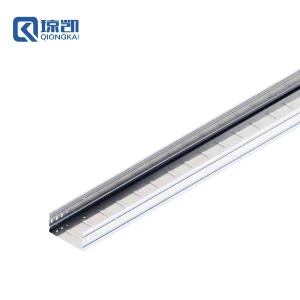
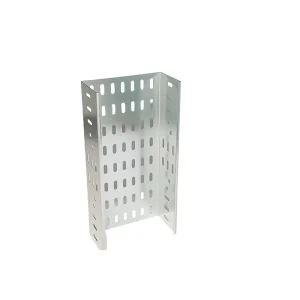
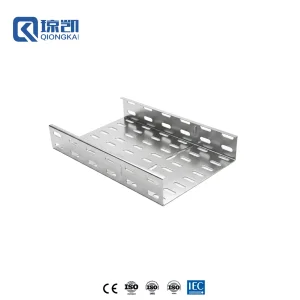
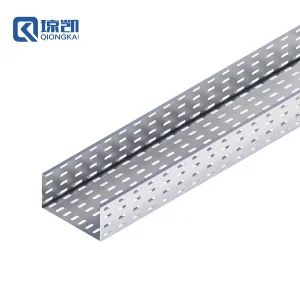
Heavy-Duty & Custom Trunking Series
Precision-machined carbon steel, hot-dip galvanized (HDG), pre-galvanized (PG), stainless steel, and FRP pultruded cable containment systems manufactured to international ISO and NEMA standards.
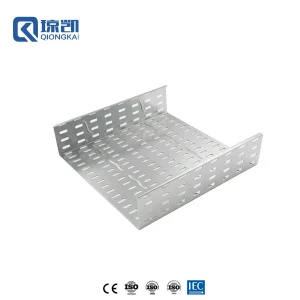
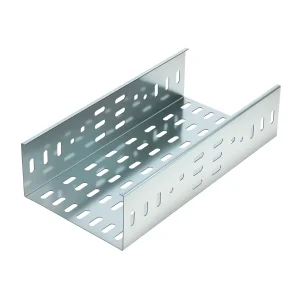
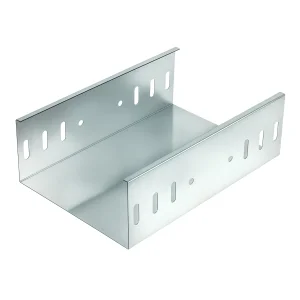
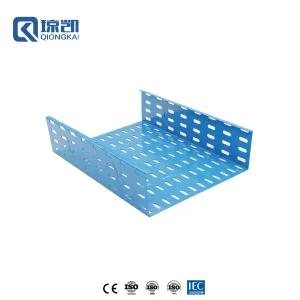
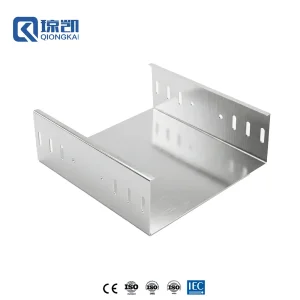
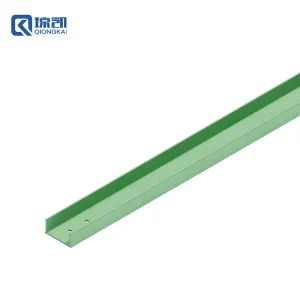
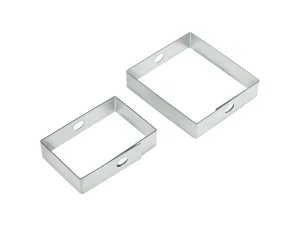
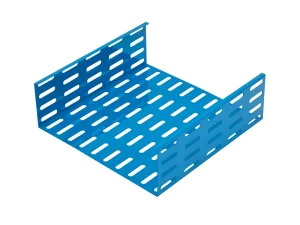
Global Landscape of Electrical Trunking & Pipe Systems
The modernization of industrial cabling enclosures from rudimentary raceways to structurally engineered containment pipelines supporting global energy transition, automation, and megawatt-scale data corridors.
Hyperscale & Grid Electrification
The global push toward renewable power transmission, clean tech manufacturing, and massive artificial intelligence server farms has transformed cable containment. Electrical trunking pipes must now manage significant heat dissipation while withstanding higher dynamic electromagnetic loads under short-circuit conditions.
- Thermally modeled airflow optimization
- Zero-halogen high-safety material compliance
- Continuous grounding integrity certification
Supply Chain Resiliency
Post-pandemic procurement strategies prioritize mills and fabricators capable of vertically integrated production: from automated coil slitting and continuous roll-forming to internal hot-dip galvanizing baths. This model eliminates multi-tier broker markup and guarantees raw material traceability back to certified metallurgical heats.
- Direct mill steel sourcing (Q235B / SS316L)
- Batch-tested galvanizing micron thickness
- Port-proximate logistics in Shanghai hubs
Regulatory Harmonization
Navigating cross-border regulatory constraints requires dual-standard engineering. Export-grade electrical trunking pipelines must align seamlessly across both American (NEMA VE-1 / NEC 392) and European/International (IEC 61537 / BS 4678) design matrices, ensuring global EPC compliance.
- Seismic restraint bracing (ASCE 7-16)
- Corrosion category ratings up to C5-M / CX
- Independent 3rd-party load deflection tests
Engineering Metallurgy & Finish Performance
A detailed examination of cold-roll profiling, yield strength thresholds, slotting configurations, and multi-tier surface barrier coatings designed to withstand aggressive commercial and industrial environments.
| Material Class | Protective Finish / Metallurgy | Yield Strength & Thickness | Corrosion Class (ISO 12944) | Target Applications |
|---|---|---|---|---|
| Pre-Galvanized (PG) Carbon Steel | Continuous hot zinc coating (Z120–Z275 g/m²) | Yield ≥ 235 MPa | 1.0 mm – 2.5 mm | C1 – C2 (Dry Indoor) | Commercial office towers, light industrial ceilings, dry duct shafts |
| Hot-Dip Galvanized (HDG) Steel | Post-fabrication batch immersion (≥65–85 µm) | Yield ≥ 245 MPa | 1.5 mm – 3.0 mm | C3 – C4 (Industrial/Marine) | Heavy manufacturing plants, bridges, petrochemical refineries, coastal yards |
| Austenitic Stainless Steel (304) | Passivated & electro-chemically pickled finish | Yield ≥ 205 MPa | 1.2 mm – 2.0 mm | C4 (Hygienic / Food) | Food processing facilities, beverage plants, pharmaceutical cleanrooms |
| Marine Stainless Steel (316/316L) | High molybdenum alloy with full passivation | Yield ≥ 220 MPa | 1.2 mm – 2.5 mm | C5-M / CX (Offshore) | Offshore oil & gas platforms, LNG terminals, coastal desalinization plants |
| Fiberglass Reinforced Polymer (FRP) | Isophthalic / vinyl ester pultrusion + UV inhibitors | Tensile strength ≥ 300 MPa | Custom | Severe Chemical/Acid | Wastewater treatment, fertilizer manufacturing, acid pickling lines |
| Architectural Powder Coated | Electrostatic thermoset polyester (60–100 µm) | Applied over PG or Carbon Steel base | C2 – C3 (Custom Identification) | Data center server halls (A/B line color coding), exposed ceiling retail |
B2B Price Formulas & Total Cost of Ownership
Understanding how electrical trunking pipe pricing is calculated at the mill level: raw commodity indices, conversion margins, fabrication complexity, and container packing optimization.
The Factory Cost Model Breakdown
Industrial trunking prices are not static catalog numbers; they track raw metallurgical spot markets. A standard quotation consists of four key components:
- Base Steel / Alloy Substrate (55-65%): Indexed directly against regional hot-rolled coil (HRC) spot prices or LME nickel indices for stainless steel.
- Zinc & Finishing Treatment (15-25%): For HDG products, zinc bath consumption (tracking London Metal Exchange zinc prices) plus energy costs dictate per-ton premiums.
- Processing & Precision Roll-Forming (10-15%): Machine amortization, high-speed CNC punching for slotted ventilation patterns, and continuous edge hem forming.
- Quality Control & Protective Packaging (5%): Steel-banded export palletization, interleaf protective films, and corner protectors preventing transport abrasions.
Lifecycle Costing (LCC) Analysis
Savvy procurement teams evaluate Total Cost of Ownership (TCO) over the 25-50 year operational design horizon of an asset rather than lowest initial purchase price (CAPEX):
- Premature Failure Risks: Specifying PG (Pre-Galvanized) in an environment requiring HDG cuts upfront cost by 20%, but results in red rust within 3-5 years, requiring costly line replacement.
- Installation Labor Savings: Integrated snap-fit trunking covers and reinforced profile ribs allow span distances up to 3.0 meters without intermediate trapeze supports, slashing on-site labor by 30%.
- Container Nesting Strategies: Engineered side-wall nesting ratios allow different sizes (e.g., 100x50 nested into 200x100) to double shipping density, cutting ocean freight costs per meter by up to 45%.
Localized Compliance & Structural Safety
Adherence to international structural design criteria, electrical bonding continuity, seismic resistance calculations, and rigorous factory testing protocols.
IEC 61537 & NEMA VE-1 Safe Working Loads
Every profile geometry undergoes strict physical destructive and non-destructive deflection testing. Supported on calibrated test beds, trunking sections are loaded with uniform lead weights to determine Maximum Working Load (WLC) under safe deflection parameters (typically L/200).
Electrical Bonding & Earth Continuity
Under short-circuit fault conditions, cable trunking operates as an integral equipment grounding conductor. Precision splice connectors, serrated grounding washers, and copper-bonding strap kits are tested to maintain impedance well below 0.005 ohms across all joints.
Seismic Bracing & Anti-Vibration Design
For installations in active seismic zones (conforming to ASCE 7-16 and IBC requirements), our channel and trunking assemblies connect directly to rigid anti-sway seismic brackets, mitigating lateral and longitudinal displacement forces during structural drift events.
Field-Tested Application Case Studies
Proven operational performance across demanding global environments, from high-traffic civil aviation facilities to corrosive offshore LNG terminals and heavy-load agricultural complexes.
Civil Aviation: Shanghai Hongqiao Hub
Challenge: Providing continuous, fire-resilient, corrosion-proof electrical distribution across vast underground baggage handling tunnels and passenger boarding piers with dense electromagnetic interference constraints.
Solution: Deployed hundreds of kilometers of customized CT-Series pre-galvanized and powder-coated solid-bottom trunking channels with reinforced cover latches, ensuring IP40 dust protection and zero service disruption.
Offshore & LNG Terminals: Qatar & Thailand
Challenge: Severe tropical maritime atmosphere characterized by continuous salt-laden fog, ambient temperatures exceeding 48°C, and exposure to hydrogen sulfide (H₂S) vapors.
Solution: Engineered non-metallic Fiberglass Reinforced Polymer (FRP) trough trunking paired with custom 316L stainless steel seismic strut channels, delivering total chemical inertness and zero maintenance over a 25-year service life.
Agri-Industrial & Chemical: Paraguay Farm Complex
Challenge: Corrosive organic ammonia compounds, regular high-pressure sanitization washdowns, and strict structural budget caps across a multi-hectare processing plant.
Solution: Supplied heavy-duty reinforced molded pre-galvanized trunking with specialized polyurethane protective topcoats, preventing chemical corrosion while reducing overall structural steel weight by 18%.
Technological Innovations in Cable Containment
The convergence of smart structural monitoring, nano-composite metallurgy, and tool-free modular connectivity shaping the next decade of infrastructure development.
Integrated IoT Sensor Pathways
Embedded distributed fiber-optic temperature sensors (DTS) integrated directly within trunking sidewalls, monitoring thermal runaway in real time along high-voltage DC runs.
Tool-Free Fast-Latch Systems
Patented spring-steel joinery and snap-locking covers eliminating 80% of nuts, bolts, and threaded rods on-site, cutting high-elevation installation time dramatically.
Zinc-Magnesium-Aluminum (ZAM) Coatings
Transition from standard hot-dip galvanizing to third-generation ZAM coatings, offering self-healing cut-edge corrosion resistance 4x superior to traditional pure zinc baths.
Bio-Resin Nano-Composite Polymers
Ultra-lightweight non-metallic trunking utilizing recycled basalt fibers and bio-derived vinyl esters, delivering negative embodied carbon footprints for Net-Zero data builds.
Technical & Procurement FAQ
Authoritative guidance covering sizing formulas, fill capacities, thermal derating calculations, and global delivery logistics.
How do you calculate NEC 392 cable fill ratios for solid trunking?
Under National Electrical Code (NEC) 392, when installing control or signal cables in solid-bottom cable trunking, the sum of cross-sectional areas of all contained conductors shall not exceed 40% of the interior usable cross-sectional area. For power conductors (exceeding 2000V), single-layer spacing must strictly adhere to outer diameter spacing to prevent localized heat pockets.
When is Pre-Galvanized (PG) acceptable versus Hot-Dip Galvanized (HDG)?
Pre-galvanized (PG) steel conforms to ASTM A653 with a coating thickness of roughly 15-20 microns, designed exclusively for indoor, climate-controlled environments (ISO 12944 C1/C2). Hot-Dip Galvanized (HDG) undergoes total immersion post-fabrication according to ISO 1461/ASTM A123, yielding a 65-85+ micron zinc-iron alloy barrier suitable for exterior, industrial, and high-humidity environments (C3/C4).
What is the impact of trunking perforations on thermal ampacity?
Perforated trunking designs provide balanced ventilation that prevents thermal trapping around densely bundled copper/aluminum cores. According to IEC 60364-5-52, utilizing an engineered slotting pattern (28-35% open area) allows electrical engineers to maintain lower derating penalties compared to enclosed solid ducts, saving conductor gauge sizing over long distances.
Can Qiongkai manufacture non-standard widths and profile heights?
Yes. With 12 automated roll-forming and CNC stamping production lines across three factory campuses in the Shanghai region, we regularly fabricate non-standard trough widths (from 50mm up to 1200mm), side rail depths (up to 200mm), and heavy-gauge plate thicknesses (up to 3.0mm) based on detailed contractor CAD/BIM specifications.
How does container nesting affect export logistics costs?
Cable trunking and channel profiles inherently occupy substantial volume. By engineering modular, graduated dimensions (e.g., nesting 100x50mm channels inside 200x100mm, inside 300x100mm units), we maximize container cubic utilization up to 92%, effectively cutting the ocean freight landed cost per linear meter in half.
What documentation accompanies an export shipment of cable trunking?
Standard export orders include Mill Test Certificates (EN 10204 Type 3.1) guaranteeing chemical and physical steel properties, zinc coating thickness measurement reports (magnetic flux method), salt spray test performance logs, IEC compliance declarations, and customized container loading diagrams.
Engineered Channel & Support Systems
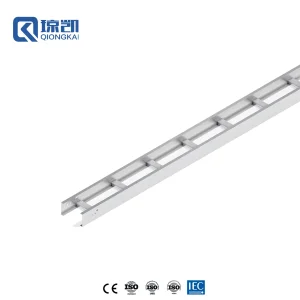
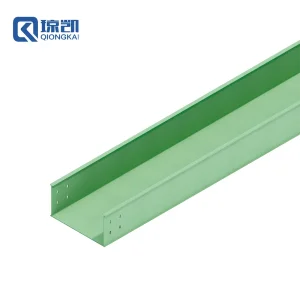
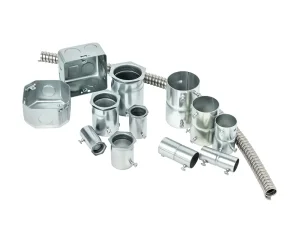
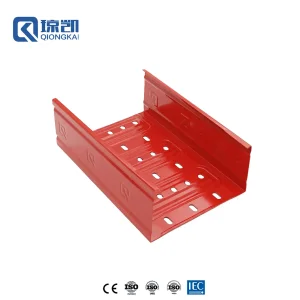
Heavy-duty cable ladders, reinforced channel troughs, precision conduit fittings, and color-coded containment solutions engineered for rapid job-site installation.