
Certified High-Load Cable Trays & Penetration Routing Systems
Tested alongside industry-standard intumescent blocks, firestop mortars, and elastomeric seals, Qiongkai's engineered pre-galvanized, powder-coated, and molded cable trays maintain load integrity through thermal expansion and extreme heat regimes.
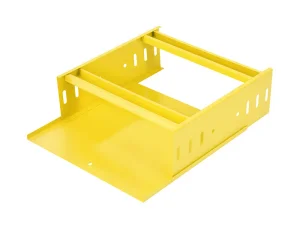
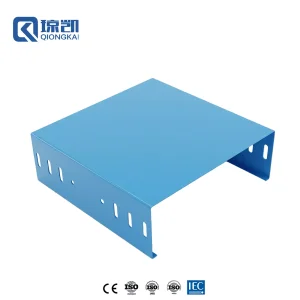
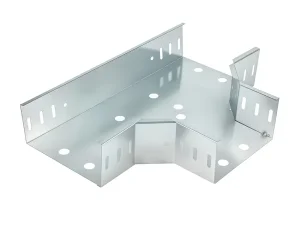
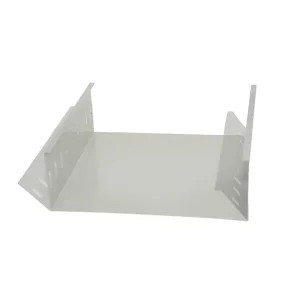
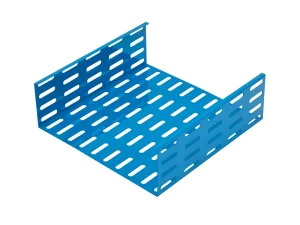
Global Sourcing Demands & Price Determination Factors
Procurement managers and lead M&E consultants frequently confront significant budget volatility when specifying passive fire stopping around continuous electrical runs. Analyzing how certified tray geometries interface with penetration sealants unlocks lifecycle savings.
Material Composition & Intumescent Density
Fire stopping around cable penetrations relies on high-expansion intumescent sealants, ablative silicone coatings, pre-formed modular firestop elastomeric blocks, or composite mineral wool batt boards. Pricing scales steeply based on graphite purity, resin stabilization agents, and endothermic water-vapor release performance under standard cellulosic (ISO 834) or rapid hydrocarbon (UL 1709) temperature rise curves.
Direct Cost Factor: 35-45%Testing Accreditation & Listing Rigor
Buying firestop systems requires validated test reports matching the exact cable loading profile (e.g., 0% to 100% visual cable fill). Systems certified for both F-Rating (Flame spread barrier) and T-Rating (Thermal transmission resistance) through UL 1479 / ASTM E814 or EN 1366-3 command a justified premium over unlisted commodity mastics, mitigating severe corporate liability risks during AHJ audits.
Certification Premium: 15-20%Integrated Structural Penetration Design
When high-density power feeders cross fire-rated walls or floors, standard practice requires continuous or segmented cable trays. Sourcing directly from an integrated manufacturer like Qiongkai eliminates interface mismatches between galvanized/powder-coated cable ladder side-rails and transit frames. Procurement teams capture up to 30% aggregate procurement savings compared to multi-tier distributor markups.
Direct Savings: 20-30%Years Manufacturing Heavy Support Systems (Since 2005)
Direct Manufacturing Facilities in Shanghai Hub
Automated Roll-Forming & Tray Assembly Lines
Maximum Tested Penetration Integrity & Insulation Ratings
Macro-Industry Solutions for Complex Cable Pathways
Fire stopping around cables is not a one-size-fits-all commodity. Different operating environments present unique challenges ranging from thermal derating and chemical washdowns to explosive gas atmospheres and constant re-cabling.
Hyperscale Data Centers & Colocation
Data halls require zero-dust, halogen-free, and re-penetrable cable transit frames. As fiber optic bundles and Cat6A cables are constantly added or retired, elastomeric modular blocks allow toolless moves, adds, and changes (MACs) while maintaining stringent L-Ratings (< 1 CFM/sq ft air leakage) to preserve cold aisle containment pressurization.
Focus: Air Leakage & Re-entryOffshore Oil, Gas & Petrochemical
Subjected to harsh marine salts and explosive vapors, penetration firestop transits require marine-grade 316L stainless steel framing or pultruded FRP combined with certified EPDM blocks. The assembly must resist 1.5-bar water pressure, withstand 3.5-bar blast shockwaves, and meet stringent IMO FTP Code A-60 / H-120 hydrocarbon fire endurance.
Focus: Blast, Salt & H-Class FiresHeavy Manufacturing & Foundries
Continuous heavy industrial power routing suffers significant heat buildup. Tight cable packing inside traditional mortar firestops causes thermal choking and severe ampacity derating per IEEE 848. Qiongkai supplies high-load ventilated ladder trays paired with wide-throat fire barrier collars that ensure natural heat dissipation during normal plant operation.
Focus: Ampacity & High HeatTransit Subways & High-Speed Rail
Underground tunnels prioritize life safety via low smoke toxicity and zero halogen (LSZH) mandates under NFPA 130 and EN 45545. Cable fire barriers must prevent toxic smoke migration across passenger evacuation shafts while accommodating high dynamic cyclic vibrations caused by passing trains without cracking or settling.
Focus: Toxicity & Cyclic VibrationGlobal Standards Comparison: ASTM E814 / UL 1479 vs EN 1366-3
Specifying fire stopping around cables requires navigating divergent regional performance mandates. Understanding the subtle performance criteria prevents critical site failures during Authority Having Jurisdiction (AHJ) building inspections.
| Standard / Code | Primary Jurisdiction | Core Classification Metrics | Hose Stream Test Mandate | Thermal Derating Evaluation | Typical Applications |
|---|---|---|---|---|---|
| ASTM E814 / UL 1479 | North America, Middle East, APAC |
F-Rating (Flame: 1-4 hrs) T-Rating (Temp < 163°C) L-Rating (Air Leakage) |
Mandatory: High-pressure water stream immediately post-burn | Optional test protocol (IEEE 848 standard) | Commercial towers, hyperscale data halls, hospitals, US DoD infrastructure |
| EN 1366-3 (CE Marked) | European Union, UK (BS EN), Australia |
E (Integrity: 30-240 min) I (Insulation: 30-240 min) W (Water tightness) |
Not Standard: Focuses on mechanical load stability during burn | Standardized inside EN test guidelines | EU infrastructure, industrial processing plants, commercial real estate |
| IEC 60332-3 / IEC 60331 | International Marine & Industrial |
Flame Retardancy Circuit Integrity (FE180) |
Conditional for marine transit frames | Assessed under continuous electrical current loading | Offshore rigs, marine vessels, naval vessels, chemical production plants |
| GB 23864-2009 | Chinese Mainland & Belt & Road |
Fire Resistance Class 1-3 Smoke Sealing Index |
Required for Class 1 penetration ratings | Evaluated for high-voltage power cable routes | State grid utility tunnels, mega airports, high-speed rail hubs |
Understanding F-Rating vs. T-Rating in Dense Cable Tray Clusters
In high-density industrial installations, achieving a 2-hour F-Rating (Flame Integrity) is relatively straightforward with standard intumescent sealant or mineral wool wraps. However, achieving the corresponding 2-hour T-Rating (Temperature Limitation) is substantially more difficult because copper and aluminum conductors inside electrical cables possess exceptionally high thermal conductivity coefficients ($k \approx 385\text{ W/(m}\cdot\text{K)}$ for copper). Conductive heat rapidly travels along the copper core through the center of the seal, potentially igniting combustible jacketing material on the unexposed non-fire side.
To resolve this, Qiongkai's engineering department recommends utilizing ventilated ladder trays with integrated thermal decoupling standoffs, or deploying engineered ablative wrap collars extended along the cable tray 300mm to 600mm outward from both faces of the penetrated partition.
Engineering Frontiers: Smart Materials & Digital Twins
Passive fire protection is rapidly evolving from static chemical sealants into intelligent, digitally monitored life-safety infrastructure. Here are the core technological shifts transforming global cable penetration practices.
Nano-Engineered Bio-Intumescents
Traditional intumescent firestop mastics rely on expandable expandable graphite with petroleum-derived plasticizers that can experience outgassing and embrittlement after 10-15 years. Emerging formulations incorporate silane-modified bio-polymers and carbon nanotubes. These next-generation composites expand up to 40x their original volume at lower triggering temperatures (140°C), creating an ultra-dense, non-spalling ceramic char layer that completely seals high-voltage cable bundle voids in milliseconds.
Key Metric: Zero VOC & 40-Year LifespanRFID-Tagged BIM Penetration Twins
Cable transits are now serialized with embedded passive UHF RFID tags linked directly into Revit/Navisworks BIM models. Facility managers scan transits with smartphones to inspect historical fire ratings, visual fill ratios, technician installation records, and permissible remaining cable capacity. This eliminates invasive physical disassembly during mandatory ISO 55000 asset integrity audits and annual fire safety recertifications.
Key Metric: 100% Audit CompliancePrefabricated Plug-and-Play Fire Modules
Manual wet-seal caulking of irregular holes on site introduces extreme human variance, with up to 28% of field-caulked penetrations failing inspection due to insufficient depth or incorrect annular clearances. The industry is standardizing on pre-formed circular and rectangular cast-in firestop transit sleeves installed before concrete pouring, cutting site installation time by 75%.
Key Metric: 75% Faster InstallationGlobal Logistics, Localization & Quality Governance
Exporting heavy cable containment systems and certified penetration components across international borders demands comprehensive metallurgical traceability and regional compliance verification.
Full Mill Traceability & MTC 3.1
Every cable ladder, perforated tray, and structural strut channel manufactured by Shanghai Qiongkai Industry is backed by EN 10204 3.1 Mill Test Certificates. From raw hot-rolled carbon steel coils (Q235B / Q355B) to 304/316L stainless steel alloys and high-purity zinc ingots, all raw inputs are batch-tested for chemical composition, yield strength, and elongation before entering our 12 automated roll-forming lines.
Pre-Galvanizing vs HDG Coating Integrity
Corrosion resistance directly influences mechanical load-bearing capacity under fire conditions. Our pre-galvanized lines deliver uniform zinc layers (Z120–Z275), while our batch hot-dip galvanizing baths (HDG per ASTM A123 / ISO 1461) achieve coating thicknesses exceeding 65–85 μm. This robust coating resists premature thermal flaking when exposed to intumescent mastic expansion during fire emergency events.
Direct Shanghai Port Ocean Export Logistics
Headquartered in Songjiang Port Science & Technology City, Shanghai, Qiongkai utilizes immediate access to both Shanghai Waigaoqiao and Yangshan deep-water ports. We provide specialized container loading optimization (fumigated wooden crates, waterproof membrane wrapping, and heavy-duty steel banding) to guarantee zero transit warping or moisture condensation damage on export shipments to the EU, Middle East, and Americas.
Direct-From-Manufacturer Price Schedules & MOQs
Empirical factory benchmark pricing for heavy-duty cable management systems, penetration sleeves, and integrated fire-rated accessories. Volume tiers reflect direct containerized ocean freight orders.
| Product System / Specification | Material & Protective Finish | Standard Dimension Range | Tested Fire Integrity | Factory Unit Price (USD) | Standard MOQ / Lead Time |
|---|---|---|---|---|---|
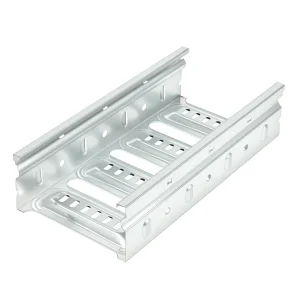
| Pre-Galvanized Cable Ladder | Carbon Steel Q235B (Z180-Z275) | W: 100–1000mm | H: 50–150mm | Tested 60–120 min with fire barrier | $8.50 – $22.00 / meter | 500 Meters | 10-15 Days |
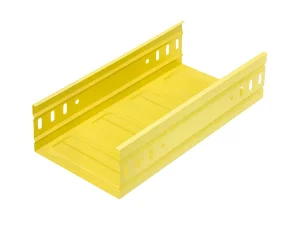
| Fireproof Molded Cable Tray (Yellow) | Pre-Galvanized + Flame Retardant Powder | W: 100–600mm | H: 50–100mm | 120 min integrity barrier tested | $11.80 – $29.50 / meter | 300 Meters | 14-18 Days |
| Heavy Duty Ribbed HDG Tray | Hot-Dip Galvanized (>65μm Zinc) | W: 200–800mm | H: 100–150mm | 120–180 min structural load support | $14.20 – $38.00 / meter | 300 Meters | 15-20 Days |
| Stainless Steel 316L Perforated Tray | Marine Grade Austenitic SS316L | W: 100–600mm | H: 50–100mm | Up to 240 min hydrocarbon exposure | $28.00 – $76.00 / meter | 200 Meters | 18-25 Days |
| FRP / GRP Heavy-Duty Ladder Tray | Pultruded Vinyl Ester Glass Fiber | W: 150–900mm | H: 100–150mm | Class 1 Flame Spread (ASTM E84 ≤ 25) | $24.50 – $65.00 / meter | 200 Meters | 15-22 Days |
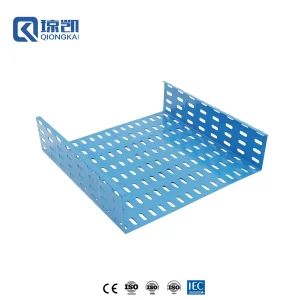
| Cable Trunking Trough Channel (RAL Blue) | Electrostatic Powder Coated Steel | W: 50–400mm | H: 50–100mm | 60–90 min smoke containment | $9.20 – $24.80 / meter | 500 Meters | 12-16 Days |
* Note: Prices are indicative FOB Shanghai. Exact figures vary according to global steel indices (SHFE/LME), raw polymer spot prices, custom punch tooling requirements, and total project volume tiers.
Specialty Corrosion-Resistant & Reinforced Tray Systems
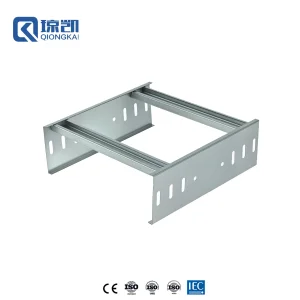
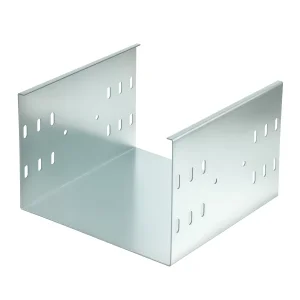
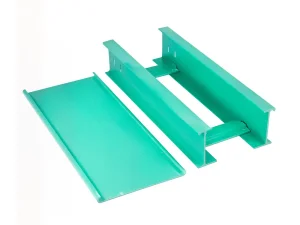
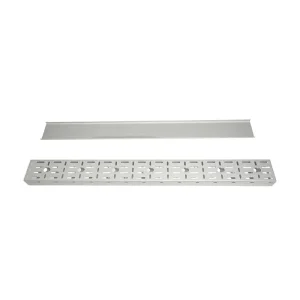
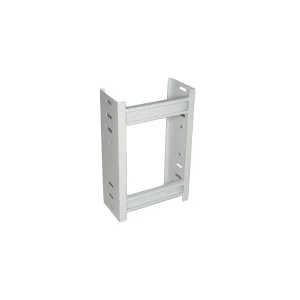
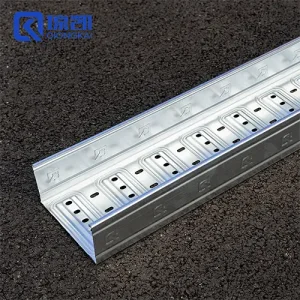
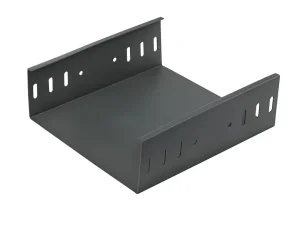
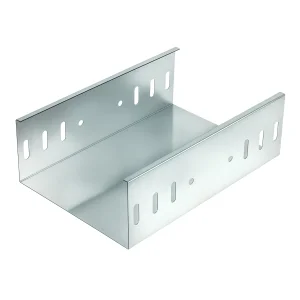
Explore our heavy-duty industrial framing portfolio, including FRP composite ladders for acidic coastal environments, deep-draw reinforced channels, and architectural powder-coated cable trunking.
Frequently Asked Questions: Fire Stopping Around Cables
Technical clarification on cable ampacity derating, structural supports, ASTM/UL listings, and field installation best practices for MEP consultants and procurement teams.
How does installing fire stopping around cables affect conductor ampacity derating?
Wrapping dense cable bundles with thermal firestop mortars, ablative coatings, or tight intumescent pillows restricts normal convective and radiative heat dissipation away from the current-carrying conductors. Under IEEE 848 (Standard Procedure for the Determination of the Ampacity Derating of Fire-Protected Cables), enclosing cable trays inside continuous fire wraps or thick barrier penetrations can induce an ampacity derating penalty between 8% and 28% depending on the total fill depth and tray ventilation factor.
To mitigate overheating and avoid oversizing electrical conductors, engineering designers specify ventilated cable ladders over solid-bottom trough channels and apply specialized thin-film intumescent coatings that remain thermally conductive during normal operational ambient temperatures, expanding only when reaching critical flashover thresholds (>180°C).
What is the maximum allowable visual cable fill percentage in firestop penetrations?
Under most tested UL 1479 and EN 1366-3 system listings, the maximum allowable visual cable fill within a penetration aperture typically ranges between 25% and 45% of the overall wall opening area. A minimum clearance (annular space) of at least 25mm to 50mm must be maintained between individual cable jackets and the opening boundary to ensure intumescent compound can flow completely around each cable during a thermal event.
If cables are bundled tightly together in a solid mass without space between conductors, the expanding char cannot reach the center cables, allowing combustible plastic sheaths to melt and create internal smoke channels. For ultra-dense installations, mechanical cable transit frames with individual elastomeric elastomeric inserts are strictly required.
Can cable trays pass continuously through fire-rated walls without being cut?
Yes, provided the continuous cable tray installation is explicitly backed by a tested and listed firestop design (e.g., UL System C-AJ-4000 series or equivalent EN 1366-3 configurations). In such designs, the steel side-rails and rungs traverse through the firestop mortar or coated mineral wool board. However, the tray must be mechanically supported within 300mm to 450mm of both sides of the wall partition using certified strut channel brackets or threaded rod trapeze supports.
Independent structural bracing ensures that if the tray on one side of the wall collapses under thermal deflection during a fire, it will not physically dislodge or shear the fire barrier seal inside the partition wall, which would instantly breach compartmentation integrity.
How do pre-galvanized (PG) trays compare to hot-dip galvanized (HDG) and FRP trays under fire conditions?
Pre-galvanized (PG) steel trays maintain structural steel integrity up to structural transition temperatures (approximately 450°C to 550°C) before experiencing yield strength reduction; however, the thin zinc layer (≤20μm) offers zero ablative fire resistance. Hot-Dip Galvanized (HDG) trays feature a substantially thicker zinc-iron alloy layer (>65μm) that provides enhanced oxidative resistance at elevated temperatures, retaining mechanical stability longer in humid or industrial atmospheres.
Fiber-Reinforced Polymer (FRP/GRP) cable trays behave completely differently: while inherently non-conductive and immune to corrosive chemical acids, standard thermoset resins will burn unless formulated with specialized brominated fire-retardant vinyl ester resins and antimony trioxide fillers. Even when achieving an ASTM E84 Class 1 rating (flame spread ≤ 25), FRP trays undergo thermal decomposition under sustained direct flame exposure, necessitating external fire barrier blankets when fire endurance ratings exceeding 60 minutes are required.
What documentation should procurement teams demand to ensure AHJ inspection approval?
To avoid costly project sign-off delays during site inspections by local Authorities Having Jurisdiction (AHJ) or civil defense authorities, procurement teams must secure:
1. Official Laboratory Test Certificates: Test reports from internationally accredited bodies (Underwriters Laboratories / Intertek / Warringtonfire) specifying exact wall substrates (concrete, gypsum drywall, masonry) and cable loadings.
2. Manufacturer Mill Test Certificates (EN 10204 3.1): Confirming steel gauge thickness, zinc coating weight, and tensile strength of the cable tray supports.
3. Engineering Judgments (EJ) / Technical Evaluations: If on-site annular gaps, tray sizes, or cable groupings deviate from published standard listings, an authorized Engineering Judgment signed by a licensed fire protection engineer (FPE) is legally mandatory prior to inspection sign-off.
Equipping an Industrial Facility or Hyperscale Data Center?
Partner directly with Shanghai Qiongkai Industry Co., Ltd. Get complete engineering submittal packages, structural tray load calculations, and competitive direct factory pricing schedules for containerized international delivery.