
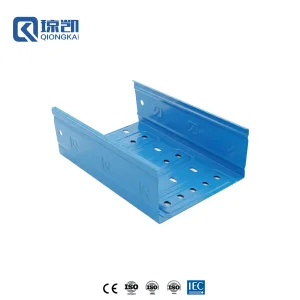
Primary Product Showcase
Engineered Cable Routing Catalog (Series I)
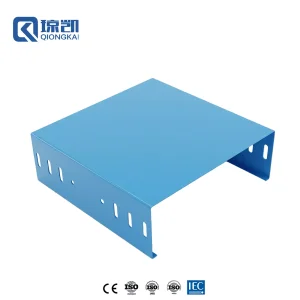
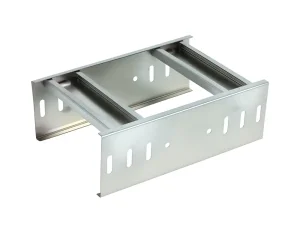
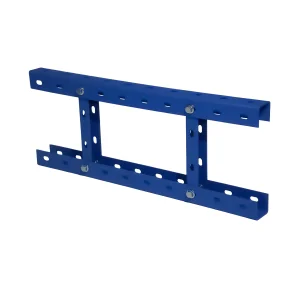
Precision-machined, perforated, trunking, and ladder cable trays manufactured for extreme structural resilience, corrosive durability, and rapid site installation.
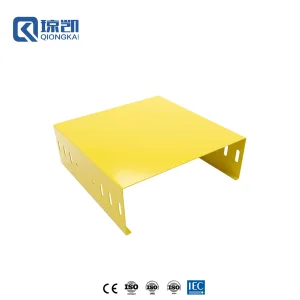
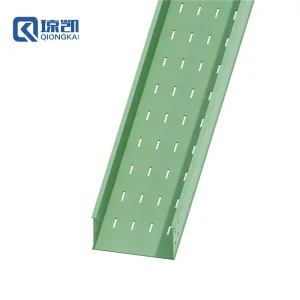
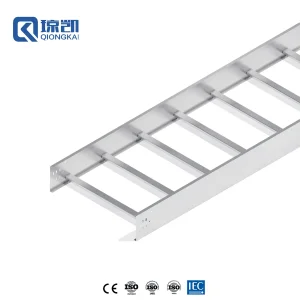
Technical White Paper
Material Science of Fiber-Reinforced Polymer (FRP/GRP) Trays
Demystifying composite formulations, pultrusion continuous molding, structural resin matrixes, and physical load behaviors under extreme thermal and chemical stressors.
In high-stakes industrial electrical design, cable trays are not mere passive conduits; they are critical lifelines maintaining the integrity of control, signal, instrumentation, and power distribution systems. While galvanized carbon steel and stainless steel alloys have historically dominated commercial installations, severe corrosive operating environments—such as offshore LNG terminals, chlor-alkali chemical processing plants, and coastal desalination facilities—quickly exhaust the sacrificial zinc layers of hot-dip galvanized (HDG) units, leading to catastrophic structural degradation. This is where Fiberglass Reinforced Plastic (FRP) and Glass Reinforced Plastic (GRP) cable tray systems establish an unassailable technical advantage.
Manufactured primarily through an advanced continuous pultrusion process, FRP cable trays integrate continuous strand fiberglass rovings, multi-directional continuous filament mats, and a thermosetting resin matrix pulled under immense hydraulic tension through high-precision heated chromium-plated steel dies. The resulting structural cross-section delivers an extraordinary strength-to-weight ratio that rivals structural steel while maintaining total biological inertness, high dielectric resistance, and zero metallic oxidation.
Isophthalic Polyester (FR-P)
The global benchmark for cost-effective industrial performance. Engineered with halogenated flame retardants and UV-inhibited additives to offer solid general-purpose acid and moderate chemical resistance.
- ASTM E84 Class 1 Flame Spread (≤ 25)
- Ideal for Water Treatment & Warehousing
- Continuous Temp: -40°C to +90°C
Vinyl Ester (FR-VE)
Premium grade formulated for severe chemical processing environments subject to aggressive acid vapors, chlorine gas, caustics, and extreme marine hydrocarbon splash zones.
- Superior Alkaline & Organic Solvent Barrier
- Offshore Platforms & Fertilizer Complexes
- Continuous Temp: -50°C to +120°C
Epoxy & Zero-Halogen (LSZH)
High-end composite matrix engineered specifically for enclosed transit subways, data centers, and cleanrooms requiring near-zero toxicity, minimal smoke density, and zero acidic gas emission.
- Low Smoke Zero Halogen (BS 6853 / EN 45545)
- Exceptional Dielectric Insulation
- Unmatched Flexural Fatigue Resistance
Supply Chain Competitiveness
Why International EPCs Source FRP Trays from Chinese Direct Factories
Analyzing economies of scale, raw resin cluster integration, bespoke tooling speed, and full compliance with international testing frameworks.
Integrated Raw Material Clusters
Chinese polymer hubs aggregate fiberglass roving, cross-linking initiators, and unsaturated polyester/vinyl ester polymer facilities within a 100km radius. This vertical ecosystem guarantees unbroken raw material availability, mitigating international resin price volatility.
Rapid Custom Die & Mold Tooling
Unlike Western supply chains constrained by months-long tooling turnaround, Tier-1 Chinese manufacturers like Qiongkai fabricate custom cross-sectional extrusion dies and custom injection molds for odd-sized side rails, rungs, and snap-on covers in under 15 days.
30% to 50% CapEx Optimization
Direct factory procurement eliminates redundant intermediary markups. By managing compounding, molding, punching, testing, and multi-modal container packaging on-site, total landed procurement cost (TCO) is reduced by up to 50% on massive utility-scale tenders.
Material Selection Matrix
Engineering Evaluation: FRP Composite vs. Metallic Systems
Review the trade-offs between composite polymers, hot-dip galvanizing, and marine-grade stainless steels across chemical, electrical, and structural parameters.
| Evaluation Parameter | FRP/GRP (Vinyl Ester) | FRP/GRP (Polyester) | Hot-Dip Galvanized (HDG) | Stainless Steel (316L) |
|---|---|---|---|---|
| Corrosion Resistance (C5-M Marine/Acid) | Outstanding (Immune) | Excellent | Moderate (Sacrificial) | High (Pitting Risk) |
| Weight Ratio (vs Carbon Steel) | ~60% Lighter | ~60% Lighter | Standard Baseline (1.0x) | Standard Baseline (1.0x) |
| Electrical Conductivity | Non-Conductive (Insulator) | Non-Conductive (Insulator) | Highly Conductive | Highly Conductive |
| Grounding / Bonding Overhead | Zero Bonding Required | Zero Bonding Required | Mandatory Jumper Straps | Mandatory Jumper Straps |
| Field Modification & Cold Cutting | Easy (No Edge Rusting) | Easy (No Edge Rusting) | Cold Galvanizing Paint Req. | Difficult (Pickling Req.) |
| 30-Year Lifecycle Cost (TCO) | Lowest (Zero Maintenance) | Extremely Low | High (Periodic Recoat) | Very High Initial CapEx |
Macro Application Profiles
Engineered Deployment Scenarios Across Global Heavy Industry
Field-tested methodologies for routing power and control cables across corrosive, offshore, high-moisture, and electrically hazardous environments.
Offshore Platforms & Marine LNG
Salt spray, high UV index, and continuous vibration degrade standard protective coatings within 24 to 36 months. Qiongkai's high-grade Vinyl Ester ladder trays provide 40+ years of maintenance-free service life across offshore extraction decks, floating production vessels (FPSO), and coastal LNG regasification complexes.
Wastewater & Chlor-Alkali Plants
Hydrogen sulfide (H2S), sulfuric acid, and wet chlorine gas rapidly attack steel containment. Solid-bottom and perforated FRP trough trays shield process instrumentation cables from corrosive liquids, condensation drips, and harmful chemical vapors without structural decay.
Clean Energy, Solar & Hyperscale Data
Utility-scale photovoltaic farms installed in deserts or alkaline soils require lightweight, UV-stable overhead routing that avoids galvanic corrosion when mounted directly to aluminum purlins. Meanwhile, data centers leverage color-coded trunking for rapid rack-level cable management.
Extended Product Directory
Engineered Cable Routing Catalog (Series II)
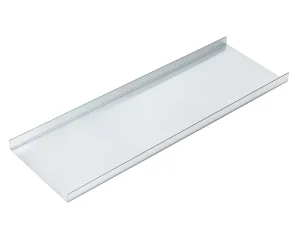
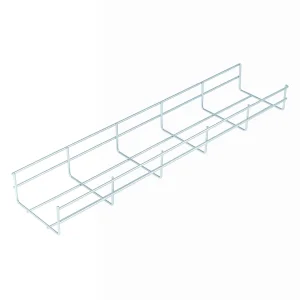
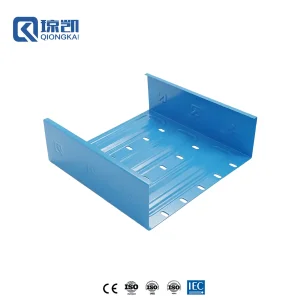
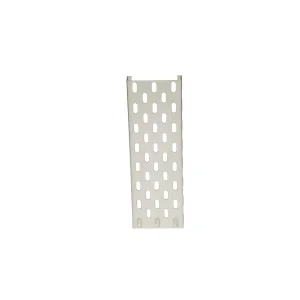
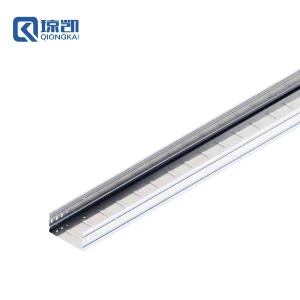
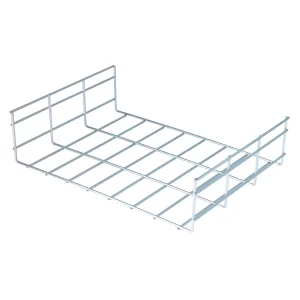
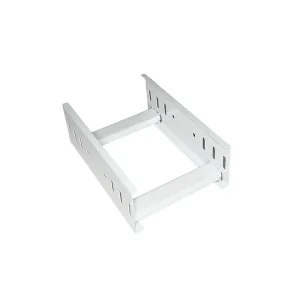
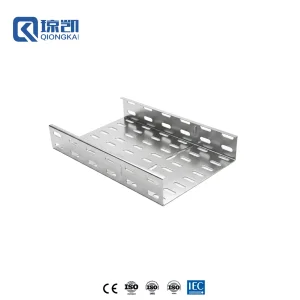
Pre-galvanized grid wire basket trays, reinforced channel trunking, protective cover assemblies, and extreme-environment cable ladders.
EPC Procurement Framework
International Standards & Factory Inspection Checklist
Standard operating procedures (SOP) for QA/QC engineers and commercial procurement teams evaluating Chinese composite manufacturers.
NEMA FG 1 & IEC 61537 Verification
Structural load verification requires non-destructive and destructive three-point bending tests across maximum span lengths (up to 6 meters). Safe Working Load (SWL) certifications confirm deflection ratios remain well under 1/200th of the span distance.
Barcol Hardness & Ignition Loss Testing
Proper cure chemistry is validated via ASTM D2583 Barcol Hardness testing (> 50). ASTM D2584 ignition loss analysis confirms reinforcing fiberglass content accounts for greater than 55% of total mass, ensuring structural integrity under thermal stress.
ASTM E84 & UL94 Flammability Compliance
Critical infrastructure demands Class 1 flame-spread ratings (≤ 25) and self-extinguishing characteristics. Factory mill certificates must include certified third-party testing (SGS, TUV, or Intertek) demonstrating compliance with UL94 V-0.
Procurement Q&A
Frequently Asked Questions by Global EPC & Electrical Engineers
Detailed answers resolving technical, commercial, logistical, and material selection inquiries regarding FRP cable containment.
What are the key technical differences between Polyester and Vinyl Ester FRP cable trays?
Polyester resins provide exceptional mechanical load bearing and moderate corrosion resistance at a lower price point, making them ideal for wastewater treatment, light commercial infrastructure, and non-critical industrial plants. Vinyl Ester resins, by contrast, possess an enhanced molecular backbone with fewer ester linkages, conferring maximum resistance to caustic alkalis, chlorinated compounds, raw crude oil, and organic acids. Vinyl ester is the mandatory standard for offshore LNG facilities, chlor-alkali production, and coastal petrochemical complexes.
Do FRP cable trays require electrical grounding and bonding straps?
No. Unlike metallic cable trays (HDG carbon steel, aluminum, stainless steel) which must be continuously bonded with copper ground jumpers at every joint to prevent hazardous stray voltages and electrical shock hazards, FRP is an electrical non-conductor. It does not carry stray currents, will not generate electrical arching, and completely eliminates bonding labor during field installation.
How do FRP cable trays accommodate thermal expansion in extreme desert or arctic climates?
The linear thermal expansion coefficient of fiberglass is approximately 5.0 × 10^-6 in/in/°F (similar to structural steel, and significantly lower than aluminum). On long outdoor straight runs experiencing substantial seasonal temperature differentials (ΔT > 40°C), expansion splice plates with slotted bolt holes and specific gap-setting guidelines (calculated per NEMA FG 1 standards) are installed every 30 to 50 meters to prevent thermal buckling.
How should site contractors cut, drill, and seal FRP cable trays in the field?
Field fabrication is straightforward and significantly faster than working with stainless steel. Trays can be cut using carbide-tipped saw blades, diamond grit abrasive wheels, or standard circular saws. Holes are drilled using high-speed steel (HSS) bits. Because composite materials do not oxidize, no hot-dip zinc re-coating is needed; however, to maintain long-term chemical resistance and prevent fiber wicking, cut edges and newly drilled holes should be brush-sealed with a compatible two-part polyurethane or clear vinyl ester resin sealant.
What certifications and third-party inspection reports does Qiongkai furnish for export tenders?
Qiongkai maintains complete documentation compliance for international EPC delivery, including ISO 9001, ISO 14001, and ISO 45001 certificates, CE conformity documentation, ASTM E84 Class 1 fire test reports, UL94 V-0 flame ratings, Barcol hardness test sheets, and structural load deflection charts conducted in accordance with NEMA VE 1 / FG 1 and IEC 61537 standards. Pre-shipment inspections by SGS, Bureau Veritas, or Intertek are welcome.