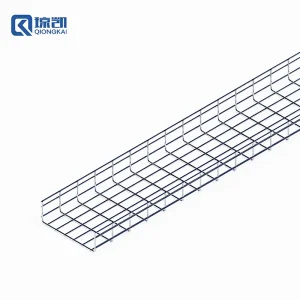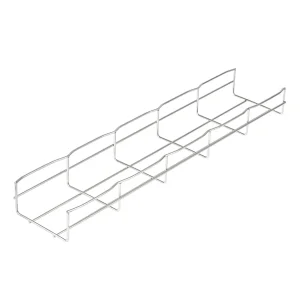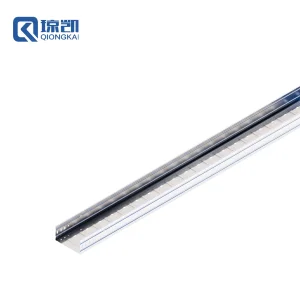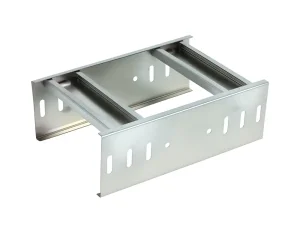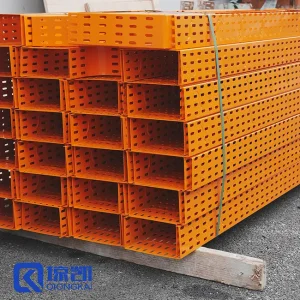
Direct Component Sourcing
Primary Route Cable Trays & Structural Components
Engineered for dynamic load conditions, critical bend intersections, and long-span containment infrastructures.
Technical Whitepaper Breakdown
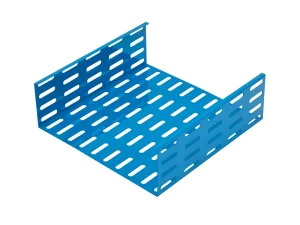
Horizontal Bend Cable Tray: Mechanics, Geometry & Pricing Models
An authoritative engineering analysis for MEP consultants, structural engineers, and commercial procurement directors.
Radial Mechanics & Cable Integrity
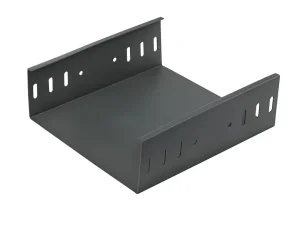
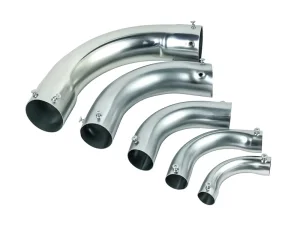
Horizontal bends (30°, 45°, 60°, and 90°) serve as critical plane-diversion conduits. Choosing inadequate bend radii causes insulation shear and conductor de-rating. Qiongkai manufacturers all bends with precise radii (300mm to 900mm) matching ICEA S-76-474 guidelines.
Direct B2B Pricing Structure
Tray fitting pricing is strictly determined by blank steel sheet dimensions, stamping wastage, weld operations, and anti-corrosion coating mass. Direct factory purchases bypass trade margins, slashing 20-35% on complete containment bills of quantities (BOQ).
Seismic & Dynamic Loading
Directional momentum shifts during power-surge short circuits create localized rotational torque at bend junctures. Our welded reinforcing gussets and flanged corner profiles ensure complete mechanical continuity compliant with IEC 61537 Section 10.3.
| Profile Specification | Material Standard | Standard Radii (R) | Estimated Weight Factor | Market Price Benchmark ($/pc) |
|---|---|---|---|---|
| Horizontal Bend 90° (200×100) | Pre-Galvanized (PG) Q235B | 300 mm / 600 mm | 1.25x Straight Section Basis | $12.50 – $16.80 |
| Horizontal Bend 90° (400×150) | Hot-Dip Galvanized (HDG) ISO 1461 | 300 mm / 600 mm / 900 mm | 1.45x Straight Section Basis | $28.20 – $36.50 |
| Horizontal Bend 45°/90° (600×150) | Stainless Steel AISI 316L | 600 mm / 900 mm | 1.85x High Load Weldment | $85.00 – $118.00 |
| FRP Chem-Resist Bend (100–400W) | Vinyl Ester / Polyester Resin | 300 mm / 450 mm | 0.45x Carbon Steel Equivalent | $32.00 – $64.00 |
Cross-Sector Engineering
Global Industrial Deployments & Macro Solutions
Proven across complex environments from international aviation terminals to hyperscale AI data halls.
Aviation & Transit Hubs
Supplied custom CT series trunking and smooth-transition bends to Shanghai Hongqiao International Airport, providing zero-friction cable pulls across terminal power spines.
LNG & Offshore Oil
Engineered structural profile sections and SS316 horizontal transition bends for an Offshore LNG platform project in Qatar, resisting extreme chloride-induced stress corrosion cracking.
Hyperscale Data Centers
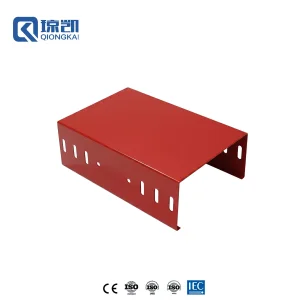
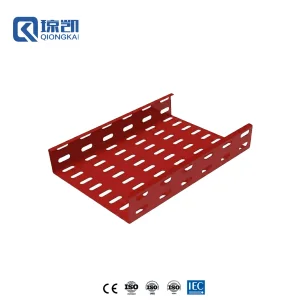
Deploys color-coded RAL3020 red and orange powder-coated bends for visual segregated routing of Tier IV hyperscale server farms, isolating fiber optic backbones from high-voltage distribution lines.
Heavy Agriculture & Bio-Chemical
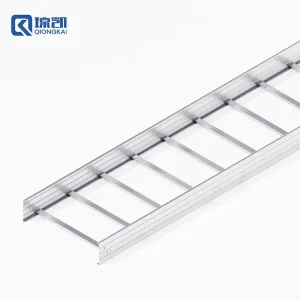
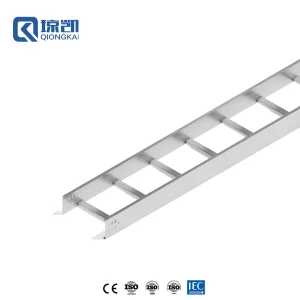
Cost-optimized, ultra-rigid HDG ladder and bend assemblies delivered to a large-scale industrial farming complex in Paraguay, withstanding constant methane and humidity exposure.
E-E-A-T Authority Framework
Compliance Assurance & Manufacturing Technology Roadmap
Combining rigorous metallurgic compliance with next-generation robotic cold-roll production lines.
Global Certification & Traceability
Every horizontal bend from Shanghai Qiongkai ships with full Mill Test Certificates (EN 10204 3.1), hot-dip galvanizing thickness logs (ASTM A123 / ISO 1461 min 85μm), and salt-spray corrosion tests exceeding 720 hours.
Automated Robotic Stamping
By shifting from manual segment welding to continuous stamping dies and 3D fiber laser contouring, our factory eliminates interior burrs, guarantees absolute angle accuracy, and prevents outer radius micro-fractures.
Future Outlook: BIM Integration
We provide Revit and IFC BIM files for all horizontal elbows, reducers, and tees, enabling MEP design teams to simulate raceway clashes and structural weight distributions long before container delivery.
Procurement Knowledge Base
Frequently Asked Questions
Direct answers addressing technical parameters, bend installation, and bulk pricing schedules.
What are the key determinants of horizontal bend cable tray prices?
Bend prices are primarily governed by: (1) Raw material cost (Carbon Steel Q235B, SS304, SS316, or Aluminum), (2) Sheet metal gauge (typically 1.2mm to 2.5mm), (3) Selected surface treatment (Pre-galvanized, Hot-Dip Galvanizing, Powder Coating, or Pickling), and (4) Bend radius (R300mm standard vs. R600/900mm large-radius bends requiring larger blank sheets and expanded mold processes).
How do you select between 45-degree and 90-degree horizontal bends?
Selection depends on the structural column layout and cable pulling tension limitations. While 90° bends are standard for perpendicular hallway routing, pairing two 45° horizontal bends creates an extended, gentle transition that reduces cable sidewall pressure (SWP) during high-amperage, large-diameter cable pulling.
What are the recommended support locations around a horizontal bend?
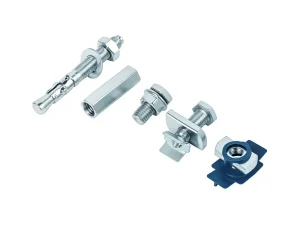
In compliance with NEMA VE 2 installation guidelines, supports (such as strut channel trapezes or cantilever brackets) must be placed within 600 mm (24 inches) of each fitting joint on the connected straight sections, with additional structural support directly underneath bends exceeding 600 mm in width to prevent torsional deflection.
Can Qiongkai manufacture customized variable-radius or reducer bends?
Yes. Backed by 3 factories, 12 production lines, and over 60 heavy-duty manufacturing machines in Shanghai, our engineering team manufactures custom offset bends, expanding or reducing horizontal tees, and non-standard angle fittings (such as 30° or 60°) based on customer layout drawings.
Specialized Systems
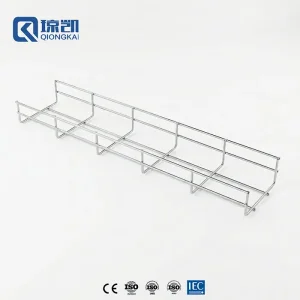
Heavy Duty Trays, Wire Mesh & Corrosion-Resistant Channels
Complete containment product lines engineered for chemical plants, offshore rigs, and coastal infrastructure.