
Hot-Dip Galv
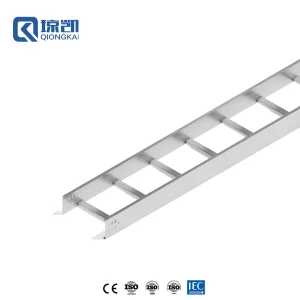
Precision-manufactured structural containment units engineered for heavy power runs, critical telecommunication trunking, and demanding offshore industrial infrastructure.
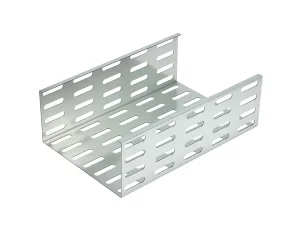
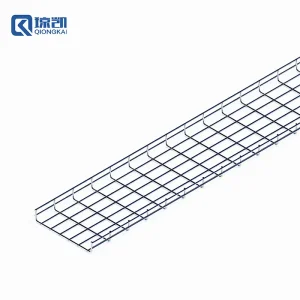
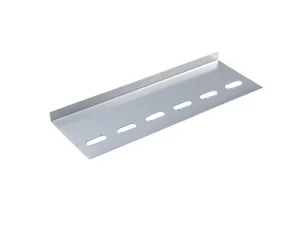
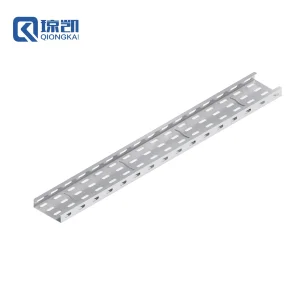
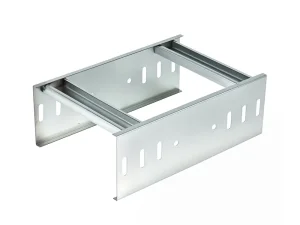
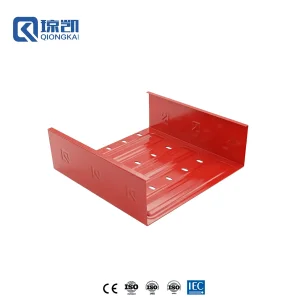
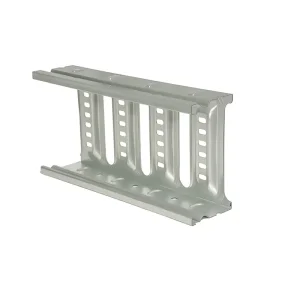
Modern commercial, industrial, and utility infrastructure mandates complete electrical containment architectures that balance mechanical load-bearing capacity, electromagnetic compatibility (EMC), thermal dissipation efficiency, and extreme environmental durability. Surface raceways, cable trunking systems, wire mesh trays, and heavy-duty cast junction boxes constitute the nervous system backbone of industrial automation facilities, hyper-scale data campuses, and petrochemical energy centers.
Procuring raceways and enclosures directly from an integrated source factory mitigates cross-tier dimensional mismatches, ensures uniform zinc galvanizing mass according to ASTM A123/ISO 1461, and guarantees structural load ratings compliant with IEC 61537 and NEMA VE-1 standards.
At Shanghai Qiongkai Industry Co., Ltd. (operating since 2005 from Songjiang, Shanghai), our multi-tier QA testing regimen eliminates latent failure risks in high-vibration and corrosive operating theaters. From 60+ heavy-duty roll-forming and stamping machines across 3 manufacturing hubs, our containment runs undergo mill-level spectral metallurgy checks, zinc coating thickness Elcometer verification, and third-party witnessed structural destruction testing.
IEC 61537:2006 • NEMA VE-1 / VE-2 • UL 5A / UL 514A • ISO 1461 • DIN 4102-12 (Fire Survivability 90 min) • CE Marking
Premature degradation of electrical containment stems from mismatched metallurgy and operating atmospheric corrosivity. Review the systematic selection guide below engineered for international specification compliance.
| Containment Material / Finish | Standard Specification | ISO 12944 Corrosivity Tier | Target Environmental Scenarios | Service Life Expectancy |
|---|---|---|---|---|
| Pre-Galvanized Steel (PG) | EN 10346 DX51D+Z275 (20µm) | C1 - C2 Indoor Controlled | Commercial office false ceilings, enclosed data halls, dry plant rooms | 25+ Years (Dry Environments) |
| Electro-Galvanized (EG) | ASTM B633 / ISO 2081 (Fe/Zn 12) | C1 Low Humidity | Telecom server overhead wire mesh basket runs, cleanroom plenum voids | 15–20 Years (Controlled HVAC) |
| Hot-Dip Galvanized (HDG) | ISO 1461 / ASTM A123 (≥65–85µm) | C3 - C4 Industrial Humid | Petrochemical refineries, outdoor substations, utility solar arrays, rooftop cabling | 35–50 Years (Outdoor Industrial) |
| Austenitic Stainless (SS304) | AISI 304 / EN 1.4301 Mill Pickle | C4 Hygienic / Washdown | Food and beverage processing, dairy dairy CIP facilities, pharmaceutical suites | 50+ Years (Acid/Alkaline Washdown) |
| Marine Grade Stainless (SS316/316L) | AISI 316L / EN 1.4404 Passivated | C5 - CX Severe Coastal | Offshore oil & gas platforms, marine coastal terminals, desalination infrastructure | 60+ Years (Extreme Saline Spray) |
| Pultruded FRP / GRP Composite | Isophthalic / Vinyl Ester Resin | CX Severe Chemical | Battery manufacturing gigafactories, sulfuric chemical storage, electro-plating facilities | 50+ Years (Non-Conductive, Zero Rust) |
| Epoxy Powder-Coated Carbon Steel | Thermoset Polyester RAL Colors | C2 - C3 Dual Protection | Subway tunnels, airport baggage systems, mission-critical architectural visual runs | 25+ Years (UV & Impact Resistant) |
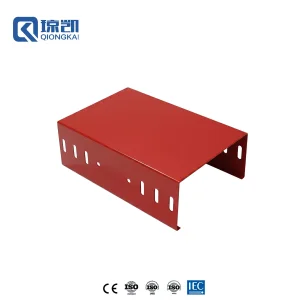
Fully enclosed metallic raceways and cable trunking act as continuous Faraday shields. Our precision interlocking steel cover channels attenuate electromagnetic interference (EMI) generated by high-voltage feeds, variable frequency drives (VFDs), and heavy motor starters, preserving analog instrumentation signal fidelity.
Under heavy continuous electrical load, cable I²R joule heating raises interior temperatures. Solid-bottom metal raceways require derating factors up to 0.70; Qiongkai’s optimized transverse slotted trays and perforated channels maximize thermal transfer, reducing operating temperature by up to 14°C and lowering operational cable degradation.
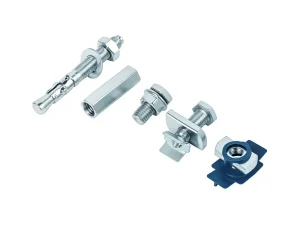
Engineered in compliance with ASCE 7-22 and IBC seismic design category D–F guidelines, our reinforced slotted channels and 41-series seismic strut brackets incorporate serrated return flanges. This mechanical tooth profile locks spring nuts into position, resisting axial slip forces up to 14.5 kN during seismic harmonic shock waves.
From equatorial heat and desert dust to arctic freezing and corrosive chemical splash, Qiongkai raceways and enclosure systems are customized for diverse international project environments.
Challenge: Ambient temperatures exceeding 50°C combined with high atmospheric humidity and marine chloride precipitation causing catastrophic galvanic pitting.
Solution: Custom SS316L profiled ladder trays with 3.0mm wall thickness and UV-inhibited pultruded vinyl ester FRP perforated covers engineered for flame spread index Class 1 (≤25).
Challenge: High-density fiber optics and multi-pair copper cabling susceptible to micro-bending loss and zinc whisker-induced short circuits on server PCBs.
Solution: Zinc-whisker-free epoxy powder-coated wire mesh grid raceways with radiused drops and zero-halogen junction splice boxes preserving optical signal integrity.
Challenge: Demanding 24/7 public concourse electrical routing requiring strict DIN 4102-12 structural circuit integrity during fire scenarios.
Solution: Corrosion-resistant CT Series heavy-gauge cable trunking with integrated fire-retardant barrier partitions, successfully maintaining life-safety lighting power for over 90 minutes.
Challenge: Highly corrosive ammonia vapors (NH3), moisture condensation, and strict budget ceilings across multi-hectare agro-industrial facilities.
Solution: Cost-optimized heavy-duty pre-galvanized channels with selective powder topcoat and gasketed IP66 terminal junction boxes engineered for low maintenance cycles.
In an era of volatile ocean logistics and rising raw metal indices, Shanghai Qiongkai Industry Co., Ltd. provides international EPCs with direct-from-source manufacturing certainty, rapid tooling flexibility, and cost efficiency.
Located in Shanghai Songjiang Industrial Zone, our manufacturing plants operate less than 60 minutes from the Port of Shanghai—the world’s highest-throughput container port. This proximity minimizes drayage fees, eliminates domestic transit bottlenecks, and enables rapid ocean dispatch to Rotterdam, Los Angeles, Dubai, Singapore, and Santos.
We procure prime structural carbon steel coils directly from domestic tier-1 mills (Baosteel, Shougang). Direct mill procurement guarantees uniform chemical metallurgy (carbon ≤ 0.18%, sulfur ≤ 0.035%), verified yield strength ≥ 235–355 MPa, and tight gauge tolerances (±0.02 mm) across high-volume orders.
From decoiling, slitting, multi-stage cold roll-forming, and high-speed CNC progressive hole punching to automated robotic welding, hot-dip zinc immersion, and electrostatic powder painting, every process occurs under internal ISO 9001 supervision.
FOB Shanghai, CIF Worldwide, DDP/DDU Project Jobsite Delivery with full customs clearance and fumigated steel palletization.
As electrical distribution systems become more digitalized, modular, and decarbonized, Qiongkai's R&D team continues to pioneer smart, low-carbon raceway innovations.
To accelerate MEP engineering schedules, Qiongkai provides comprehensive Autodesk Revit, Tekla, and IFC 3D parametric families. Contractors can simulate clashed cable runs, verify bend radius clearances, and generate automated Bills of Materials (BOM) with millimeter precision, reducing jobsite re-work costs by up to 30%.
Integrating distributed fiber-optic temperature sensors (DTS) directly into cable raceway side-rail extrusions. Real-time temperature profile monitoring detects electrical hotspots, cable insulation degradation, and micro-spark partial discharges before catastrophic electrical flashovers occur in high-amperage bus runs.
Aligning with Scope 3 corporate ESG mandates, Qiongkai uses scrap-recycled Electric Arc Furnace (EAF) steel and zinc coatings formulated with organo-silane, hexavalent-chromium-free passivation. This achieves lower embodied carbon emissions (tCO2e/ton) while exceeding 1,000-hour ASTM B117 salt-spray standards.
Specialized composite fiberglass trays, extreme chemical containment solutions, and seismic framing brackets designed for challenging architectural and hazardous industrial environments.
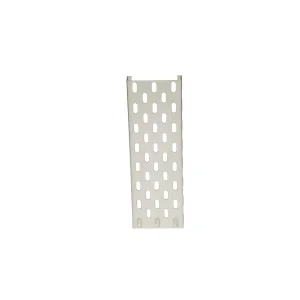
Prior to export packaging, every production batch is evaluated across dimensional geometry, metallurgical chemistry, and structural load deflection to eliminate field failures.
Trays are mounted over continuous test spans up to 6.0 meters and uniformly loaded with steel ingots to verify the Safe Working Load (SWL). Mid-span deflection is measured using digital micrometer gauges to guarantee compliance with the L/200 deflection limit.
Our on-site environmental testing lab subjects hot-dip galvanized and powder-coated specimens to continuous 5% NaCl neutral salt spray at 35°C. Hot-dip galvanized samples reliably withstand 1,000+ hours with zero red rust emergence on critical edges.
Continuity across splice junctions and coupling accessories is verified under a 25-amp DC test current. Junction resistance must not exceed 50 mΩ across joints, ensuring an uninterrupted earth path for system fault clearance.
Cast aluminum, stainless steel, and FRP junction boxes undergo pressurized water jet testing (IPX6) and talcum dust chamber tests (IP6X) with closed-cell neoprene gaskets, ensuring complete sealing against dust and moisture ingress in washdown areas.
Detailed technical answers to common queries raised by MEP consulting engineers, commercial procurement directors, and electrical project supervisors.
While terminology varies across regional standards (NEC, BS 7671, AS/NZS 3000), these systems serve distinct functions:
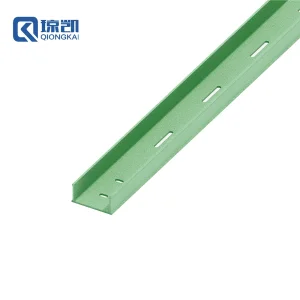
Cable Trunking (or Closed Raceway): A solid enclosure with removable sheet metal or non-metallic covers designed to house insulated power, lighting, or signal conductors. It provides complete physical protection and electromagnetic shielding, making it well-suited for exposed vertical risers and false ceilings.
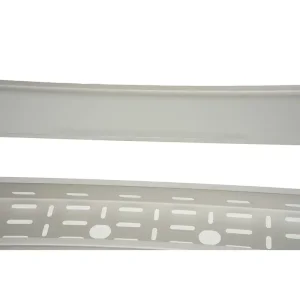
Perforated Cable Trays: Feature a continuous vented base with transverse or longitudinal slots (≥15% open area). This profile improves natural thermal convection, simplifying cable drops through stamped holes while providing robust base support for larger cables.
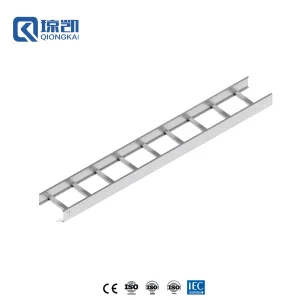
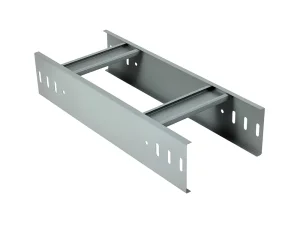
Ladder Trays: Built from longitudinal side rails connected by individual rungs spaced at 150mm, 225mm, or 300mm centers. Ladder trays offer maximum thermal dissipation and ease of tie-off for heavy power feeder cables, making them the standard choice for industrial plants, utility substations, and vertical cable shafts.
According to NEC Article 392 and IEC 60364-5-52, running insulated conductors in fully enclosed solid-bottom raceways traps air, creating an oven effect under continuous conductor resistance heating. Solid metal raceways with covers typically require derating correction factors between 0.65 and 0.72 of the free-air ampacity rating.
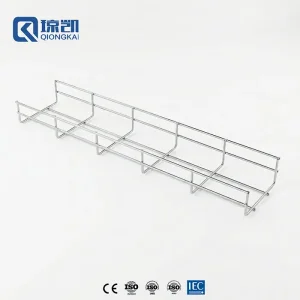
Open wire mesh (basket) cable trays provide virtually unobstructed 360-degree ambient airflow. As a result, conductor ampacity ratings can often be calculated at 0.90 to 1.00 of standard free-air tables, reducing the conductor cross-sectional area (mm² or AWG) required and delivering substantial copper cost savings on long runs.
Hot-dip galvanizing protects carbon steel through a sacrificial zinc layer that forms zinc hydroxycarbonate patinas. However, in environments with airborne chlorides (marine salt spray within 5 km of an open coastline) or persistent acidic moisture (pH < 5.5, such as sulfur washdown plants and coastal LNG facilities), the zinc layer can deplete rapidly (exceeding 8–12 µm/year loss in ISO 12944 Category C5/CX settings).
Under these conditions, stainless steel 316 (containing 2–3% molybdenum) forms an auto-regenerating chromium oxide passivation layer that resists chloride pitting and crevice corrosion. For coastal industrial installations, SS316 offers a 50+ year service life with lower life-cycle replacement and downtime costs than galvanized steel.
Every wire junction is joined via multi-head automated medium-frequency inverter DC resistance welding. Weld joints are tested to a minimum shear destruction force of ≥1,150 N, and longitudinal wire ends are chamfered or factory-trimmed to prevent cable snagging during pulling operations.
Suspended electrical containment must comply with ASCE 7-22 Chapter 13 and IBC seismic provisions for non-structural MEP components. In Seismic Design Categories C through F, trapeze supports hung solely from smooth threaded rods are prone to fatigue failure from lateral pendulum sway.
Qiongkai supplies rigid and cable sway bracing systems using 41-series back-to-back strut channels with 45° angle brackets and wedge anchor studs. These assemblies restrict lateral and longitudinal seismic displacement, absorbing building drift while preventing raceway joints from shearing during seismic events.
Yes. Utilizing CNC laser cutting tables and multi-axis hydraulic punching presses, we produce carbon steel, aluminum, and SS316 junction boxes with custom metric (M20–M63) or imperial (1/2" to 3") conduit knockouts, threaded entries, internal grounding studs, and pre-fitted high-temperature silicone or closed-cell EPDM perimeter gaskets.
Standard export production lengths are 3.0 meters (or 10 feet) and 6.0 meters (or 20 feet). For containerized maritime freight, 3.0-meter sections load efficiently into standard 20-foot GP and 40-foot HQ shipping containers. We use custom nested nesting schemes—layering smaller channel profiles inside larger trays—to achieve volumetric packing efficiencies up to 94%, significantly reducing ocean freight cost per meter.
Every commercial export order includes an EN 10204 Type 3.1 Inspection Certificate documenting the parent coil's chemical analysis and mechanical tensile properties. We also provide magnetic induction zinc coating thickness logs (ISO 2178), CE declarations of conformity, RoHS material compliance certificates, and factory pre-shipment dimensional checklists.
Submit your electrical Bill of Quantities (BOQ), single-line diagrams, or structural support schedules. Our technical engineering team will review load spans, confirm ISO 12944 corrosion finishes, and provide an itemized factory-direct quote within 24 hours.