
Buy Roofing Channel Manufacturer & Factory
Precision Roll-Formed Roofing Channels, Modular Structural Purling, and Certified Cable Management Solutions Engineered for Heavy Industrial and High-Wind Roof Systems.
Factory Direct Cable Tray & Rooftop Channel Systems
Engineered cold-formed channel sections, perforated trunking, and high-load cable ladders engineered to seamlessly integrate with commercial roof framing and industrial building envelopes.
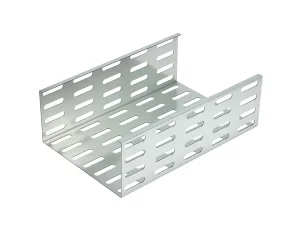
Wholesale Pre Galvanized Cable Tray With Perforation Manufacturers, Factories
View Specifications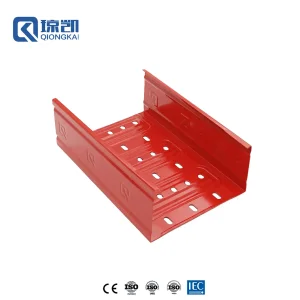
Buy Powder Coated Carbon Steel Cost Saving Heavy Duty Reinforced Molded Pre Galvanized Cable Tray - RAL3020 Red 200*100 Supplier, Factory
View Specifications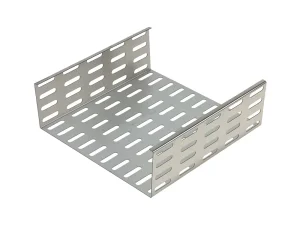
Wholesale Stainless Perforated Cable Tray 300mm - SS304 Suppliers, Factory
View Specifications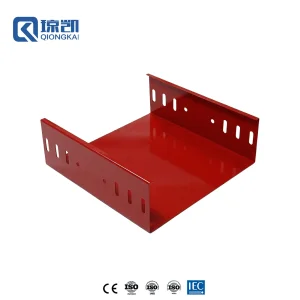
Wholesale Powder Coated Carbon Steel PG Pre Galvanized Cable Trunking Trough Type Channel - RAL3020 Red 300*100 Manufacturers, Price
View Specifications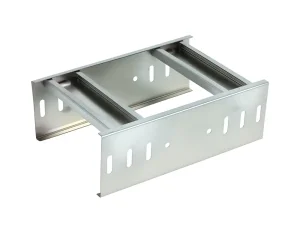
Wholesale 304 and 316 Stainless Cable ladder Factory, Factories
View Specifications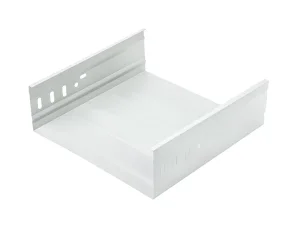
Wholesale Lightweight tenacity aluminium molded cable tray Suppliers, Price
View Specifications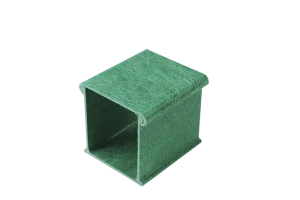
Wholesale FRP Through cable tray 50mm Supplier, Suppliers
View Specifications
Wholesale UPVC Cable Trunking Thermal Insulated Anti-corrosion Resistance Manufacturers, Price
View SpecificationsEngineering Architecture: Roofing Channels in Heavy Industry
In modern industrial facilities, the roof is no longer a passive environmental cover. It serves as an active structural deck that must carry substantial point loads from solar arrays, overhead MEP utilities, HVAC platforms, and critical power trunking.
Structural Load Dissipation
Cold-formed continuous roofing channels (C-sections, Z-purlins, and unistrut configurations) distribute dead weights and dynamic thermal thrusts across primary structural rafters. By utilizing high-yield cold rolled steel (minimum 350 to 550 MPa), deflection ratios are rigidly maintained well within strict engineering thresholds (<1/240 to <1/360 span limits).
Wind Uplift & Dynamic Vortex Mitigation
Roof perimeters and corners experience localized negative pressures exceeding 3.5 kPa during severe meteorological events. Our factory-engineered channels integrate roll-formed stiffening lips and return flanges that elevate section modulus ($Z_x$), preventing local torsional buckling and seam detachment under extreme cyclic vortex shedding.
Integrated MEP Utility Attachment
Modern roofing channels incorporate precision slotted punchings along the web. This enables direct attachment of pipe clamps, drop rods, and perforated cable trays without on-site welding or hot-work permits, preserving structural galvanization integrity and slashing installation schedules by up to 40%.
Worldwide Industrial Dynamics & Sourcing Challenges
The global transition toward hyperscale data centres, gigafactories, and clean energy logistics hubs has placed unprecedented structural demands on industrial roof envelopes.
The Gigafactory & Logistics Hub Surge
Industrial builds across North America, Europe, and Asia-Pacific require roof spans exceeding 24 to 30 metres between primary columns. Roofing channels must deliver exceptional stiffness-to-weight ratios to keep structural deadweight minimal while supporting extensive arrays of commercial PV arrays and mechanical ductwork.
Environmental & Microclimatic Challenges
Global projects frequently operate in aggressive C4 and C5-M atmospheric corrosion zones (coastal marine, chemical manufacturing, and high-salinity desert environments). Conventional mill-galvanized purlins fail prematurely, driving market demand toward HDG (ISO 1461), austenitic stainless steel (SS316), and pultruded fiber-reinforced polymers (FRP).
Supply Chain Consolidation
Tier-1 EPC contractors avoid fragmented purchasing where roof purlins, strut channels, and cable trays are procured from multiple intermediaries. Direct factory engagement with a specialized manufacturer guarantees metallurgical consistency, matched thermal expansion tolerances, and coordinated installation drawings.
Material Engineering Specification Matrix
Selecting the correct base substrate and anti-corrosion barrier is critical for project lifecycle success. Compare our standard factory roll-formed profiles below.
| Channel Material & Coating | Yield Strength ($f_y$) | Corrosion Class (ISO 12944) | Salt Spray Resistance (ASTM B117) | Primary Industrial Use-Case |
|---|---|---|---|---|
| Pre-Galvanized (PG) Q235B / DX51D | 235 – 275 MPa | C1 – C2 (Low / Indoor) | 96 – 120 Hours | Internal dry ceilings, secondary partition framing, concealed spaces |
| Hot-Dip Galvanized (HDG) Q355B | 355 – 420 MPa | C3 – C4 (Industrial / Urban) | 720 – 1,000+ Hours | Commercial roofing purlins, exterior parapets, HVAC mechanical decks |
| Powder-Coated Over Galvanized Steel | 355 MPa | C3 – C4 (Color Coding) | 600 – 800 Hours | Aesthetic exposed roof lines, airport terminals, specialized fire service channels |
| Stainless Steel AISI 304 / 316L | 205 – 240 MPa | C5-I / C5-M (Marine & Severe) | 2,000+ Hours (316L) | Offshore oil & gas decks, chemical manufacturing, coastal desalination |
| Fiberglass Reinforced Polymer (FRP) | Tensile: 300 MPa | Extreme Chemical / Acidic | Chemically Inert | Acid mist extraction roofs, battery production plants, pulp and paper facilities |
Site-Specific Scenarios & Deployment Profiles
Engineered roofing channels adapt directly to distinctive structural and environmental demands across key international market sectors.
Hyperscale Data Center Rooftops
Accommodating chilled water pipes, massive condensers, and high-voltage feeder busways requires ultra-rigid roofing channel networks. Our slotted 41x82mm back-to-back channels eliminate vibration propagation and accommodate high point loads without penetrating critical roof waterproofing membranes.
High-Efficiency Commercial Solar Racking
Roofing channels act as the structural bridge between standing-seam roof clamps and bifacial photovoltaic modules. Cold-formed profiles feature serrated flange grooves that mechanically lock channel nuts, preventing slippage caused by thermal expansion and wind buffeting.
Corrosive Marine & Offshore Terminals
Coastal logistics terminals face continuous windborne chloride attack. Utilizing SS316L or heavy-coat HDG (100 µm+) channels guarantees continuous structural integrity for overhead lighting trusses, radar masts, and power distribution raceways with zero maintenance downtime.
Food Processing & Pharmaceutical Enclosures
Hygiene-controlled facilities mandate wash-down rated roofing channels free of dirt traps. Our smooth, electro-polished stainless steel and closed-profile metal studs prevent microbial accumulation and endure aggressive chemical cleaning protocols.
Global Standards Compliance & Structural Quality Assurance
Every channel produced across our 3 manufacturing plants undergoes rigorous third-party testing and adheres strictly to international engineering codes.
Design Code Compliance
Profiles are calculated and load-rated strictly according to AISI S100 (North American Specification for Cold-Formed Steel Structural Members) and EN 1993-1-3 (Eurocode 3). Mill certificates (EN 10204 Type 3.1) accompany every raw coil, documenting heat analysis, yield, and tensile values.
Corrosion Testing & Verification
Finished hot-dip galvanized components conform to ISO 1461 and ASTM A123, with zinc coating thickness verified using calibrated electromagnetic gauges. Continuous salt spray performance is validated in accordance with ASTM B117 and ISO 9227 standards.
Seismic Bracing & Dynamic Verification
For high-seismic zones (UBC Zone 4, IBC Class D/E/F), our strut channels, channel brackets, and seismic sway braces undergo cyclic dynamic loading tests to prevent connection shearing and roof truss distortion under lateral seismic accelerations.
Technology Roadmap: The Next Era of Roll-Forming
Shanghai Qiongkai Industry continuously advances tooling intelligence, alloy development, and decarbonized production across modern manufacturing facilities.
AI-Monitored Roll Forming Precision
Our 12 assembly lines are upgrading with in-line laser thickness interferometry and automated roll-gap adjustment. Real-time feedback loops eliminate flare, spring-back, and camber variances during cold profiling, holding dimensional cross-section tolerances within $\pm 0.15\text{ mm}$.
Zinc-Aluminum-Magnesium (ZAM) Coatings
Phasing in high-efficiency Zn-Al-Mg metallic alloy coatings that deliver over triple the corrosion resistance of traditional galvanizing at equal coating mass. ZAM profiles feature superior self-healing edge corrosion characteristics on laser-cut edges and slotted perforations.
BIM Integration & Direct CNC Pre-Fabrication
We supply native Revit/IFC parametric families directly to engineering design offices. Channel sections are cut to custom pre-engineered lengths and punched with millimetric CNC accuracy prior to export crating, completely eliminating scrap metal waste on project job sites.
Heavy Duty Channels, Trunking & Support Systems
Complementary factory solutions engineered for mechanical roof bridges, secondary structural framing, and integrated electrical cable distribution.
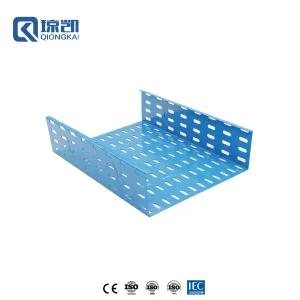
Buy Powder Coated Carbon Steel Pre Galvanized Hot Dip Galvanized PG HDG Cable Tray with Reinforce Ribs - RAL5015 Blue 300*100 Manufacturer, Price
View Specifications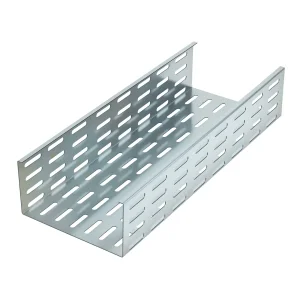
Buy Pre Galvanized Perforated Cable Tray 200mm Manufacturers, Supplier
View Specifications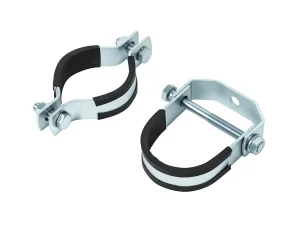
Buy Pipe Clamping Supplier, Suppliers
View Specifications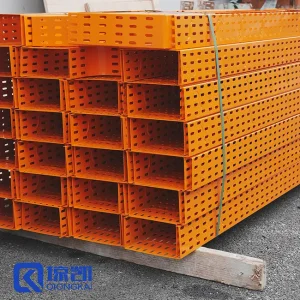
Wholesale Reinforced Medium duty Pre-galvanized Hot-dip-galvanized Powder Coated Perforated Cable Tray 200*100 - Orange Manufacturers, Factories
View Specifications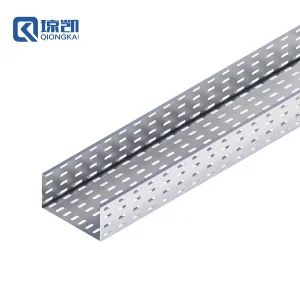
Wholesale Pre-galvanized Hot-dip-galvanized Perforated Cable Tray 200*100 Manufacturer, Factories
View Specifications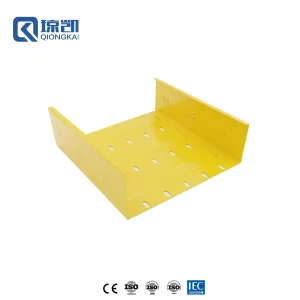
Buy Powder Coated Carbon Steel Cost Saving Heavy Duty Reinforced Molded Pre Galvanized Cable Tray with less perforation - RAL1080 Yellow 300*100 Manufacturers, Suppliers
View Specifications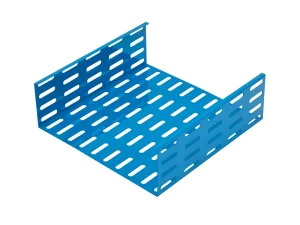
Buy Pre Galvanized Perforated Cable Tray Series With Powder Coating Suppliers, Factories
View Specifications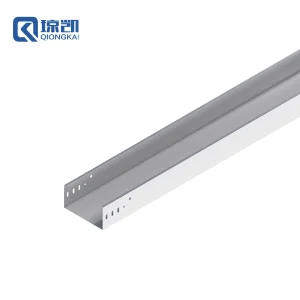
Wholesale Carbon Steel PG Pre Galvanized HDG Hot Dip Galvanized SS Stainless Steel Cable Trunking Trough Type Channel 200*100 Manufacturer, Suppliers
View SpecificationsFrequently Asked Engineering & Procurement Questions
Authoritative technical clarifications addressing mechanical capacity, metallurgical protection, custom profile engineering, and direct manufacturing logistics.
How does a roofing channel differ from standard strut and cable tray sections?
While cable trays are designed primarily for continuous electrical load distribution and strut channels serve as modular secondary supports, true structural roofing channels (such as cold-formed purlins and high-capacity unistrut profiles) must carry structural roof live loads, dead weights, and wind uplift forces. Roofing channels feature engineered roll-formed stiffening lips, specific depth-to-thickness ratios, and high-yield raw steel grades (such as Q355B or ASTM A653 HSLAS Grade 50) designed to prevent lateral-torsional buckling across broad spans.
What is the recommended anti-corrosion finish for exposed industrial rooftop installations?
For outdoor rooftop conditions, Hot-Dip Galvanizing (HDG) to ISO 1461 or ASTM A123 with a minimum coating thickness of 65 to 85 µm is standard practice. For severe coastal environments (C5-M corrosion category), we recommend upgrading to Austenitic Stainless Steel AISI 316L or pultruded FRP. In moderate microclimates, pre-galvanized continuous coils (Z275 or higher) with an external UV-stable architectural powder coating provide both corrosion resistance and aesthetic harmony with the roof cladding.
Can the factory manufacture customized profile geometries and non-standard punch patterns?
Yes. Operating three dedicated manufacturing plants equipped with over 60 heavy-duty forming presses and 12 continuous roll-forming lines, Shanghai Qiongkai Industry produces tailored web dimensions, return lip lengths, variable wall gauges from 1.0 mm up to 3.5 mm, and custom slotting patterns. We have executed specialized profiled solutions for major infrastructure undertakings, including offshore LNG terminals in Qatar and international airport trunking networks.
How do you ensure wind uplift compliance for lightweight roof channel systems?
Our structural engineering team evaluates site-specific wind velocity, building elevation, exposure category, and local corner aerodynamic factors according to ASCE 7-16 or EN 1991-1-4. We supply certified section properties, moment of inertia ($I_x, I_y$), and section modulus ($Z_x$) data, along with engineered bracket assemblies, allowing specifying engineers to calculate exact fastener withdrawal and shear safety margins.
What documentation and third-party inspection certificates are provided with export shipments?
Every industrial export consignment is backed by comprehensive Mill Test Certificates (EN 10204 3.1) detailing chemical composition and mechanical stress testing. Coating thickness logs, salt spray test reports, non-destructive welding checks, and third-party inspection certifications (SGS, TÜV, or BV) are routinely coordinated and verified prior to container loading at Shanghai Port.