
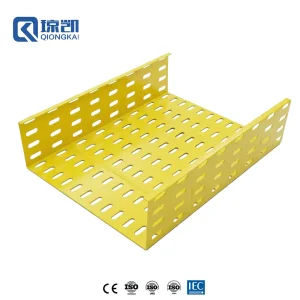
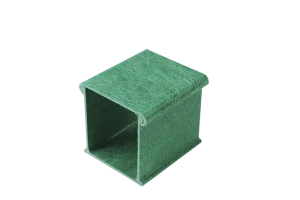
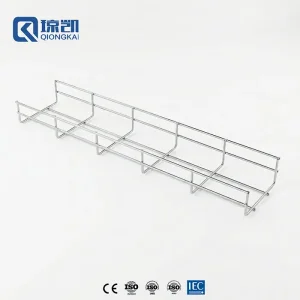
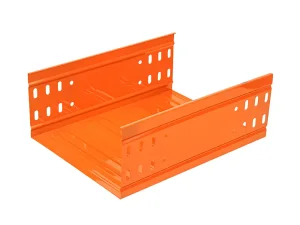
Engineered Cable Trays & Supporting Systems
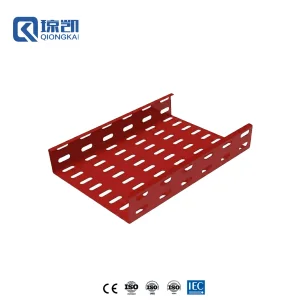
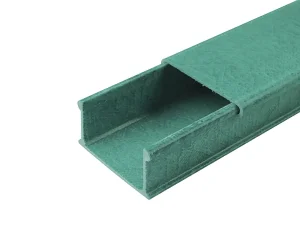
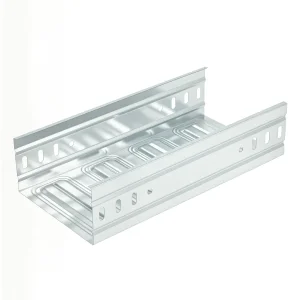
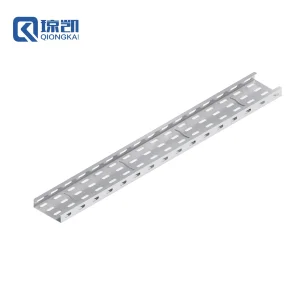
Standard and heavy-duty pre-galvanized, hot-dip galvanized, FRP, and stainless steel routing infrastructures manufactured to international mechanical performance thresholds.
Global Stainless Strut Channel Market Dynamics
Analyzing macro supply chain shifts, raw material index-linked cost fluctuations, and the technical necessity of austenitic stainless framing in critical modern infrastructure.
Geopolitical Supply Realignment
The international mechanical, electrical, and plumbing (MEP) secondary support sector has experienced substantial geographic consolidation. As engineering specifications increasingly call for ASTM A240 / A276 certified stainless alloys to mitigate lifecycle failures, high-throughput manufacturing clusters centered near deep-water export container hubs—such as Shanghai Port—provide vital supply security for mega-scale infrastructure programs worldwide.
LME Nickel/Molybdenum Indexing
Procurement cost modeling for stainless strut channels differs markedly from carbon steel. Base prices are intrinsically governed by London Metal Exchange (LME) nickel surcharges and European Ferro-Molybdenum indices. Professional EPC quantity surveyors require real-time index-linked transparent quotation mechanisms to establish budget predictability for multi-year project commissioning timelines.
Zero Tolerance for Zinc Degradation
Critical environments, including hyperscale semiconductor cleanrooms and coastal LNG liquefaction trains, have phased out electro-galvanized (EG) and hot-dip galvanized (HDG) channels. The elimination of conductive zinc whisker growth and protection against chloride stress corrosion cracking (CSCC) make 304 and 316 stainless strut channels an absolute technical mandate.
Engineering Grade Selection & Load Capacities
Evaluation of austenitic and duplex stainless steels adhering to MFMA-4 (Metal Framing Manufacturers Association) standards, section modulus parameters, and corrosion pitting metrics.
| Alloy Grade | UNS / EN Standard | Yield Strength (Rp 0.2) | Tensile Strength (Rm) | PREN Rating | Target Environmental Class | Chloride Resistance Limit |
|---|---|---|---|---|---|---|
| AISI 304 (V2A) | S30400 / 1.4301 | 230 - 280 MPa | 520 - 720 MPa | 18.0 - 20.0 | C1 - C3 (Urban/Indoor) | < 200 mg/L Cl⁻ |
| AISI 316 (V4A) | S31600 / 1.4401 | 240 - 300 MPa | 530 - 730 MPa | 23.0 - 25.5 | C4 (Coastal/Industrial) | < 1,000 mg/L Cl⁻ |
| AISI 316L | S31603 / 1.4404 | 220 - 280 MPa | 500 - 700 MPa | 23.0 - 25.5 | C5-M (Marine/Chemical) | High Intergranular Protection |
| Duplex 2205 | S32205 / 1.4462 | ≥ 450 MPa | 680 - 880 MPa | 35.0 - 38.0 | CX (Extreme Offshore) | > 3,000 mg/L Cl⁻ |
Pitting Resistance (PREN)
Pitting Resistance Equivalent Number quantifies defense against localized breakdown of passive chromium oxide films: PREN = %Cr + 3.3(%Mo) + 16(%N). Where standard 304 yields PREN ~19, our 316/316L series delivers PREN ≥24, essential for surviving direct saline sea-spray aerosols.
Deflection Limit Mechanics
Beam bending deflection is computed using uniform load beam algorithms: δ = (5 · w · L⁴) / (384 · E · I). For critical MEP pipe racks and heavy electrical busducts, our engineering team ensures the deflection criterion does not exceed L/200 or L/360, preventing downstream joint fatigue.
Serrated Flange Friction
Channels roll-formed with inward-curled lips feature precision CNC cold-stamped serrations. When torqued to 55 N·m with case-hardened stainless channel spring nuts, the connection yields an anti-slip friction shear resistance exceeding 7.5 kN, complying with ASCE 7-22 seismic bracing provisions.
Future Trends & Technological Roadmap
How prefabrication, digital twins, robotic laser forming, and carbon border adjustments are redefining the global metal framing sector.
BIM Level 3/4 Native Integration
Structural channels are no longer field-cut haphazardly. Our direct parametric Revit & Tekla 3D families allow contractors to pre-calculate weight, center of gravity, and exact bolt placements for off-site modular multi-tier MEP corridor racks.
Automated Fiber Laser Punching
Traditional punching dies generate micro-fissures and work-hardening stresses around slot edges. Advanced continuous fiber-laser slitting systems ensure micro-burr-free profiles with zero distortion of cross-sectional flatness.
Low Carbon & Scope 3 Traceability
With the implementation of the European Carbon Border Adjustment Mechanism (CBAM), our production lines utilize electric arc furnace (EAF) stainless feedstock with over 80% recycled content, minimizing embodied carbon per installed meter.
Robotic Dual-Seam Plasma Welding
For combination channels (41×82mm back-to-back), continuous plasma keyhole welding replaces intermittent spot welding, eliminating micro-gaps where crevice corrosion could otherwise initiate in wet environments.
Localized Industrial Application Scenarios
From extreme sub-sea coastal installations to micro-electronics cleanrooms, discover where stainless steel strut channels are mission-critical.
Offshore LNG & Desalination
Environment: Severe coastal marine atmospheres (ISO 12944 Category C5-M / CX) with perpetual salt fog and high UV radiation.
Solution: AISI 316L passivation pickled channel profiles (41×41mm and 41×82mm back-to-back). Selected for Qatar LNG expansion and coastal seawater processing installations.
Biopharma cGMP & Cleanrooms
Environment: Aseptic pharmaceutical manufacturing cleanrooms subjected to aggressive Clean-In-Place (CIP) chemical washdowns.
Solution: Electropolished AISI 304 strut systems with continuous smooth-edge profiling that prevents bacterial harboring, ensures zero particulate flaking, and withstands peroxide sprays.
EV Gigafactories & Battery Plants
Environment: High electromagnetic flux, corrosive electrolyte vapors, and stringent clean-dry room environments.
Solution: Reinforced slotted 304/316 channels for overhead high-amp busway suspensions and heavy industrial battery formation lines, completely mitigating zinc flaking contamination hazards.
Integrated Multi-Tier MEP Solutions
Secondary structural frameworks designed to integrate strut channels, brackets, seismic cable braces, and pipe clamps into one unified, rapid-deployment ecosystem.
Prefabricated Trapeze Systems
Pre-cut, de-burred 41×41mm stainless strut profiles paired with matching threaded drop rods and isolation washers eliminate on-site hot work permits, speeding up mechanical pipeline installation by up to 45% compared to structural angle-iron welding.
Rigid Seismic Bracing
Engineered to absorb lateral and longitudinal ground acceleration forces up to 2.0g. Reinforced hinged connectors and back-to-back strut channels guarantee life-safety continuity for emergency fire suppression and electrical risers during seismic events.
Thermal Expansion Traps
In solar farms, cryogenic plants, and rooftop runs, stainless steel’s thermal expansion coefficient (16.5 × 10⁻⁶ /K) requires slotted channels with PTFE/POM sliding clips to accommodate longitudinal expansion without buckling anchor bolts.
Manufacturer Direct Pricing & TCO Analysis
Transparent wholesale price benchmarks per meter, production cost components, and 25-year lifecycle cost modeling against conventional galvanized steel.
| Profile Specification | Dimensions (W × H) | Wall Thickness | Weight (kg/m) | Indicative SS304 Price /m | Indicative SS316 Price /m | Standard MOQ |
|---|---|---|---|---|---|---|
| Standard Medium | 41 × 41 mm (1-5/8" × 1-5/8") | 2.0 mm (14 Gauge) | 2.05 kg/m | $8.20 - $9.80 | $11.90 - $13.80 | 300 Meters |
| Heavy Duty | 41 × 41 mm (1-5/8" × 1-5/8") | 2.5 mm (12 Gauge) | 2.55 kg/m | $10.10 - $12.20 | $14.80 - $17.10 | 300 Meters |
| Shallow Profile | 41 × 21 mm (1-5/8" × 13/16") | 2.0 mm (14 Gauge) | 1.42 kg/m | $5.80 - $7.10 | $8.40 - $10.20 | 500 Meters |
| Deep Profile | 41 × 62 mm (1-5/8" × 2-7/16") | 2.5 mm (12 Gauge) | 3.35 kg/m | $13.40 - $15.90 | $19.50 - $22.80 | 300 Meters |
| Back-to-Back (Welded) | 41 × 82 mm (1-5/8" × 3-1/4") | 2.5 mm (12 Gauge) | 5.10 kg/m | $21.50 - $25.20 | $31.20 - $36.50 | 200 Meters |
Initial CAPEX vs Replacement
While hot-dip galvanized steel has an initial cost advantage of roughly 30-40%, its zinc layer depletes at 2 to 5 μm per year in C4/C5 marine environments. This often leads to complete structural re-installation within 7 to 10 years, dramatically increasing operational costs.
Zero Maintenance Downtime
Stainless steel forms a self-healing chromium oxide film. In mission-critical facilities like data centers, microchip fabs, and continuous process chemical plants, eliminating maintenance-related power outages yields hundreds of thousands in operational savings over a 25-year design life.
Residual Scrap Recovery Value
At facility decommissioning, austenitic stainless strut channels retain over 60-70% of their base alloy value as recyclable scrap. In contrast, rusted galvanized carbon steel incurs significant disposal and hazardous re-melting handling surcharges.
Frequently Asked Engineering Questions
Detailed answers to the key questions raised by MEP consultants, structural engineers, and international procurement managers.
How does channel slotting affect mechanical load capacity?
How do you prevent bimetallic galvanic corrosion with stainless strut?
What is the difference between cold-rolled and hot-rolled stainless channels?
What are the standard export packing and logistics parameters?
Can Shanghai Qiongkai provide EN 10204 3.1 Mill Test Certificates?
What is the maximum torque recommendation for stainless channel spring nuts?
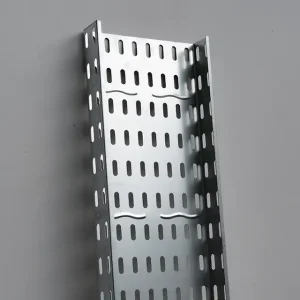
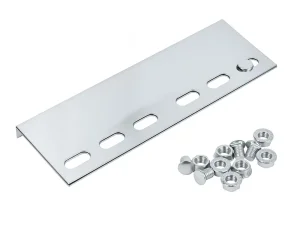
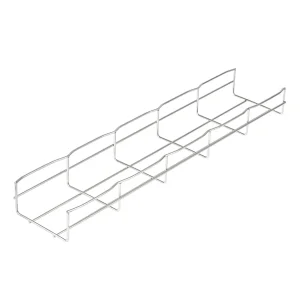
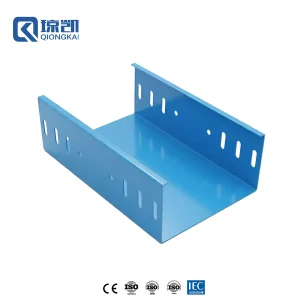
Heavy-Duty Cable Trunking & Framing Profiles
Specialized pre-galvanized, powder-coated, stainless steel wire mesh, and molded fittings supporting industrial MEP integration projects.
Consult with Qiongkai Project Engineers
Send your bill of quantities (BOQ), structural loading parameters, or project layout drawings. Receive a manufacturer-direct price proposal, mechanical deflection calculation, and free sample verification within 24 hours.