
Featured Cable Trunking & Industrial Raceway Systems
Engineered from architectural-grade structural carbon steel and precision alloys. Fully compatible with IEC 61537, NEMA VE-1, and UL cable management specifications.
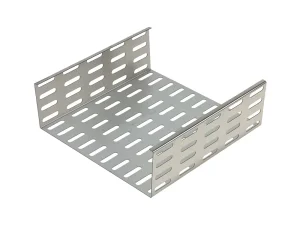
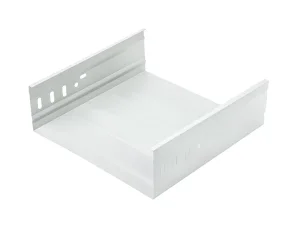
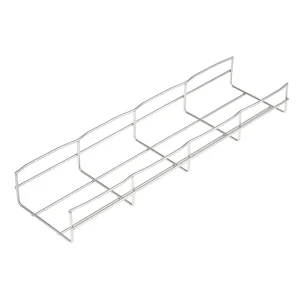
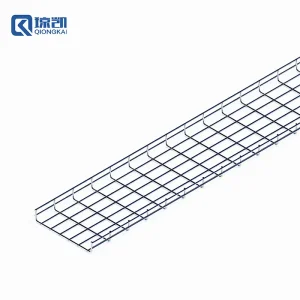
The Macro Supply Shift: Why EPC Contractors Source Steel Trunking Directly
Electrification megatrends, automated mega-factories, hyperscale artificial intelligence data halls, and offshore green energy conversion stations are redefining high-density electrical cable routing requirements worldwide.
Hyperscale AI & High-Density Centers
Modern data center architectures demand massive copper and optical conductor density. Enclosed and ventilated steel trunking provides magnetic field isolation, structural thermal dispersion, and dedicated multi-compartment segregation between high-voltage power bus ducts and optical interconnects.
Automated Gigafactories & Process Lines
From electric vehicle battery dry-rooms to chemical manufacturing plants, mechanical impacts, solvent vapors, and extreme ambient thermal fluctuations quickly degrade sub-standard raceways. Cold-rolled structural carbon steel delivers the required elastic modulus and yield strength under heavy static cable loads.
Rigorous Electromagnetic & Fire Isolation
Unlike PVC or unshielded open trays, fully continuous grounded steel trunking provides up to 80 dB attenuation against radiated electromagnetic interference (EMI/RFI). In fire emergency scenarios, steel containment systems maintain physical circuit integrity under DIN 4102-12 and BS 5839 standards.
Metallurgical Standards, Anti-Corrosion Chemistries & Load Dynamics
Structural failure in cable management typically stems from inadequate zinc alloy bonding, uncontrolled elastic deflection, or Galvanic incompatibility. Shanghai Qiongkai operates in-house metallurgical verification to guarantee global project survivability.
Substrate Metallurgy: Q235B vs. Q355B Grade Steels
Our cable trunking and return-flange raceway systems are roll-formed from cold-rolled commercial-quality structural steel sheets. Q235B carbon steel provides an optimal balance between ductile forming elongation (≥26%) and tensile yield strength (235 MPa), preventing micro-fractures along rolled return flanges. For extreme seismic applications or 6-meter span bridge crossings, Q355B low-alloy high-strength steel delivers enhanced flexural stiffness without unnecessary deadweight penalties.
Hot-Dip Galvanizing (HDG) per ISO 1461 & ASTM A123
For outdoor industrial and marine zones (ISO 12944 C3 to C5 classifications), fabricated steel trunking sections undergo multi-stage chemical degreasing, hydrochloric acid pickling, fluxing, and full immersion in a molten zinc bath held at 450°C. This forms a series of iron-zinc alloy layers (Gamma, Delta, Zeta) topped with an outer pure zinc (Eta) shell, achieving a metallurgical bond that provides cathodic sacrificial protection and an average coating thickness exceeding 65 µm to 85 µm.
Pre-Galvanized Mill Treatment (PG / Gi Sheet)
Produced using continuous hot-dip zinc-coated steel coils according to EN 10346 / ASTM A653 with mass designation Z120 to Z275 (double-sided coating mass up to 275 g/m²). Pre-galvanized trunking delivers pristine surface aesthetics, uniform thickness, and cost efficiency for indoor commercial office fit-outs, suspended false ceilings, and dry equipment plantrooms.
Thermoset Polyester Powder Coating (RAL Identification)
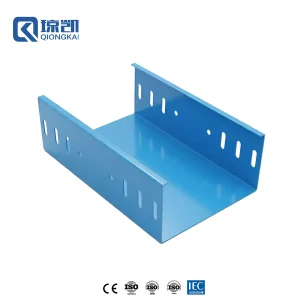
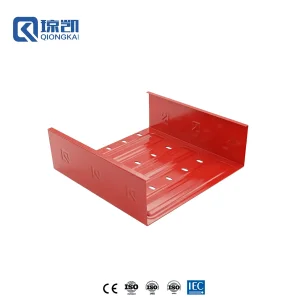
Electrostatic powder application over phosphate-pretreated or pre-galvanized substrates with cross-linked polyester curing at 200°C. Coating thickness averages 60 µm to 100 µm, offering outstanding UV stability, chemical resistance, and instant color-coded identification for safety lines (e.g., RAL 5015 Signal Blue for Telecom/Data; RAL 3020 Traffic Red for Emergency Fire Lines).
| Containment Material / Finish | Standard Specification | Corrosion Class (ISO 12944) | Yield Strength (ReH) | Recommended Deployment Context |
|---|---|---|---|---|
| Pre-Galvanized (PG) Carbon Steel | EN 10346 / ASTM A653 (Z120-Z275) | Class C1 - C2 | ≥ 235 N/mm² | Indoor commercial complexes, raised office floors, retail false ceilings |
| Hot-Dip Galvanized (HDG) Steel | ISO 1461 / ASTM A123 (65–85 µm) | Class C3 - C4 | ≥ 235 - 355 N/mm² | Petrochemical refineries, power utility sub-stations, outdoor utility gantries |
| Stainless Steel (AISI 304 / 316L) | ASTM A240 / EN 10088-2 | Class C5-M / Marine | ≥ 205 - 240 N/mm² | Offshore oil platforms, coastal desalination, cleanroom food & pharma processing |
| Fiberglass Reinforced Polymer (FRP) | ASTM D3917 / Pultruded Vinylester | Acidic / Severe Chem | Tensile: 200 MPa | Chlor-alkali plants, battery pickling halls, marine splash zones, high stray-current rail |
| Powder Coated over PG Steel | Electrostatic Polyester (RAL Spec) | Class C2 - C3 | ≥ 235 N/mm² | Hyperscale data centers, institutional hospitals, architectural aesthetic exposure |
Sector Solutions & Global Project Case Records
Shanghai Qiongkai Industry's cable containment systems are deployed across international aviation hubs, high-temperature Middle Eastern gas terminals, and demanding European industrial retrofits.
Shanghai Hongqiao International Airport
Deployment: Heavy-Duty CT Series Cable Trunking & Return-Flange Channels.
Challenge: Ultra-stringent fire containment, zero-vibration structural fatigue under high mechanical resonance, and rapid snap-on cover maintenance accessibility.
Outcome: Thousands of meters of precision-molded pre-galvanized trunking successfully delivered on time, ensuring uninterrupted terminal baggage and flight control power distribution.
Offshore LNG Terminal, State of Qatar
Deployment: Custom Profiled Section Stainless SS316L & Pultruded FRP Systems.
Challenge: Ambient desert operating temperatures reaching 52°C, combined with intense saline maritime humidity, high UV degradation, and corrosive hydrocarbon gas exposure.
Outcome: Engineered custom non-conductive, self-extinguishing resin matrix cable containment that passed 3,000 hours of continuous accelerated salt spray testing.
Industrial Infrastructure Export to Italy (EU)
Deployment: Hot-Dip Galvanized Perforated Trays & Unistrut Channels.
Challenge: Full compliance with CE European Construction Products Regulation (CPR) and strict EN 61537 thermal deflection certifications under maximum permissible load classes.
Outcome: 40HQ high-cube containerized consignments with engineered nesting schemes, saving 35% in container volume freight costs while maintaining pristine zinc surface luster upon arrival.
Technological Roadmap: Next-Generation Cable Trunking Design
How Shanghai Qiongkai is bridging mechanical rigidity, rapid jobsite assembly, and smart asset telemetry for future industrial installations.
Toolless Quick-Fit Clamping Mechanics
Labor constitutes up to 60% of total MEP electrical installation costs. Our engineering team has pioneered toolless interlock cover profiles and press-in splice couplers. By eliminating over 70% of standard nut-and-bolt hardware on straight runs, contractors cut jobsite labor hours significantly while ensuring unyielding vibration resistance.
Calculated Span-to-Deflection Control
Adhering strictly to NEMA VE 1 / IEC 61537 Type II structural testing guidelines, Qiongkai cable trunkings feature precision longitudinal stiffening ribs. These return flanges enhance cross-sectional moment of inertia ($I_x$), guaranteeing maximum flexural deflection remains well below $L/200$ (or $L/300$ for high-sensitivity optical fiber corridors).
Green Low-Carbon Steel Metallurgy
Aligned with carbon-neutral procurement directives, Qiongkai is introducing scrap-recycled Electric Arc Furnace (EAF) carbon steels across our major roll-forming operations. Paired with hexavalent-chromium-free passivation and dry powder reclaiming, we reduce cradle-to-gate embodied carbon by up to 38%.
Global Compliance, TCO Modeling & Factory Verification
A direct factory partnership provides end-to-end traceability, certified Mill Test Certificates (MTC), and optimized packaging schemes that slash total lifecycle expenditure.
Comprehensive Quality Control Protocol
Every production batch is audited before release: raw coil thickness micrometer checks, spectrophotometric zinc coating mass analysis, cross-cut adhesion tests for powder-coated layers, and electrical earth continuity bonding verification (<0.05 ohms across spliced joints) in conformance with electrical safety standards.
Export Logistics & Container Nesting Schemes
Steel cable trunkings and strut channels are bulky commodities prone to container volume wastage. Qiongkai designs graduated channel dimensions (e.g., nesting 200*100 within 300*100 units). Reinforced steel-banded bundle pallets and waterproof vapor-barrier wrap eliminate ocean transit moisture damage and ensure fast unloading at project sites.
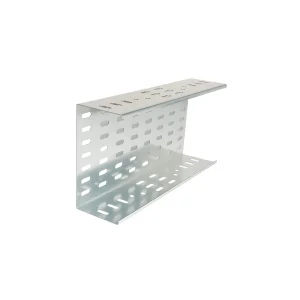
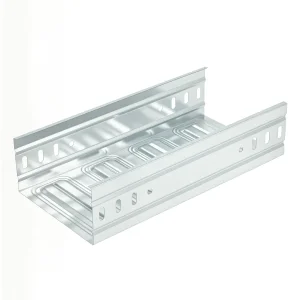
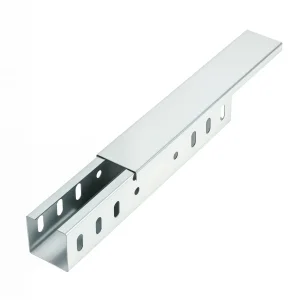
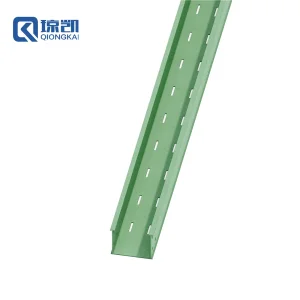
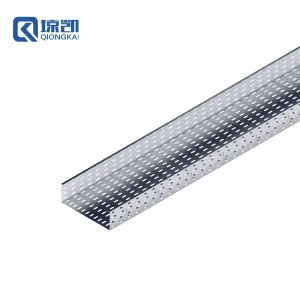
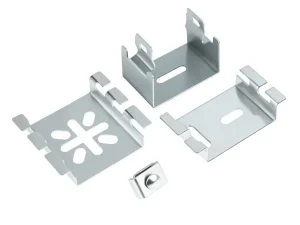
Heavy-Duty Modular Trunking, Trough Channels & Spare Parts
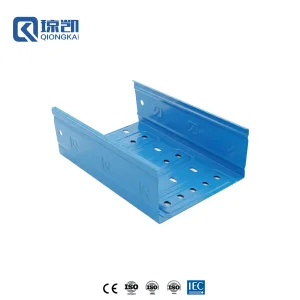
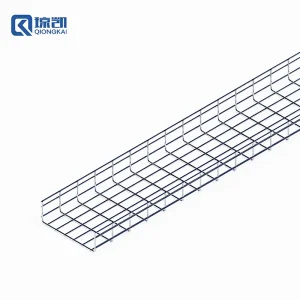
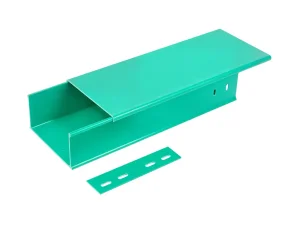
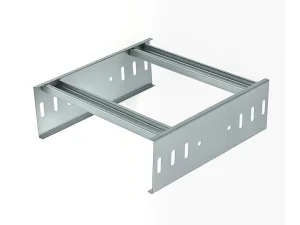
Precision fabricated straight elements, reinforced perforated channel runs, modular covers, and structural junction fittings available for direct enterprise dispatch.
Frequently Asked Engineering & Procurement Questions
Critical technical considerations answered by our chief MEP structural engineers.
What are the key technical differences between Steel Cable Trunking and Cable Tray systems?
While often used interchangeably by general purchasers, international electrical engineering standards (such as IEC 61084 versus IEC 61537) strictly distinguish the two. Cable Trunking is a fully enclosed raceway system characterized by solid bottoms and snap-on or screw-fixed metallic covers, designed to provide comprehensive physical protection, dust sealing, and high electromagnetic screening (EMI shielding) for sensitive low-voltage conductors. Cable Trays (perforated, wire mesh, or ladder profiles) prioritize open ventilation, convection cooling for medium-to-high voltage power cables operating under high current loads, and ease of routing branch dropouts along extensive plant runs.
How do you calculate permissible cable load and support span according to IEC 61537?
Under IEC 61537 / NEMA VE 1 Type II testing, the Safe Working Load (SWL) is calculated based on uniformly distributed load ($q$ in N/m) across continuous multi-span setups. The maximum permissible bending deflection must not exceed $L/100$ per standard safety thresholds, though high-end engineering specs typically restrict this to $L/200$ to maintain architectural alignment and protect internal insulation. Our engineers review cable weight calculations ($\Sigma W_c$), wind/ice environmental loading, and seismic acceleration factors to specify the correct steel thickness ($1.0\text{ mm}$ to $2.5\text{ mm}$) and strut hanger intervals ($1.5\text{ m}$ to $3.0\text{ m}$).
When should an engineer specify Hot-Dip Galvanized (HDG) versus Pre-Galvanized (PG) finishes?
The selection hinges directly on the environmental corrosivity category defined in ISO 12944. Pre-Galvanized (PG) steel trunking utilizes continuous mill-galvanized coil (Z120–Z275 coating mass, typically 10–20 µm per side). It is strictly recommended for climate-controlled indoor spaces (Categories C1 and C2), such as commercial offices, clean equipment rooms, and false ceiling plenums. Hot-Dip Galvanized (HDG) trunking is fabricated first and subsequently dipped into molten zinc, yielding an impermeable alloy layer exceeding 65 µm to 85 µm. This is required for outdoor exposures, chemical plants, wastewater treatment facilities, and coastal industrial zones (Categories C3 through C5-I).
How is electrical earthing and bonding continuity guaranteed across trunking joints?
Electrical safety codes (including BS 7671 Regulation 543 and NEC Article 392) require the entire cable support assembly to act as an effective equipotential bonding conductor. For bare galvanized finishes, our engineered wrap-around splice connectors with serrated flange-locking hardware bite directly into the zinc layer, maintaining resistance values well below 0.05 ohms. For powder-coated trunkings, dedicated tinned-copper bonding jumpers must be installed across each junction using factory-punched earth stud positions to bypass the non-conductive polyester barrier.
Can Shanghai Qiongkai support custom fabrication drawings, seismic bracing, and OEM lengths?
Yes. With 12 automated roll-forming lines and over 60 heavy-duty hydraulic press breaks across three facilities, we produce custom raceway widths (from 50mm up to 1000mm), non-standard side rail depths (50mm to 200mm), multi-compartment internal dividers, and custom lengths (such as 2.44m, 3.0m, or 6.0m). We also engineer anti-seismic channel configurations (41x21, 41x41, 41x82) and 3D-modeled seismic restraint sway brackets designed to resist dynamic lateral loads during seismic events.
Equip Your Global Project With Industrial-Grade Cable Containment
Submit your electrical Bill of Quantities (BOQ), routing layouts, or custom profile requirements directly to our factory engineering division in Shanghai. Receive detailed submittal drawings, static deflection calculations, and factory-direct export container pricing within 24 hours.