
Featured Cable Management Production Systems
Direct factory-manufactured tray configurations, precision brackets, and heavy-duty fittings verified for mission-critical infrastructure projects.
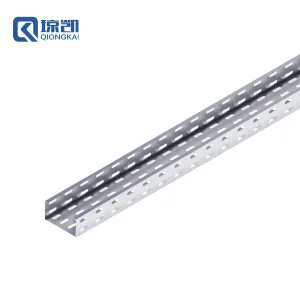
Wholesale Pre-galvanized Hot-dip-galvanized Perforated Cable Tray 100*50
Explore Product Specs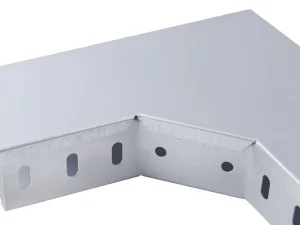
Pre Galvanized Elbow / Tee / X Fitting with Cover
Explore Product Specs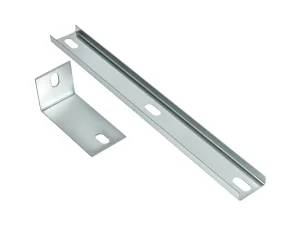
Heavy Duty Pre Galvanized L-Shaped Support Bracket
Explore Product Specs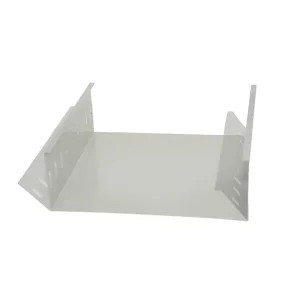
Non-Perforated Powder Coated Solid Trough Cable Tray
Explore Product Specs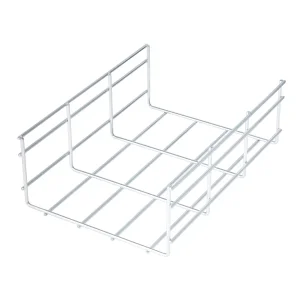
Pre Galvanized Wire Mesh Grid Cable Tray 200mm
Explore Product Specs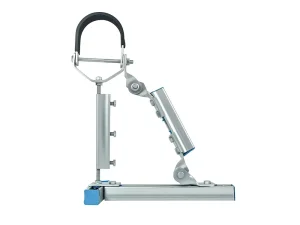
Engineered Seismic Bracing Bracket for Strut Channels
Explore Product Specs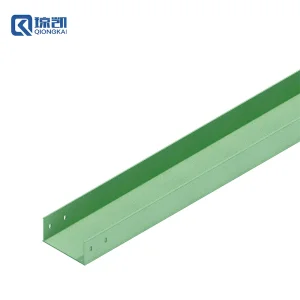
FRP Anti-Corrosive Cable Trunking Trough Channel 400*200
Explore Product Specs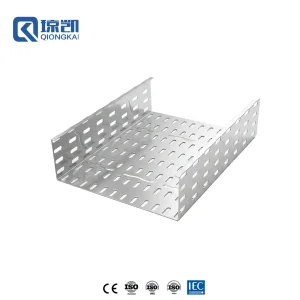
Carbon Steel PG / HDG Tray with Reinforce Ribs 300*100
Explore Product SpecsWhy Global Specifiers Migrate to Aluminium Perforated Cable Trays
In mission-critical electrical containment, aluminium perforated cable trays represent an optimal convergence of high structural strength-to-weight ratio, superior thermal dissipation, and permanent atmospheric passivity.
Across modern megaprojects—from offshore green hydrogen processing units and hyperscale AI computing data centers to coastal railway networks—the historical reliance on standard structural steel (such as hot-dip galvanized Q235B) presents severe compounding liabilities: deadweight penalties on primary building frames, risk of zinc whisker growth in clean environments, and expensive site-welding or cut-edge corrosion. Perforated aluminium cable trays, extruded or cold-formed primarily from marine-grade 6063-T6 or 5052-H32 alloys, solve these constraints permanently while radically reducing Total Cost of Ownership (TCO).
Key Engineering Finding: According to IEC 61537 and IEEE Std 835 cable ampacity guidelines, a continuous perforation pattern providing an open area between 28% and 42% lowers operating cable temperatures by up to 9.4°C compared to solid trough systems. This thermal efficiency reduces conductor $I^2R$ resistive losses, directly contributing to long-term energy savings across industrial lifecycles.
Additionally, aluminium naturally builds a micro-thin, chemically stable aluminum oxide ($Al_2O_3$) passive barrier upon atmospheric exposure. Unlike carbon steel coatings that deteriorate via sacrificial depletion, this passivating film immediately self-heals when scratched, eliminating field maintenance and touch-up galvanizing during commissioning.
62% Deadweight Reduction
With a density of ~2.70 g/cm³ versus 7.85 g/cm³ for steel, aluminium cable trays drastically cut ceiling hanger loads and seismic deadweight, accelerating installation speed by 40% with smaller crews.
Non-Magnetic & Low Losses
Being completely non-ferromagnetic, aluminium trays eliminate magnetic hysteresis losses and excessive heating caused by high-amperage alternating single-core cables, ensuring zero eddy current entrapment.
Permanent Atmospheric C5-M Rating
Alloy 5052-H32 exhibits exceptional resistance against airborne chlorides, sulfur dioxide, and coastal fog, satisfying ISO 12944-2 C5-M extreme marine environment requirements without supplementary coatings.
Material Performance & Structural Specification Matrix
Direct empirical data comparing aluminium alloys against carbon steel and stainless steel variants across mechanical, thermodynamic, and corrosion metrics.
| Material / Structural Specification | Density (g/cm³) | Yield Strength (MPa) | Tensile Strength (MPa) | Thermal Conductivity (W/m·K) | Corrosion Mechanism | Safe Span Deflection Limit |
|---|---|---|---|---|---|---|
| Aluminium 6063-T6 (Extruded Profile) | 2.70 | 170 - 214 | 205 - 245 | 201 - 218 | Self-healing $Al_2O_3$ film | L/200 (NEMA VE-1 Compliant) |
| Aluminium 5052-H32 (Sheet Metal Perforated) | 2.68 | 193 - 220 | 228 - 260 | 138 | Marine chloride passivation | L/200 to L/250 (IEC 61537) |
| Hot-Dip Galvanized Steel (Q235B / HDG) | 7.85 | 235 | 370 - 500 | 50 | Sacrificial Zinc Barrier (depleting) | L/200 |
| Pre-Galvanized Carbon Steel (PG / GI) | 7.85 | 235 | 370 - 500 | 50 | Thin zinc layer (indoor only) | L/200 |
| Stainless Steel AISI 316L | 8.00 | 220 | 520 | 16.3 | Chromium oxide passive layer | L/300 (Extreme heavy-duty) |
China Factory 4.0: Supply Chain Resilience & Manufacturing Edge
Operating from the Songjiang Industrial Belt in Shanghai, Shanghai Qiongkai Industry Co., Ltd. unifies robotic CNC punching, automated extrusion profiles, and deep seaport logistics into a frictionless procurement chain.
Procuring industrial-scale cable management from China has evolved beyond basic labor arbitrage into an aggressive search for supply chain elasticity, dimensional precision, and raw material integration. Shanghai Qiongkai’s manufacturing base incorporates vertically integrated billet processing, extrusion presses ranging up to 3,600 tons, and automated continuous punching lines that manufacture perforated cable tray side rails and bases in a unified pass.
High-Speed Multi-Axis CNC
Stamping punch presses deliver precise staggered oblong perforation patterns without burrs or micro-fissures, safeguarding sensitive fiber optic and power cable sheaths during pulling.
Dynamic Extrusion Tolerances
Side rails feature an integrated continuous I-beam or C-channel profile with return flanges, boosting section modulus ($Z_x$) while preserving strict ±0.2mm dimensional tolerances.
Seaport Port Logistics
Situated 45 minutes from Shanghai Yangshan Deepwater Port and Waigaoqiao Terminals, we guarantee direct container loading, customized sea-worthy wood crating, and rapid customs exit.
Nested Volume Packaging
Our tapered-flange tray engineering enables high-density nesting inside 40ft High Cube containers, slashing ocean container volume requirements by up to 38% per project manifest.
Mission-Critical Sector Engineering Solutions
Engineered to excel in demanding environments where weight constraints, seismic vulnerability, chemical exposure, and electromagnetic compatibility are non-negotiable.
Hyperscale AI Data Centers
Rapid airflow circulation dissipates severe server rack heat. Non-magnetic aluminium prevents EMI/RFI noise corruption in adjacent high-density fiber and Cat6A backbones.
Offshore Wind & LNG Plants
Combats persistent salt aerosol and high relative humidity. Certified for extreme offshore LNG platforms in Qatar and harsh coastal environments across Southeast Asia.
Utility Solar & Clean Hydrogen
Withstands UV degradation and continuous outdoor thermal cycling (-40°C to +85°C) without micro-cracking or requiring expensive recoating programs.
Semiconductor Cleanrooms
Zero risk of zinc whiskers (conductive zinc flaking off galvanized steel that shorts microcircuits). Chemically clean, anodized surfaces satisfy ISO Class 1 to 5 environments.
Rail Transit & Subways
Validated at Shanghai Hongqiao International Airport. Vibration-resistant side flange designs endure continuous cyclic air pressure waves from high-speed train passages.
Wholesale Pricing Determinants & 20-Year TCO Evaluation
Understand the direct cost mechanics behind manufacturer quotations, indexing formulas against London Metal Exchange (LME) spot rates, and lifecycle cost recovery.
Direct wholesale pricing for aluminium perforated cable trays is calculated by industrial manufacturers via a transparent three-part algorithm rather than static list prices:
Wholesale Price Model: $P_{\text{meter}} = [ (M_{\text{weight}} \times (LME_{\text{spot}} + S_{\text{billet}})) + C_{\text{process}} + S_{\text{finish}} ] \times (1 + \mu)$
Where: $M_{\text{weight}}$ is profile weight per meter (kg/m); $LME_{\text{spot}}$ is primary A00 aluminium ingot price; $S_{\text{billet}}$ is alloy extrusion ingot premium; $C_{\text{process}}$ covers automated CNC stamping and profiling; $S_{\text{finish}}$ is optional surface treatments (anodizing / fluorocarbon PVDF powder coating); and $\mu$ represents manufacturer wholesale operating margin (typically 6-10% at direct export volume).
While the initial procurement price per linear meter of aluminium cable tray is typically 18% to 28% higher than pre-galvanized carbon steel, its Total Cost of Ownership over 20 years yields a 34% net saving due to freight efficiency, single-technician handling, reduced bracket structural density, and zero maintenance re-coating schedules.
| Nominal Tray Width (mm) | Side Rail Depth (mm) | Material Thickness | Nominal Load Cap (kg/m at 2.0m Span) | Indicative Price (USD/Meter, Mill Finish)* | Indicative Price (USD/Meter, Anodized)* |
|---|---|---|---|---|---|
| 100 mm (Compact) | 50 mm | 1.5 mm Alloy 5052 | 65 kg/m | $5.80 - $7.20 | $7.10 - $8.60 |
| 200 mm (Medium) | 75 mm / 100 mm | 1.8 mm Alloy 5052 | 110 kg/m | $9.50 - $12.10 | $11.80 - $14.50 |
| 300 mm (Industrial) | 100 mm | 2.0 mm Extruded 6063 | 175 kg/m | $14.20 - $17.80 | $17.50 - $21.20 |
| 400 mm (Heavy Power) | 100 mm / 150 mm | 2.0 mm Extruded 6063 | 240 kg/m | $18.60 - $23.50 | $22.90 - $27.80 |
| 600 mm (Substation Scale) | 150 mm | 2.5 mm Extruded 6063 | 350 kg/m | $28.40 - $35.00 | $34.00 - $41.50 |
*Prices are indicative FOB Shanghai container volume rates based on LME aluminium base. Exact project bids fluctuate according to monthly commodity indexes and custom perforation drawings.
Technical Roadmap & Future Outlook: 2026–2035
Engineering breakthroughs in alloy metallurgy, digital asset integration, and low-carbon aluminum smelting are transforming cable tray infrastructure.
Scandium-Modified 6xxx Alloys
Trace additions of Scandium (Sc) and Zirconium (Zr) form fine $Al_3(Sc, Zr)$ precipitates, boosting tensile yield by 28% without diminishing ductility or corrosion resistance, enabling thinner 1.5mm walls with identical load bearing.
Scope 3 'Green Aluminium'
Deploying primary aluminum smelted exclusively with renewable hydroelectric power (<4 kg $CO_2$/kg Al vs coal-fired 16 kg $CO_2$/kg Al) allows Tier-1 global EPCs to meet strict Scope 3 embodied carbon targets.
BIM 4D & RFID Tracing
Factory-embedded QR codes and passive UHF RFID chips on every tray segment feed directly into Autodesk Revit and Navisworks digital twins, verifying assembly sequence, heat batches, and load ratings on-site.
Global Standards, Electrical Continuity & Thermal Expansion
Meeting international regulatory compliance is essential for high-voltage plant handovers. Our systems adhere to rigorous mechanical and electrical test standards.
When engineering high-span aluminium cable containment, structural engineers must accommodate both electrical bonding resistance and thermal coefficient expansion differentials:
Thermal Expansion Formula: $\Delta L = L \times \alpha \times \Delta T$
Where: $\alpha$ of aluminium is $23.1 \times 10^{-6}\text{ K}^{-1}$ (approximately double that of carbon steel at $12.0 \times 10^{-6}\text{ K}^{-1}$). For a 100-meter straight run experiencing a 40°C temperature swing between winter shutdown and peak summer operation, total tray expansion equals $92.4\text{ mm}$. Shanghai Qiongkai supplies slotted expansion splice plates and bonding jumpers at calculated 24-meter intervals to prevent structural buckling.
IEC 61537 Certified
Strict Safe Working Load (SWL) testing verifying mid-span deflection remains within the standardized $L/100$ or $L/200$ limit under full uniform distributed load (UDL).
NEMA VE 1 / VE 2
Meets North American load class designations (Class 8A, 12B, 16C) for heavy industrial cable tray applications and structural field installation protocols.
Electrical Continuity
Maximum electrical joint resistance certified at $<50\text{ m}\Omega$ across all coupled connections without external earth jumpers, functioning as an integrated equipment grounding conductor (EGC).
ASTM B221 & UL Classified
Extrusion chemistry verified against ASTM B221 standards with third-party chemical spectrographic analysis reports attached to every master bill of lading.
Complementary Cable Tray Infrastructure & Custom Fittings
Ensure system-wide integrity with matching energy-saving trays, modular angle iron, heavy-duty strut channels, and chemical-resistant FRP systems.
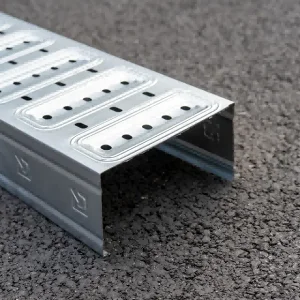
Pre-Galvanized Perforated Energy Saving Tray 200*100
Explore Product Specs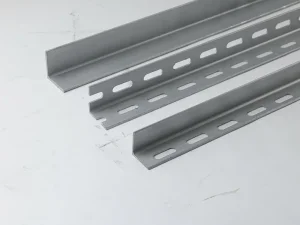
Pre Galvanized Non-Perforated Heavy Angle Iron
Explore Product Specs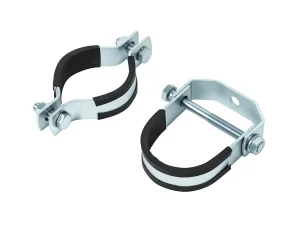
Precision Fastening Conduit & Pipe Clamping Assemblies
Explore Product Specs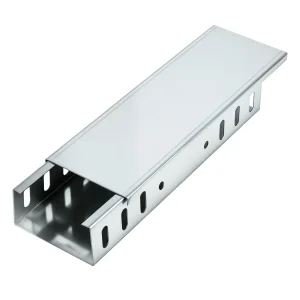
Pre-Galvanized Industrial Cable Trunking 100*50
Explore Product Specs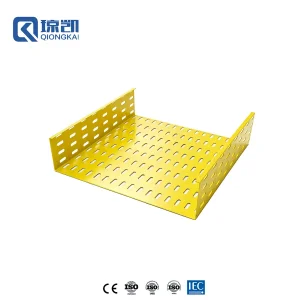
Powder Coated PG/HDG Cable Tray RAL1080 Yellow 400*100
Explore Product Specs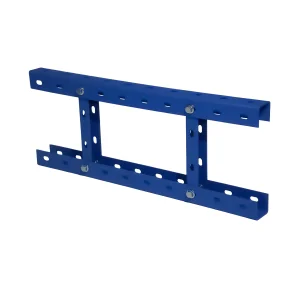
High-Capacity Blue Powder Coated Ladder Cable Rack
Explore Product Specs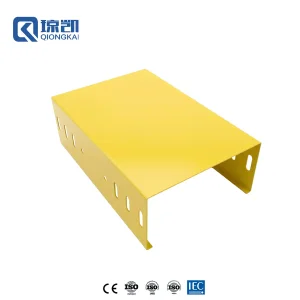
Powder Coated Cable Trunking RAL1080 Yellow 200*100
Explore Product Specs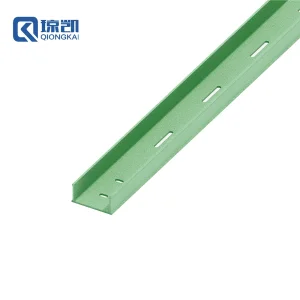
FRP Chemical Acid-Resistant Perforated Cable Tray 100*50
Explore Product SpecsFrequently Asked Technical & Commercial Questions (FAQ)
Detailed, mathematically rigorous responses answering the most common queries raised by MEP directors, procurement managers, and electrical consultants.
How does the wholesale pricing mechanism function for custom aluminium perforated cable trays?
What alloy provides the ideal balance between structural deflection and corrosion: 6063-T6 or 5052-H32?
Why are aluminium cable trays mandated in hyperscale AI data center server halls?
What Safe Working Load (SWL) span distances should be specified under IEC 61537?
How is bimetallic (galvanic) corrosion prevented when connecting aluminium trays to steel brackets?
What container packaging optimization is utilized for large-scale export orders?
Accelerate Your Cable Containment Engineering
Submit your Bill of Quantities (BOQ), project layout drawings, or tender specifications. Our technical engineering division delivers verified load calculations, expansion spacing plans, and direct manufacturer pricing within 24 hours.