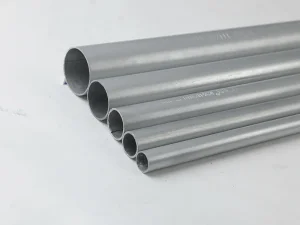
Factory-Engineered Cable Support Flagship Catalog
Direct wholesale access to heavy-duty, reinforced, wire mesh, and molded modular cable trays engineered under ISO 9001, NEMA VE 1, and IEC 61537 international protocols.
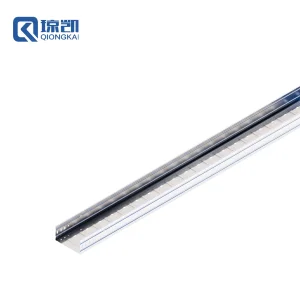
Wholesale Cost Saving Heavy Duty Reinforced Molded Pre Galvanized Cable Tray with less perforation 200*100 Factory, Price
View Specifications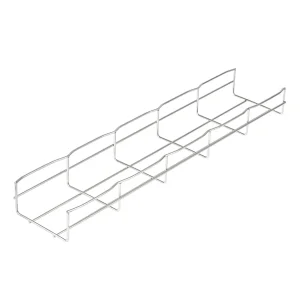
Buy Stainless grid cable tray100mm Manufacturer, Factories
View Specifications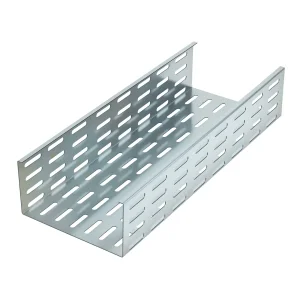
Buy Pre Galvanized Perforated Cable Tray 200mm Manufacturers, Supplier
View Specifications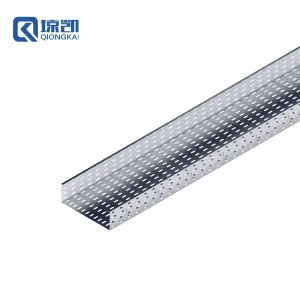
Wholesale Reinforced Medium duty Pre-galvanized Hot-dip-galvanized Perforated Cable Tray 300*100 Manufacturer, Factories
View Specifications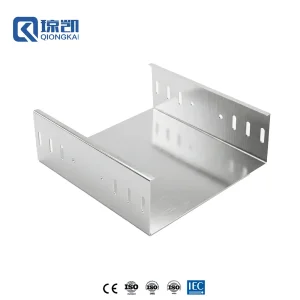
Wholesale Stainless Steel SS 304 316 Cable Trunking 300*100 Manufacturers, Supplier
View Specifications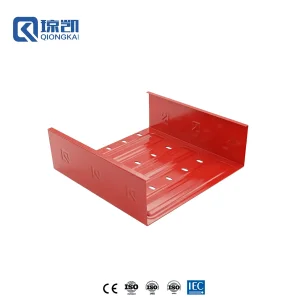
Wholesale Powder Coated Carbon Steel Cost Saving Heavy Duty Reinforced Molded Pre Galvanized Cable Tray with less perforation - RAL3020 Red 300*100 Factory, Factories
View Specifications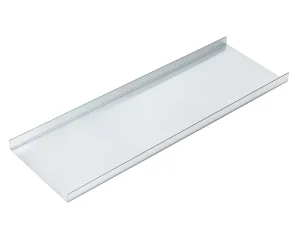
Buy Pre-Galvanized Cable Tray Cover Cable Protection Manufacturers, Supplier
View Specifications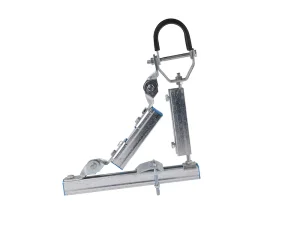
Buy Reliable heavy duty seismic resistant bracket Factories, Price
View SpecificationsThe Structural Transition to Aluminum Cable Tray Systems
Engineering parameters driving procurement shifts across global EPC projects: corrosion immunity, structural strength-to-weight ratios, and Total Cost of Ownership (TCO) benchmarks.
Macro-Industrial Demand Shifts
In industrial electrical infrastructure, the selection of raceway systems determines long-term plant uptime, structural deadweight, and maintenance overhead. While hot-dip galvanized (HDG) carbon steel has historically anchored heavy-duty installations, international procurement mandates across energy infrastructure, chemical processing, offshore installations, and hyperscale data centers are moving decisively toward extruded aluminum cable tray assemblies.
The economic rationale is driven by life-cycle cost analysis. Marine atmospheric environments, offshore salt spray, and sulfur-laden industrial facilities cause rapid degradation in zinc coatings, often initiating pitting corrosion within 5 to 7 years. In contrast, copper-free aluminum alloys (primarily 6063-T6 and marine-grade 5052-H32) instantly form an adherent, micro-thin aluminum oxide (Al₂O₃) passivation layer that repairs itself when scratched, eliminating structural maintenance across multi-decade operating horizons.
Logistical & Installation Savings
Beyond chemical resilience, extruded aluminum cable trays provide a high strength-to-weight ratio. Aluminum has a density of approximately 2.70 g/cm³, roughly one-third the weight of structural carbon steel (7.85 g/cm³). For EPC engineering contractors executing complex vertical drops or long horizontal spans, this weight reduction lowers dead-load engineering calculations for overhead roof trusses, pipe racks, and cable bridges.
From a logistics standpoint, reduced freight weight allows shipping containers to reach cubic volume limits rather than weight limits, cutting ocean freight costs per linear meter. Onsite handling times decrease by up to 45%, requiring fewer riggers and hoists, while field alterations—such as miter cuts, ladder drops, and junction transitions—are executed faster using portable cold-cutting equipment without compromising protective coatings.
Extrusion Metallurgy: Alloy 6063-T6 vs. 5052-H32
Precision structural composition determines deflection limits, thermal dissipation performance, and grounding electrical continuity under NEMA VE 1 and IEC 61537 testing parameters.
Alloy 6063-T6 (Extrusion)
The global standard for cable tray side rails and structural ladder rungs. Magnesium-silicide (Mg₂Si) precipitation hardening delivers a yield strength exceeding 170 MPa and tensile strength over 205 MPa. It allows integrated I-beam side-rail extrusions that optimize moment of inertia ($I_x$) while minimizing material mass.
Alloy 5052-H32 (Sheet & Plate)
Engineered primarily for perforated solid bottoms, splice joint connecting plates, and heavy-duty barrier dividers. Alloyed with 2.5% magnesium, 5052-H32 offers resistance to chloride stress-corrosion cracking and marine spray environments, maintaining ductility for stamped perforation geometry.
EMC Shielding & Grounding
With volumetric electrical conductivity reaching 50% to 55% IACS (International Annealed Copper Standard), aluminum cable tray systems serve as an Equipment Grounding Conductor (EGC) per NEC Article 392, reducing harmonic ground-fault loops and providing high RF/EMI attenuation for critical control cabling.
| Performance Metric | Extruded Aluminum (6063-T6) | Hot-Dip Galvanized Steel (Q235/HDG) | Stainless Steel (SS316L) | Fiberglass Reinforced Polymer (FRP) |
|---|---|---|---|---|
| Density & Deadweight | 2.70 g/cm³ (Ultra-Light) | 7.85 g/cm³ (Heavy) | 7.98 g/cm³ (Very Heavy) | 1.80 g/cm³ (Lightweight) |
| Tensile Yield Strength | 170 – 215 MPa | 235 – 345 MPa | 220 – 310 MPa | 140 – 200 MPa (Directional) |
| C5-M Marine Atmospheric Life | > 35 Years (Passive Al₂O₃) | 7 – 12 Years (Zinc Depletion) | > 40 Years (Nickel-Moly Passive) | > 30 Years (Resin Degradation Dep.) |
| Electrical Conductivity (% IACS) | 50% – 55% (Native EGC Approved) | 10% – 15% (Requires Bonding Jumper) | 2% – 3% (Poor, Dedicated Cable Req.) | Zero (Complete Dielectric Insulator) |
| Field Fabrication Flexibility | Fast (Standard Carbides, No Coating Repair) | Complex (Touch-up Zinc Paint Required) | Difficult (Work Hardening, Specialized Bits) | Dust Protective Masking & Sealant Needed |
| Thermal Expansion (10⁻⁶/K) | 23.1 (Requires Expansion Splices) | 12.0 (Moderate Expansion) | 16.5 (Moderate Expansion) | 18.0 (Directional Fiber Expansion) |
Wholesale Aluminum Cable Tray Pricing Architecture
Transparent analysis of London Metal Exchange (LME) raw billet indexing, extrusion tooling amortization, side rail geometry, and total landed cost calculations.
Cost Structuring & Price Factors
Wholesale pricing for aluminum cable tray systems is structured around variable and fixed elements. Unlike standard stamped sheet metal parts, industrial-grade extruded ladder and ventilated trays depend on primary aluminum cash contract pricing on the London Metal Exchange (LME) or Shanghai Metal Market (SMM), alongside magnesium and silicon alloy premiums.
A manufacturer's direct price quote generally incorporates:
1. Raw Ingot Base Price: Index-pegged metric ton cost of primary A00 aluminum.
2. Extrusion & Tooling Toll: Conversion costs across 2500-ton to 4500-ton hydraulic extrusion presses, including billet homogenization and nitrogen-die cooling.
3. Wall Thickness & Load Class: Structural side-rail thickness (typically 2.0 mm to 4.5 mm) engineered to comply with NEMA 12A, 12C, 20B, or 20C working load ratings.
4. Chemical Anodization or Powder Conversion: Clear anodized finishes (10 µm to 25 µm, Class I / II) or marine thermoset polyester powder coating.
Hedging & Contract Procurement
For major infrastructure undertakings with 6- to 24-month procurement schedules, raw material price swings introduce financial risk. Industrial suppliers utilize forward hedging strategies to lock billet costs at project sanction, mitigating exposure to market volatility.
Bulk pricing models typically drop per-meter costs when total run lengths allow automated production runs. For example, producing custom rung spacings (such as 6, 9, or 12 inches) in batches over 1,500 meters optimizes robotic welding sequences and cuts per-unit factory tooling costs.
| Profile Specification | Width Range (mm) | Side Rail Depth (mm) | NEMA Load Class | Est. Wholesale Price / Meter (USD)* | Key Economic Advantage |
|---|---|---|---|---|---|
| Light-Duty Ventilated | 100 – 300 mm | 50 – 75 mm | NEMA 8A / 8B | $14.50 – $22.80 / m | Minimal deadweight for data-center ceilings |
| Medium-Duty Ladder (9" Rung) | 150 – 600 mm | 100 mm (4 in) | NEMA 12B / 12C | $24.20 – $38.50 / m | Standard commercial and cleanroom raceways |
| Heavy-Duty Industrial Ladder | 300 – 900 mm | 150 mm (6 in) | NEMA 20B / 20C | $42.00 – $68.00 / m | Refinery and process plant primary distribution |
| Extra Heavy-Duty Marine I-Beam | 600 – 1000 mm | 175 – 200 mm | CSA Class E / 6m Span | $72.00 – $115.00 / m | Long spans between outdoor pipe rack bents |
*Note: Estimated FOB wholesale baseline tiers. Final prices reflect aluminum billet market indexing, total order tonnage, project-specific anodization thicknesses, and accessory bundles.
Macro-Industry Application Solutions
Targeted engineering designs addressing high-current ampacity routing, coastal salinity resistance, cleanroom hygiene, and extreme industrial environments.
Hyperscale Data Centers
Overhead high-density busway and fiber-optic management. Aluminum’s low mass preserves roof truss reserve load capacity for HVAC ductwork. Non-magnetic alloys prevent inductive heating under high-current, continuous AC loads.
Offshore LNG & Petrochem
Engineered with copper-free 6063-T6 alloys and 316 stainless steel fasteners with isolation washers to eliminate galvanic reactions. Natural passivation layers resist sulfur dioxide, volatile hydrocarbons, and continuous marine humidity.
Utility Solar & Renewable
Utility-scale tracker arrays and substation transitions. Superior UV stability compared to polymer composites, zero toxic zinc leaching into soil runoffs, and thermal expansion handling over desert day-night shifts.
Semiconductors & Pharma
Cleanroom environments require zero surface shedding or zinc whisker formation, which can cause micro-short circuits in high-purity microelectronics. Anodized aluminum finishes offer clean surfaces that withstand washdowns.
Technical Roadmap: Future Innovations
Forward-looking manufacturing advancements in circular low-carbon smelting, snap-lock structural joinery, and digital twin load tracking.
Circular Low-Carbon Billet Smelting
Meeting Scope 3 decarbonization mandates via hydro-powered green aluminum smelting. Incorporating up to 75% certified post-industrial recycled extrusions lowers the carbon footprint to under 4.0 kg CO₂e/kg aluminum, compared to the coal-fired industry average of 16.0 kg.
Tool-Free Splice Interlocking
Next-generation side-rail profiles feature cold-snap interlocking joints with integrated spring-loaded cam latches. This design reduces field bolting by up to 60% while providing continuous electrical grounding continuity verified through IEEE 525 ground tests.
Digital BIM Integration
Full-dimension BIM objects configured in Revit and Navisworks. Real-time stress calculations allow engineers to model dynamic sag, load weight distribution, and thermal movement along long spans, preventing clash issues during construction.
Global Regulatory Compliance & Seismic Engineering
Verification through third-party mechanical testing, salt-spray validation, load destruction proofs, and seismic dynamic bracing approvals.
NEMA VE 1 / CSA C22.2
Certified destructive testing protocols determine safety factors (1.5x working load) and deflection limits ($L/200$) across 3-meter to 6-meter span intervals.
IEC 61537 International
European standard compliance covering Safe Working Load (SWL), non-flammability, impact performance down to -40°C, and electrical continuity resistance below 5 mΩ/m.
ASCE 7 Seismic Bracing
Engineered strut channels, seismic rigid arm brackets, and dynamic cable sway bracing designed to resist lateral and longitudinal loads in seismic zones 3 and 4.
UL Classified Grounding
Listed Equipment Grounding Conductor (EGC) compliance under UL 568. Facilitates direct fault current distribution without dedicated secondary copper earth lines.
Engineering & Procurement Q&A
Direct answers to core specification and procurement queries raised by EPC electrical designers, project consultants, and commercial estimators.
Why choose extruded aluminum cable trays over hot-dip galvanized (HDG) steel?
How do you prevent bimetallic galvanic corrosion when mounting aluminum trays to steel struts?
How are wholesale bulk prices quoted against raw aluminum market volatility?
How is thermal expansion calculated and managed across long outdoor runs?
Can custom extrusion profiles, rungs, and bend radii be manufactured?
Specialized Modular Tray & Installation Accessories
Engineered accessories, high-corrosion FRP ladders, fireproof powder-coated profiles, and heavy-duty structural struts to complete your cable routing system.
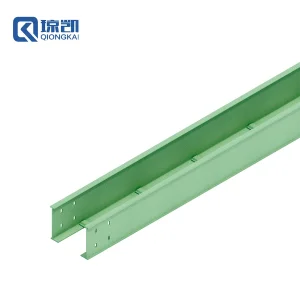
Buy FRP Cable Ladder 200*150 Factory, Factories
View Specifications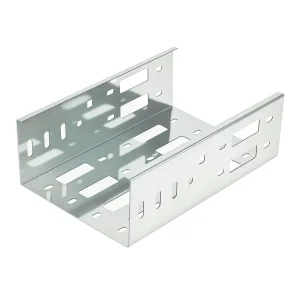
Wholesale Custom Size Pre Galvanized Perforated Cable Tray Factory, Price
View Specifications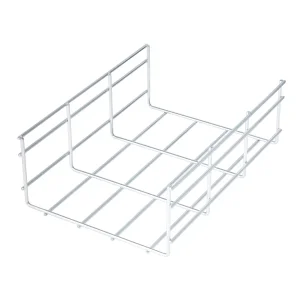
Wholesale Pre Galvanized grid Cable tray 200mm Manufacturer, Manufacturers
View Specifications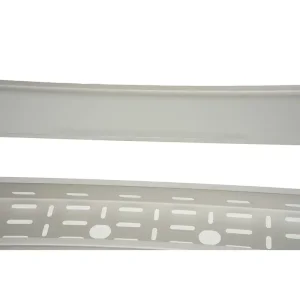
Buy Customized Stainless Steel Cable Tray With Surface Treatment Factory, Factories
View Specifications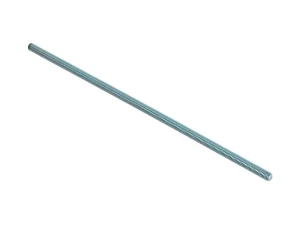
Buy Metal hanger rod Supplier, Price
View Specifications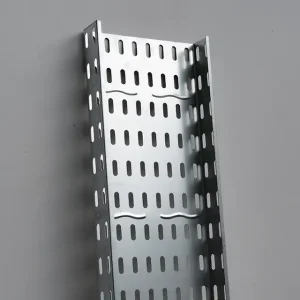
Buy Pre-Galvanized Reinforced Cable Tray 200*50 Suppliers, Factories
View Specifications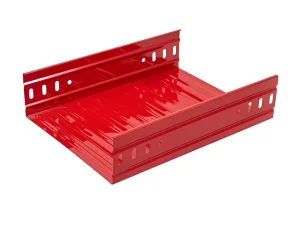
Buy Fireproof Red Pre Galvanized Powder coated molded cable tray Supplier, Price
View Specifications