
Standard & Heavy-Duty Product Showcase
Manufactured across 12 automated lines at our Shanghai Songjiang facilities under ISO 9001:2015 QA protocols. Complete traceability from carbon steel coils to protective finishes.
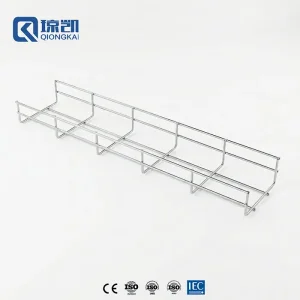
Buy Stainless Steel SS 304 316 Basket Wire Mesh Grid Cable Tray 100*50 Manufacturer, Manufacturers
Request Technical Spec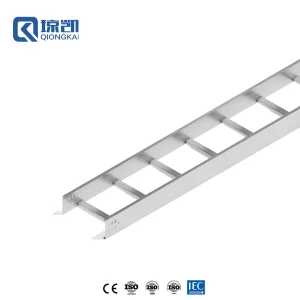
Wholesale Galvanized Ladder Type Cable Tray 400*150 Suppliers, Factory
Request Technical Spec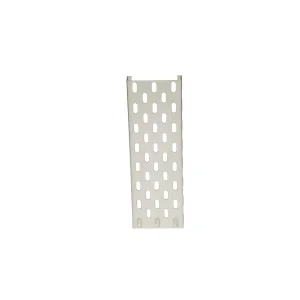
Wholesale 100*25 Stainless Steel Extreme Perforated Cable Tray Supplier, Price
Request Technical Spec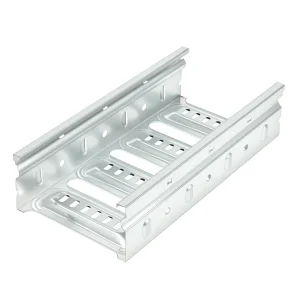
Buy Pre Galvanized High load capacity cable tray Factory, Price
Request Technical Spec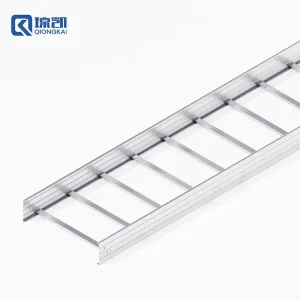
Wholesale Heavy Duty Pre GI HDG Ladder Type Cable Tray 800*200 Suppliers, Price
Request Technical Spec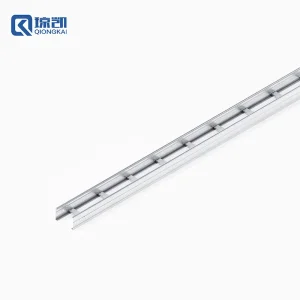
Buy Reinforced Pre Galvanized or HDG Ladder Type Cable Tray 200*100 Manufacturers, Price
Request Technical Spec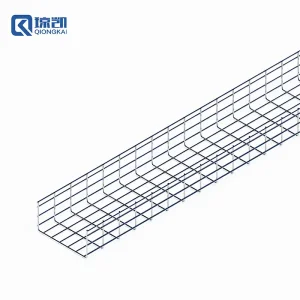
Buy GI Galvanized Wire Mesh Tray 300*150 Factory, Factories
Request Technical Spec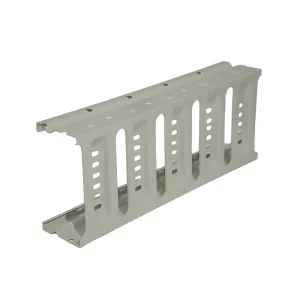
Buy Powder Coated Customizable Ladder Perforated Cable Tray Manufacturer, Factory
Request Technical SpecMacro Industrial Shifts Transforming Cable Support Procurement
Modern electrical balance of plant (eBoP) specifications have shifted from commodity sheet-metal purchases to tightly toleranced, algorithm-verified cable routing infrastructures capable of surviving extreme mechanical stress and corrosive environments.
Hyperscale Data Density
With artificial intelligence cluster topologies requiring bundled high-ampacity busway feeds and high-density fiber harnesses, thermal dissipation formulas and fill-ratio limits dictate cable ladder flange design and bottom ventilation spacing.
Corrosion Aggression (C3–C5M)
From coastal LNG regasification facilities in Qatar to sulfur-dense agricultural complexes in Paraguay, procurement managers need precise lifecycle metal loss formulas (μm/year) to calculate whether SS316, HDG (85μm+), or FRP yields the lowest TCO.
EPC Turnkey Predictability
Global engineering houses demand full BOM modularization. Instead of field cutting and hot works, procurement models require mathematical bend derivations, custom dropouts, and seismic strut channels built precisely to coordinated BIM models.
Engineering Algorithms: The Fabrication Formula Matrix
Cable tray manufacturing combines sheet metal plasticity, structural beam mechanics, thermodynamic ventilation, and industrial cost accounting into predictable mathematical laws. Below are the governing equations deployed across Shanghai Qiongkai’s fabrication lines.
When converting slit carbon steel or stainless coils into perforated trays or ladder side rails via continuous roll forming, metal stretching across the neutral axis alters the cut width. The Bend Allowance (\(BA\)) is computed using the material-specific K-factor:
Safe Working Load (\(w_{safe}\), expressed in N/m or kg/m) defines the maximum allowable static cable weight across span length \(L\). Under NEMA VE 1 / IEC 61537, the structural deflection must never compromise cable insulation integrity or cause buckling at splice plates.
Joule heating (\(P = I^2 R\)) generates internal thermal rises within dense cable bundles. If the cross-sectional area of cables exceeds NEC fill constraints, free convection stalls, requiring dramatic ampacity derating:
Direct factory wholesale pricing eliminates trading-house markups through formulaic decomposition. EPC buyers can accurately baseline production costs against raw coil indexes (SHFE/LME) and surface treatment metrics:
Macro Industry Solutions & Global Deployment
Shanghai Qiongkai’s cable systems are not one-size-fits-all components. Each vertical demands distinct metallurgical selection, span-to-depth profiles, and structural fastening topologies.
AI Hyperscale Data Centers
Challenge: Massive routing overhead within white-space server halls requiring rapid dropouts and electro-static discharge management.
Solution: Zinc whisker-free Stainless Steel SS304 or Powder-Coated (RAL 9005/7035) wire mesh grid trays combined with quick-splice couplers, eliminating hot-spot grounding risks.
Offshore Oil & Gas / LNG
Challenge: Extreme marine salinity, atmospheric chlorine, and persistent cyclic structural vibration on floating production platforms.
Solution: SS316L pickled & passivated or structural pultruded FRP systems with custom profiled sections, successfully delivered for Qatar offshore natural gas operations.
Aviation & Mass Transit
Challenge: Stringent Class 1 fire-stopping resistance, low smoke zero halogen (LSZH) mandates, and high aesthetic integration.
Solution: Heavy-gauge galvanized cable trunking and return-flange ladder systems, as deployed across Shanghai Hongqiao International Airport passenger terminals.
Industrial Aggrotech & Livestock
Challenge: Severe localized uric acid and ammonia vapors that chemically disintegrate standard commercial electro-plated coatings within 18 months.
Solution: Optimized heavy-duty hot-dip galvanized ladder trays (minimum 85μm zinc thickness per ISO 1461), custom-engineered for Paraguay's large-scale automated facilities.
Engineering Specifier’s Metallurgy & Finish Matrix
A mismatched protective finish leads to premature failure and costly shutdown risks. Use our empirical site data table to benchmark material performance, design life, and pricing multiples.
| Material / Treatment | Applicable Standards | Coating / Spec Depth | Corrosion Rating | Expected Design Life | Wholesale Cost Factor |
|---|---|---|---|---|---|
| Pre-Galvanized (PG) Carbon Steel | ASTM A653 / EN 10346 | Z120–Z275 (12–20 μm) | ISO 12944: C1–C2 (Dry Indoor) | 15–25 Years | 1.0x (Baseline) |
| Electro-Galvanized (EG) Wire Mesh | ASTM B633 / BS 7371 | Fe/Zn 12 (8–12 μm) | ISO 12944: C1 (Clean HVAC) | 10–20 Years | 1.15x |
| Hot-Dip Galvanized (HDG) After Fab | ASTM A123 / ISO 1461 | 600–900 g/m² (85–125 μm) | ISO 12944: C3–C4 (Outdoor/Industrial) | 30–50+ Years | 1.45x–1.60x |
| Stainless Steel SS304 (1.4301) | ASTM A240 / EN 10088 | Natural Passivated Oxide Film | ISO 12944: C4 (Food/Pharma Washdown) | 50+ Years | 2.80x–3.20x |
| Stainless Steel SS316L (1.4404) | ASTM A240 / EN 10088 | 2.5% Molybdenum Cr-Ni-Mo | ISO 12944: C5-M (Marine/Offshore) | 60+ Years | 3.80x–4.40x |
| Pultruded Fiber-Reinforced Polymer (FRP) | ASTM D3917 / UL 94-V0 | Isophthalic / Vinylester Resin | Severe Chemical / Acid Acidic Atmosphere | 40+ Years | 2.20x–2.60x |
| Powder-Coated over Galvanized | ASTM D3451 / Qualicoat | 60–100 μm Thermoset Polyester | Dual-Barrier Aesthetic / Color-ID | 20–30 Years | 1.30x–1.45x |
Technical Roadmap: Next-Generation Tray Fabrication
Smart factories, parametric engineering, and low-carbon metallurgical tracking represent the future of electrical infrastructure delivery. Shanghai Qiongkai’s 2026–2030 technology roadmap sets new benchmarks for precision and carbon accountability.
Phase 1: Real-Time Gauge Telemetry
Continuous ultrasonic laser scanning integrated into coil feeding lines detects sheet thickness variance (+/- 0.02mm) dynamically, adjusting roll-forming pressure to prevent micro-fissuring at radius bends.
Phase 2: Robotic Laser-Punch Cells
High-speed fiber lasers replace fixed die-stamping for complex customer perforation geometries, slot venting configurations, and integrated snap-in grounding clip receptacles without retooling downtime.
Phase 3: Digital Twin BIM Export
Autodesk Revit and Bentley OpenBuildings-compatible parametric models generated directly from quotation calculations, providing contractors with pre-calculated clash-detection coordinates and structural weights.
Phase 4: Green Steel & EPD Verification
Adoption of hydrogen-reduced low-carbon steel coils and closed-loop solar-powered galvanizing lines to supply third-party verified Environmental Product Declarations (EPD) required by LEED v4.1 projects.
Global Standards Compliance & Port-Adjacent Logistics
Headquartered in Shanghai’s Songjiang District, Shanghai Qiongkai Industry Co., Ltd. sits within minutes of Waigaoqiao and Yangshan deep-water maritime hubs, ensuring rapid multi-modal dispatch to North American, European, Middle Eastern, and ASEAN construction ports.
NEMA VE 1 / CSA C22.2 No. 126.1
Full destructive proof testing verifying load capacity ratings, structural safety factors, and electrical electrical grounding continuity without requiring supplemental jumper cables across splice connections.
IEC 61537 / CE Low Voltage Directive
International compliance for European and Commonwealth infrastructure tenders covering temperature classification, flame propagation resistance, impact resistance up to 20J (IK10), and corrosion resistance.
Seismic Bracing & Anti-Vibration
Engineered channel strut profiles (41x21, 41x41, 41x62, 41x82) with regular and anti-seismic serrated flanges, fully compliant with GB 50981 and ASCE 7-16 structural seismic requirements.
Frequently Asked Questions: Fabrication & Pricing
In-depth technical answers addressing the real questions raised by structural consultants, project estimators, and site electrical superintendents.
How does Shanghai Qiongkai formulate wholesale pricing for non-standard ladder or perforated trays?
What mathematical rule governs the choice between ladder type, perforated type, and wire mesh trays?
Can Qiongkai assist with span-to-deflection structural recalculations under heavy load conditions?
Why is Hot-Dip Galvanizing (HDG) after fabrication superior to Pre-Galvanized (PG) for industrial projects?
What are the lead times and container loading capacities for international export shipments?
Modular Fittings, Strut Supports & Specialized Profiles
A comprehensive cable management layout requires reliable system fittings, reinforced cover plates, and support channels to ensure long-term structural integrity.
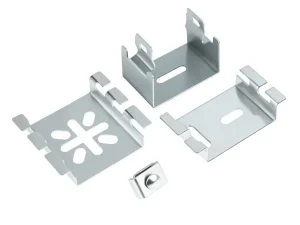
Buy Grid Cable Tray Spare Parts Manufacturers, Price
Request Technical Spec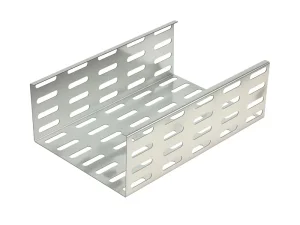
Buy Stainless Steel Perforated Cable Tray 200mm width Suppliers, Factory
Request Technical Spec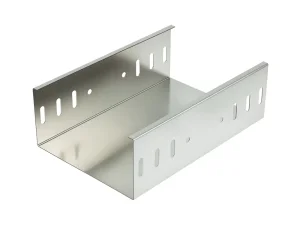
Buy Stainless Cable Tray With Perforation Supplier, Factories
Request Technical Spec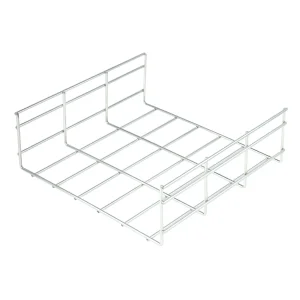
Buy Stainless Wire Mesh Cable Tray 300mm Manufacturers, Supplier
Request Technical Spec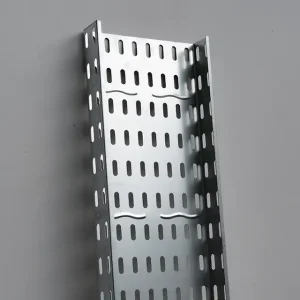
Buy Pre-Galvanized Reinforced Cable Tray 200*50 Suppliers, Factories
Request Technical Spec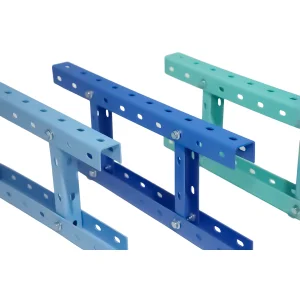
Wholesale Durable Powder Coated Telecom Cable Management Rack Supplier, Factory
Request Technical Spec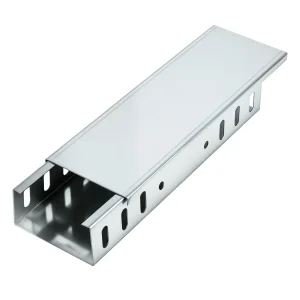
Wholesale Pre-Galvanized Cable Trunking 100*50 Manufacturer, Manufacturers
Request Technical Spec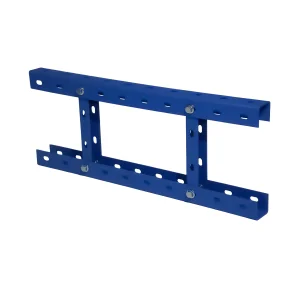
Wholesale Durable Blue Powder Coated Ladder Cable Rack Manufacturer, Suppliers
Request Technical SpecVerified Track Record in International Engineering
From airport terminals and LNG processing modules to overseas agricultural complexes, Shanghai Qiongkai delivers engineered cable management that performs under the toughest conditions.
Shanghai Hongqiao Int'l Airport
Supplied extensive corrosion-resistant CT series galvanized cable trunking and return-edge fittings throughout terminal power distribution pathways and maintenance sub-tunnels.
Qatar Offshore LNG Project
Engineered and manufactured custom profiled structural support sections and SS316L cable management components able to withstand aggressive marine atmospheres and cyclic deck vibrations.
Paraguay Agri-Industrial Complex
Delivered an optimized, high-durability HDG ladder cable tray system engineered to resist severe ammonia vaporization while keeping capital expenditure within strict client budgets.
Request Custom Tray Calculations & Tiered Factory Pricing
Send your project Bill of Quantities (BOQ), single-line diagrams, or cross-sectional requirements. Our engineering team returns fully verified section properties, deflection calculations, and factory-direct volume pricing within 24 hours.