
Featured Fiber Optic Cable Trays & Structural Ladders
Explore our factory-engineered cable management solutions designed with enhanced bend-radius protection, smooth burr-free surfaces, and high load-bearing capacity for telecom infrastructure.
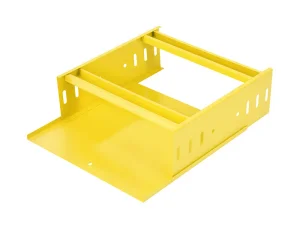
Buy Pre Galvanized Powder coated cable ladder Yellow Manufacturers, Factory
View Specifications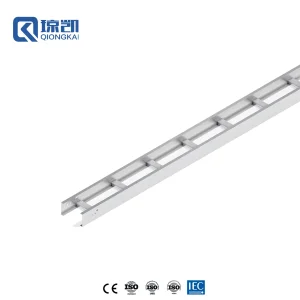
Buy GI Galvanized Cable Ladder 200*100 Supplier, Suppliers
View Specifications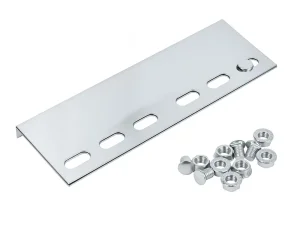
Wholesale Pre-Galvanized Cable Tray Connections spare parts Supplier, Price
View Specifications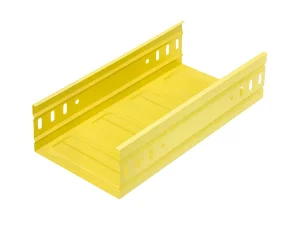
Wholesale Fireproof yellow Pre Galvanized Powder coated molded cable tray Manufacturer, Suppliers
View Specifications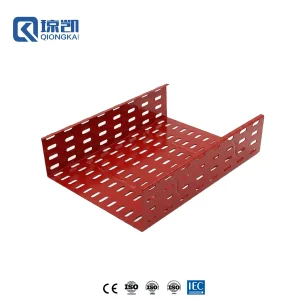
Buy Powder Coated Carbon Steel Pre Galvanized PG Cable Tray with Reinforce Ribs - RAL3020 Red 300*100 Suppliers, Price
View Specifications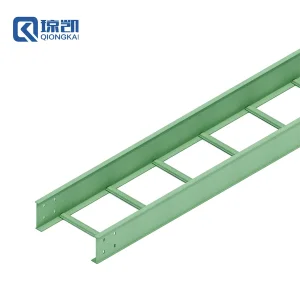
Buy FRP Ladder Type Cable Tray 400*150 Supplier, Factory
View Specifications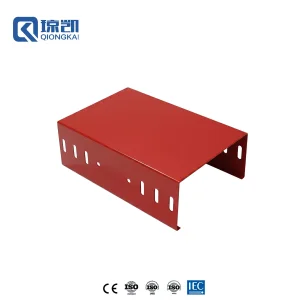
Wholesale Powder Coated Carbon Steel PG Pre Galvanized Cable Trunking Trough Type Channel - RAL3020 Red 200*100 Suppliers, Factory
View Specifications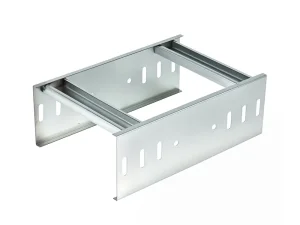
Buy 304 and 316 stainless steel ladder type cable tray customizable perforated design Manufacturer, Factory
View SpecificationsThe Commercial Landscape of Fiber Optic Pathway Infrastructure
With the exponential expansion of Generative AI, high-frequency algorithmic financial systems, and cloud colocation centers, the demand for specialized fiber routing infrastructure has evolved from passive containment into a critical performance-determining layer.
Hyperscale 800G & 1.6T Connectivity
Modern data center fabrics require optical fiber bundles carrying terabits of bandwidth. Unlike rigid copper conductors, optical glass cores (such as Corning SMF-28 Ultra or OM4/OM5 multi-mode fiber) are sensitive to micro-cracking and signal loss caused by excessive mechanical crushing or sharp structural radius drops.
Preventing Micro & Macro-Bending Losses
Macro-bending attenuation occurs when a fiber optic cable violates its minimum bend radius (typically 10x to 20x its outer cable diameter). Premium fiber trays must incorporate smooth deburred edges, flared trumpet drop-out waterfalls, and modular radiused fittings to ensure insertion loss remains within strict 0.2 dB budgets.
Color Coding & Pathway Segregation
Telecommunications standards (TIA-569-E and ISO/IEC 14763-2) prescribe distinct visual segregation between high-voltage power conduits and optical transmission trunks. Factory electrostatic powder-coated safety yellow (RAL 1018 / RAL 1023) or signal red trays immediately alert maintenance technicians to delicate glass raceways.
Material Metallurgy & Structural Classifications
Selecting the correct pathway material prevents premature infrastructure breakdown, electrical interference, and fiber stress. Review our engineering matrix comparing physical characteristics, corrosion classifications, and compliance metrics.
| Material / Profile | Standards Compliance | Corrosion Resistance | Optimal Fiber Application | Tensile / Load Capacity |
|---|---|---|---|---|
| Pre-Galvanized (PG) Powder Coated | IEC 61537 / NEMA VE 1 | Indoor / C1-C2 | Overhead telecom routing, Hyperscale server halls, yellow raceways | High (Steel base gauge 1.2mm - 2.5mm) |
| Hot-Dip Galvanized (HDG) | BS EN ISO 1461 / ASTM A123 | Outdoor / C3-C4 | Exterior backbone links, campus inter-building risers, utility plants | Heavy Duty (Load Class 12A/20C) |
| Stainless Steel 304 / 316L | AISI / ASTM A240 | Extreme Marine / C5-M | Offshore platforms, chemical wash-down cleanrooms, desalination | Maximum Yield Strength > 290 MPa |
| Fiberglass Reinforced Polymer (FRP) | UL94 V-0 / ASTM D635 | Non-Metallic / Chemical | Substations, coastal switchyards, electromagnetic pulse (EMP) isolation | High strength-to-weight, non-conductive |
| Electro-Galvanized Wire Mesh | ASTM B633 / NEMA VE 1 | Controlled Indoor | Underfloor plenums, server rack waterfalls, point-to-point cross connects | Flexible basket load (Up to 150 kg/m) |
Bend Radius Engineering
Our fiber optic cable ladders and trunking feature formed smooth corners with minimum 50mm, 100mm, or 150mm inner curvature arcs, eliminating micro-bending signal decay on single-mode 9/125µm lines.
Anti-Deflection Ribbing
Integrated continuous longitudinal ribs pressed into the side rails enhance structural rigidity, maintaining deflection ratios below L/200 over 3-meter spans under full cable bundles.
Zero-Snag Deburring
All wire mesh cuts and perforated punchings undergo proprietary thermal vibro-polishing and laser edge smoothing to prevent fiber jacket abrasion during high-speed cable pulls.
Fire Resistance
Epoxy-polyester coatings and FRP resins are formulated to meet UL 94V-0 flammability standards with Low Smoke Zero Halogen (LSZH) characteristics to protect technicians and electronic equipment.
Factory Direct Scalability: Shanghai Qiongkai Industry
Headquartered in the Songjiang Port Science and Technology City of Shanghai, Shanghai Qiongkai Industry Co., Ltd. has specialized in precision cable containment and structural support systems since 2005. Our integrated industrial hub delivers uncompromised mechanical quality at direct-factory economies of scale.
Supply Chain Cluster Integration
Our strategic Shanghai location bridges prime raw material suppliers (Baosteel certified prime coil) directly with automated roll-forming equipment. Close proximity to Yangshan Deep-Water Port and Waigaoqiao Port enables rapid container dispatch, reducing export transit times to European, Middle Eastern, and North American distribution centers.
Automated Roll-Forming & Powder Lines
With 12 high-speed continuous cold roll-forming lines, automated punch presses, and robotic welding cells, our plants produce up to 25,000 meters of cable tray daily. Our in-house electrostatic powder coating line applies uniform 60–120µm RAL finish layers that withstand salt-spray and scratching without chipping.
30%–45% Procurement Arbitrage
By eliminating trading intermediaries and deploying high-tonnage multi-station progressive stamping, Qiongkai reduces overall project expenditure by 30% to 45% compared to legacy Western brands, while providing fully interchangeable standard profiles (e.g., 41x41 and 41x21 strut channels, 100x50 to 900x150 trays).
Localized Solutions Built for Demanding Realities
Qiongkai engineered systems are deployed across mission-critical airports, hyperscale cloud facilities, and aggressive chemical processing complexes worldwide.
Shanghai Hongqiao International Airport
Delivered custom CT-series corrosion-resistant cable trunking systems to protect security, avionics, and flight telemetry fiber cabling throughout expansive passenger terminals and service tunnels.
Qatar Offshore LNG Platform Project
Fabricated custom heavy-duty profiled support sections and 316L stainless steel channels engineered to withstand continuous saline spray, severe vibration, and extreme desert heat cycles.
Tropical Petrochemical Sites, Thailand
Supplied high-load FRP-lined composite steel trays and pultruded fiberglass raceways immune to sulfurous atmospheres, high tropical humidity, and corrosive chemical vapors.
European Industrial Shipments (Italy)
Successfully batch-manufactured, ISO 1461 hot-dip galvanized, and exported containerized shipments of modular cable trays and bracket supports matching European DIN installation guidelines.
Commercial Agro-Industrial Complex, Paraguay
Engineered an optimized, high-span heavy-duty cable tray route that lowered total structural bracket cost while safeguarding automated processing cables under tight budget constraints.
Next-Gen Trends in Optical Pathway Infrastructure
The pathway engineering sector is rapidly modernizing to keep pace with AI data center modularity, rapid construction cycles, and tighter environmental guidelines.
Tool-Less Quick-Fit Splices
Modern telecom installations require rapid snap-on couplers and bolt-less splice plates. Qiongkai's engineered quick-connect fasteners reduce field assembly time by up to 60%, drastically cutting contractor labor expenses.
Anti-Seismic Bracing Integration
High-density data facilities located in seismic zones require dynamic support structures. Our 41x41 and 41x82 back-to-back strut channels with anti-seismic serrated flanges ensure that raceway trays resist lateral shock without distortion.
Integrated Fiber Drop Cascades
Pre-engineered trumpet-flared drops snap directly onto tray sidewalls, providing continuous 50mm smooth bend radiuses wherever patch cords transition from overhead pathways down to server racks.
Low Smoke Zero Halogen (LSZH)
Stricter green building codes (LEED v4) mandate halogen-free coatings that release non-corrosive, non-toxic gases during fire scenarios, protecting multi-million dollar optical transceivers from acid degradation.
Global Corporate Sourcing & Turnkey Logistics
International EPC contractors, M&E subcontractors, and telecom operators face tight delivery windows and strict specification hurdles. We provide comprehensive supply-chain management from drawings to job site.
BOM Optimization & CAD/BIM Matching
Our engineering team reviews your Bill of Quantities (BOQ), structural drawings, and load specs. We create precise cut-length schedules, optimize standard 3m/6m section usage, and supply exact bracket and splice counts to prevent job site shortages.
Nested Packaging & Freight Optimization
Cable ladders and trunking trays are nested using protective corrugated corner guards, heavy shrink-wrap, and fumigated wooden pallets. This nested geometry maximizes container space utilization up to 95%, saving thousands of dollars in ocean freight per 40ft HQ container.
Custom OEM/ODM & Coating Tailoring
We accommodate customized side rail heights (50mm–200mm), sheet thicknesses (1.0mm–3.0mm), and RAL powder coatings (RAL 1018 Yellow, RAL 3020 Red, RAL 5012 Blue, RAL 9005 Black). Laser brand marking and project-coded labeling simplify on-site sorting.
Specialty Fiber Trunking, Perforated & FRP Solutions
Explore additional specialized components: from compartmentalized split trunking for power/data isolation to corrosion-proof pultruded composite trays.
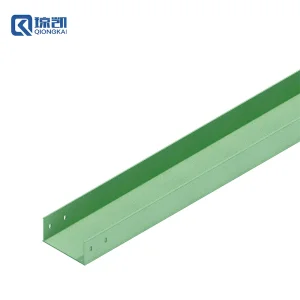
Buy FRP Cable Trunking Trough Type Channel 400*200 Supplier, Factory
View Specifications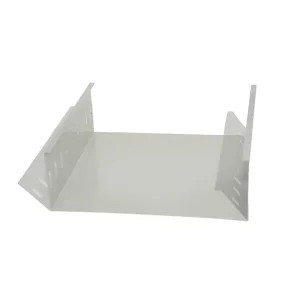
Wholesale Non-perforated Powder Coated Cable Tray_ Suppliers, Factories
View Specifications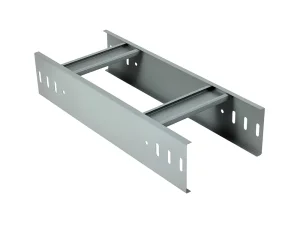
Buy Fireproof powder coated Pre galvanized ladder type cable tray Manufacturer, Manufacturers
View Specifications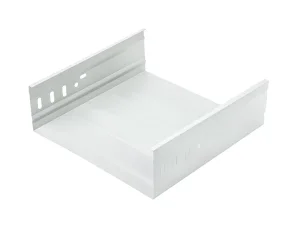
Wholesale Lightweight tenacity aluminium molded cable tray Suppliers, Price
View Specifications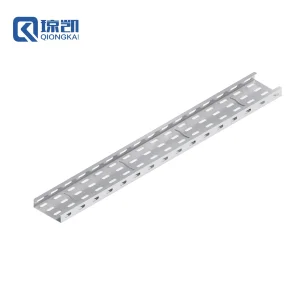
Wholesale Reinforced Medium duty Pre-galvanized Hot-dip-galvanized Perforated Cable Tray 100*25 Factory, Price
View Specifications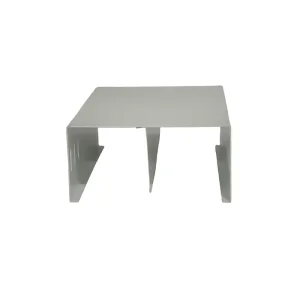
Buy Split Cable Trunking With partition in between Supplier, Factories
View Specifications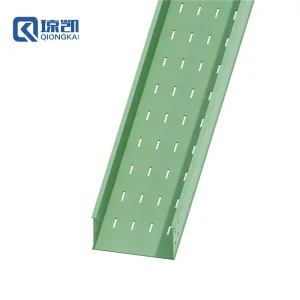
Wholesale FRP Perforated Cable Tray 400*200 Manufacturer, Factory
View Specifications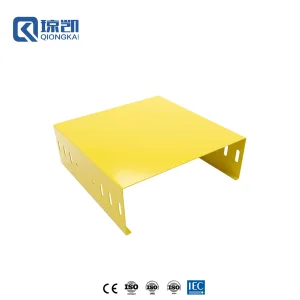
Buy Powder Coated Carbon Steel PG Pre Galvanized Cable Trunking Trough Type Channel - RAL1080 Yellow 300*100 Factory, Price
View SpecificationsFrequently Asked Questions for Project Engineers & Buyers
Clear, technical answers to common queries regarding standards, grounding, finish selection, and manufacturing lead times.
What makes a fiber optic cable tray different from a standard electrical power cable tray?
Fiber optic cable trays are specifically engineered to safeguard sensitive glass strands from micro-bending and macro-bending losses, crush damage, and excessive localized pressure. Unlike heavy power trays that focus primarily on electrical heat dissipation and massive static copper weight, fiber raceways require completely deburred interior surfaces, radiused bottom transitions (minimum 30mm–50mm bend radius fittings), and trumpet-flared drops.
Additionally, they often feature solid or closely perforated bottoms to prevent small fiber patch cords from sagging through gaps, and are typically powder-coated in distinctive safety yellow (RAL 1018/1023) or orange for immediate system identification.
How do I choose between Wire Mesh Basket Trays, Solid Trunking, and Fiber Raceways?
Wire Mesh Basket Trays: Best suited for underfloor data center routing, server rack overhead drops, and high-density environments where maximum airflow, flexible field routing, and easy cable drop-outs are needed.
Solid Trunking (Trough Type): Ideal for dedicated telecom rooms and central offices where optical patch cords require complete protection from physical impact, dust accumulation, and unauthorized physical tampering.
Split Trunking with Partition: Essential when routing both optical communication lines and low-voltage control or DC power cables along the same physical pathway without electromagnetic or mechanical interference.
Do fiber optic cable trays need to be grounded if the optical cables are non-conductive?
Yes. If the tray system is made of metallic materials (pre-galvanized steel, stainless steel, or aluminum), building safety codes (such as NEC Article 392, NFPA 70, and IEC 61537) mandate that all conductive pathways must be electrically bonded and grounded.
This prevents static charge accumulation, provides an equipotential plane during lightning strikes or nearby high-voltage faults, and shields signal cables from high EMI/RFI noise. Non-conductive FRP (Fiberglass Reinforced Polymer) systems do not require electrical grounding, which makes them ideal for high-voltage substations and EMP-sensitive installations.
What international manufacturing and quality standards do Qiongkai cable trays comply with?
Our manufacturing facilities operate under an ISO 9001:2015 certified quality management system. Our products conform to:
- IEC 61537: Cable management - Cable tray systems and cable ladder systems.
- NEMA VE 1 / CSA C22.2 No. 126.1: Metal Cable Tray Systems load class ratings.
- BS EN ISO 1461: Hot-dip galvanized coatings on fabricated iron and steel articles.
- UL 94V-0 & ASTM D635: Flame retardance standards for powder coatings and FRP composites.
Can Qiongkai manufacture custom width, depth, or non-standard profiled channels?
Yes. With over 60 heavy-duty forming machines, automated CNC punching, and laser-cutting stations across 3 factories, we regularly customize cable trays to client specifications. We fabricate tray widths from 50mm up to 1000mm, side heights from 25mm to 200mm, and metal thicknesses from 1.0mm to 3.0mm.
We also produce custom-profiled support struts (including 41x21, 41x41, 41x62, and 41x82mm profiles) and specialized curved fittings designed for unique structural ceiling constraints.
What is the standard production lead time and export packing method for overseas orders?
Standard container orders (20ft or 40ft HQ) typically complete production within 15 to 25 business days. Our Songjiang manufacturing plant is situated near Shanghai's primary maritime ports (Yangshan and Waigaoqiao), enabling container loading and customs clearance within 48 hours of manufacturing completion.
Products are packed with edge-protection guards, moisture-barrier wrapping, and strapped on fumigated wooden skids to prevent transit abrasion during multi-week ocean shipments.
Ready to Optimize Your Fiber Pathway Infrastructure?
Connect directly with Shanghai Qiongkai Industry's application engineering team. Send us your BOQ, single-line diagrams, or tender specifications for a free material take-off, BIM models, and direct factory pricing.