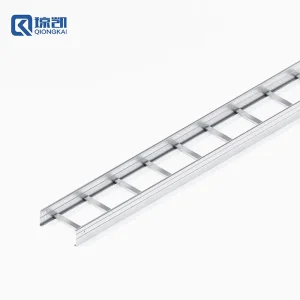
Primary Industrial Cable Management Solutions
Explore heavy-duty pre-galvanized, hot-dip batch galvanized, stainless steel, and structural FRP containment configurations engineered for utility, data processing, and industrial applications.
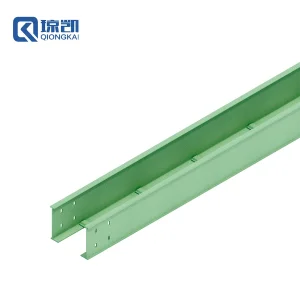
Buy FRP Cable Ladder 200*150 Factory, Factories
View Engineering Specs →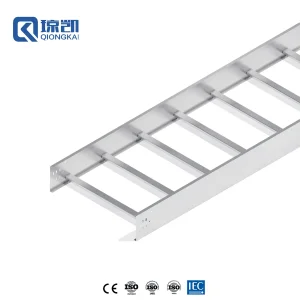
Buy PG Pre-galvanized Ladder Tray 800*200 Manufacturer, Factory
View Engineering Specs →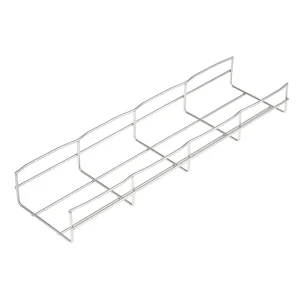
Wholesale Stainless cable tray50mm Manufacturers, Factories
View Engineering Specs →
Wholesale Stainless Steel Grid wire mesh cable tray Manufacturers, Suppliers
View Engineering Specs →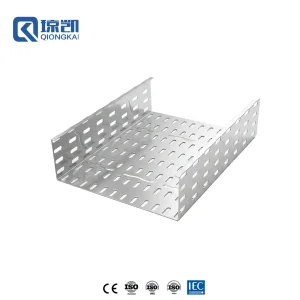
Buy Carbon Steel Pre Galvanized PG Hot Dip Galvanized HDG Cable Tray with Reinforce Ribs 300*100 Supplier, Suppliers
View Engineering Specs →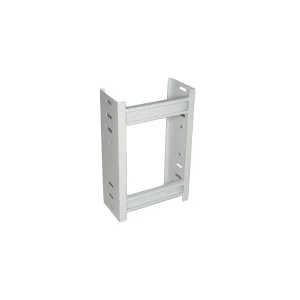
Wholesale Powder Coated Ladder Tray Factory, Price
View Engineering Specs →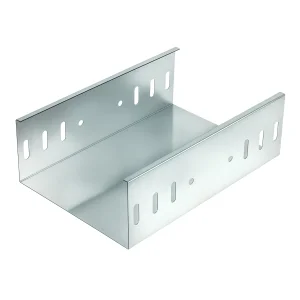
Buy Custom Size Pre Galvanized Cable Trunking Manufacturer, Factories
View Engineering Specs →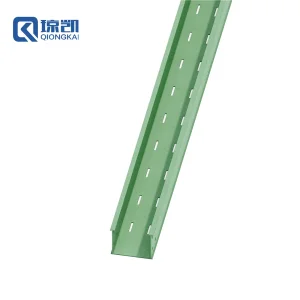
Wholesale FRP Perforated Cable Tray 200*100 Manufacturer, Factory
View Engineering Specs →Hot-Dip Galvanized Cable Tray Industry Evolution & Standards
Modern electrical engineering demands fail-safe structural support under extreme atmospheric, chemical, and mechanical stresses. Reviewing how Hot-Dip Galvanizing (HDG) surpasses standard mill surface finishes.
Diffusion Metallurgy: The 4 Intermetallic Layers
Unlike electrostatic paint or mill pre-galvanizing that merely coats steel, Hot-Dip Galvanizing immerses clean structural steel into a molten zinc bath at approximately 450°C (842°F). This triggers a metallurgical diffusion reaction producing distinct iron-zinc alloy layers: Gamma (75% Zn, 25% Fe), Delta (90% Zn, 10% Fe), Zeta (94% Zn, 6% Fe), and an outer Eta layer (100% Zn). These intermetallic zones achieve Diamond Pyramid Hardness (DPH) exceeding 200, creating superior mechanical abrasion resistance during heavy cable pulling.
Sacrificial Cathodic Protection & Self-Healing
In harsh coastal or chemical atmospheres, accidental scratches or post-fabrication field drillings expose raw carbon steel. The zinc in HDG possesses an electrochemical potential of -0.76V versus -0.44V for iron. Zinc acts preferentially as a sacrificial anode, corroding electrochemically to shield adjacent steel surfaces. Concurrently, zinc hydroxide reacts with atmospheric carbon dioxide to form an insoluble, compact barrier of basic zinc carbonate (ZnCO₃·2Zn(OH)₂), sealing pinholes naturally without localized pitting.
Rigorous Compliance: ASTM A123 & BS EN ISO 1461
Global EPC contracts enforce strict thickness metrics to guarantee a 30 to 50-year maintenance-free lifecycle. Batch HDG specifications mandate a minimum average coating thickness of 65 µm (455 g/m²) for steel thicknesses between 1.5mm to 3.0mm, and 85 µm (600 g/m²) for structural steel sections above 3.0mm. In comparison, continuous strip Pre-Galvanized (PG) steel conforms to ASTM A653 with a standard G90 coating offering merely 20 µm, making it inadequate for outdoor C3–C5 corrosive microclimates.
| Containment Material & Treatment | Protective Coating Thickness | Corrosion Mechanism | C-Rating (ISO 12944) | Salt Spray Longevity (ASTM B117) | Optimal Deployment Arena |
|---|---|---|---|---|---|
| Pre-Galvanized Steel (PG / GI) | 15 – 20 µm (Z275 / G90) | Barrier layer only; exposed slit edges prone to red rust | C1 to C2 | 120 – 240 Hours | Commercial office plenums, indoor server rooms, HVAC ducts |
| Hot-Dip Galvanized (HDG Batch) | 65 – 100+ µm (455–710 g/m²) | Metallurgical Fe-Zn alloy with full edge and weld encapsulation | C3 to C5-I | 1,200 – 2,500+ Hours | Petrochemical complexes, coastal utility racks, bridges, subways |
| Stainless Steel 316 / 316L | Base metal passive film (Cr₂O₃) | Chromium oxide passive layer; high molybdenum pitting resistance | C5-M / Extreme | 3,000+ Hours | Offshore oil & gas rigs, marine desalination, coastal splash zones |
| FRP / GRP Pultruded Composite | Isophthalic / Vinyl Ester Resin | Complete dielectric immunity to electrolytic and galvanic corrosion | Acid / Alkali Immune | Continuous chemical dip safe | Wastewater chlorination plants, sulfuric acid processing units |
Global Enterprise Sourcing & Total Cost of Ownership
Enterprise procurement directors evaluate cable tray packages based on operational life-cycle return rather than initial invoice rates. Strategic analysis reveals why hot-dip galvanized cable trays lower total expenditure across large-scale facilities.
CapEx vs. OpEx Economics
Initial CapEx for HDG cable tray systems is roughly 15% to 25% higher than continuous pre-galvanized alternatives due to batch handling and zinc thermal dipping. However, in mid-to-high humidity or coastal industrial settings, PG systems routinely show localized rust at punched perforation perimeters within 2 to 4 years. Replacing live cable support systems in operating industrial plants carries astronomical OpEx—requiring plant shutdowns, re-pulling electrical cables, scaffolding, and hazardous work permits that dwarf the initial steel price differential by up to 800%.
Packaging Density & Ocean Freight Math
Freight logistics comprise up to 18% of landed cable tray wholesale costs. Sophisticated manufacturers optimize side-rail draft angles to allow seamless nesting of perforated trough channels. Nesting increases 40-foot High-Cube container payload weight utilization from 14 tons to over 26 tons. This cuts maritime shipping costs per linear meter in half. Automated bundles banded with structural timber skids and moisture-barrier vapor films eliminate sea-transit white oxidation (zinc storage stain) across trans-ocean voyages.
NEMA VE 1 / IEC 61537 Load Class Engineering
International tenders strictly specify structural load tiers. Under NEMA VE 1 standards, Class 12C requires a working load capacity of 100 lbs/ft (149 kg/m) over a 12-foot span with a safety factor of 1.5. Procuring systems with reinforced bottom stiffening ribs reduces the required sheet gauge by 0.2mm to 0.5mm without sacrificing load deflection margins (retaining span deflection below L/200). This structural optimization slashes baseline steel tonnage, shielding global buyers from fluctuating metal raw-material indices.
China Smart Factory 4.0: Supply Chain Resilience & Efficiency
Inside high-throughput industrial hubs, advanced manufacturing centers integrate automated cold roll-forming, laser punching, and zero-emission hot-dip galvanizing kettles to scale global infrastructure deliveries.
Continuous CNC Roll-Forming
Multi-station automated roll-forming lines process structural carbon steel coils up to 3.0mm thick in one seamless pass. Precision roll passes eliminate residual stress concentrations, ensuring side rail linearity within ±1.0mm per 3-meter section, minimizing on-site alignment headaches during mechanical joining.
Robotic Welding Automation
For cable ladder configurations, automated 6-axis robotic cells weld swaged or perforated rungs to side rails using pulsed MIG/MAG shielding. Complete penetration and uniform weld beads prevent internal micro-voids, ensuring the molten zinc creates an unbroken, non-porous alloy interface during the HDG dip.
Eco-Friendly Pickling & Fluxing
Modern Chinese operations employ fully enclosed, negative-pressure acid pickling systems that eliminate hydrochloric fumes. Ultrasonic degreasing and preheating baths ensure completely oxide-free iron substrates prior to immersion into 99.995% special high-grade (SHG) pure zinc melts.
Deepwater Port Export Agility
Direct logistical access to Shanghai's deepwater terminals (Yangshan & Waigaoqiao) eliminates inland transfer bottlenecks. Proximity to mega-steel mills (Baosteel, Shagang) guarantees resilient raw hot-rolled strip access, shortening lead times from weeks to days for phased multi-container EPC shipments.
Global Infrastructure Scenarios: Engineering Deployment
Cable management systems cannot rely on a one-size-fits-all formula. Critical project environments require tailored tray geometry, structural gauge selection, and bespoke anti-corrosion metallurgy.
Tier IV Hyperscale AI Data Centers
High-density GPU computing clusters demand immense low-voltage busway routing and fiber optic trunking. Heavy-gauge hot-dip galvanized wire basket and perforated trough trays provide robust electromagnetic interference (EMI) containment while maintaining maximum convective heat dissipation. Custom powder-coated and HDG duplex options prevent zinc whisker propagation in pressurized sub-floor cold aisles, ensuring absolute micro-electronic hardware safety.
LNG Facilities & Petrochemical Refineries
Exposed to volatile sulfur compounds, salt-laden sea air, and extreme operating temperatures across the Middle East and Southeast Asia, heavy-duty ladder cable trays must withstand severe mechanical and chemical loading. Deep 150mm side-rail ladder profiles fabricated from 2.5mm carbon steel, immersed in high-purity zinc baths reaching 85 µm to 100 µm minimum thickness, provide 40+ years of uninterrupted support across massive pipe racks.
International Aviation & High-Speed Rail
High-capacity transportation hubs such as Shanghai Hongqiao International Airport require modular trunking and channel strut arrays that withstand sustained low-frequency vibration and acoustic stresses. Specialized hot-dip galvanized and pre-galvanized ribbed profiles deliver rigid structural containment without structural deflection or fastener loosening over decades of operational life.
Wholesale Cable Tray Hot-Dip Galvanized Price Breakdown
Demystifying international B2B cost models. Cable tray pricing follows an engineering-driven formula tied directly to commodity indices, fabrication mechanics, and zinc galvanizing market rates.
The Core Cost Equation
Factory wholesale costing is calculated as: Price = [Steel Substrate Weight × (Base Steel Coil Rate + Stamping Scrap Margin)] + [Galvanizing Weight Pick-Up (typically 6-11%) × LME Zinc Spot Price] + Tooling/Labor Overhead + Export Seaworthy Packaging. By decoupling steel and zinc raw commodity markets, direct industrial manufacturers provide project procurement managers with transparent, formula-backed bids.
Volume & Tooling Economies of Scale
Orders exceeding 5,000 linear meters achieve maximum extrusion line speeds (up to 15 meters/minute) on continuous CNC roll formers. Continuous production eliminates die reset overhead and minimizes coil head/tail scrap. Furthermore, standardized rung spacings (225mm, 300mm) and uniform perforation punch dies lower per-meter labor allocations by up to 22% compared to custom short-run fabrications.
Zinc Ingot Hedging Strategies
Because zinc accounts for 20% to 35% of an HDG tray's final weight-based cost, volatility on the London Metal Exchange (LME) or Shanghai Futures Exchange (SHFE) introduces quotation risks. Tier-1 manufacturers offer 30-to-60-day price locks backed by physical zinc ingot hedging reserves for enterprise EPC tenders, protecting procurement budgets against sudden commodity price spikes.
Frequently Asked Questions: Technical Guidance for Engineers & Buyers
Detailed technical answers addressing standard compliance, hydrogen embrittlement risks, field modification protocols, and international shipping verifications.
What are the precise differences between ASTM A123 and BS EN ISO 1461 for HDG cable trays?
Both standards govern batch hot-dip galvanizing on fabricated steel products, but they utilize slightly different sampling categories and minimum coating thickness thresholds. ASTM A123 classifies cable trays under "Structural Shapes and Plate" or "Strip and Sheet." For steel thickness from 1.5mm to 3.0mm, ASTM A123 requires a minimum average coating thickness grade of 65 µm (equivalent to 460 g/m²). For structural members exceeding 3.0mm, the grade rises to 75 µm or 85 µm. BS EN ISO 1461 (Table 1) dictates that for steel parts between 1.5mm and 3.0mm, the local coating thickness must not fall below 55 µm, with an overall mean coating thickness of at least 70 µm. Both international standards stipulate complete visual absence of dross pimples, blisters, and acid salts that could abrade electrical insulation jackets during cable installation.
How do high-volume factories prevent thermal warpage and distortion during hot-dip galvanizing?
Immersion into a 450°C molten zinc bath releases residual stresses introduced during cold stamping and roll-forming, which can cause longitudinal bowing or twisting on wide trays. Top factories mitigate distortion through three primary engineering controls: First, using symmetrically roll-formed stiffening ribs along the tray bottom to dramatically elevate the structural section modulus (Ix/Iy). Second, ensuring all punched perforation slots maintain a minimal 1.5× material thickness clearance from bend radii to relieve thermal stress gradients. Third, controlling the angle and speed of crane immersion and withdrawal, allowing uniform thermal expansion and unobstructed molten zinc drainage through systematically aligned ventilation and drainage holes.
Can hot-dip galvanized cable trays be safely cut, drilled, or modified on the job site?
While factory prefabrication of elbows, tees, and reducers is strongly advised, site alterations are sometimes necessary. When cutting or drilling HDG trays in the field, all operations must be executed with cold mechanical tools (such as portable metal cutting bandsaws or hydraulic hole punchers); oxy-acetylene torch cutting is strictly prohibited as it destroys the surrounding protective zinc-iron alloy matrix. Freshly cut carbon steel edges must immediately be deburred, degreased, and repaired in strict accordance with ASTM A780 (Standard Practice for Repair of Damaged and Uncoated Areas of Hot-Dip Galvanized Coatings). Application of high-solids zinc-rich paint containing at least 65% to 69% metallic zinc dust by weight (or zinc-alloy soldering sticks) must achieve a dry film thickness (DFT) at least 50% thicker than the original factory specification to guarantee long-term cathodic boundary protection.
What testing methodologies verify coating quality prior to container loading?
Export compliance involves four standard QC testing phases: (1) Coating Thickness Measurement: Executed using calibrated magnetic flux or eddy-current thickness gauges compliant with ASTM E376 / ISO 2178 across at least five distinct reference points per linear section. (2) Adhesion Testing: Assessed via cross-hatch scribe or stout-knife shear testing under ASTM A123 to verify that zinc layers do not flake, peel, or de-laminate from the steel substrate. (3) Uniformity Verification (Preece Test): Periodic chemical dipping in neutral copper sulfate solution (ASTM A239) to identify pinpoint weaknesses in the zinc alloy envelope. (4) Load-Bearing Verification: Proof load tests performed to NEMA VE 1 / IEC 61537 protocols, loading test specimens to destruction or 1.5× working design load while tracking central span deflection (maintaining deflections strictly within the L/200 engineering threshold).
How do container packaging methods prevent 'white storage stain' during sea transit?
Wet storage stain—colloquially termed "white rust"—occurs when freshly galvanized, highly reactive zinc surfaces are exposed to trapped moisture in unventilated, high-humidity cargo holds without sufficient atmospheric CO₂ circulation to form basic zinc carbonate. To prevent this, our export logistics teams implement several preventative steps: After hot-dip galvanizing, trays undergo a passivating dichromate or water-based chrome-free rinse that stabilizes the surface. Next, individual tray bundles are separated by seasoned hardwood dunnage or treated corrugated shims to avoid metal-to-metal capillary trapping. Finally, the bundles are shrink-wrapped in micro-perforated VCI (Vapor Corrosion Inhibitor) films and packed with industrial silica gel desiccants inside marine shipping containers, ensuring arrival in pristine mill condition.
Why choose hot-dip galvanizing over stainless steel or FRP in heavy chemical environments?
While Stainless Steel (SS316) and Fiberglass Reinforced Polymer (FRP) offer remarkable corrosion resistance, their initial acquisition cost is typically 2.5 to 4 times higher than hot-dip galvanized carbon steel. Furthermore, stainless steel is uniquely vulnerable to chloride stress corrosion cracking (SCC) at ambient temperatures above 60°C, and FRP suffers UV polymer matrix degradation over long-term sunlight exposure unless treated with expensive specialty resin blockers. Hot-dip galvanized steel delivers an ideal balance of immense structural rigidity, high impact resistance (Charpy V-Notch toughness), robust electrical ground path conductivity (limiting earthing hardware expenses), and an attractive 30-year lifecycle cost-to-performance ratio in most industrial C3-C4 environments.
Specialized Tray Profiles, Struts & Fasteners
Complete your balance of plant requirements with engineered pre-galvanized grid meshes, heavy-duty trough channels, structural telecom frames, and corrosion-resistant mounting hardware.
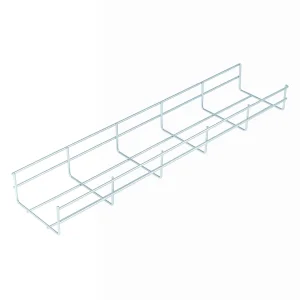
Wholesale Pre Galvanized grid Cable tray100mm50mm Suppliers, Factory
View Engineering Specs →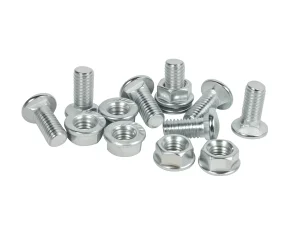
Buy Bridge frame screws Supplier, Factories
View Engineering Specs →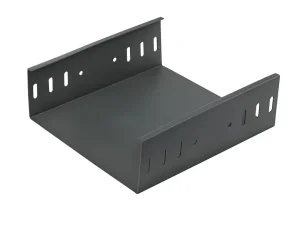
Wholesale Pre Galvanized Powder Coating Cable Tray Factory, Price
View Engineering Specs →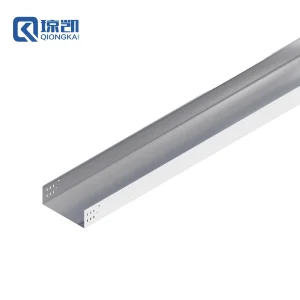
Buy Carbon Steel PG Pre Galvanized HDG Hot Dip Galvanized SS Stainless Steel Cable Trunking Trough Type Channel 400*150 Factory, Factories
View Engineering Specs →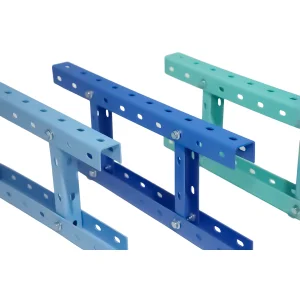
Wholesale Durable Powder Coated Telecom Cable Management Rack Supplier, Factory
View Engineering Specs →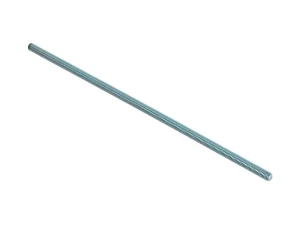
Buy Metal hanger rod Supplier, Price
View Engineering Specs →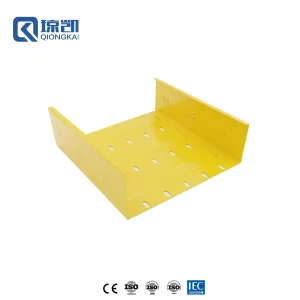
Buy Powder Coated Carbon Steel Cost Saving Heavy Duty Reinforced Molded Pre Galvanized Cable Tray with less perforation - RAL1080 Yellow 300*100 Manufacturers, Suppliers
View Engineering Specs →