
Engineered Cable Containment: Batch 01 Direct Specifications
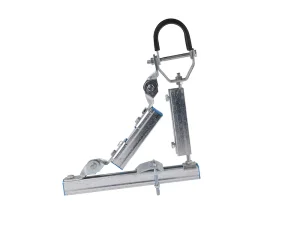
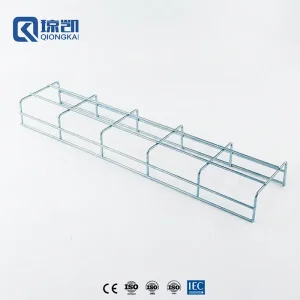
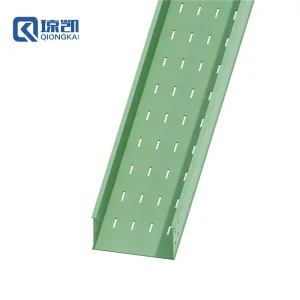
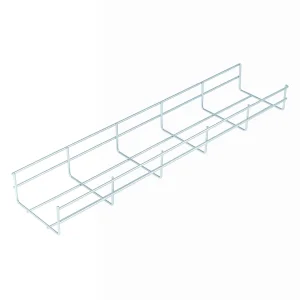
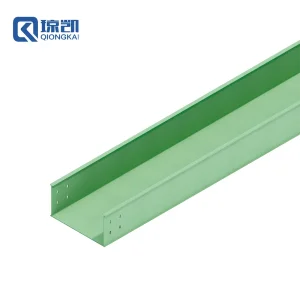
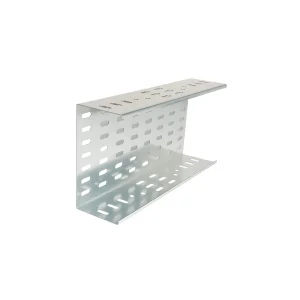
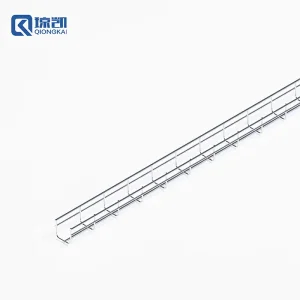
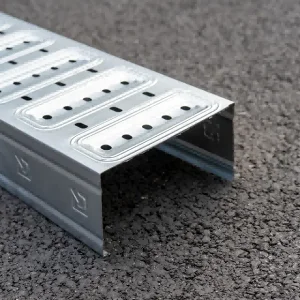
Heavy-duty seismic braces, precision wire basket trays, GRP/FRP chemical troughs, and pre-galvanized perforated systems optimized for commercial data halls and marine substations.
Global Industry Evolution & Technological Paradigms
The electrical raceway and structural containment industry is transitioning from passive steel sheet forming to highly integrated, digitally engineered life-safety systems designed for mission-critical infrastructure.
Hyperscale Digitalization & BIM
Modern electrical engineering mandates Building Information Modeling (BIM) Level 3 parametric models. Cable tray designs now incorporate algorithmic routing, thermal dissipation modeling for power conductors, and collision detection, eliminating 95% of jobsite structural interferences during MEP pre-construction stages.
- Revit / IFC Parametric Library Output
- Automated Cable Fill Ratio Validation
- CFD Heat-Dissipation Vent Modeling
Advanced Metallurgy & Passivation
Traditional hot-dip galvanizing is complemented by Zinc-Aluminum-Magnesium (ZAM) alloys that exhibit cut-edge self-healing galvanic action. In marine and heavy chemical atmospheres, thermosetting pultruded FRP composites eliminate micro-fissuring and catastrophic electrochemical pitting over a 40-year design lifecycle.
- ISO 12944 C5-M & CX Atmospheric Durability
- Zero-Zinc-Whisker Electro-Passivation
- Vinyl-Ester Fire Retardancy (ASTM E84 Cl. 1)
Modular Boltless Assembly Systems
Global labor shortages demand raceways designed for rapid snap-fit installation. New cold-formed profile geometries utilize continuous rib embossing and integral swaged jointers, reducing assembly labor by 40% compared to traditional slotted splices, while maintaining electrical bonding integrity without external grounding jumpers.
- Interlocking Click-Splice Connectors
- Certified Electrical Continuity < 0.05 Ω
- Integrated Expansion Gap Mitigators
Years Industrial Manufacturing Line Experience
Fully Automated Roll-Forming Lines in Operation
Floor Footprint Across Specialized Facilities
Traceable Mill Test Certs (MTR) to EN 10204 3.1
Wholesale Factory Price Architecture & Procurement Economics
A deconstruction of wholesale quotation parameters for tier-1 EPC contractors, international project estimators, and bulk electrical distribution networks.
The manufacturing and landed cost of industrial cable tray and trunking systems is primarily driven by raw coil metal commodity indexes (London Metal Exchange zinc contracts and Shanghai Futures Exchange hot-rolled coil steel), sheet profile geometry, gauge precision, perforation tooling scrap percentage, and secondary corrosion barrier processes. Understanding these factory price variables allows global procurement managers to effectively audit vendor quotations and optimize container load nesting.
“Direct-from-factory procurement avoids the typical 18% to 35% mark-ups introduced by regional distribution intermediaries while providing mill-certified mechanical trace integrity for compliance-heavy projects.”
| Containment Profile & Finish | Standard Steel Base / Spec | Protective Coating Thickness | Indicative Price Scale (FOB) | Optimal Deployment Environment |
|---|---|---|---|---|
| Pre-Galvanized (PG) Perforated | Q235B / JIS G3131 SPHC (1.0–2.0mm) | Z120–Z275 (15–20 µm) | $4.20 – $14.50 / Meter | Indoor dry commercial HVAC ceilings, light commercial fit-outs |
| Hot-Dip Galvanized (HDG) Ladder | Q235B / ASTM A1011 (1.5–3.0mm) | ASTM A123 / ISO 1461 (≥ 65–85 µm) | $11.80 – $38.00 / Meter | Outdoor industrial infrastructure, refineries, thermal power plants |
| Electro-Galvanized (EG) Wire Mesh | Low Carbon Q195 Wire (Ø 3.5–6.0mm) | ASTM B633 (8–15 µm) | $3.60 – $18.50 / Meter | Data center server halls, telecommunication raised flooring |
| Stainless Steel (SS304 / SS316L) | AISI 304 / 316L Annealed (1.2–2.5mm) | Natural Passivation / Electro-Polished | $28.00 – $95.00 / Meter | Food processing, marine environments, LNG terminals, offshore rigs |
| FRP / GRP Pultruded Trunking | Vinyl Ester / Isophthalic Resin Matrix | Synthetic Surface Veil > 2.5mm thk | $16.50 – $52.00 / Meter | Chemical manufacturing, acid pickling lines, high-humidity tropics |
| Powder Coated Cable Runway | Pre-Galvanized / CRCA Steel Frame | Electrostatic Epoxy/Polyester 60–90 µm | $6.50 – $22.00 / Meter | Telecommunications, high-visibility enterprise data halls |
Containerization Economics & Nesting Efficiency
In wholesale supply chains, freight represents between 8% and 22% of landed costs. Experienced factories minimize ocean freight volume through tapered tray profiles and modular nesting configurations. By progressively tapering channel widths (e.g., nesting 290mm inside 300mm trays, or nesting channel trunking covers inside bases), a single 40ft High Cube container can achieve up to 26 metric tons without wasting cubic space, slashing per-meter shipping overhead dramatically.
Heavy Engineering Solutions for Mission-Critical Projects
Engineered raceway ecosystems configured to meet severe dynamic vibrations, chemical atmospheres, thermal extremes, and catastrophic fault currents.
Hyperscale AI Data Centers
High-density fiber optic and 415V busway overhead drops require lightweight wire mesh baskets and anti-static powder coatings. Systems must strictly prevent conductive zinc whiskers that trigger microcircuit shorts in high-compute server nodes.
Offshore LNG & Petrochemical
Exposed to saline aerosol and sulfur dioxide vapors, refineries use heavy-gauge pultruded GRP/FRP or marine SS316L cable ladder systems capable of supporting heavy armored multiconductor power lines across unbraced 6-meter pipe rack spans.
Solar Utility & Renewable Plants
PV array tracker cables demand UV-stabilized, high-thermal-cycling raceways. Corrosion-resistant Hot-Dip Galvanized trays with slotted bottoms allow rapid zip-tie harness management, mitigating water pooling in desert and humid outdoor deployments.
Transit Hubs & Subways
Tunnel raceways must comply with strict low-smoke zero-halogen (LSZH) fire mandates. Solid trunking profiles with bolted covers provide structural protection against flying debris, projectile pressure waves, and train-induced aerodynamic suction.
Regulatory Standards, Proof Testing & Seismic Resilience
Compliance validation procedures verifying working load limits, continuous thermal cycling endurance, and three-dimensional earthquake force mitigation.
IEC 61537 & NEMA VE-1 Regimes
Tray profiles undergo destructive load testing per NEMA VE 1 / IEC 61537 standards. Testing measures Safe Working Load (SWL) over multi-span configurations with mid-span deflection kept under L/200, confirming that full dynamic cable runs will not buckle side rails.
ASCE 7 & Seismic Restraint
Under seismic accelerations, cable trays act as heavy suspended pendulums. Engineering guidelines dictate rigid lateral and longitudinal bracing with slotted strut channels (41x41 / 41x82 back-to-back) and heavy-duty seismic hinge brackets per ASCE 7-22 specifications.
DIN 4102-12 Fire Survivability
Life safety circuits for smoke extractors and emergency lighting mandate E30 to E90 circuit integrity. Trays must withstand temperatures up to 1000°C for 90 minutes without loss of mechanical support or structural collapse under direct flame exposure.
Structural Load Deflection Formulas
In structural verification calculations, simple beam deflection $\delta$ under uniformly distributed load $w$ over span length $L$ is calculated using the elastic modulus $E$ and moment of inertia $I$:
$$\delta = \frac{5 \cdot w \cdot L^4}{384 \cdot E \cdot I}$$
To satisfy typical consultant specifications, $\delta$ must not exceed $L/200$ for standard industrial trays, or $L/360$ for sensitive data center communications raceways.
Heavy Structural Systems: Batch 02 Direct Specifications
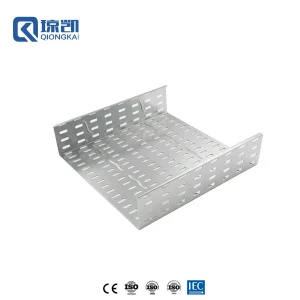
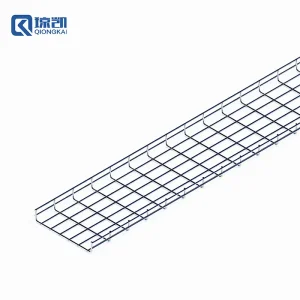
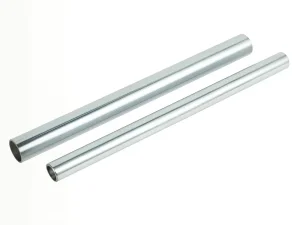
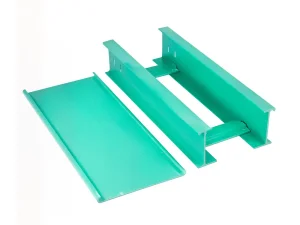
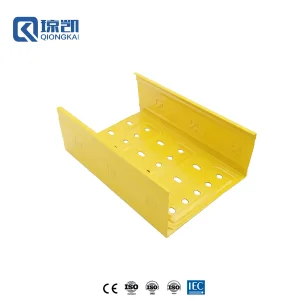
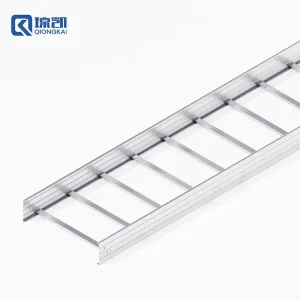
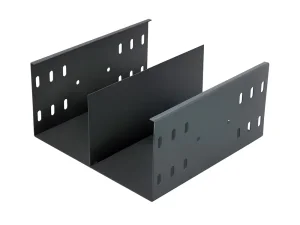
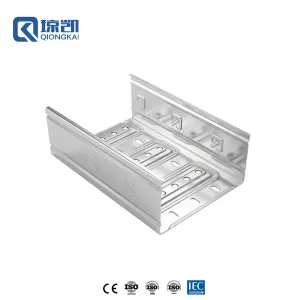
Reinforced-rib high-capacity trays, wide ladder systems, powder-coated split trunking channels, and precision electrical conduit runs ready for containerized sea shipment.
Technical Roadmap: Next-Generation Containment Systems
The strategic manufacturing trajectory addressing automation, embodied carbon offsets, predictive maintenance, and robotic installation compatibility.
Continuous Roll-Forming
Multi-station automated high-speed cold-rolling lines with inline servo CNC punching for continuous side-rail embossing and custom mounting patterns, reducing material waste below 2%.
Robotic Laser Splice Welding
Automated 6-axis fiber laser cells replacing resistance spot-welding on ladder rungs, improving mechanical cyclic shear resistance by 35% without degrading protective zinc coatings.
Zero-Carbon Green Steel
Adoption of electric arc furnace (EAF) low-carbon steel coils and closed-loop non-cyanide trivalent galvanizing, aligning with European CBAM carbon tax and ESG supply-chain mandates.
Smart Sensor Telemetry
Embedding passive RFID and strain-gauge fiber sensors within high-load offshore trays to monitor physical deflection and vibration anomalies during extreme weather in real-time.
Global Logistics Logistics Support & Compliance Assurance
Ensuring end-to-end container preservation, international documentation accuracy, and on-time site staging for major worldwide EPC destinations.
Export Seaworthy Packaging
Trays are wrapped in high-density VCI anti-corrosion film, bundled with heavy steel strapping, corner edge-protectors, and mounted on fumigated IPPC ISPM-15 compliant timber runners, preventing maritime transit friction damage and white rust oxidation.
Bilingual Regulatory Paperwork
Every shipment is accompanied by complete documentation: Mill Test Certificates (EN 10204 Type 3.1), third-party SGS/TUV chemical spectro-analysis reports, Certificate of Origin (Form E, CO, EUR.1), and complete container-level packing lists.
Port Proximity & Rapid Clearance
Our direct proximity to Shanghai Port (Yangshan Deepwater Terminal & Waigaoqiao) reduces domestic cartage transit to under 4 hours, providing immediate feeder vessel access and rapid shipping turnaround across Trans-Pacific, Middle East, and EU corridors.
Wholesale Cable Trays & Trunking: Questions & Answers
Technical guidance addressing real-world engineering issues, pricing metrics, steel thickness standards, and factory lead-time management.
Request Detailed Factory Specifications & Project Quotes
Submit your Bill of Quantities (BOQ), tray load profiles, or structural engineering drawings. Our engineering division will return a comprehensive quotation with weight-optimized container nesting plans within 24 hours.